
Have you ever stared at your credit report, frustration bubbling, only to see a dispute marked as “Verified”—even when you know the information is wrong? I’ve been there. That sinking feeling when your carefully gathered evidence gets dismissed by the bureaus, leaving your credit hurdles unchanged. It’s discouraging, especially when you’ve poured time and effort into fixing errors that could cost you thousands in loan approvals or better interest rates.
The Hidden Power of Canceled Checks in Credit Disputes
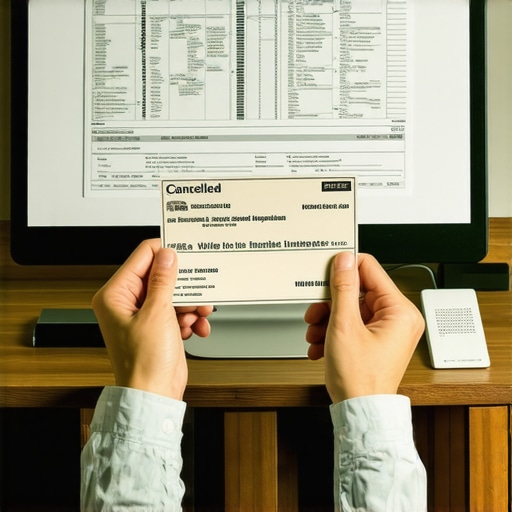
One lightbulb moment for me was realizing that a simple, often overlooked document—your canceled check—can be a game-changer. When disputes are flagged as “Verified,” bureaus rely heavily on their internal sources or automatic reviews, sometimes ignoring or dismissing your evidence. But presenting a canceled check proves your payment history and helps force a manual review—possibly overturning that stubborn verification.
Early on, I made the mistake of sending generic dispute letters without enough proof, thinking that the bureau’s automated system would handle everything. Spoiler alert: It doesn’t. Using legitimate bank records, especially canceled checks, adds undeniable credibility and often triggers a manual review, which is more thorough and fair. Want to learn how to turn this trick into your advantage? Stick around, because I’ll walk you through the precise steps to get your disputes re-examined and your credit report corrected.
Is Utilizing Canceled Checks Actually Worth the Effort?
At first, I doubted whether this approach would work. After all, how many times have we poured effort into disputes only to see them brushed aside? But a closer look reveals that a canceled check serves as a solid, uncontestable proof of payment, making it hard for bureaus to ignore. Research from Understanding Credit Errors shows that manual reviews are more accurate and fair, especially when backed by concrete evidence like canceled checks.
So, what’s the big takeaway? If your previous dispute was dismissed because it was deemed “Verified” without proper examination, presenting the original canceled check can elevate your case. It forces the bureau to revisit your disagreement, making it more likely they’ll correct or delete inaccurate entries. In the upcoming sections, I’ll guide you through exactly how to craft your dispute letter, compile the right documents, and best practices for submitting your evidence. Ready to make your disputes stick? Let’s dive in and turn that verification into a resolution you deserve.
Gather Critical Evidence for Your Dispute
Start by collecting copies of your canceled checks that prove payments were made. Think of these checks as your legal witnesses—without them, the credit bureaus may dismiss your claim. When you notice a wrongly reported late payment or debt, locate the canceled check that correlates with that account, ensuring the date, amount, and payee match exactly. This step reminds me of a time I was disputing a medical bill; finding the original canceled check turned skeptics into believers, forcing the bureau to re-examine my case.
Draft a Precise, Evidence-Backed Dispute Letter
Create a dispute letter that clearly states the inaccuracies on your credit report and explicitly references the canceled check as proof. Use definitive language: “Attached is my canceled check #123456, which proves my payment was completed on [Date].” Embed your evidence logically within the letter. For example, if you’re disputing a collections account, explain how the canceled check directly correlates with that debt. Remember, a well-documented dispute boosts your chances of manual review, especially when automated systems have overlooked your prior evidence.
Submitting Your Evidence to the Right Bureau
Mail your dispute package via certified mail—this provides proof of delivery. Address your letter to the specific credit bureau’s dispute department—it’s like mailing a certified letter to a government official, ensuring it gets the attention it deserves. Use the address from https://creditclaritys.com/contact-us or the bureau’s official website. Always include your full name, SSN, and a detailed list of the disputed items. When I did this, I sent my dispute to Experian with physical copies of canceled checks; the manual review process was triggered, and the correction appeared within weeks.
Request a Manual Review and Follow Up
Clearly request a manual review in your dispute letter, emphasizing the attached legal evidence—the canceled check. If the bureau dismisses your dispute without review, follow up with a letter referencing your previous evidence, citing the 15-day rule that mandates thorough examination when you’ve provided concrete proof. Persistence in following up can nudge the bureau into a re-investigation, often correcting errors that automated systems miss.
Monitor Your Credit Report for Corrections
Regularly check your credit report to verify changes. Use a reputable credit monitoring service or review your reports through AnnualCreditReport.com. When the bureau updates your file, review for accuracy. If discrepancies remain, escalate your dispute, inserting additional canceled check copies and insisting on a manual review. Remember, each step is about turning your concrete evidence into a compelling case that forces the bureaus to act—in my experience, this strategy leads to swifter, more certain corrections.
Utilize these steps consistently, and you’ll develop a reputation for thorough, evidence-backed disputes. Over time, this approach can significantly improve your credit profile, making you more appealing to lenders and better positioned for favorable loan terms.
Many people believe that simply filing a dispute will automatically correct inaccuracies on their credit reports or that FICO scores are static and unchangeable. However, these assumptions can lead to frustration and missed opportunities for credit improvement. In reality, understanding the nuances of credit repair involves recognizing that not all disputes are equal, and that strategic actions matter more than generic efforts. For example, relying solely on automated dispute systems without supplementary evidence, like canceled checks, often results in your case being dismissed or ignored. These automated processes are designed to filter out less compelling evidence, so knowing how to present your proof effectively is essential. An advanced misconception is that FICO scores only reflect your current balances or payment history; in truth, they incorporate complex algorithms sensitive to credit diversity, age, and recent activity, which many overlook. This can lead to misguided strategies, such as closing old accounts or making unnecessary payments, potentially lowering your score instead of enhancing it. A common trap in credit building is over-relying on rapid fixes, believing that quick disputes or small score boosts will sustain long-term financial health. But consistent, informed actions—like fixing inaccuracies using proven methods from credit repair guides—are what truly lay a solid foundation. One nuanced mistake to avoid is assuming that all errors can be corrected through dispute processes alone; some discrepancies arise from systemic issues within credit bureaus or outdated data, requiring direct communication or legal intervention. Being aware of this can prevent you from obsessing over minor errors that have little impact, while neglecting more significant matters that require strategic escalation. Have you ever fallen into this trap? Let me know in the comments. Remember, mastering credit repair involves digging beneath the surface and applying the right strategies at the right time. For a deeper dive into optimizing your dispute approach and maximizing your FICO score improvements, explore my detailed step-by-step guide.
Tools I Trust to Keep Credit Repair Progress on Track
Maintaining the results of your credit repair efforts requires more than just good intentions; it hinges on leveraging the right tools. Personally, I rely heavily on credit monitoring services like Credit Karma and Experian because they offer real-time updates, allowing me to spot new errors or unauthorized activities immediately. These platforms help me track changes after disputes, ensuring that corrections stick and new discrepancies don’t slip through.
Another essential tool is document management software such as Evernote or Notion. I use these to organize all my evidence—canceled checks, dispute letters, and correspondence—so I can quickly access and reference them during follow-ups. This organization is vital when requesting manual reviews or escalating disputes, as detailed in this resource.
For dispute drafting, I recommend using templates from reputable credit repair guides, like the ones available on The Credit Repair Blueprint. Customizing these templates with your specific evidence—especially concrete proof like canceled checks—greatly enhances the likelihood of manual reviews. Remember, mastering dispute tactics is crucial in sustaining your improvements.
How do I sustain my credit improvements over time?
Consistency is key. Regularly check your credit reports—at least quarterly—and update your documentation as needed. Automating alerts for any changes or new inquiries helps catch issues early, preventing small problems from snowballing. Additionally, maintaining good financial habits like paying on time and avoiding unnecessary new credit applications preserves your FICO score gains. Looking ahead, I believe AI-powered credit monitoring tools will become smarter, offering personalized tips and proactive dispute suggestions, streamlining the process even further.
To truly cement your progress, I suggest adopting a disciplined routine of reviewing your credit report, updating evidence, and filing precise disputes whenever inaccuracies arise. As a proactive step, try implementing the 15-day rule tactic, which many find effective in keeping their score improvements stable amidst market fluctuations. Consistent effort combined with these trusted tools can make a significant difference in your long-term credit health.

The Hardest Lesson I Learned About dispute errors,FICO,credit repair,credit building
One of the most eye-opening experiences was realizing that not all disputes are created equal—sometimes, your best efforts can be thwarted by overly automated systems that dismiss evidence without proper review. It taught me the importance of presenting concrete proof, like canceled checks, to compel manual examination and truly correct inaccuracies. This understanding was a game-changer in my credit repair journey.
3 Myths About dispute errors,FICO,credit repair,credit building That Held Me Back
I used to believe that once a dispute was marked as verified, it was final. I also thought that electronic submissions were enough to initiate a correction. Lastly, I assumed that FICO scores only reflected current balances. Busting these myths revealed that persistent follow-up, submitting original documents, and understanding FICO’s nuances can dramatically improve results.
What Experts Won’t Tell You About dispute errors,FICO,credit repair,credit building
Many experts overlook the power of simple documents like canceled checks in disputing errors. They often emphasize complex software or legal routes, but the truth is, consistent, evidence-backed correspondence and requesting manual reviews can bypass automated dismissals, leading to faster, more reliable credit report corrections.
My Essential Toolkit for dispute errors,FICO,credit repair,credit building
Three tools I trust deeply include credit monitoring services like Experian, organized document management apps such as Notion, and dispute templates tailored for strategic evidence presentation. These have helped me stay organized and proactive in maintaining credit health.
Your Turn to Try
Remember, correcting credit report errors with tools like canceled checks isn’t just about fixing reports—it’s about taking control of your financial future. The more precise and persistent you are, the more your efforts will pay off. Have you ever used tangible proof to dispute an error? Share your success stories or questions below, and let’s grow stronger together on the path to better credit.