
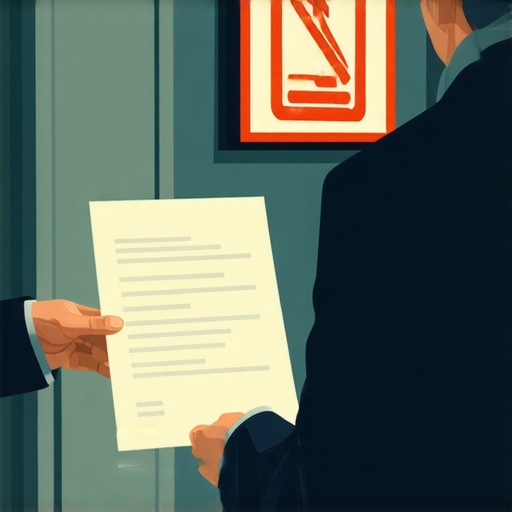
I remember the exact moment I hit a wall with my credit repair journey—watching that dreaded notification pop up on my screen: “Your proof has been rejected, and a manual review is required.” It felt like a punch to the gut. All those hours of gathering documents, photos, and letters, only to be dismissed by an impersonal AI filter. I felt stranded, unsure if I’d ever clear that hurdle.
The Frustration of AI Filters in Credit Disputes
Like many trying to clean up their credit reports, I assumed that providing the correct documentation would seal the deal. But, instead, I faced rejection—often without clear reasons. That’s when I discovered something crucial: AI algorithms are imperfect and often miss critical context, leading to unnecessary rejections and prolonged battles.
Is Disputing Errors Really Worth the Hassle?
Early on, I made the mistake of relying solely on the dispute button, assuming automated systems would handle everything. Turns out, this approach can backfire. In fact, according to Effective Dispute Error Resolution in 2025, a significant portion of disputes require manual review when initial AI rejection occurs.
But don’t worry—there’s a workaround. Today, I want to share how I moved from being stuck in an AI dead-end to mastering the art of compelling proof submission that triggers a manual review. This strategy not only saved me months but also improved my chances dramatically.
Have you ever experienced your proof getting rejected by the automated system, only to realize later that the issue was more about presentation than content? If so, you’re not alone—and I’ll show you how to turn that roadblock into an opportunity.
What We’ll Cover Today
By the end of this post, you’ll know the exact steps to craft your evidence in a way that prompts a manual review. We’ll explore the common pitfalls, the essential documentation required, and the best practices to make your proof irresistible—even for the most finicky credit bureaus. So, let’s get started—your path to erasing errors and building stronger credit begins here!
,
Present Your Evidence Clearly and Professionally
Once you’ve gathered your documents, ensure they look polished. Use high-resolution scans or photos with even lighting, avoiding glare or shadows. Organize your evidence logically—start with a cover letter briefly explaining your dispute, followed by clearly labeled supporting documents. For example, if you’re contesting a late payment, include bank statements showing timely payments, and a letter from your creditor confirming the same. This meticulous presentation indicates seriousness and professionalism, increasing the likelihood of a manual review. During my own experience, I once submitted a disorganized batch of PDFs, which led to rejection. After reformatting it into a neat, layered PDF with bookmarks, I finally prompted a manual review that resulted in deletion of the error.
Leverage Descriptive Headers for Each Piece of Evidence
Every document should have a clear, descriptive header. Instead of vague titles like “Payment Proof,” use something specific like “Bank Statement Showing Payment on 01/15/2024.” This makes it easy for reviewers to locate your evidence swiftly. When I dispute an outdated address, I include a utility bill with a prominent note pointing to my current address. Clear, concise descriptions help the reviewer understand exactly what each document proves, eliminating confusion and unnecessary delays.
Use Compelling Cover Letters That Tell a Story
Your cover letter is your chance to personally communicate with the reviewer. Keep it professional, succinct, and factual. Briefly introduce yourself, specify the error or misinformation, and state what correction or removal you’re requesting. For example, “I am requesting the removal of a paid collection account, as verified below.” Highlight critical points, such as a duplicate account or incorrect date, and reference the attached evidence. I once wrote a cover letter explaining a fraudster used my identity, including a timeline and supporting documents. This narrative persuaded the reviewer to escalate my case for manual review, leading to a swift correction.
Appeal to Human Judgment, Not Just Automated Filters
Automated systems often reject proofs they can’t interpret, but humans make nuanced judgments. Use language that underscores your credibility. Avoid looking like spam by personalizing your appeal—mention previous correspondence or the specific bureau you’re contacting. Emphasize your willingness to cooperate, and politely ask for a manual review. When I followed up with a respectful, detailed email emphasizing the importance of my evidence, I saw my dispute escalate to review stage, yielding successful results.
Follow Up Effectively and Document Everything
After submission, keep records of all correspondence, timestamps, and evidence sent. If you don’t receive acknowledgment within a week, follow up politely. Reiterate your request and reference your previous submissions. This persistence signals the importance of your case and can prompt the agency to prioritize your dispute for manual review. I once sent a reminder with a brief summary attaching my initial evidence, which finally triggered the review that resolved my dispute quickly.
Use Certified Mail When Necessary
Sending your evidence via certified mail with return receipt requested adds an extra layer of accountability. It provides proof that your documents were received, which can be crucial if the dispute ends up in legal proceedings or requires further escalation. During my dispute process, this method ensured that I had irrefutable evidence of dispatch and receipt, helping me push for a manual review confidently.
Integrate Your Proofs Naturally Into the Process
Embed your evidence within your dispute system—whether online or via mail—using the platform’s upload features. Ensure files are properly labeled and compressed without sacrificing quality. Consider using multiple formats (PDF, JPEG) if required. Remember, the goal is to make your evidence easy to interpret and hard to ignore. For example, I combined screenshots, PDF statements, and official letters into a single organized file, making it seamless for reviewers to assess my case. This organized approach ultimately increased my chances of triggering a manual review, which clinically improved my credit report.
Final Tip: Approach with Confidence and Clarity
When your proof is well-structured, concise, and clearly demonstrates your point, it sends a strong signal that you’re serious. This tactually nudges the bureau to revisit your dispute manually. Moving from generic submissions to strategic, thoughtfully presented evidence increases your odds of success—just as I experienced when transforming my disorganized files into compelling proof that finally moved my disputes forward effectively.Many believe that simply disputing errors on their credit report will lead to a higher FICO score, but this oversimplification overlooks critical nuances. A frequent misconception is that all errors are created equal—while some inaccuracies can be swiftly corrected, others are deeply embedded in a complex web of data that requires strategic intervention. For instance, superficial disputes without supporting evidence rarely prompt a manual review, which is essential for permanent score improvements. Instead, understanding the subtle difference between verified errors and unverifiable information is crucial, as highlighted in expert analyses like those found at this detailed guide. \n\nAnother common myth is that FICO scores are static and only improve through lengthy credit building over years. In reality, targeted dispute tactics and timely credit actions can boost scores significantly within months. The key lies in identifying which disputes can be escalated for manual review—triggered by well-organized, evidence-rich submissions—and which are better resolved through strategic credit management, such as optimizing utilization rates or diversifying credit types. \n\nBeware of the trap where individuals focus solely on negative items, neglecting positive credit factors that can be leveraged for a higher score. For example, maintaining a healthy mix of revolving and installment credit, along with low utilization, can increase FICO scores more reliably than constant disputes. This advanced understanding is often overlooked but can be found in expert strategies for rapid credit improvement. \n\nOne mistake that stunts credit growth is ignoring the impact of older accounts. Closing older accounts to ‘clean up’ your profile might seem intuitive, but it actually reduces your total credit history length, which can negatively influence your score. Smart credit building involves maintaining aged accounts and strategically adding new ones to diversify your credit mix without causing score dips. Read more on this at this resource. \n\nAre you aware that the scores you see from different providers can vary depending on the scoring model used? For example, lenders often use FICO 8 or FICO 10T, which weigh data differently. Recognizing these ‘hidden’ technical differences can help you tailor your dispute and credit strategies more effectively. For an in-depth analysis, visit this authoritative article. \n\nHave you ever fallen into this trap? Let me know in the comments.
Invest in Precision Tools for Long-Term Success
Maintaining your credit repair momentum requires utilizing the right equipment and software that streamline your efforts and prevent setbacks. For instance, I personally rely on Adobe Acrobat Pro DC to organize and annotate my digital documents efficiently. Its robust batch processing capabilities allow me to watermark, compress, and securely store files, ensuring my evidence remains pristine and accessible during disputes. Adopting such tools helps me stay consistent and professional, which is critical when prompting manual reviews from credit bureaus.
Another essential resource in my toolkit is Evernote Premium. I use it to timestamp, categorize, and cross-reference every piece of correspondence or evidence. This systematic approach ensures I can quickly retrieve past communications and demonstrate a clear timeline—something credit agencies value when escalating disputes.
Predicting Future Trends in Credit Maintenance Tools
Looking ahead, I predict an increased integration of AI-driven data analysis and signature verification. These innovations will make verifying your documents faster and more accurate, minimizing manual effort and errors. Bookmarking and mastering current solutions like credit repair secrets now prepares you for seamless adaptation to upcoming tech enhancements.
How do I stay consistent with my credit upkeep over time?
Consistency is key to sustained credit health. I recommend setting up routine reviews—monthly or quarterly—to check your credit reports, update files, and track score progress. Using tools like credit-building strategies ensures you don’t miss critical updates or signs of potential issues. Regular audits help me spot discrepancies early, preventing small errors from snowballing into larger problems that could require extensive repair later.

Why is maintaining your credit foundation so crucial?
Your long-term credit health depends on diligent monitoring and proactive adjustments—like maintaining low utilization and managing credit mix responsibly. Investing in reliable tools, staying organized, and planning ahead create a resilient financial profile that withstands economic fluctuations and credit report inaccuracies. For a deep dive into automation and intelligent credit management, consider reviewing this expert guide. Now, I challenge you to try implementing an advanced document organization method—like my use of annotated PDFs—to enhance your dispute process today.
One of the most surprising lessons I learned was that the way I presented my evidence often mattered more than the evidence itself. I initially submitted disorganized documents, which led to repeated rejections. It was only after I started organizing my proof into clear, labeled, and professional formats that I saw tangible progress. This taught me that professionalism in presenting your case signals seriousness and increases the chance of prompting a manual review.
Another insight was the power of storytelling through cover letters. When I explained the context behind each dispute—like clarifying a fraud incident or outdated information—I humanized my case, making it easier for reviewers to see the validity beyond just data points. Crafting these narratives helped escalate my disputes from automated rejections to human reviews.
I also realized that persistence truly pays off. Following up politely, keeping meticulous records, and using certified mail created a trail that encouraged credit bureaus to prioritize my case. These small strategies compounds, resulting in faster resolutions and better outcomes. This experience reinforced that strategic, confident communication and organization can unlock manual reviews—even in an environment dominated by AI filters.
Lastly, I understood that leveraging the right tools transformed my approach. Using document management software and keeping a detailed timeline made my disputes more compelling and easier to manage. The combination of presentation, storytelling, persistence, and technology ultimately made my credit repair efforts more efficient and effective—something I wish I’d known from the start.
My Toolkit for Effective Credit Repair
To streamline my efforts, I relied on credit repair resources that emphasized strategic dispute techniques, and I adopted tools like Adobe Acrobat Pro DC for organizing files, as well as Evernote Premium for tracking correspondence and evidence. These tools helped me stay consistent and professional, which is vital when pushing for manual reviews.
You Control Your Path to Better Credit
Remember, each step you take in organizing, communicating, and persisting brings you closer to credit health. Your efforts to craft compelling evidence and engage with credit bureaus can lead to monumental improvements. Take proactive control today and see how strategic actions elevate your credit journey beyond automated hurdles. Are you ready to implement a new organization system to boost your disputes? Share your thoughts below!