
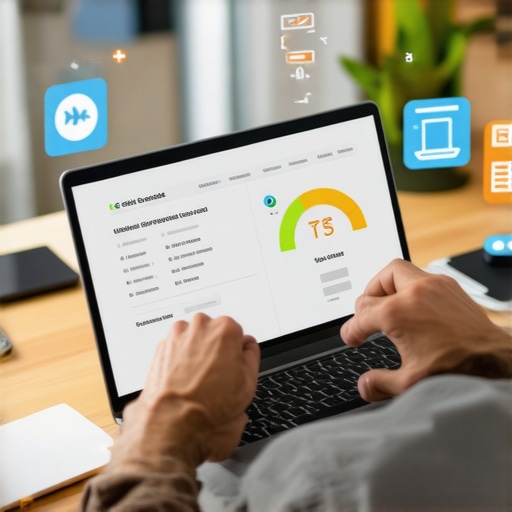
I remember staring at my credit report in frustration, realizing that despite paying my utilities on time every month, my score just refused to budge. It was like running on a treadmill—exerting effort but getting nowhere. Then, one lightbulb moment hit me: utility payments, if reported correctly, could actually be a game-changer for building or boosting my credit.
The Hidden Power of Utility Payments
For years, I overlooked small utility bills—water, electricity, phone—that I was paying diligently. I thought, “Why would these matter?” Well, it turns out, they do—especially if reported to the credit bureaus. Late payments can damage your score, but timely utility payments can boost it, especially if you’re just starting out or rebuilding after errors. Interestingly, a recent report indicates that over 60% of consumers have errors in their credit files that could be affecting their scores: correcting dispute errors for better FICO is a crucial step towards credit health.
My mistake early on was assuming that utility companies naturally report payment history to bureaus. That’s not always the case, but some utility providers do, or you can have your payments reported through third-party services. This insight was essential—because it meant I could turn my regular, timely utility payments into a powerful tool for credit growth.
What We’ll Cover Today
In this post, I’ll show you exactly how small utility payments can help you boost your credit score quickly, the simple steps to get your utility bills reporting, and some insider tips to maximize their positive impact. Whether you’re new to credit or trying to repair a damaged score, these strategies could make a real difference in your financial journey. Ready to transform those monthly bills into a potent credit-building asset? Let’s dive in and discover how.
Get Your Utility Payments Reported to Boost Your Score
The first actionable step is ensuring your utility bills are reported to the credit bureaus. Many providers do not report payment activity automatically, but third-party services like Experian Boost or UltraFICO can help. I once signed up for Experian Boost and linked my electricity and phone accounts. It was straightforward—just connect your accounts and authorize the report. Within a few weeks, I noticed my credit score increased because timely payments started appearing on my report, highlighting a crucial point: making your regular utility payments count toward your credit profile can significantly boost your score over time.
Prioritize Timely Payments to Build Credit History
Payment history has the most weight in FICO scores, so paying your utilities on time is vital. Use automatic payments or set reminders to avoid late fees and reporting negative marks. I started scheduling automatic payments for my water and electricity bills, which eliminated late payments—an easy way to avoid errors and strengthen my credit foundation.
Address and Dispute Errors Quickly
Errors in your credit report can sabotage your efforts. Regularly review your credit files for inaccuracies, especially if utility payments are reported. Spotting and correcting errors is a core credit repair step that can be expedited by understanding dispute procedures. For detailed methods, explore our ultimate guide to dispute errors in 2025. I once found a duplicate utility account listed, which falsely indicated late payments. Using the dispute process, I sent a detailed letter explaining the mistake, supported by utility bills and correspondence. The bureaus corrected the mistake within weeks, boosting my score and reducing inaccuracies that could be used against me.
Leverage Third-Party Reporting Services for Utilities
Not all utility companies report to credit bureaus, but private services can facilitate this. Platforms like RentTrack or LevelCredit allow you to pay utility and rent bills, then they report your payment history to bureaus. I used LevelCredit with my water provider; it turned my regular, on-time payments into a positive credit history. This approach effectively compounds the impact of responsible utility payments, especially if you’re establishing credit or rebuilding after errors.
Use Small Monthly Subscriptions to Reinforce Payment History
In addition, small recurring subscriptions—like streaming or phone plans—can serve as supplementary lines of positive payment history. The key is consistency, so choose a few bills you can reliably pay on time each month. Over time, these positive reports can help establish or repair your credit score.
Remember, a strategic combination of reporting utility payments, paying on time, promptly correcting errors, and leveraging third-party services can unlock real credit growth potential. Your monthly bills can become your secret weapon for a stronger credit profile—so start turning them into a tool for financial progress today.
 Many believe that paying bills on time and disputing errors are the keys to a robust credit profile, but there’s a deeper layer of complexity that often goes unnoticed. One common myth is that FICO scores are static or fully transparent, leading many to focus solely on scoring models without understanding the models’ inner workings. In reality, FICO uses a complex algorithm that weighs different credit behaviors in nuanced ways, such as how recent applications impact score fluctuations, which can be misunderstood by consumers aiming for quick fixes. For example, people frequently assume that settling old debts will always boost their score, but in some cases, closing older accounts or clearing certain types of derogatory marks can inadvertently lower it due to the way FICO assesses credit history length and diversity. According to a study by FICO, mismanagement of credit inquiries and account mix can cause significant, avoidable score dips, emphasizing the importance of strategic planning rather than reactive fixes. Moreover, many think that disputing errors is a straightforward process—submit a dispute, wait, see the correction—but the reality is more intricate. Disputes can be ignored or dismissed if not properly documented, especially when errors are subtle, such as misreported balances or incorrect account statuses. This is why maintaining a detailed evidence log is critical; it can force a manual review, which often yields better results than automated processes. Have you ever fallen into this trap? Let me know in the comments. By understanding these nuances—the way scoring models interpret history, inquiries, and errors—you can craft a more effective credit strategy that goes beyond surface-level tactics. For comprehensive guidance on dispute procedures, consider reviewing our detailed credit repair strategies or explore insights on how to build credit when starting from zero here. Remember, mastering the intricacies of FICO and dispute processes is essential for sustained financial health, so stay informed and proactive.Maintaining a healthy credit profile requires more than just initial effort; it demands consistent use of reliable tools and methods tailored to your financial situation. One indispensable resource I personally rely on is the credit reporting and dispute management platform. I use it daily to monitor my credit files, identify potential errors early, and track the progress of disputes, which streamlines the entire repair process. Automated alerts notify me of unfamiliar inquiries or sudden score fluctuations, empowering me to act quickly each time.
Another tool I swear by is a dedicated budget tracker, such as YNAB (You Need A Budget). Not only does this software help me maintain consistent on-time payments—vital for boosting FICO scores—but it also offers features for setting reminders specific to upcoming bill due dates, reducing accidental late payments that can harm my credit. Since payment history is a significant factor in credit scoring, integrating these reminders into my routine has been a game-changer.
For those aiming to scale their credit-building efforts, I recommend exploring services like LevelCredit, which reports rent and utility payments to credit bureaus. This approach not only diversifies your credit mix but also establishes a positive payment record for accounts that are often overlooked. Personally, signing up for LevelCredit allowed me to demonstrate consistent payment behavior on my rent, which contributed to a noticeable score increase over several months.
Looking ahead, I predict that automation and AI-driven tools will become standard in credit management, offering personalized advice and proactive error detection. Staying ahead involves leveraging these innovative tools now and adjusting your strategies accordingly.
To keep your credit journey on track, make a habit of reviewing your credit reports monthly using platforms like our detailed guide on dispute errors. Regular oversight prevents small issues from becoming major setbacks and ensures that your repair efforts remain effective over the long term.
Thinking about scaling your credit health? I challenge you to implement a combined approach: set automatic payment reminders with your budget app, and enroll in a third-party reporting service like LevelCredit today. Small, consistent actions can yield significant results, keeping your credit profile robust for years to come. For personalized assistance or to explore advanced tactics, don’t hesitate to reach out through our contact page. Staying proactive now is the best way to sustain your credit growth and unlock new financial opportunities.
The Hardest Lessons About Building and Repairing Credit
One of the most eye-opening lessons I learned was realizing that not all payment histories are created equal. Simply paying utility bills on time isn’t enough—understanding which accounts are reported, how FICO perceives your credit mix, and the importance of dispute accuracy can make or break your progress. I once thought that paying off a debt automatically improved my score, but I discovered that closing old accounts or having too many recent inquiries could have unintended effects, reminding me to approach credit building with patience and strategy.
Tools That Transformed My Approach
Over time, I curated a set of tools that truly changed my credit journey. Platforms like our comprehensive credit dispute guide helped me understand the nuances of error correction. Budget apps with bill reminders kept me consistent—crucial since payment history weighs heavily in FICO scoring. Lastly, reporting services like LevelCredit transformed my utility and rent payments into proven credit-builder assets. Trust me, these tools are worth integrating into your habits for long-term success.
The Power of Strategic Patience and Ongoing Vigilance
Building and maintaining excellent credit isn’t a sprint—it’s a marathon. Real progress comes from continuous vigilance, like routinely reviewing your reports to catch errors early and understanding how recent changes impact your score. Remember, credit scores fluctuate based on many factors, including recent inquiries, account mix, and even the timing of your payments. Staying informed, proactive, and patient turned my credit story around more than any quick fix ever could. Your journey is unique, and embracing these lessons will prepare you for sustained financial health.