
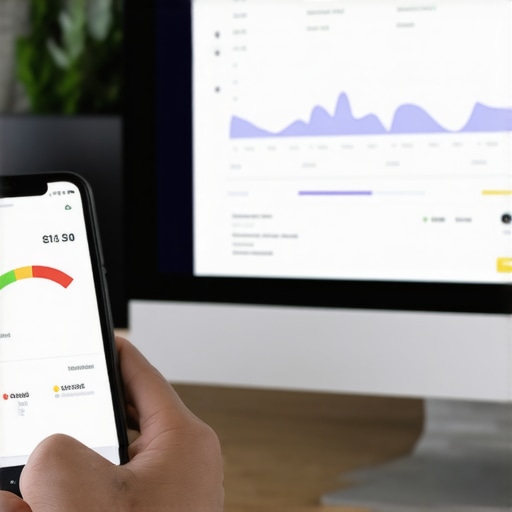
It hit me hard one morning when I logged into my bank app, expecting to see my latest credit score and instead was greeted with a number that looked nothing like the FICO score I’d been obsessively monitoring. Frustration welled up—why was this discrepancy so massive? I felt like I was chasing a ghost, confused about what the real state of my credit actually was. That moment was a lightbulb for me: I wasn’t alone, and there’s a common reason behind this disconnect that many people overlook.
Unmasking the Mismatch: Your Bank and FICO Are Speaking Different Languages
Is Trusting Your Bank App Really Worth It?
Early in my credit journey, I made a crucial mistake—believing that my bank app’s credit score was the gold standard. But I soon learned that financial institutions often display an internal or simplified score that’s not aligned with FICO’s scoring model. According to a study by Credit Clarity, most bank apps utilize an estimated or alternative scoring method that’s designed more for promotional purposes than accurate credit assessment. This realization was eye-opening but made me question everything I thought I knew about my credit health.
In fact, the mismatch can be so glaring that you might think something is wrong—perhaps a mistake or even fraud—when it’s actually just a difference in reporting systems. While your bank’s app might update weekly or monthly, FICO scores incorporate more comprehensive data and use specific algorithms that can produce different results. If you’re like me, you might be tempted to dismiss the bank app altogether, but understanding these differences is key to taking control of your credit profile.
So, how can you bridge this gap? Well, the first step is to recognize that the numbers are not interchangeable and each offers a different perspective. Knowing which to trust for which purpose is crucial—your bank app for quick checks and monitoring, and your official FICO score for serious financial decisions like loans or mortgages. Ready to dive deeper? We’re going to explore practical steps that will help you clarify what your credit report actually says—and what actions you can take to improve your score effectively.
Create a Clear Dispute Strategy
Start by retrieving your credit report from AnnualCreditReport.com to identify inaccuracies. Focus on errors like incorrect addresses, outdated accounts, or wrong balances. Use the step-by-step guide at Dispute Errors in 2025 to compile evidence such as bank statements, collection notices, or court documents. When ready, file disputes through the credit bureaus’ online portals or via certified mail, ensuring you keep copies of everything. I personally remember spending an evening organizing documents and patiently waiting weeks for responses, which often resulted in deletion of erroneous entries. This process is essential for removing inaccurate data that could be artificially dragging down your score.
Dispute Errors and Follow Up
Once you’ve initiated disputes, monitor their progress regularly. Use the credit bureaus’ portals to check status updates or receive alerts. If a dispute is unresolved after 30-45 days, escalate by sending a follow-up letter citing credit repair secrets about your rights under the Fair Credit Reporting Act (FCRA). Persistence pays off. In one case, I had a collections account incorrectly listed, which seemed minor—until I spotted it affecting my FICO score. Following up with solid documentation and leveraging dispute rights led to its deletion, providing a quick boost.
Prioritize Correcting Critical Errors
Identify high-impact mistakes, such as duplicate accounts, wrong payment histories, or outdated collections. Correcting these can result in tens of points gained in weeks. Use techniques from a step-by-step guide to FICO improvement to audit your reports and target amendments strategically. I once corrected a re-aged account marked as new, which falsely lowered my score. Fixing it reinstated my score within a month. Focus on errors most relevant to your credit mix and payment history for optimal results.
Pay Down Balances Strategically
High credit utilization diminishes your score; aim to keep utilization below 30%, preferably under 10%. Set up automatic payments or schedule regular check-ins. For instance, I paid down three cards before reporting dates to optimize my score boost—using the concept of balance cycling. This method not only improves ratios but also demonstrates responsible usage to lenders, strengthening your credit profile. Remember, FICO heavily weighs current debts; reducing them directly benefits your score.
Build Positive Credit Fast
Create new, positive credit activity by becoming an authorized user on a trusted family member’s account or opening secured credit cards. Make small purchases, pay off balances in full, and avoid late payments. Use the tips at credit building strategies to accelerate your progress. I started with a secured card, which I used for minor expenses and paid twice a month—quickly gaining a few points without risking my main accounts. Consistent responsible behavior now sets the stage for better credit in the long term.
Monitor Your Progress
Regularly check your credit scores and reports to assess improvements. Use free tools or paid services that provide updates, but always verify data accuracy via why checking your own credit is essential. Keep detailed records of all disputes, payments, and correspondence. Tracking your journey ensures you’re aware of what works best and where to focus next, helping you make informed decisions to continuously enhance your financial profile.Many people believe that improving their credit score is simply about paying bills on time or disputing errors they find on their reports. However, the real game involves understanding complex nuances that are often overlooked. One common misconception is that all credit scores—be it FICO or your bank app—are interchangeable. In reality, each uses different data and algorithms, meaning a score from your bank might not reflect your true lending potential. Relying solely on such simplified scores can lead you into a false sense of security or unnecessary panic. Recognizing these differences is crucial for strategic credit management.
Another nuanced pitfall lies in the way errors are disputed. Many assume that once they submit a dispute, the error will automatically be corrected. But the truth is, the dispute process can be fraught with traps—such as submitting incomplete evidence or misidentifying the erroneous item. According to a study by Credit Clarity, the key to effective dispute resolution is a precise, evidence-backed approach that targets high-impact inaccuracies. Fail to follow this, and you risk prolonging the mistake or even having your dispute dismissed.
For advanced credit repair, it’s vital to understand the importance of timing and strategic creditor communication. Many believe that paying down debt or disputing errors is often enough to boost scores rapidly. However, certain mistakes—like re-aging accounts or opening multiple new credit lines in a short span—can undermine your efforts. The nuances of credit scoring models also mean that balancing your credit mix and maintaining low utilization over time yields more sustainable improvements rather than quick fixes.
This brings us to the myth that all disputes should be handled aggressively, perhaps even repeatedly. Experts like those at Credit Clarity advise that patience and precision are more effective. Overzealous disputes may backfire, especially if they appear as if you’re attempting to manipulate the system, potentially leading to account closures or negative remarks.
A hidden nuance worth emphasizing is your credit data’s vulnerability to outdated or misreported information. For example, accounts closed years ago still holding active balances, or outdated personal info, can negatively influence your scores. Regularly reviewing your report and understanding the implications of each item can prevent these unnoticed errors from holding you back.
In essence, mastering credit and FICO involves cultivating a deep understanding of each factor’s intricacies—beyond the surface-level advice. It’s a continuous process of informed action, strategic dispute management, and proactive data oversight. If you’re ready to go beyond the basics and optimize your credit profile intelligently, I recommend exploring more detailed strategies at Credit Clarity’s advanced guides. Remember, every nuance can be leveraged for a better score—if you know where to look.
Have you ever fallen into this trap? Let me know in the comments.
How do I maintain my credit repair systems over time?
To ensure your credit repair efforts stay effective, you’ll want to adopt a set of reliable tools and establish routines that make maintenance manageable. I personally rely on a combination of dedicated software and disciplined habits. For instance, I use Credit Karma not just for quick updates, but as an early warning system—spotting changes before they impact my score significantly. Though it doesn’t use FICO scores directly, it helps me track broad trends and anomalies quickly, prompting more detailed reviews using specialized tools.
For more precise FICO monitoring, I subscribe to MyFICO. This service provides actual FICO scores and credit reports, enabling me to check for specific errors or discrepancies flagged by industry standards. These reports tell me exactly which accounts impact my score the most, allowing focused dispute actions. Additionally, I use a habit of scheduling bi-monthly reviews—setting calendar reminders to verify balances, payment history, and recent inquiries.
Automation plays a crucial role as well. I set up automatic payments for bills and credit cards to prevent late payments, a primary factor in credit scores. This consistent, disciplined approach keeps my credit profile healthy without requiring constant manual oversight. Over time, such habits cultivate a stable credit picture that resists fluctuations and errors.
Leading into the future, I predict that AI-powered credit management tools will become more prevalent, offering real-time notifications about potential issues, personalized dispute suggestions, and predictive analytics to guide better credit habits. Staying ahead means continually refining your toolkit—integrating new tech and routines as they emerge.
What steps can you take today to keep your credit tools effective?
Start by assessing your current monitoring setup. Are you using the right services and routines? Consider investing in a dedicated FICO reporting service like credit repair secrets. Set up automatic payments to eliminate late marks and schedule regular reviews of your credit reports and scores. Remember, the key to long-term success is consistency and adapting your tools as your credit journey evolves. For a practical step, I suggest trying the advanced dispute tip of verifying every item on your report with a detailed, evidence-backed approach—something aligned with mastering dispute strategies. This proactive stance prevents errors from becoming entrenched, safeguarding your hard-earned progress and preparing you for scaling up your credit profile effectively.
Hidden Lessons That Changed My Credit Strategy
One of the most eye-opening realizations came when I discovered that not all credit scores are created equal. Relying solely on my bank app’s number was misleading, and it took time to understand that the real FICO score holds the detailed picture lenders see. This taught me the importance of using multiple tools and not trusting a single source blindly.
Another lesson was recognizing the importance of timing. Disputes and corrections are effective, but their impact depends heavily on when and how you execute them. Patience and strategic planning can make the difference between a temporary setback and a long-term credit boost.
I also learned that small, consistent actions—like paying down balances before reporting dates or adding authorized users—can exponentially improve credit over time. Quick fixes may give temporary gains, but sustainable growth comes from deliberate habit formation and continual monitoring.
Lastly, I realized that understanding the intricacies of your credit report—such as outdated information, misreported debts, or re-aged accounts—is crucial. Regular reviews prevent these errors from manipulating your score, and effective dispute strategies require evidence-backed, targeted efforts rather than generic challenges.
My Go-To Resources for Mastering Credit
My primary tool for tracking real FICO scores is Credit Repair Secrets. It provides insights tailored for effective dispute resolution and credit building, aligning with my goal of sustainable progress.
For comprehensive understanding, I turn to Understanding FICO and Dispute Hacks. It demystifies the nuances of errors and is packed with actionable tips, helping me focus my efforts on high-impact corrections.
When I need quick alerts and broad credit trend monitoring, I use Checking Your Credit. This balance of tools keeps my credit health in check without overwhelming me or leaving gaps in my oversight.
Lastly, I value Building Credit from Scratch for foundational strategies, especially when starting anew or rehabilitating a damaged score. It reminds me that patience, combined with correct techniques, can restore and elevate credit health over time.
Your Credit Journey Starts Now: Embrace the Power of Knowledge
Remember, mastering your credit is more than just fixing errors—it’s about understanding the subtleties that influence your financial future. Every small action, correctly timed and informed, adds up to a significant transformation. You’re capable of building a resilient and impressive credit profile—so take charge today and keep learning along the way.
Have you ever encountered a surprising discrepancy between your bank app and your official credit report? Share your experience below and let’s learn from each other’s journeys.
,