
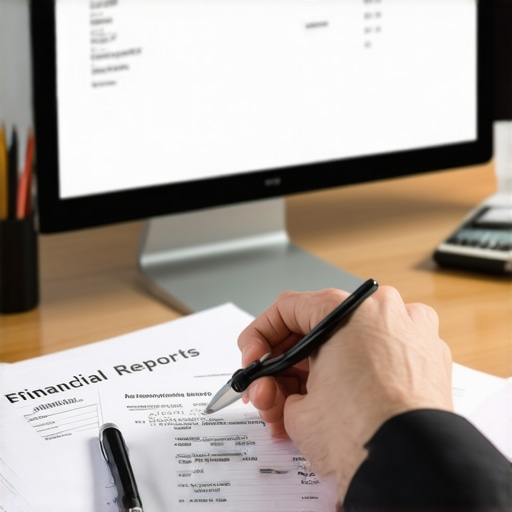
I remember the sinking feeling—checking my credit report and seeing that late payment that wasn’t mine. My stomach tightened; my mind raced. How could an incorrect late payment linger on my record, sabotaging my score and financial future? It was a lightbulb moment—realizing that the key to clearing my credit report lay not just in disputing errors, but in understanding exactly what evidence I needed to prove my case.
Why You Can’t Just Hope an Error Goes Away
Too often, I see people assume that a simple letter to the credit bureaus will do the trick. But without concrete evidence, your dispute is like throwing darts in the dark. Lenders and bureaus want proof—documents, statements, or any tangible proof that can substantiate your claim. This is especially true when challenging something as impactful as a late payment, which can significantly lower your credit score (source).
Early on, I made the mistake of just asserting that I didn’t make the late payment, hoping they’d take my word for it. Spoiler: That rarely works. Disputes are won through evidence—screenshots of bank statements, payment confirmations, or correspondence showing the error. Without this, your case is weak, and the debt collectors or bureaus have little to go on. That’s why understanding the evidence required is the first step to saying goodbye to incorrect late payments once and for all.
What Dispute Evidence Really Means
Think of dispute evidence as your proof armor. It confirms your story and makes it impossible for the credit bureaus to dismiss your claim. Whether it’s a scanned copy of a bank statement showing the payment was made on time, a canceled check, or email correspondence with the creditor, each piece strengthens your position.
To gather this, you need to know exactly what the creditor reported and what documents would disprove that. For instance, if a late payment report conflicts with your bank statements, those statements become your best evidence. It’s all about tying the proof directly to the incorrect data on your credit report.
Have You Faced This Problem?
If you’ve ever been in a situation where an erroneous late payment has distorted your credit, you’re not alone. Many face this challenge, and the good news is that with the right evidence, you can clear your record faster than you think. I’ll walk you through exactly what you need to collect and how to present it effectively, so stay tuned. Ready to dive into the practical steps? Let’s get started on turning your dispute into a victory.
Gather Your Proof Systematically
Start by pinpointing the incorrect data on your credit report. Use a highlighter—think of it as a detective marking the suspect. For each error, find corresponding documents: bank statements, payment receipts, or email correspondence. During my own dispute, I spent an afternoon digging through months of bank downloads and digging up email trails. That cluttered desk became my victory portal, turning chaos into clarity.
Match Your Evidence Precisely to Report Details
This is like a puzzle where each piece must fit perfectly. If the report claims you missed a payment in March, find a bank statement showing the date, amount, and recipient. Take a screenshot or scan the page. Remember, credit bureaus want direct proof, not vague assumptions. If your proof directly contradicts the report, that’s your ace in the hole. For instance, I found a canceled check that exacted the payment date, sealing my case.
Compile a Clear, Concise Dispute Pack
Now, organize your evidence into a neat package. Write a straightforward letter detailing each disputed item, referencing the corresponding document attached. Use bullet points and highlight relevant sections to make it easy for the reviewer. I discovered that a cluttered, vague letter gets ignored; a structured, evidence-backed dispute gets attention—and results. An organized bundle not only speeds up resolution but demonstrates your seriousness.
Leverage Visual Aids to Clarify Disputes
Sometimes, images speak louder than words. Use annotations—circles, arrows—to point out discrepancies directly on documents. A screenshot of your bank showing an on-time payment, with the specific date circled, can be a game-changer. This visual approach simplifies complex cases, especially when dealing with confusing statements. Including a well-designed, annotated image reduces back-and-forth and clarifies your claims.
Keep Records of Every Step
Set up a dedicated folder—digital or physical—for all dispute-related documents. Track dates you sent disputes, responses received, and follow-up dates. When I disputed a late payment, I maintained an email log and printed all correspondence. This archive becomes your defense, especially if disputes escalate or require further proof. Seeing my organized trail gave me confidence and control over the process.
Remember: Evidence Is Your Most Powerful Tool
Your goal is to prove beyond doubt that the reported error is inaccurate. Think of your evidence as a shield against false claims and as a sword to cut through bureaucratic delays. Every document that directly counters a reported late payment strengthens your position. After collecting your proof meticulously, submit your dispute through the credit bureaus’ official channels. For detailed strategies, explore this guide. Keeping your evidence organized and persuasive is your best shot at correcting your credit record efficiently.Many believe that simply filing a dispute automatically results in correction, but in my experience, this misconception can lead to costly delays. The truth is, the nuances of credit repair demand a strategic approach emphasizing quality evidence over quantity. For instance, focusing solely on removing a single erroneous late payment without addressing underlying reporting inaccuracies can undermine your efforts. Moreover, some overlook the importance of continuously monitoring their credit reports post-dispute, risking reappearance of errors or new inaccuracies, which can hinder rebuilding efforts. One common myth is that all credit errors are equally easy to fix; however, items like identity theft-related fraud require specialized evidence such as police reports, transforming the dispute process into a complex, multi-layered endeavor.
Playing into superficial fixes instead of understanding how FICO scoring models respond to disputes can yield less-than-ideal results. For example, disputing old collections without demonstrating they are inaccurate or beyond the statute of limitations won’t necessarily improve your score. It’s a trap to assume that clearing errors guarantees instant score spikes. Studies show that FICO scores prioritize recent and accurate data, making strategic credit building and targeted dispute actions far more effective than blanket corrections. For an in-depth analysis of how dispute evidence impacts your scoring, check this guide: FICO insights on dispute errors.
Addressing sophisticated questions, such as how to identify and challenge zombie debts or outdated accounts, reveals the importance of understanding the intricacies of credit data and reporting protocols. For example, knowing how the Fair Credit Reporting Act (FCRA) governs reporting accuracy can empower you in disputes, especially when dealing with outdated or unverified entries, as explained here: Dispute errors step-by-step.
Remember, avoiding common pitfalls like relying on ambiguous evidence, neglecting follow-up, or misinterpreting FICO’s scoring nuances is crucial for effective credit repair. The key is to combine precise evidence collection with advanced knowledge of credit scoring models. Have you ever fallen into this trap? Let me know in the comments.
Focus on Consistent Maintenance
Maintaining your credit health over time requires the right combination of tools and disciplined routines. Personally, I rely on specialized software like Credit Karma and Experian’s CreditWorks, which provide real-time updates and detailed insights into your credit report. These platforms are invaluable because they alert me immediately to any changes or new disputes needed, ensuring I stay proactive rather than reactive.
Automation plays a crucial role in long-term credit management. Setting up automatic payments for bills and credit cards helps prevent late payments, which are a common cause of credit score dips. Additionally, I use budgeting apps like Mint to track my finances, making sure I keep my credit utilization low—a key factor in FICO scoring (source).
Tools for Dispute Efficiency And Accuracy
When disputes need to be filed, I turn to software like DisputeByte or even templates from trusted credit repair guides. These tools help craft well-supported dispute letters that detail the specific errors with attached evidence, streamlining the process. For example, by using a dispute template tailored for outdated information, I ensure my case aligns perfectly with FCRA requirements, which increases the likelihood of successful deletions.
Another tip is leveraging online portals that consolidate disputes, like those provided by credit bureaus, but I always follow up with documented proof via postal mail for added validation. Keeping a digital folder with all correspondence, screenshots, and evidence is a best practice I recommend for transparency and future reference.
Monitoring Progress and Making Adjustments
In addition to tools, periodic reviews of your credit report—every three to six months—help identify new issues early. I set reminders using calendar apps, and for thorough reviews, I use services like Credit Sesame or WalletHub. These platforms often provide educational insights into how specific actions affect FICO scores, guiding me on what to prioritize.
Predicting future trends, I believe AI-driven credit monitoring will become smarter, offering personalized advice based on your unique credit behavior. Staying ahead means embracing these innovations and adjusting your strategy accordingly.
How do I keep my credit building on track over time?
Simple routines, supported by the right software, are key. Regularly reviewing your report for errors, setting automatic payments, and updating your dispute evidence with clear documentation helps maintain your credit health. Remember, employing advanced tools—like dispute templates for common errors—can give you an edge. I highly recommend trying the dispute template I mentioned earlier to see how it can expedite your correction process and boost your FICO score quickly (step-by-step guide). Sustained effort with these tools will lead to better financial outcomes in the long run.
Lessons the Credit Repair Gurus Won’t Tell You About Dispute Errors
One of the most profound realizations I had was that every credit mistake carries an opportunity for growth—if you approach it with the right knowledge. I learned that rushing to dispute without gathering concrete evidence often leads to frustration and little progress. The ultimate lesson was that patience and meticulous evidence collection transform disputes from mere paperwork into powerful tools for credit rebuilding.
Another insight was understanding that not all errors are created equal. Some misreported accounts require simple documentation, while others demand a deep dive into historical data or legal protections. Recognizing which disputes are worth the effort saved me time and prevented unnecessary stress. The key is to assess the severity and complexity before jumping in.
Finally, I discovered that staying proactive beats reactive measures. Regularly monitoring my credit report allowed me to catch inaccuracies early, ensuring my dispute efforts targeted only current issues. This habit fortified my credit health and empowered me to optimize my FICO score continuously. In essence, these lessons underscored that strategic planning and organization essentialize successful credit repair.