

I walked into that car dealership with my head held high, expecting a victory lap after months of saving. Instead, I left with a face as red as a beet and a rejection letter that felt like a punch to the gut. The finance manager handed me a report showing a string of maxed-out cards and a repossession in a state I’ve never even visited. It turns out, I was sharing my financial life with a complete stranger who just happened to share my name. It was a classic mixed file situation, and it turned my world upside down. This wasn’t just a glitch; it was a wall between me and my future. Today, I am going to show you exactly how to tear that wall down and ensure your identity belongs to you and you alone. [image placeholder]
Why Your Credit Report Thinks You Are Someone Else
The bureaus are not as careful as they want you to believe. They often use loose matching logic, which means if your name and birth year are similar to someone else’s, their garbage debt might end up on your pristine record. I learned the hard way that you have to fix a credit report if you have a common name by being aggressive and meticulous. Early on, I made the amateur mistake of trying to resolve this via a quick phone call. I thought a friendly chat would clear things up. Spoiler alert: It didn’t. In fact, even a name misspelling can tank your credit application because it triggers these automated systems to look for any data that might fit, even if it is wrong. We are going to stop the credit bleeding today. I’m going to show you how to force the bureaus to draw a hard line between you and your credit twin.
Does the Bureau Really Care Enough to Fix This?
You might be worried that you are just a number in a machine that does not care about your mortgage dreams. You are right to be skeptical. According to data from the Consumer Financial Protection Bureau (CFPB), mixed files are a persistent issue because credit reporting agencies often prioritize speed over accuracy in their automated matching algorithms. It feels like an uphill battle, but it is winnable. If you follow the right path to dispute errors on your credit report, you can force their hand and clear your record. Have you ever looked at your report and seen a total stranger’s debt staring back at you? It is a terrifying moment, but it is the first step toward reclaiming your score. We are moving past the shock and straight into the strategy to get your financial life back on track.To fix a mixed file, you have to treat it like a legal case. You are the prosecutor, and the credit bureau is a defendant that is being deliberately obtuse. Think of your credit report as a giant library where a librarian has filed twenty books about someone else’s life in your personal biography section. You cannot just walk in and ask them to move the books; they will tell you it is not their problem. You have to prove the system itself failed.
Build Your Fortress with a Perfect Paper Trail
The first mistake most people make is relying on memory. When I was fighting to get my name cleared, I realized that the bureau was counting on me to get frustrated and quit. I had to stop being a victim and start being a clerk. You need to gather every piece of identification you own. I am talking about your birth certificate, your social security card, and at least three different utility bills from different years. This is part of the document checklist for your first credit dispute that keeps you organized when the bureaus start sending stall letters. 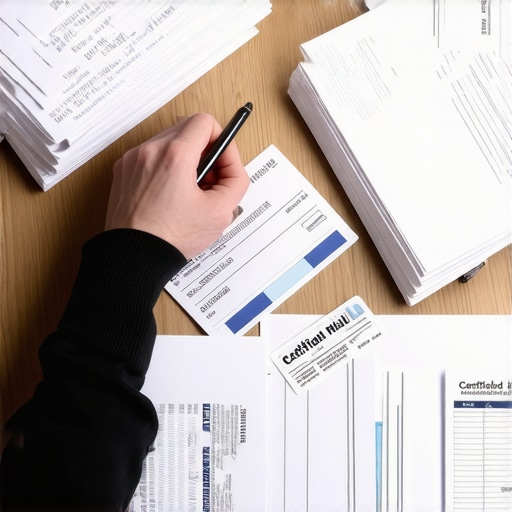
Why a Validation Letter Trumps a Phone Call
Never call them. When you call, there is no record of what was said, and they can easily brush you off. I spent three weeks mailing certified letters because some guy in Ohio had a name one letter off from mine. I eventually had to provide the evidence you need to win a dispute against a bank by showing my actual signature versus the one on the fraudulent contracts. The bureaus are legally required to investigate, but they often do the bare minimum. You need to send the letter that forces bureaus to reveal their data source. This forces them to admit that they got the bad info from a secondary junk data provider, which is usually the smoking gun you need.
Force the Bureaus to Separate Your Identities
Once you have your evidence, you have to hit all three bureaus at once. They do not talk to each other. If you fix it with Experian, TransUnion will still be happily reporting that you owe ten grand for a jet ski you never bought. You must also fix your address history to improve loan approval odds. Mixed files are almost always triggered by a shared previous address or a very similar one. By deleting every address that is not yours, you break the ‘link’ the algorithm uses to merge your files.
Avoid the Online Dispute Portal at All Costs
The bureaus want you to use their shiny website because it is easier for them, not you. When you click those buttons, you often waive your right to sue them under the Fair Credit Reporting Act (FCRA). I learned this the hard way after my first attempt. The portal limits the amount of evidence you can upload and forces you to choose from a list of ‘canned’ reasons for your dispute. This is exactly why online dispute portals are designed to make you fail. They want to turn your complex identity crisis into a simple ‘not mine’ checkbox that an automated system can reject in seconds. Use the mail. Use certified letters. Make them sign for it.
Most people think credit repair is just about deleting the ‘bad stuff,’ but if you delete everything without building a new foundation, your score will just hover in the mediocre zone forever. It is a delicate balance between aggressive removal and strategic growth. When I was fighting my mixed file, I assumed that simply removing the stranger’s debt would send my score soaring back to the 700s. I was wrong. The reality is that the FICO algorithm is far more sensitive to the timing of your disputes than the actual volume of them.
Your Zero Balance Might Actually Be Stalling Your Score
Here is a contrarian take that usually shocks my clients: aiming for a $0 balance on every single card can actually hurt your score. This is known in the expert community as the ‘All Zero Except One’ (AZEO) rule. If every revolving account shows no activity, the algorithm might penalize you for ‘non-use,’ viewing you as a dormant risk. I’ve seen people work tirelessly to why a zero balance might be the reason your score is stuck, only to find their score drops by 15 points the moment they clear their last debt. To keep the algorithm happy, you need to show that you can manage credit responsibly by leaving a tiny, manageable balance on just one card. Have you ever fallen into this trap? Let me know in the comments.

Will Paying an Old Collection Finally Fix My Credit?
This is the most common ‘oops’ factor in the industry. Most people believe that paying off an old, dusty collection account will help their FICO score. In many cases, it does the exact opposite. When you make a payment on a six-year-old debt, you ‘wake up’ the account, updating the ‘Date of Last Activity.’ To the FICO system, that old, fading negative mark now looks like a brand-new delinquency. This is why paying a collection might actually lower your score instantly. According to a study by the National Consumer Law Center (NCLC), the credit reporting system is fraught with these ‘re-aging’ traps that punish consumers for trying to do the right thing. If you must pay, you should never pay a collection without a deletion letter, which legally binds the collector to remove the entry entirely upon payment.
The Stall Letter Trap and How to Strike Back
Once you start making progress, the bureaus will likely hit you with a ‘stall letter.’ This is a generic response claiming your dispute is ‘frivolous’ or that they need more information. Don’t fall for it. This is a calculated move to get you to give up. You need to know what to do when a bureau sends a stall letter to keep the clock ticking on their 30-day legal deadline. Often, the most effective weapon is the one document that wins almost every credit dispute: a formal declaration of your correct identity from a government entity. By diving into fico insights how dispute errors affect your score and what to do, you can anticipate these hurdles and navigate them like a pro rather than a frustrated amateur.
Once you have moved past the initial shock of a mixed file and survived the bureau’s stall tactics, you enter what I call the maintenance phase. This is where most people fail because they stop paying attention once the red flags disappear. I personally use a dedicated physical binder for my certified mail receipts because digital scans can be easily dismissed if things ever escalate to a legal battle. You need to focus on mastering fico proven strategies to improve your credit dispute score by treating your credit history like a high-stakes business ledger. I recommend using the official MyFICO dashboard because why checking your own credit is actually essential for growth is about more than just seeing a number; it is about seeing the exact data points that mortgage lenders see. This is essentially why your fico 8 score is different from fico 10t, and understanding that gap is the difference between a prime interest rate and a subprime trap.
Stop Playing Guessing Games with Your Data
The most important tool in my arsenal is not a piece of software, but a simple spreadsheet where I track the ‘Date of Last Activity’ for every account. If you do not track this, a debt collector can ‘re-age’ an old debt, making it look brand new and tanking your score overnight. By keeping your own records, you can implement the simple move that protects your identity from credit scammers by catching unauthorized changes before they settle into your permanent file. I’ve found that the truth about credit repair companies vs doing it yourself comes down to this: no one will fight for your data accuracy as hard as you will. You have to be the gatekeeper of your own financial reputation.

How can I keep my credit score growing month after month?
Maintenance is about consistency, not massive shifts. To keep the momentum, you should implement the ‘Small Charge’ strategy. I use my oldest, least-used cards for one small recurring subscription—like a $5 streaming service—and set it to auto-pay. This keeps the account ‘active’ without increasing your utilization. If you allow an old account to go dormant, the bank might close it, which is credit repair tips correcting dispute errors effectively won’t be able to fix easily. According to technical documentation from FICO regarding the 10T model, trended data now looks at your payment behavior over a 24-month window. This means the algorithm is watching to see if you are consistently paying more than the minimum or just hovering near your limit. Consistency is the only language the FICO algorithm respects long-term.
The Future of Credit is More Personalized and Ruthless
I predict that in the next few years, AI-driven credit scoring will move away from static reports and toward real-time behavior analysis. We are already seeing this with ‘UltraFICO,’ which looks at your banking balances to supplement your credit report. This makes the human element of your disputes even more critical. Automated systems are great at catching simple math errors, but they are terrible at understanding the nuances of a mixed file or identity theft. If you want to stay ahead, try this advanced tip: freeze your secondary reports like LexisNexis and SageStream. These are the ‘junk data’ providers that bureaus use to verify (or incorrectly verify) your info. By cutting off the bureaus’ access to these messy secondary sources, you force them to rely only on the primary evidence you provide. It is a power move that few people use, but it works wonders for keeping your file clean.
The Brutal Truths I Learned Fighting My Own Credit War
Going through the nightmare of a mixed file taught me things that aren’t in the standard brochures. First, I realized that credit bureaus are not government entities; they are private data brokers who prioritize profit over your accuracy. If a machine can merge your file with a stranger’s to save a millisecond of processing time, it will. Second, I learned that silence from a bureau isn’t a defeat—it’s a countdown. When I started mastering fico proven strategies to improve your credit dispute score, I realized that their 30-day window is my biggest leverage. If they don’t respond, that junk debt has to go. Finally, the biggest ‘lightbulb moment’ was realizing that my middle name is my strongest shield. By ensuring every account included my full legal name and middle initial, I created a unique digital fingerprint that the automated matching logic could no longer ignore.
#IMAGE_PLACEHOLDER_E#
My Trusted Arsenal for Winning Against the Giants
You don’t need a fancy law firm, but you do need the right gear. I personally swear by a physical ‘Credit Bible’—a three-ring binder where every certified mail receipt is taped to the letter it belongs to. Digital scans are great, but showing a stack of physical receipts is far more intimidating if you ever need to escalate. For tracking, I rely exclusively on the MyFICO dashboard because the tactics we used to fix a broken credit profile fast only work if you are looking at the same data as the lenders. I also highly recommend keeping a copy of the Fair Credit Reporting Act (FCRA) bookmarked. When you quote specific section numbers in your letters, the bureaus stop treating you like an amateur. These resources helped me move from a victim of a mixed file to an expert in effective dispute error resolution to boost your credit score in 2025.
Take Back Control of Your Identity Today
The system is designed to be confusing, but you have more power than you realize. Every time you successfully dispute errors on your credit report, you are essentially voting for a more accurate financial future. Don’t let a stranger’s bad habits dictate whether you get that home or car. It’s a marathon, not a sprint, but the finish line is a life where your score actually reflects your hard work. You’ve got the tools and the strategy; now it’s time to send that first certified letter and start the clock. Have you ever found a complete stranger’s address or debt on your report? Share your experience in the comments below—let’s help each other out.