

I remember the exact moment the floor fell out from under my financial confidence. I was sitting in a cramped office at a local car dealership, ready to sign for a modest SUV, when the finance manager looked at me with that “bless your heart” expression. My score had plummeted forty points for no reason I could see. I felt like a failure. I was paying my bills on time, yet I was stuck in the high-600s purgatory. It turned out I had fallen into the classic trap: I believed that as long as I wasn’t late, my score would take care of itself. I didn’t realize that why paying off a collection could actually drop your score was a real phenomenon that I had just triggered by “cleaning up” an old medical bill. That day, I stopped guessing and started building the one habit that has kept me in the 780+ club for years.
The Score Stall Is Real Even When You Are Doing Everything Right
Most people think a high FICO score is about having zero debt or a massive income. It is not. I made the mistake of thinking my “good behavior” was being recorded accurately by default. It was not. I discovered that understanding credit errors is half the battle because the system is designed for speed, not accuracy. I once lost points because a creditor reported my limit as $500 instead of $5,000, making it look like I was maxed out. Today, I am going to show you the 30-day rhythm that catches these glitches before they cost you thousands in interest.
Is This Level of Credit Obsession Actually Worth the Trouble?
You might be wondering if this is just another way to obsess over numbers that do not matter until you buy a house. I get it. But consider this: according to a study by Consumer Reports, more than one-third of volunteers found at least one error on their credit reports. If you are not looking, you are losing. The habit isn’t about the number; it is about the data integrity. Have you ever checked your report only to find an account that was not even yours?
Put Your Credit Progress on Autopilot With This Monthly Audit
The secret sauce is remarkably simple: I treat my credit report like a monthly subscription I actually want to keep. By checking reports every 30 days, I can spot the tiny re-aging tricks or balance errors that usually fly under the radar. I also learned that why your credit card statement date is more important than your due date is the difference between a 720 and a 790. If the bureau sees your balance before you pay it off, your utilization looks sky-high even if you are a responsible spender. We are going to break down how to time your life around these reporting cycles so the math always works in your favor.
Stop the Guesswork with a 30-Day Audit Routine
Think of your credit report as a giant, high-stakes game of telephone. Your bank shouts your balance to the bureaus once a month, but by the time it gets recorded, the message is often scrambled. To keep the signal clear, I committed to checking reports every 30 days. This isn’t about vanity; it’s about catch-and-release for errors. You are looking for ‘zombie’ accounts—debts that were settled but still show a balance, or misspelled names that could lead to a mixed file. I use a simple spreadsheet to log my balances on the 1st of every month. If the bureau shows a balance that doesn’t match my log, I know exactly where the leak is.
Master Your Statement Date to Manipulate Utilization
Most people focus on the due date, but the statement date is where the real magic happens. This is the day the bank ‘takes a snapshot’ of your balance and sends it to the bureaus. If you spend $2,000 on a card with a $3,000 limit and pay it off on the due date, the bureau might still see a 66% utilization rate because they took the snapshot before your payment landed. To fix this, I use the 15-15 rule for payments. I make a payment 15 days before the statement date and another 3 days before. This ensures that when the bureau looks at my file, they see a tiny balance, even if I’ve been using the card heavily all month. Understanding why your credit card statement date is a critical number allowed me to jump from a 740 to a 785 in a single billing cycle without spending a penny more.
The Paper Trail Method That Forces Bureaus to Listen
When you find an error, your first instinct is to click that shiny ‘Dispute’ button on a credit monitoring app. Don’t do it. I learned the hard way that why you should never use the online dispute button is the most important lesson in credit repair. When you dispute online, you often waive your right to re-dispute the same item later, and you are forced into a dropdown menu that oversimplifies your problem. I once spent three months trying to fix a $1,200 medical bill error online, only to be rejected by an automated system every time. The moment I switched to physical mail, everything changed. 
Force a Human Review When the AI Rejects You
To get results, you have to bypass the OCR (Optical Character Recognition) scanners that bureaus use to process mail. I started using the evidence log that wins every investigation. This is a simple physical folder where I keep copies of every check, every bank statement, and every letter sent. When I mail a dispute, I include the specific phrase that triggers a human review of your dispute, which essentially forces a real person to look at my physical evidence rather than letting a computer bot ‘verify’ the error in seconds. I once had a mixed file where another person’s car loan appeared on my report. It took me three weeks to gather the 3 documents you need to clear a mixed credit file, but once I sent them via certified mail, the error was purged within ten days. The system respects paper; it ignores clicks.
I see it all the time: people think the goal of the credit game is to reach a zero balance on everything. It sounds logical, right? But here is where the nuance of credit repair secrets comes into play. If you pay off an old, dormant collection account that hasn’t been touched in five years, you might actually see your score drop. This happens because the ‘Date of Last Activity’ gets updated to today, making an old mistake look brand new to the FICO algorithm. Instead of blindly paying, I always recommend looking into how to negotiate a pay-for-delete without admitting to the debt. If you do not get that agreement in writing first, you are essentially resetting the clock on your own financial misery.
Why a Perfect Payment History Still Leads to a Mid-700s Stall
You have paid every bill on time for three years, yet your score will not budge past 745. Why? It is often because of a ‘thin file’ or a lack of variety. The ‘Oops’ factor here is focusing so hard on debt reduction that you forget about credit mix. I have seen enthusiasts close their oldest accounts thinking they are ‘cleaning up,’ but why closing an old card is a bad financial move becomes painfully clear when your average age of accounts vanishes. According to research by the Consumer Financial Protection Bureau (CFPB), the methodology bureaus use to ‘verify’ data is often automated, meaning the nuances of your account age can be lost if a trade line is closed incorrectly. You have to be strategic about what stays and what goes.
Does the Bureau’s AI Flag You for Too Many Disputes?
This is the advanced level of the game. If you send ten dispute letters in a month using a cookie-cutter template, you are going to hit a wall. Bureaus use sophisticated algorithms to detect ‘frivolous’ disputes. This is why most dispute templates get ignored by bureau algorithms. They are not looking for the truth; they are looking for patterns that suggest a mass-produced credit repair service is pulling the strings. To stay under the radar, focus on effective dispute error resolution to boost your credit score in 2025 by targeting one or two high-impact errors at a time with personalized evidence. 
One final warning: never, ever dispute a positive account because you think a minor detail like a previous address is wrong. I once knew someone who lost ten years of perfect payment history because they disputed a ‘wrong’ phone number on a mortgage entry, and the bureau simply deleted the whole trade line. Have you ever fallen into this trap? Let me know in the comments. If you are ready to get serious, start by building the evidence log that wins every investigation so you never go into battle unarmed.
Maintaining an elite score is less about big moves and more about boring, repetitive maintenance. I stopped using flashy monitoring apps as my primary source of truth because of the hidden reason your credit monitoring app misses real errors: they often use VantageScore data, which is virtually irrelevant for most mortgage or auto lenders who stick to FICO. Instead, I rely on my own ‘Master File.’ This isn’t high-tech; it’s a physical three-ring binder with tabs for each bureau. I print my FICO reports quarterly and literally circle any change, no matter how small. According to technical insights from the National Consumer Law Center (NCLC) regarding the ‘Metro 2’ reporting format, the data fields used by creditors are incredibly rigid. Even a tiny clerical error in a secondary field can cascade into a major score drop. My binder serves as the documentation that forces a bureau to manually verify your data when their automated systems fail to catch a mistake.
How do I maintain my high score without making it a full-time job?
The 30-day check-in is my non-negotiable. I use the DIY credit repair checklist that outperforms paid services because, frankly, no paid service has the patience to audit your file with the level of detail you can. This involves more than just checking the number; it’s about verifying that every single limit is reported correctly. By keeping an eye on the impact of high credit limits on your future loans, I can strategically ask for increases every six months to keep my utilization naturally low, even when I have a heavy spending month. This is how you scale your profile from ‘good’ to ‘lender-preferred.’
The master log that beats expensive repair software
If you want to win, you have to realize that the bureaus are moving toward even more aggressive AI-enhanced dispute processing. This is a trend that will only accelerate in 2025, leading to more ‘automated’ rejections of legitimate claims. To stay ahead, you need to master how to stop AI from automatically rejecting your dispute letter by utilizing physical mail, colored ink, and specific attachments that machines struggle to read. This forces the file onto the desk of a human investigator who actually has the power to delete an error. 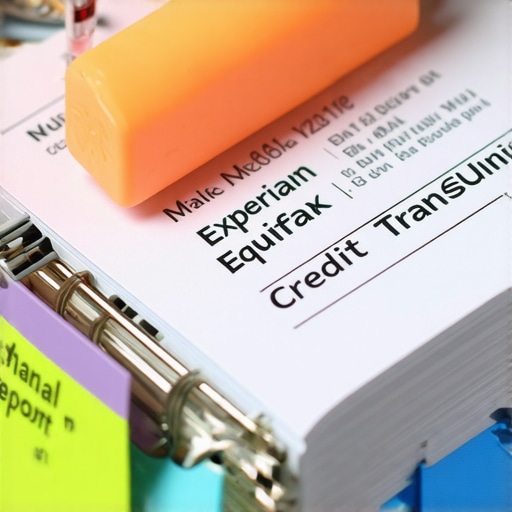
I’ve seen too many people lose their 800+ status because they assumed ‘autopilot’ was enough. It isn’t. My challenge to you today is to stop looking at your credit app for five minutes and actually download your full, detailed report from each bureau. Check for the tiny inconsistencies—the misspelled former employer, the wrong zip code on an old account—and realize that checking reports every 30 days is the only way to catch ‘data drift’ before it becomes a disaster. Start building your physical evidence log today; it is the single most powerful tool in your financial arsenal.
I spent years thinking that credit was something that happened to me, rather than something I could control. The biggest shift in my journey wasn’t finding a magic trick; it was realizing that the bureaus are simply massive databases prone to human and digital error. Once I stopped acting like a victim of the score and started acting like an auditor of my own data, my entire financial landscape changed.
The Hard Truths I Learned Fighting for My FICO
Over the years, I have discovered a few realities that the brochures never mention. First, the credit bureaus are not government agencies; they are private, for-profit corporations. They do not have a moral obligation to be right—they only have a legal obligation to respond when you prove they are wrong. This is why fico insights how dispute errors affect your score are so critical to your strategy. I also learned that a ‘perfect’ payment history is just the baseline. To move into the elite 800+ tier, you have to manage the optics of your debt, not just the existence of it. Finally, I realized that the system relies on your frustration. They make the dispute process tedious on purpose so that you will give up and accept a lower score and higher interest rates. Don’t give them that satisfaction.
My Arsenal for Maintaining Credit Integrity
I don’t leave my financial reputation to chance, and neither should you. Here are the specific tools I trust to keep the system honest. First, I always keep a physical master log of every communication. If it’s not in the binder, it didn’t happen. I highly recommend using the paper trail method for deleting wrongful medical bills because it provides a level of accountability that digital forms simply cannot match. Second, I rely on my own 30-day calendar audit. I treat this like a business meeting with myself. Third, I use certified mail for everything. The few extra dollars you spend on a return receipt are the best insurance policy you can buy when you need to prove a bureau missed their 30-day response deadline. Finally, I use the 30-day blueprint for erasing a wrongful late payment whenever a bank makes a clerical error, ensuring my history remains spotless.
Take the Wheel of Your Financial Future
You have the power to change your financial trajectory starting today. You don’t need a high-priced ‘guru’ to fix your file; you just need the discipline to audit your reports and the persistence to hold the bureaus accountable. These credit repair secrets are not about ‘gaming’ the system, but about ensuring the system reflects the truth of your responsibility. Start by pulling your reports tonight, circling the errors, and preparing your first physical dispute letter. Your future self—the one getting approved for a dream home or a low-interest car loan—will thank you for the work you are doing right now. What’s the most frustrating or bizarre error you’ve ever discovered on your credit report? Let me know in the comments below!