
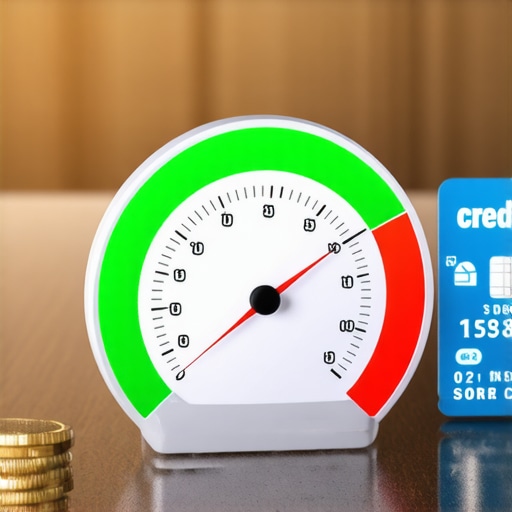
I’ll never forget the sting of that Tuesday morning. I’d just sent a massive payment to clear my last remaining credit card, thinking I’d finally cracked the code to financial freedom. I expected my FICO score to skyrocket. Instead, I opened my monitoring app to see a 15-point drop. It felt like a slap in the face. I did everything ‘right,’ yet the algorithm punished me. That was my first hard lesson in the weird world of credit scoring: a zero balance isn’t always the gold star we think it is. Today, I’m going to show you how to avoid the ‘all-zero’ penalty and why the weird way a zero balance backfires is a real phenomenon that catches even the most disciplined people off guard.
The Day My Empty Credit Cards Lowered My Score
When I started my journey, I believed that debt was the enemy. I worked overtime, skipped vacations, and threw every spare cent at my balances until they hit zero. But FICO doesn’t just look at how much you owe; it looks at how you manage what you’re allowed to borrow. If every single account shows a $0 balance on your statement date, the scoring model basically shrugs its shoulders. It sees ‘No Data’ rather than ‘Responsible Usage.’ This is often why your score just won’t move for months on end even after you’ve been perfect with your money. I remember staring at my report, feeling like the game was rigged. I had no late payments, no collections, and yet my score was stuck in the low 700s simply because I wasn’t giving the algorithm anything to calculate.
Is carrying a small balance actually worth the hassle?
I get it. It sounds completely counterintuitive. Why would you want to leave even a few dollars on a card? The skepticism is real. You’ve probably heard that you should never carry a balance because of interest. But here is the secret: you don’t have to pay a dime in interest to show activity. It’s all about the timing between your statement date and your due date. If you can master the simple trick of keeping a tiny balance, you get the ‘active user’ bonus without the interest penalty. According to data from FICO’s own consumer research, those with the highest credit scores—the ‘high achievers’—typically use about 7% of their available credit rather than leaving it at zero. Have you ever noticed your score dip right after you thought you did something great for your finances? Drop a comment below—I’d love to hear how you handled that frustration.
The Math Behind Why Lenders Love a Little Utilization
Think of it like this: if you have a lawnmower but never turn it on, how do I know you actually know how to use it safely? Lenders are the same. They want to see that you can use the credit, let it report, and then pay it off. Early in my credit building days, I made the massive mistake of closing accounts once they hit zero, which only made things worse by shutting down my oldest credit lines and shrinking my history. You need that history and that open line of communication with the bureaus to prove you are a reliable borrower. When you leave a tiny balance—say, $10 or $20—to report on your statement, you are essentially signaling to the algorithm that you are an active, low-risk participant in the credit market. It’s a nuance that separates the 700s from the 800s, and it’s a lot easier to manage once you understand the timeline.
Pinpoint Your Real Reporting Date
The first step to beating the all-zero penalty is realizing that your due date and your statement closing date are two different beasts. Your due date is when you must pay to avoid late fees, but the statement closing date is the moment the bank ‘takes a snapshot’ of your account and sends that data to the credit bureaus. I learned this the hard way in 2021. I had a $500 balance and, in a fit of productivity, I paid it all off on the 12th of the month. Little did I know, my statement closed on the 13th. When the bureau looked at my account, they saw a big fat zero. Even though I was using the card heavily, my credit report looked like the card was sitting in a drawer gathering dust. This is precisely why your credit card statement date is a critical number you need to memorize. To find yours, look at your last PDF statement or call your issuer. Once you have that date, you have the power to control what the algorithm sees.

Keep Your Balance Small But Visible
Once you know your reporting date, you need to manage the math. You want to show activity, but you don’t want to look like you’re drowning in debt. The sweet spot is leaving a balance between 1% and 3% of your total limit on the card until the statement generates. If you have a $1,000 limit, let $10 or $20 hit that statement. After the statement closes and you see that $20 balance on your official bill, pay it off immediately. You won’t pay a penny in interest because you’re paying the full balance before the due date, but you’ve successfully ‘tricked’ the system into seeing responsible usage. Many people find success using the habit of high score achievers: the 15-15 rule for payments, which involves making multiple payments throughout the month to ensure the balance is exactly where you want it on that crucial snapshot day. It’s a bit of a dance, but it’s the difference between a stagnant score and a climbing one.
Audit Your History for Hidden Errors
Even with perfect timing, your score might stay suppressed if there is ‘noise’ in your data. It’s not enough to just manage your current balances; you have to ensure the bureaus aren’t holding onto old ghosts. While I was obsessing over my $10 balance trick, I didn’t realize I had a duplicate entry from an old utility bill that was dragging me down. You should regularly audit your own credit report for 10 common mistakes to ensure every line of data is accurate. If you find a mistake, like a late payment that shouldn’t be there, you need to act fast. Following a specific path like the 30-day blueprint for erasing a wrongful late payment can clear the path for your score to rise once your utilization is optimized. Remember, a clean report is the foundation that allows your ‘active usage’ strategy to actually work.
Let’s dig deeper because mastering the statement date is only half the battle. If your foundation is cracked, no amount of balance-shuffling will save your score. Most people think they are being proactive when they log into a credit app and click that shiny Dispute button, but that is exactly why you should never use the online dispute button. When you do that, you’re often waiving your right to a full investigation under the Fair Credit Reporting Act (FCRA) and forcing your case into an automated system that rejects 90% of claims within seconds. To the algorithm, you’re just another data point; you haven’t actually proven anything.
The Online Dispute Button Is a Hidden Trap
In my years of studying the system, I’ve realized that the bureaus love automation because it’s cheap. If you use their built-in tools, your dispute is converted into a three-digit code that strips away all your context and evidence. This is how to stop AI from automatically rejecting your dispute letter: you have to go back to the old-school paper trail. A physical letter sent via certified mail forces a different workflow. According to a landmark FTC study, one in five consumers has an error on at least one of their reports, yet most fail to fix them because they rely on these broken digital shortcuts. Have you ever fallen into this trap of clicking dispute on an app and seeing no result? Let me know in the comments.
Why You Should Leave Some Mistakes on Your Report
Contrary to popular belief, a perfect report isn’t always the highest-scoring one. This is a nuance that catches even the most seasoned experts. I once spent months trying to remove an old closed account that had a minor late payment from six years ago. When it finally fell off, my score dropped 20 points. Why? Because that account was 10 years old, and removing it tanked my average age of accounts. You have to be strategic; sometimes the one account you should never dispute on your credit file is the one that provides your oldest history, even if it has a small blemish. Before you go on a deletion spree, you need to understand mastering credit repair, dispute errors, and FICO optimization is about surgical precision, not a shotgun approach.
Can a Successful Dispute Actually Lower Your FICO Score?
The short answer is yes. If you successfully remove a collection that was actually quite old, the age of your credit might shift in a way that the algorithm dislikes. Or, if you dispute a balance that you think is wrong but the bureau finds you actually owe more, you could see a sudden dip. This is why you must avoid the common mistake of blindly disputing valid information. In fact, why you should never dispute valid information becomes clear once you realize it can flag your account for a manual audit, which is the last thing you want. Instead, focus on using the specific phrase that triggers a human review of your dispute. Words like identity theft or not mine are often filtered, but providing a specific, logic-based narrative with an attached exhibit forces a human eye to look at your file, which is where the real wins happen. This is how you move from just building credit to truly effective dispute error resolution to boost your credit score in 2025.
How I Keep My File Clean Month After Month
Once you have cleared the big hurdles, the real work begins: the boring, repetitive maintenance that keeps your score from sliding back. I used to think I could just check my score once a quarter, but I quickly realized that errors can pop up like weeds. Now, I practice the habit of high score achievers: checking reports every 30 days. This is not about being obsessed; it is about being an early warning system for your own wallet. If a zombie debt or a misreported balance appears, catching it in the first 30 days is significantly easier than trying to fight a six-month-old ghost. I personally use a simple spreadsheet to track my snapshot balances against my reported balances. It is a 10-minute task once a month that has saved me thousands in potential interest rates by keeping my score in the top tier.
The Digital Paper Trail That Wins Disputes
When it comes to scaling your credit repair efforts, you need a system that does not rely on your memory. I swear by my own version of the evidence log that wins every investigation. Every time I call a creditor or mail a letter, it goes into a folder with a date stamp and a tracking number. If a bureau fails to correct a blatant error within the 30-day window mandated by 15 U.S.C. § 1681i of the Fair Credit Reporting Act, I have the exact proof needed to escalate to the CFPB. This level of organization is what separates the people who try credit repair from those who achieve effective dispute error resolution to boost your credit score in 2025. You are not just asking for a favor; you are demanding compliance with federal law.

How do I maintain my FICO gains over the long haul?
Maintenance is about consistency, not intensity. I have seen people go on a credit sprint where they fix everything in two months and then ignore their finances for a year. That is a recipe for disaster. To keep your momentum, you should integrate credit-building strategies: correcting dispute errors for better FICO in 2025 into your regular bill-paying routine. For example, I check my statement dates every time I log in to pay a bill, just to ensure the bank has not shifted the snapshot date on me. Remember, the truth about how often your FICO score actually updates is that it is dynamic—every day a different creditor could be reporting. By staying vigilant, you ensure that even if you are starting from zero in 2025, your climb is steady and permanent.
Where the Credit Game Is Heading
Looking ahead, I predict we will see a massive shift toward trended data and AI-driven scoring models like FICO 10T. These models will not just look at what you owe today; they will analyze your trajectory over the last 24 months. This means that a single month of all-zero utilization will not hurt you as much, but a pattern of rising debt will be punished much more severely. This is why following the diy credit repair checklist that outperforms paid services is more important than ever. You need to build a historical narrative of responsibility. Try this tonight: Log into your oldest credit card account and find the Statement Close Date. Set a calendar alert for two days before that date to check your balance. It is a small move that pays massive dividends in the long run.
What the Big Banks Keep Quiet About Your Score
Looking back at my journey, the biggest revelation wasn’t a complex math equation; it was realizing that the credit bureaus are private data brokers, not government agencies. They are not incentivized to help you; they are incentivized to sell accurate-looking reports to lenders. This mindset shift changed everything for me. I stopped asking for permission and started demanding accuracy. One hard lesson I learned is that patience is a tactical advantage. Sometimes, waiting for the right moment to dispute errors on your credit report is better than rushing in with a half-baked letter that the automated systems will just toss out. Also, remember that your score is a living thing; don’t let a five-point fluctuation ruin your day as long as the long-term trend is pointing toward 800.
The Reliable Sources I Use Every Month
I didn’t reach a top-tier score by guessing. I relied on a few key pillars that kept me on track. First, I always keep a copy of the Fair Credit Reporting Act (FCRA) bookmarked. Knowing your legal rights is your strongest weapon against predatory collection agencies. Second, I use certified mail for every single piece of correspondence—never trust a digital portal with your financial future. If you are looking for a comprehensive roadmap to success, I highly recommend uncovering the real credit repair secrets because it cuts through the common myths that keep people stuck in the 600s. Finally, I use a physical evidence log to track every interaction. It is low-tech, but it is the only undeniable proof that a bureau has failed its legal duties to you.
#IMAGE_PLACEHOLDER_E#
Take Back Control of Your Financial Narrative
The system can feel like it is stacked against you, but now you have the blueprint to flip the script. By mastering the timing of your payments and focusing on surgical mastering credit repair and FICO optimization, you are doing more than just moving numbers on a screen—you are opening doors to lower interest rates, better housing, and long-term security. Whether you are starting from zero in 2025 or fixing years of old mistakes, the most important step is to keep the momentum going. You don’t need a financial miracle; you just need a consistent method. Have you ever felt like you were doing everything right only to see your score drop for no apparent reason? Let me know in the comments below!