
I stood there at the car dealership, my face heating up as the finance manager slid a piece of paper across the desk. I thought my credit was solid—I’d paid everything off. But there it was: a “delinquent” status for a medical bill I’d settled six months prior. I felt like a failure, stuck in a loop where my words meant nothing to the big bureaus. That’s when I realized that being “right” isn’t enough; you need the specific leverage that forces their hand.
Stop Letting Old Debts Boss Your Life Around
I spent years thinking that if I just called the credit bureaus or used those sleek mobile apps, they’d fix my mistakes. I was wrong. My biggest blunder was clicking that “dispute” button online, which essentially stripped away my right to a thorough investigation. Today, I’m going to show you how to stop asking for permission and start demanding accuracy. We are going to look at the exact paper trail that turns a “no” into a “corrected.” This isn’t just about mastering credit repair; it’s about reclaiming your financial identity. Have you ever felt like you were screaming into a void while trying to get a simple error fixed?
Does this DIY approach actually work?
It’s natural to be skeptical. We’ve been told that credit bureaus are these untouchable fortresses. But here is a surprising fact: a landmark study by the Federal Trade Commission (FTC) revealed that 20% of consumers had verified errors on at least one of their credit reports. That’s one in five people being penalized for someone else’s clerical error. The system is flawed, and they know it. When I finally stopped playing by their “easy” rules and sent the one document that forces a bureau manual review, my score jumped 45 points in three weeks.
The Evidence That Ends the Argument
Creditors don’t move because they want to be helpful; they move because the law says they have to when presented with undeniable proof. If you are tired of the “verified” runaround, you need to stop sending generic letters. You need to provide the evidence log that forces a bureau manual review. I remember the first time I sent a certified letter with my settlement agreement attached—the tone of the conversation changed instantly. It’s about moving from a victim of the algorithm to an informed advocate for your own FICO score.
Audit Your Report Like a Forensic Accountant
Before you send a single letter, you have to find the cracks in their foundation. Think of your credit report like a restaurant bill; if they charge you for a steak you never ordered, you don’t just pay it. You point out the specific line item. Start by performing a deep dive to audit your own credit report for 10 common mistakes. I once found a late payment that was supposedly ‘verified’ twice, but when I looked closer, the account number had an extra digit on one report. That tiny clerical slip was my ticket out. If you find a name misspelling or an old address, don’t ignore it. These are often the seeds of a mixed file when someone else has your name, which can tank your score for no reason at all.
Beat the Robots at Their Own Game
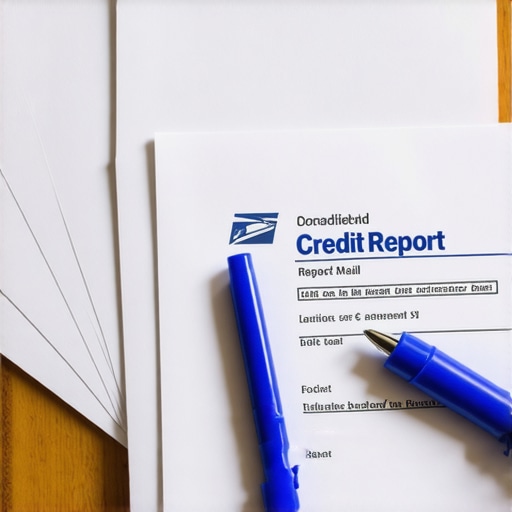
The biggest hurdle in DIY credit repair isn’t a human being; it’s an Optical Character Recognition (OCR) scanner. When you send a standard, typed letter, a computer reads it, assigns it a two-digit code, and spits out a generic rejection. To get a human to actually look at your proof, you need to know how to stop AI from automatically rejecting your dispute letter. I started using blue ink on yellow paper or adding hand-drawn circles around key errors. It sounds crazy, but it forces the machine to kick the letter to a manual reviewer. This is how you implement the 30 day blueprint for erasing a wrongful late payment effectively. You want to be the grain of sand in their well-oiled machine.
Why Certified Mail is Your Secret Weapon
If you don’t have a tracking number, you don’t have a dispute. Period. I remember a friend who tried to dispute a $2,000 collection over the phone for three months. The bureau ‘lost’ his request every single time. The moment he understood why you should always send dispute letters via certified mail, the game changed. That green return receipt is your legal proof that they received your evidence. When they know you have a paper trail, they are less likely to claim your request is ‘frivolous.’ You must provide the evidence that stops a bureau from labeling your dispute frivolous, such as a copy of a canceled check or a settlement letter. In my case, I used the 15 day window for disputing medical bill errors to show that a hospital had overcharged me. Because I had the certified receipt, they couldn’t pretend the clock hadn’t started ticking on their 30-day investigation window.
Hunt Down the Duplicate Accounts
One of the most common FICO-killers is the double-entry error. This happens when a debt is sold from one collector to another, and both report it as an active balance. It’s like being punished twice for the same mistake. You need to learn how to properly remove a duplicate account from your report by comparing the original creditor’s account number to the junk debt buyer’s file. I once saw a client’s score jump 60 points just by clearing out three ‘ghost’ entries of the same $50 debt. It’s about precision, not volume. Focus on the facts that they cannot logically argue against, and they will be forced to delete the entries to stay compliant with the Fair Credit Reporting Act.
The biggest lie in the financial world is that paying off your old debts will automatically fix your credit score. In fact, doing so without a strategy can often lead to a sudden, heart-wrenching drop. I’ve seen it a hundred times: someone finally clears a $500 collection, only to see their FICO score tank by 30 points the next day. This happens because of a nuance in the algorithm regarding the ‘Date of Last Activity.’ When you make a payment on an old, stagnant collection, you effectively ‘wake up’ the debt, making it appear as a recent negative event to the scoring model. This is why you should check the truth about paying off a collection before buying a house before sending a single dime.
The Zero Balance Trap That Stalls Your Progress
Another common mistake is the belief that every credit card should show a zero balance at all times. While it sounds responsible, the FICO algorithm actually penalizes you for having ‘no recent revolving activity’ if every single card reports $0. This is known as the ‘All Zero’ penalty. To maximize your score, you need at least one card to report a small balance—usually less than 1% of your limit. I personally use the rule for using just one credit card to maximize your fico to keep my score in the elite range. If you are struggling to see movement, why a zero balance is not always the best for your fico score is likely the missing piece of your puzzle.
Why did my score drop after I did the right thing?
It feels like a betrayal when you pay off a car loan or a student loan only to see your score dip. The reason is two-fold: you’ve closed an active account, which might have been contributing to your ‘credit mix,’ and you’ve potentially lowered the average age of your accounts. This is a sophisticated nuance that most beginners overlook. You have to understand why your fico score drops after paying off a car loan to manage your expectations. According to a study by the Consumer Financial Protection Bureau (CFPB), the lack of transparency in how these ‘closed account’ factors are weighted is one of the top reasons for consumer frustration. It’s not just about the debt you have; it’s about the active, positive history you are currently maintaining.
Beware of the Zombie Debt Resurrection
One of the most dangerous ‘oops’ factors in credit repair is accidentally acknowledging a debt that is past the statute of limitations. Debt buyers frequently purchase old, ‘zombie’ debts for pennies on the dollar and try to trick you into making a small ‘good faith’ payment. The moment you do, you might reset the legal clock, allowing them to sue you for a debt that was otherwise uncollectible. You must learn how to spot a zombie debt before it strikes your report. Instead of engaging with these collectors over the phone, use the evidence that proves your debt is too old to sue over to shut them down permanently. Have you ever fallen into this trap? Let me know in the comments. We need to stop reacting to collectors and start anticipating their moves using the logic behind the fico 10t trended data shift to stay ahead of the curve. Accuracy is your shield, but timing is your sword.
Once you’ve cleared the debris from your report, the real challenge begins: staying in the elite club. Repair is a sprint, but maintenance is the marathon that actually gets you the 0% APR on a new mortgage. I’ve seen too many people do the hard work of mastering credit repair only to let their scores slip because they stopped paying attention. You need to adopt the habit that keeps your fico score above 780 every month, which involves more than just paying on time. It involves a monthly audit of your own files.
How do I keep my credit healthy without it becoming a full-time job?
The secret is automation and a simple spreadsheet. I personally track my ‘Statement Closing Dates’ rather than ‘Due Dates.’ If you pay your balance after the statement closes, that high balance is already reported to the bureaus, even if you pay it in full by the due date. This is why I always emphasize why your credit card statement date is a critical number. By paying 3 days before that closing date, I ensure my utilization always looks like 1% to the FICO algorithm. This isn’t just my opinion; credit expert John Ulzheimer, formerly of FICO and Equifax, has frequently noted that the timing of when a balance is reported is often more impactful than the actual payment itself for those already in high-score tiers.

Scale Your Profile by Gaming the Limits
If you want a truly resilient score, you need a high total credit limit. A $500 balance on a $1,000 card is a 50% utilization disaster, but that same $500 on a $20,000 limit is a negligible 2.5%. I regularly use how to get a credit limit increase without a hard inquiry to pad my profile. Lenders see high limits as a sign of trust. If you can handle a $50,000 line of credit without spending it, you are a low-risk goldmine for them. Use why a high credit limit is safer than a low one as your justification when talking to your bank’s retention department.
The Future of FICO is Trended Data
The trend in credit reporting is shifting away from ‘snapshots’ and toward ‘behavioral patterns.’ With the rollout of FICO 10T, the bureaus are looking at your last 24 months of payment trends, not just where you stand today. This means if you’ve been ‘revolving’ debt (carrying a balance) for a year, a one-time large payment won’t boost your score as much as it used to. You must understand the logic behind the fico 10t trended data shift to stay ahead. AI is being integrated into these models to predict your likelihood of default based on subtle changes in your spending. To counter this, I recommend how to audit your credit report for hidden reporting errors at least once a quarter to ensure no weird ‘trend’ data is being manufactured by a glitchy algorithm. My advanced tip for you today: Try the ‘Small Balance Hack’ by making a small balance hack that adds 20 points to your fico on your oldest card this week—you might be surprised how quickly the needle moves when you show active, responsible usage.
What I Finally Realized After Fighting the Bureaus for Years
The biggest shift in my journey wasn’t just learning a specific consumer law, but changing my fundamental mindset. I had to stop seeing myself as a ‘debtor’ and start seeing myself as an informed advocate with clear legal rights. Here is the truth: the credit bureaus are not your friends, but they aren’t your enemies either—they are simply high-volume data processors. If you give them messy data, you get a messy score. When I started treating my credit file like a forensic investigation, the results became predictable. I realized that dispute errors are often just the tip of the iceberg; the real victory lies in the persistent follow-up. Patience is a tactical advantage in this game. If they don’t respond accurately within the legal timeframe, that’s not a roadblock—it’s an opportunity for you to demand an immediate deletion.
Tools That Actually Move the Needle
You don’t need a high-priced subscription to reclaim your financial life, but you do need a disciplined system. I rely on three core pillars to keep my score in the elite range. First, I always keep a physical ‘Dispute Folder’ containing every single certified mail receipt, organized by account name. Second, I recommend following the diy credit repair checklist that outperforms paid services to ensure you never miss a technicality that could win your case. Third, I live by the habit that keeps your fico score above 780 every month, which is as simple as reviewing your reports on the same day every month to catch ‘ghost’ accounts before they settle in. Lastly, keep understanding credit errors a step by step guide to fico improvement open on your desktop for those moments when the bureaus use confusing language to slow you down.
#IMAGE_PLACE_HOLDER_E#
Take the Reins of Your Financial Future Today
It is incredibly easy to feel defeated when an automated system sends you a generic rejection, but remember that the algorithm is only as accurate as the humans providing the input. You have the absolute right to challenge every single digit on that report. By mastering credit repair and staying relentless about the details, you are doing more than just fixing a number; you are opening doors to better housing options, lower interest rates, and the freedom you deserve. Don’t let a clerical slip-up from years ago dictate your life today. Start with one certified letter, one piece of evidence, and one corrected mistake. Your future self will thank you for the grit you show right now.
Have you ever felt like you were doing everything right only to see your score stall or drop for no apparent reason? Let me know in the comments—I’d love to help you find the missing piece of the puzzle!