

I sat at my kitchen table three years ago, staring at a screen that felt like it was mocking me. I had just sent over $600 to a collection agency for an old credit card debt, fully expecting my FICO score to instantly heal. I felt like a responsible adult doing the right thing. But when I checked my report a month later, that ‘Paid’ status was still there, anchoring my score to the floor. It was a visceral gut-punch. I realized then that the credit bureaus do not reward you for being honest after the fact; they only care about the history. If you have ever felt that same sinking feeling after trying to clean up your financial past, I am here to tell you that there is a way out, but it is not the path the debt collectors suggest.
Stop Waiting for the Bureau to Do You a Favor
The biggest myth in credit repair is that a zero balance is a clean slate. It is not. A paid collection is still a negative collection. It is like having a giant red mark on your permanent record that says ‘I did not pay on time, but I eventually coughed it up.’ For most mortgage or auto lenders, that is still a huge red flag. This is often why a zero balance is not always the best for your FICO score in the short term. I spent months waiting for the bureaus to just see my payment and fix things, but they will not act unless you make them. Today, we are going to walk through how to actually purge these records by identifying reporting errors and using the right legal leverage.
Can you really get a legitimate debt removed once it is paid?
I get asked this every single week. People think that once they pay, they lose their power. I made this exact mistake early on in my journey. I thought I had no leverage left because the agency already had my money. I did not realize that I could still how to prove a paid collection is actually a double-entry error or challenge the granular accuracy of the reported dates. According to the Federal Trade Commission (FTC), nearly one in four consumers identified errors on their credit reports that might affect their credit scores. If you have already paid, your strategy changes from negotiation to documentation.
The Mistake That Set Me Back Six Months
When I first started trying to fix my mess, I did what everyone does: I clicked that ‘Dispute’ button on the bureau’s website. Huge mistake. You should never use the online dispute button because it often waives your right to a manual review and limits the evidence you can submit. I learned the hard way that a paper trail sent via certified mail is the only language these companies truly respect. We are going to dive into the the pay-for-delete strategy that works even if you have already sent the check. Have you ever felt like you were shouting into a void when trying to fix your credit? Drop a comment below and let’s talk about it.
Look for the Smallest Lies on Your Report
If you want to clear your record, you have to stop looking at the big picture and start looking at the atoms. Think of a credit report like a complex engine; if one tiny gear is out of place, the whole thing is legally considered broken. When I finally got serious about my recovery, I realized that I didn’t need to prove the debt wasn’t mine—I just had to prove that the bureau’s data was messy. You need to how to audit your credit report for hidden reporting errors by comparing every single field across all three bureaus. I once spent four hours comparing my old bank statements to a single line item on my TransUnion report. I found a $12 difference in the ‘High Balance’ field. It seemed petty, but that discrepancy was the leverage I needed to argue that the entire record was inaccurate. If they cannot report it 100% accurately, the law says they cannot report it at all. This is the core of understanding credit errors and using them to your advantage.
Find the Double Entry Trap
One of the most common ways to see an instant jump in your score is to catch a collection agency and an original creditor reporting the same debt at the same time. This is effectively a double penalty for the same mistake. You should learn how to properly remove a duplicate account from your report because these errors happen more often than you think when debts are sold. In my own case, I had a medical bill that showed up twice—once from the hospital and once from a collector. By pointing out this ‘double-dipping,’ I forced the bureau to delete the most recent entry, which was the one hurting my score the most. 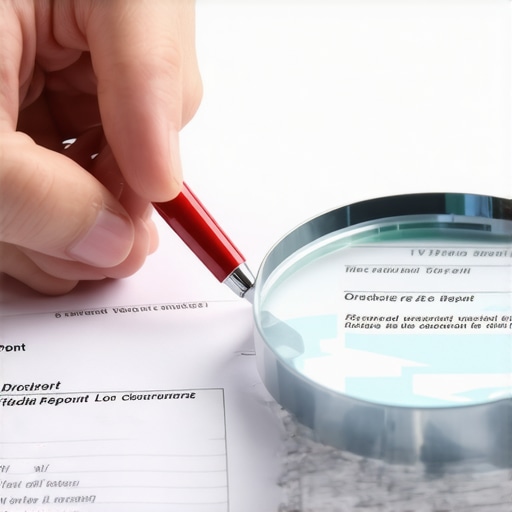
Stop the Automated Rejection Robots
The credit bureaus use an AI system called e-OSCAR to process disputes. When you send an online dispute, it gets boiled down to a three-digit code, and a computer decides your fate in seconds. To win, you have to break the machine. You must how to force a manual review when the bureau robots say no by providing physical evidence that a computer cannot parse. I started including copies of my actual cancelled checks and highlighted billing statements. Because a human had to physically open the envelope and look at my highlighted documents, they couldn’t just hit the ‘automated reject’ button. I recommend keeping the evidence log that forces a bureau manual review so you have every piece of paper ready when they try to claim your dispute is frivolous.
Why Certified Mail Is Your Only Real Weapon
If you do not have a tracking number, your dispute does not exist. It sounds harsh, but collectors and bureaus lose mail like it is their job. Every time I sent a letter, I spent the extra few dollars for a return receipt. This creates a legal clock. Once they sign for that letter, they have 30 days to investigate. If they miss that window, you have them cornered. This is why you should always send dispute letters via certified mail. I remember the feeling of power I felt when I saw that green signature card come back in the mail; I knew exactly when their deadline was, and I held them to it. This level of precision is what separates people who talk about credit repair from those who actually see their scores climb.
Let’s dig deeper into the psychology of the FICO score, because if you do not, you will end up like I did—confused and frustrated after doing what felt like the right thing. Most people believe that being debt-free is the ultimate goal for a high score. But here is the contrarian truth: FICO does not reward you for having zero debt; it rewards you for managing debt perfectly. I once watched my score plummet after paying off a three-year auto loan. It felt like a betrayal. However, when you close a loan, you often lose a ‘mix’ of credit and an active ‘current’ account, which is why your FICO score drops after paying off a car loan. This is a common advanced mistake that catches even the most disciplined savers off guard.
The Debt-Free Trap That Tries to Kill Your Score
The nuance that the big banks do not tell you is that the algorithm thrives on activity. If you have no active installment loans, your ‘Credit Mix’—which makes up 10% of your score—takes a hit. I actually found that how to use a small personal loan to diversify your credit mix can be more effective for your long-term FICO health than just stacking up credit cards. Think of it as a workout for your financial reputation; if you stop lifting the weights (managing the debt), the muscle (your score) starts to atrophy.
Why did my FICO score drop 30 points right after I paid off my student loans?
This is the most common advanced question I get, and the answer lies in the ‘Length of Credit History.’ When that student loan—which might be your oldest account—is marked closed, the algorithm sometimes recalculates your average age of accounts differently. According to research by the Consumer Financial Protection Bureau (CFPB), the sudden closure of long-standing installment accounts can lead to an immediate dip because the ‘credit utilization’ for that specific category vanishes. It is a technical quirk that feels unfair, but it is the reality of the software we are playing against.

Keep Your Oldest Accounts Alive at All Costs
One of the biggest ‘oops’ factors I see is people closing their old credit cards to ‘simplify’ their lives. Please, do not do this. You are literally erasing years of positive history and shrinking your total available credit. This is why closing your oldest account is a financial mistake that can haunt your mortgage application months later. Instead of closing them, keep them open with a tiny, automated charge once a month. I personally use the small balance hack that adds 20 points to your FICO by ensuring one card always shows a balance of less than 1% of the limit while the others remain at zero. This ‘All Zero Except One’ method is the secret sauce for those sitting in the 800-club. Have you ever fallen into this trap of paying off a loan only to see your score drop? Let me know in the comments below!
You have done the hard work of scrubbing the errors, but the real challenge is keeping the engine running without it stalling. I used to think I could just check my score once a quarter and be fine. I was wrong. I missed a fraudulent address that popped up and almost ruined a car loan application. Now, I use a specific stack of tools that I swear by. First, stop relying on the free ‘educational’ scores. They are often VantageScores, which 90% of lenders do not even look at. I personally pay for a MyFICO subscription because it gives me the exact versions used for mortgages, autos, and credit cards. Understanding why your score is different on Experian and Transunion is only possible when you see the raw FICO data. I also keep a physical ‘Credit Bible’—a simple three-ring binder where I store every certified mail receipt and every response from the bureaus. If you do not have a system to audit your own credit report for common mistakes every 30 days, you are essentially flying blind.
How do I keep my score high without checking it every hour?
The secret to long-term maintenance is aggressive automation paired with a strict 30-day manual check. I have every single one of my cards set to auto-pay the minimum balance just in case I forget, but I manually pay them off five days before the statement closing date. This ensures that the ‘balance’ reported to the bureau is exactly what I want it to be. This is the habit of high score achievers that prevents ‘accidental’ credit utilization spikes. If you find your score stagnating, it might be time to scale your limits. I regularly request a credit limit increase every six months to keep my overall utilization naturally low, even if I spend more during a vacation or the holidays. 
Watch out for the trended data shift
The credit landscape is moving toward FICO 10T, which looks at ‘trended data’—essentially your behavior over the last 24 months rather than just a snapshot of today. According to FICO’s technical documentation, this new model rewards consumers who consistently pay down their balances rather than those who just ‘transact’ and pay in full at the last second. To stay ahead of this, you need to prove a downward trend in your debt. I use the $10 purchase hack to keep inactive cards alive while showing consistent, manageable activity. This is the future of credit building: showing the algorithm that you are a reliable, long-term partner, not just someone who can clean up a mess when they need a loan. If you want to scale to a perfect score, I challenge you to open a ‘Credit Evidence Log’ today. Start by printing your reports and highlighting every single date that doesn’t match across the three bureaus. This one advanced tip will give you the ammo needed for effective dispute error resolution that lasts.
The Hardest Lesson I Learned About Credit Resilience
After years of battling dispute errors and feeling like I was losing, I realized the biggest obstacle wasn’t the law—it was my own impatience. I used to think a single letter would fix everything, but the truth is that credit repair is a marathon of documentation. One lightbulb moment for me was realizing that the bureaus actually rely on you giving up; they count on the frustration of a generic rejection letter to stop you. Another shift in my thinking happened when I stopped viewing credit as a ‘test’ I was failing and started seeing it as a game where I finally learned the rules. Persistence is the only language the credit system truly understands.
My Personal Arsenal for a 780+ Score
If you want to move beyond the basics, you need a system that works while you sleep. I swear by the credit repair blueprint for anyone just starting their journey. To stay organized, I recommend a physical ‘Credit Bible’—a binder where you keep every piece of certified mail evidence. I also suggest following the habit that keeps your FICO score above 780, which is simply checking your reports for new entries every 30 days without fail. Lastly, don’t ignore the technical shifts; reading up on the logic behind the FICO 10T trended data shift will help you understand why your long-term behavior matters more than a quick fix. #IMAGE_PLACEHOLDER_E#
Take Back the Power Over Your Financial Future
You are not defined by a three-digit number, but that number does define the interest rates you pay and the house you can buy. By taking the time to systematically address dispute errors, you are essentially giving yourself a massive raise. The future of your financial health is in your hands, and now you have the legal leverage and the tactical tools to make it happen. You’ve got this! Building a legacy starts with fixing the foundation.
Have you ever found a mistake on your report that felt impossible to fix? Tell me your story in the comments below and let’s troubleshoot together.