

I’ll never forget the feeling of my stomach dropping into my shoes when my loan officer called. I was standing in a half-packed kitchen, surrounded by cardboard boxes, ready to move into my dream home. “We have a problem,” he said. A tax lien I thought I’d settled years ago was staring him in the face. It wasn’t just a number; it was a wall. My FICO score took a nose dive, and suddenly, my “guaranteed” approval was on life support. I felt like a failure. I’d spent months mastering credit repair, or so I thought. I assumed once you paid something, it just… went away. Spoiler alert: it doesn’t.
The Day My Mortgage Approval Died in a Paper Trail
My mistake was simple but devastating: I trusted the system to update itself. I had the receipt from the courthouse tucked away in a drawer, but the credit bureaus didn’t care about my drawer. They only care about what is reported to them. This experience taught me that fico insights are only as good as the data they receive. If a lien is sitting there, paid or not, it acts like an anchor on your financial life. Today, I’m going to show you exactly how to gather the documents that actually matter so you don’t end up stuck in a half-packed kitchen like I was. We are going to solve the mystery of which forms get results and which ones end up in the shredder.
Is it actually worth the headache to fight a lien?
You might be thinking that since the lien is paid, the damage is already done. Or maybe you’re worried that poking the credit bureaus will just result in a “frivolous” label. I made the mistake of thinking time would heal all wounds. It didn’t. In fact, according to the Consumer Financial Protection Bureau, credit reporting errors are the most complained about issue they handle, making up over 70% of their total volume in recent years. If you don’t fight, you lose. Have you ever found a surprise lien on your report just when you needed your credit most?
The Evidence That Actually Moves the Needle
When I first started my journey, I sent a generic “please delete” letter. It was a total disaster. The bureau basically laughed in my face because I didn’t provide proof. You need a surgical approach. You need to know how to properly remove a duplicate account or a misfiled public record with cold, hard evidence. First, get your hands on the ‘Withdrawal of Filed Notice of Federal Tax Lien’ or the ‘Release of Lien’. These aren’t the same thing, and the bureaus are incredibly picky. If you’re dealing with a state or local lien, the terminology changes, but the requirement for a court-stamped document remains. I once tried to use a simple receipt from the courthouse and was rejected immediately. You need the formal document that forces a creditor to update your status. I also learned the hard way that you should always send dispute letters via certified mail. Without a paper trail of your own, the bureaus can claim they never saw your evidence. We’re going to dive into the specific right way to challenge a public record to ensure your hard work isn’t ignored by an automated system.Think of your credit report like a restaurant bill. You wouldn’t pay for a steak you never ordered, yet millions of us let errors sit on our files because we’re too intimidated to speak up. When I was dealing with my own lien, I realized that the credit bureau’s automated system is basically a giant, unfeeling sieve. If your data doesn’t fit perfectly into their tiny holes, it gets tossed into the ‘rejected’ pile. To get results, you have to stop acting like a victim of the system and start acting like an auditor.
Scour Your Report for the Tiny Details That Matter
The first thing I did after my mortgage disaster was to audit my own credit report for 10 common mistakes. I wasn’t just looking for the lien itself; I was looking for how it was tethered to my identity. I found that my name was misspelled in three different ways and my previous address was listed as ‘Current.’ These seem like minor annoyances, but for a bureau, they are anchors that keep a negative public record attached to you. By performing a deep dive and knowing how to audit your credit report for hidden reporting errors, you strip away the secondary data that the automated systems use to ‘verify’ the bad debt.
Pinpoint the Discrepancies Before You Write a Single Word
During my cleanup, I found a duplicate entry for a medical bill I’d paid months prior. I had to learn how to properly remove a duplicate account before I even touched the lien. Why? Because if the bureau sees multiple errors, it builds a pattern of ‘unreliable data’ that works in your favor. If you can prove they can’t even get your address or smaller accounts right, their ‘verified’ lien looks a lot more suspicious.
The Tactical Approach to Writing Your Dispute
When you finally sit down to write, you need to abandon the emotional pleas. The bureau employees have a limited amount of time to look at your file. If you send a five-page sob story, it goes nowhere. I once sent a letter that was essentially a wall of text, and it was flagged as ‘frivolous’ within 48 hours. You need to know the evidence that stops a bureau from labeling your dispute frivolous. I learned to use bullet points, clear headings, and red ink to circle the exact case numbers on my court documents.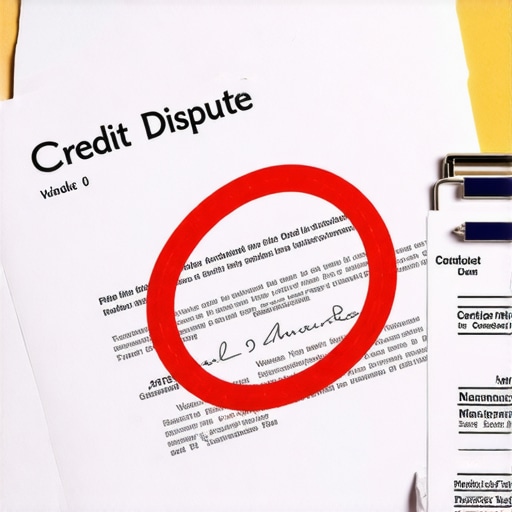
Force the System to Look at Your Real Life
The goal is to move your file from a computer algorithm to a human being. This is where you force a manual review when the bureau robots say no. In my case, I included a ‘Withdrawal of Filed Notice of Federal Tax Lien’—a specific document that legally ‘un-files’ the lien as if it never happened. Most people just send a ‘Release,’ which only says it’s paid. A withdrawal is the silver bullet. I also kept a specific log you need to keep when calling bureaus to track every name and employee ID I spoke with. This level of organization is what finally broke the deadlock. By using the one document that forces a bureau manual review, I turned a two-year headache into a 30-day victory.
Stop Thinking a Paid Collection is a Clean Slate
Most people assume that once they settle a debt, the damage magically disappears. I used to believe this too, until I realized that in the eyes of many lenders, a ‘paid’ collection is still a collection. The common wisdom says to pay everything off immediately, but I found that why paying off a collection does not always raise your score is one of the most misunderstood nuances in the industry. According to data from FICO, while newer versions like FICO 9 ignore paid collection accounts, the most commonly used version by mortgage lenders, FICO 8, still factors them into your score regardless of the balance. If you pay without negotiating a deletion, you might just be moving money around without moving your score an inch. You need a more surgical credit repair tips correcting dispute errors effectively strategy than just writing a check.
Watch Out for the Re-Aging Trap Before You Pick Up the Phone
There is a specific danger in the ‘pay it off’ mentality that can actually reset the clock on your misery. I’ve seen people call a debt collector to settle a six-year-old debt, only to have the collector ‘re-age’ the account. This effectively makes the debt look brand new to the credit bureau’s algorithms, tanking your score all over again. You must know how to spot a re-aged debt on your credit report immediately because once that date is changed, it is much harder to fix. Before you even speak to a collector, ensure you have the paperwork needed to prove a debt is outside the statute of limitations. If you acknowledge the debt without the right protections, you lose your primary leverage. 
Why does your score stall even when you have zero debt?
This is the ultimate frustration for high-achievers. You’ve cleared the decks, paid the bills, and yet your score sits in the low 700s. I realized that why a zero balance is not always the best for your fico score comes down to a concept called ‘credit utilization’ and ‘activity.’ If the bureaus see zero activity across all accounts, they can’t predict your future behavior. I found that how a 10 amazon purchase can boost your score every month 2 is a real-world tactic that keeps your files ‘warm’ without carrying interest. Have you ever fallen into this trap where doing the ‘right’ thing financially actually hurt your credit? Let me know in the comments.
I used to think that once my score hit 750, I could just put my credit on autopilot and cruise. I was wrong. Credit maintenance isn’t a destination; it’s a lifestyle, and if you aren’t careful, the system will find a way to drag you back down through sheer administrative entropy. After my house-buying nightmare, I realized that relying on flashy apps with colorful ‘score simulators’ was like trying to fix a jet engine with a plastic toy wrench. If you want to scale your financial profile, you need to understand credit-building strategies correcting dispute errors for better fico in 2025 at a granular level.
Stop Paying for Apps and Start Printing Your Reports
I know it sounds archaic, but I stopped relying exclusively on digital dashboards. Why? Because the ‘free’ scores you see on most banking apps are usually VantageScore 3.0, which is practically irrelevant to a mortgage lender using FICO 2, 4, or 5. I personally started a ‘Credit Bible’—a physical accordion folder where I keep every single certified mail receipt and every response from the bureaus. This is the only way to avoid the problem with using credit repair software for complex errors. Most software packages just blast generic letters that the bureau’s automated systems (like e-OSCAR) flag as ‘frivolous’ instantly. You need to be the person who knows exactly how to handle a bureau that says your dispute is frivolous by pointing to your paper trail, not a software template.
How do I maintain my credit score over time?
Maintenance is about 80% observation and 20% surgical intervention. I now set a quarterly calendar invite to audit my own credit report for 10 common mistakes. I’m not just looking for big errors; I’m looking for the ‘identity drift’ that happens when creditors report slightly different versions of your name or address. This is exactly the paperwork needed to stop a bureau from merging your file with someone who has a similar name. If you catch these small discrepancies early, they never have the chance to grow into a split credit file or a zombie debt situation. I also recommend keeping the specific log you need to keep when calling bureaus to document the ‘Reasonable Reinvestigation’ requirements mandated by the Fair Credit Reporting Act (FCRA). Expert John Ulzheimer, a veteran of both FICO and Equifax, often emphasizes that the bureaus are only required to investigate what you specifically point out—they won’t find the errors for you.

The Shift Toward Trended Data is Changing Everything
The future of credit is moving away from static snapshots and toward ‘Trended Data.’ We are already seeing the logic behind the fico 10t trended data shift 2 take hold in the industry. This means that instead of just seeing your balance today, lenders are looking at whether you are ‘revolving’ debt or ‘paying it off’ every month over a 24-month window. This makes the best day of the month to pay your credit card bill 2 more important than ever. If you consistently carry a balance, even a small one, the new models will flag you as higher risk than someone who clears it. This is why I advocate for mastering fico proven strategies to improve your credit dispute score by focusing on the ‘velocity’ of your payments, not just the amounts. I predict that within three years, your ‘historical utilization’ will be just as important as your current score. Start using a simple spreadsheet to track your statement closing dates; this one specific tip will give you more control over your FICO future than any ‘credit repair’ service ever could.
The Brutal Realities I Learned Fighting the Bureau Robots
Looking back at my journey, I realize that the biggest hurdle wasn’t the lien itself—it was the belief that the system was designed to be fair. It isn’t. It is designed for efficiency. Here are the three most important lightbulb moments I had while mastering credit repair through trial and error.
- Identity drift is the silent killer. Even if you fix a major error, if your name or address varies across different accounts, the bureau’s system will keep trying to re-attach that bad data. You have to scrub your personal info clean before attacking the debt.
- Withdrawal vs. Release is everything. In the world of public records, a ‘Release’ means you paid your debt, but it stays on the record. A ‘Withdrawal’ means the record shouldn’t have been there or was fully satisfied in a way that removes the filing entirely. Always aim for the withdrawal.
- Human eyes are your best friend. The automated e-OSCAR system is where disputes go to die. Every piece of evidence you send should be designed to force a manual review when the bureau robots say no.
The Arsenal I Use to Keep My Credit in the 800s
I do not leave my financial health to chance anymore. I have built a specific toolkit that ensures I never get blindsided again. First, I stopped relying on free apps and started paying for a real FICO service. Knowing how to find out which credit model your lender uses is the difference between a ‘maybe’ and a ‘yes’ at the mortgage desk. Second, I keep a physical ‘Credit Bible’—a folder containing every piece of certified mail evidence and the specific log you need to keep when calling bureaus. This paper trail is my insurance policy against bureau incompetence. Finally, I use how to audit your own credit report for 10 common mistakes as a quarterly ritual to catch identity drift before it becomes a crisis.
Take Back the Keys to Your Financial Future
If you are feeling overwhelmed, remember that I was once standing in a kitchen full of boxes with a dying mortgage dream. The system is intimidating, but it is not invincible. By using an effective dispute error resolution to boost your credit score in 2025, you are not just fixing numbers on a screen; you are reclaiming your freedom to live where you want and buy what you need. You have the tools, the templates, and the strategy. Now, you just need the persistence to see it through. What is the one error that has been haunting your report for years? Let us talk about it in the comments below.