

I remember the cold sweat I broke into back in 2018. I was applying for a mortgage, feeling confident, when my broker called. "We have a problem," he said. A random medical bill for $142 had popped up on my report. The kicker? I didn’t recognize the company name. I spent weeks calling every hospital in a three-county radius, only to realize the "reporting party" wasn’t the hospital at all—it was a third-party debt buyer hiding behind a confusing acronym. I wasted so much time because I didn’t know how to look past the surface level of my FICO report. I was barking up the wrong tree while my score took a nosedive.
Stop Chasing Ghosts and Find the Real Data Furnisher
The biggest mistake I made—and maybe you are doing it right now—was assuming the name on my credit app matched the name on the report. In the world of credit reporting, the entity that actually sends the data to the bureaus is called a "data furnisher." Often, the original creditor sells your debt, and suddenly, you are looking at a name like "ASSET-MGMT-XYZ" instead of "Big Bank Corp." If you want to fix your score, you have to find out exactly who is pulling the strings. Today, I am going to show you how to peel back those layers so you can audit your credit report for hidden reporting errors like a seasoned pro. We are going to identify the specific subscriber codes and the actual addresses of the agencies that are impacting your financial life.
Is digging through these reports really worth the headache?
You might think, "Can I just file a generic dispute and let the bureaus handle it?" Trust me, I tried that. It failed miserably. According to the Consumer Financial Protection Bureau (CFPB), nearly 50 percent of consumers who dispute errors feel the process is biased toward the creditors. To win, you need to know exactly who to target. Have you ever felt like you were arguing with a brick wall when trying to clear a debt? I have been there, and the wall usually wins unless you have the right documentation. If you are serious about understanding credit errors and FICO improvement, you have to realize that the bureaus are just the messengers. The real power lies with the companies reporting to them. We are going to find their contact info and the specific laws that force them to talk to you. Before we move into the heavy lifting, I will tell you this: always send dispute letters via certified mail. It is the only way to prove they received your evidence and start the clock on their legal obligations. Now, let’s get into how you can unmask these creditors once and for all.
Grab the Official Disclosure Before Doing Anything Else
Stop looking at the colorful apps on your phone for a second. While those dashboards are great for tracking trends, they often hide the technical details we need to win a dispute. You need your full consumer disclosure. Think of your credit app as a movie trailer and the full disclosure as the raw, unedited footage. To find the source of an error, you have to how to audit your own credit report for 10 common mistakes by looking at the hard data. This disclosure contains something your phone app usually omits: the Subscriber Code.
Decode the Subscriber ID Number
Every data furnisher has a unique fingerprint called a subscriber code. This is a sequence of numbers and letters that tells the credit bureau exactly which company is reporting. I once spent three days trying to find a company listed as ‘NRA’ on my report. I thought the National Rifle Association was coming after me for a membership I never had. It turned out to be the National Recovery Agency, a third-party debt buyer. Once I found the subscriber code, I could cross-reference it and find their actual headquarters. Without that code, I was just shouting into the void. If you are struggling with a similar identity mix-up, you might need to look into the 3 documents you need to clear a mixed credit file to prove you aren’t the person they’re looking for.
Track Down the Real Physical Address
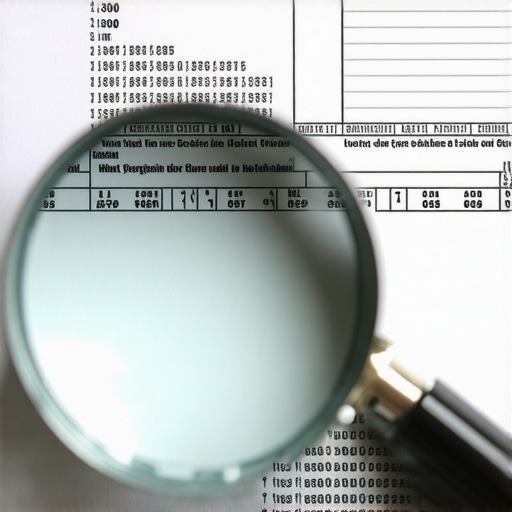
Don’t trust the address listed in a generic search engine. Large banks have dozens of departments—sending a dispute to the ‘General Inquiries’ desk at a branch is a one-way ticket to the shredder. You need the address of the specific department that handles credit reporting disputes. This is usually listed at the very end of your credit disclosure. By using the exact address linked to that subscriber code, you ensure your evidence hits the desk of someone who actually has the power to change it. This is why you should never use the online dispute button; it strips away your ability to include a paper trail that connects the subscriber code to the physical location. I learned this the hard way when a $500 medical debt kept bouncing between three different agencies because I was mailing letters to their billing department instead of their compliance office.
Build an Evidence Log for Every Interaction
When you start digging into these hidden layers, you have to keep a record. Imagine you are a lawyer preparing for a trial. Every phone call, every letter, and every name you speak with needs to be written down. This creates the evidence log that forces a bureau manual review. When the bureaus see that you have the subscriber code, the correct address, and a timeline of their failure to respond, they can no longer hide behind automated systems. This level of detail provides the evidence that stops a bureau from labeling your dispute frivolous and forces them to take your claim seriously. I started doing this after my third ‘automated rejection’ and the tone of the conversation changed instantly once I started citing their own internal reporting codes back to them.
Stop Paying Collection Agencies Until You Read This
Here is a pill that’s hard to swallow: paying off a collection account does not automatically remove it from your credit report. Most people believe that settling a debt is the ‘right thing to do’ and will result in an immediate score jump. In my experience, it often does the exact opposite. When you pay a collection, the status changes to ‘Paid Collection,’ but the negative mark stays for seven years from the date of the original delinquency. Even worse, for older FICO models used in mortgage lending, a paid collection carries almost as much weight as an unpaid one. This is one of the most common credit repair tips for correcting dispute errors effectively I share: never trade your cash for a ‘paid’ status without a ‘delete’ agreement.
Why did my score drop after I paid a debt?
I’ve seen it happen dozens of times. A consumer pays an old debt, and their score suddenly drops 20 points. Why? Because the ‘last reported’ date on that account just updated to today. The FICO algorithm sees recent activity on a negative account and assumes the ‘problem’ is current. This is why the truth about paying off a collection before buying a house is so nuanced. To avoid this, you must learn how to negotiate a pay for delete without admitting to the debt. If you don’t get that deletion in writing, you’re essentially paying a company to stay on your report. A study by the Federal Reserve noted that the reporting of paid vs. unpaid collections varies wildly in its impact on a consumer’s access to credit depending on the scoring model used. Always ensure you are following effective dispute error resolution to boost your credit score in 2025 before opening your wallet.
The Zero Balance Myth That Keeps You at 720
Another ‘common sense’ rule that fails at the expert level is the idea that you should have a zero balance on every single card. While it sounds responsible, FICO’s algorithm actually penalizes you slightly for having ‘no revolving activity.’ If every card reports a $0 balance, the system can’t tell if you are managing credit well or just not using it at all. If you’re wondering why a zero balance is not always the best for your FICO score, it’s because of a phenomenon called the ‘all zero penalty.’ I’ve found that the small balance hack that adds 20 points to your FICO—leaving a tiny balance (less than 1% of your limit) on just one card—often yields the highest possible score. It’s a counterintuitive part of mastering FICO and proven strategies to improve your credit dispute score, but it works because it proves you have active credit that you aren’t abusing.
Avoid the Bureau’s Convenient Trap
Finally, we have to talk about the ‘dispute’ button on the bureau’s website. They make it look so easy. But here is the ‘oops’ factor: when you click that button, you often waive your right to a manual investigation and your right to re-dispute the item with new evidence under the same terms. You are essentially opting into an automated system designed to rule against you. Instead, stick to the paper trail we discussed earlier. Understanding FICO insights and how dispute errors affect your score means knowing when to bypass their ‘convenience’ tools in favor of legal leverage. Have you ever fallen into this trap and used the online portal only to get a ‘verified’ result in 48 hours? Let me know in the comments, and we can discuss how to restart your paper-based audit.
Keep Your Progress From Slipping Through the Cracks
Maintaining a high score isn’t a one-and-done event; it’s a lifestyle change that requires the right technical approach. I use a custom Excel spreadsheet where I track the ‘Date of Last Activity’ versus the ‘Date of First Delinquency’ (DOFD) for every single account. This is the only way to catch ‘re-aging,’ a shady tactic where debt buyers update the date to make an old debt look new and keep it on your report longer than the legal seven-year limit. According to the National Consumer Law Center (NCLC), debt re-aging is one of the most persistent violations of the Fair Credit Reporting Act, and if you aren’t manually tracking your DOFD, you’ll miss it every time. I also swear by the raw data from MyFICO, but I supplement it with a ‘clean’ calendar approach to manage my reporting cycles.
The Spreadsheet That Saved My Sanity
I think we’re heading toward a world where AI-driven ‘Trended Data’ like FICO 10T becomes the industry standard. This means lenders won’t just look at your score today; they’ll look at whether your balances have been rising or falling over the last 24 months. To stay ahead of this trend, you need to transition from simply fixing mistakes to proactively building a ‘thick’ file. I’ve found that the best way to do this is following the habit of high score achievers checking reports every 30 days to catch minor clerical errors before they bake into your permanent history.
How do I maintain these results for the long haul?
The secret is a combination of automation and strategic diversification. Once your report is clean, you have to feed the algorithm the ‘credit mix’ it craves. For me, that meant learning how to use a small personal loan to diversify your credit mix. It’s not about taking on unnecessary debt; it’s about demonstrating competence across different ‘credit types.’ If you only have credit cards, your score will eventually plateau regardless of how low your utilization is. By adding a small, well-managed installment loan, you prove to the bureaus that you can handle varied financial responsibilities. This is a core part of the blueprint on how to build an 800 credit score starting from zero.
Prepare for the AI Scoring Revolution
As we look toward 2025, the bureaus are getting more aggressive with their automated filters. You have to be even more precise with your documentation and formatting. I highly recommend using the DIY credit repair checklist that outperforms paid services to ensure your files are formatted with OCR-friendly fonts like Courier or Arial to avoid being flagged. If you don’t format your letters correctly, you’ll find yourself stuck in a loop of automated rejections. Learning how to stop AI from automatically rejecting your dispute letter is arguably the most important skill you can learn this year. My personal challenge to you: Go into your calendar right now and set a recurring ‘Credit Audit’ for the first Saturday of every month. Don’t wait for a mortgage rejection to start caring about your data accuracy.
Hard Truths the Bureaus Hope You Never Discover
Looking back at my own journey, the biggest lightbulb moment wasn’t finding a mistake—it was realizing the bureaus aren’t actually looking for the truth; they are looking for a match in their database. If the data furnisher says it is yours, the bureau believes them by default. I learned the hard way that accuracy is not their priority, efficiency is. This is why you must become your own best advocate. Another painful lesson was realizing that ‘doing the right thing’ by paying an old debt can actually backfire if you don’t know why you should never pay a collection agency without a delete agreement. Your moral compass and the FICO algorithm often point in opposite directions. Finally, never underestimate the power of the paper trail. In a world of digital shortcuts, a physical, certified letter is your only real legal shield.
The Tools That Actually Moved the Needle for Me
I don’t believe in ‘magic’ credit fixers, but I do believe in having the right toolkit. My first recommendation is always the raw consumer disclosure from AnnualCreditReport.com—not for the score, but for the subscriber codes we discussed. Secondly, I highly recommend using the DIY credit repair checklist that outperforms paid services because it keeps your logic consistent across all three bureaus. For tracking your real-time progress without the fluff, MyFICO remains the gold standard for seeing exactly which ‘flavor’ of your score a lender will actually see. These resources, combined with a dedicated evidence log, are the only things that truly changed my financial trajectory.
Take Control of Your Financial Narrative Today
You now have the technical blueprint to stop being a victim of clerical errors and automated systems. Credit repair is not just about a number; it is about the doors that number opens for your family and your future. Whether you are aiming for a perfect profile or just trying to get back on your feet, remember that persistence beats the algorithm every time. If you are just starting out, check out my guide on how to build an 800 credit score starting from zero to ensure your new foundation is rock solid. By mastering credit repair, dispute errors, and FICO optimization, you are taking the first step toward true financial freedom. Have you ever found a name or an acronym on your report that you didn’t recognize? Let me know in the comments below, and let’s decode it together!