

I sat in the loan officer’s office, my palms sweating and my confidence high. I had spent years paying every bill on time. But then, the officer turned the screen around. “Who is James R. Miller from Ohio?” he asked. My name is James Miller, but I’ve lived in Texas my whole life. I didn’t know it then, but I was a victim of a ‘mixed file.’ It felt like a punch in the gut. My pristine record was being dragged down by a total stranger’s financial mistakes just because we shared the same basic name. If you have a name like Smith, Miller, or Jones, you might be living this nightmare right now. It is unfair, it is exhausting, but most importantly, it is fixable. Today, I am going to walk you through the exact steps I took to separate my financial identity from my ‘credit twin’ and how you can reclaim your score. [IMAGE_PLACEHOLDER]
When You Aren’t Who the Bureau Thinks You Are
The credit bureaus use algorithms to match data, and sometimes, they get lazy. If your name and birth year match someone else’s, their late payments can bleed into your history. I made the mistake of thinking a simple phone call would fix it. I was wrong. You need a paper trail. You need the specific documents required to clear a mixed file to prove you aren’t that other person. I learned the hard way that the system is designed for speed, not accuracy. When I first started, I didn’t even realize that something as small as a missing middle initial could trigger these massive headaches.
Is It Actually Possible to Win Against the Bureaus?
I get it. You’re skeptical. Dealing with Equifax or TransUnion feels like shouting into a void. But I’ve seen it happen. According to the FTC, about one in five consumers has an error on at least one of their credit reports. When your name is common, those odds skyrocket. You have to be the squeaky wheel. Have you ever looked at your report and seen an address or an employer you didn’t recognize? Drop a comment below; I want to hear how you first discovered the mix-up. We are going to dive into proving your identity to a bureau that insists you are someone else. It starts with a very specific type of audit. You cannot just click a button online. You need to gather the evidence that forces them to delete incorrect data and stop the automated rejection machines. Let’s get to work on reclaiming your good name.Imagine your credit file is a library book. Someone else with a similar name has been checking out books and never returning them, but the fines are being charged to your account. To fix this, you can’t just tell the librarian it wasn’t you; you have to show them your library card, your ID, and a log of every book you actually borrowed. The first step I took was a deep dive. I sat down with a highlighter and marked every account, address, and employer that wasn’t mine. I realized that how to audit your own credit report for 10 common mistakes is the only way to catch the subtle bleed-over from another person’s history. One time, I found a phone number from Ohio—a state I’ve never even visited—buried in my ‘identity’ section. It was the smoking gun.
Scour Your Report Like a Private Investigator
You need to look beyond the big numbers. Check the spelling of your name and your previous addresses. In my case, the simple way to dispute a misspelled name was the key to untangling my file from the ‘other’ James. If the bureau thinks your name is ‘James R.’ but you are ‘James T.’, every automated system they use will keep merging your data. This isn’t just a typo; it’s a structural flaw in how their database links your FICO score to your actions.
Stop Falling for the Online Dispute Trap
This is where most people fail. They click the ‘dispute’ button on the bureau’s website. Do not do this. When you use that button, you often waive your right to a full investigation under the Fair Credit Reporting Act. It’s like trying to win a court case by sending a text message to the judge. Instead, you need a physical packet. I learned quickly why you should never use the online dispute button if you actually want results. You need to send a physical letter via certified mail. This creates a legal clock that the bureaus cannot ignore, and it prevents their software from automatically categorizing your request as a simple ‘correction’ rather than a legal dispute.
The Paper Trail That Forces a Human Review
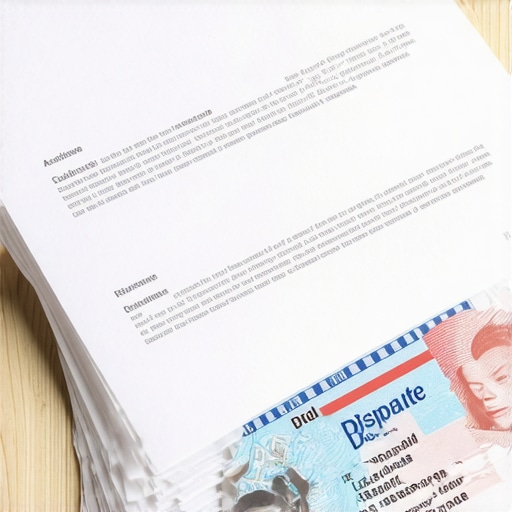 When you send a letter, you want it to land on a human’s desk, not get scanned by a robot. To do this, you need to include the one document that forces a bureau manual review, which is usually a clear copy of your Social Security card combined with a government-issued ID and a utility bill. I remember my third attempt; I was so frustrated I almost gave up. But then I realized I was missing the evidence log that forces a bureau manual review. Once I provided a chronological list of why these accounts couldn’t be mine—pointing out that I was in high school in Texas while the ‘other’ James was buying a truck in Ohio—the walls finally started to crumble. This isn’t just about effective dispute error resolution to boost your credit score in 2025; it’s about reclaiming your legal identity. You are providing the evidence that stops a bureau from labeling your dispute frivolous, which is their favorite way to ignore you. By overwhelming them with proof, you move from a victim to an advocate for your own financial future.
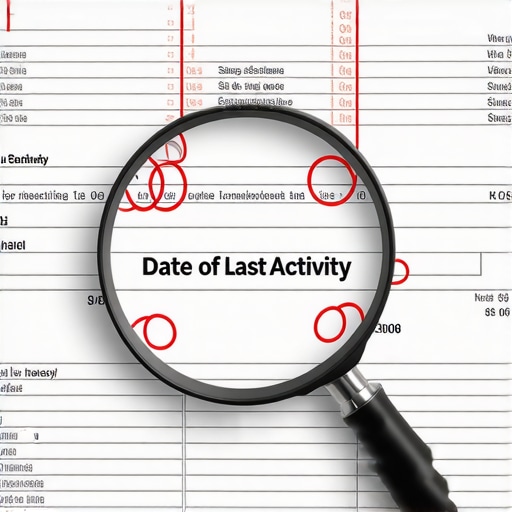
The biggest lie I was told during my credit journey was that ‘time heals all wounds.’ When it comes to a mixed file, time is actually your enemy. Most people assume that if they just wait seven years, the ‘other’ person’s mistakes will simply drop off. They won’t. Because the bureau’s algorithm thinks you and that other person are the same entity, new data from their life will keep refreshing the ‘Date of Last Activity’ on your report, keeping those errors alive forever. This is the nuance that many DIY-ers miss: you aren’t just fighting a single error; you are fighting a system that has fundamentally misidentified your personhood.
Why Paying Your Old Debt Might Actually Tank Your Score
Here is a contrarian take that often shocks people: sometimes, paying a collection is the worst thing you can do for your FICO score. I’ve seen countless people settle an old debt thinking it will help them qualify for a mortgage, only to see their score drop 40 points the next day. This happens because the Consumer Financial Protection Bureau (CFPB) notes that the age of the debt is a primary scoring factor. When you pay an old, stagnant collection, you essentially ‘wake it up,’ making it look like a brand-new negative event. Before you send a single dollar, you must understand the truth about paying off a collection before buying a house. It is almost always better to negotiate a ‘pay-for-delete’ agreement rather than a simple ‘paid’ status. Have you ever fallen into this trap? Let me know in the comments.
Don’t Trigger the Automated Rejection Machine
The most common ‘oops’ factor I see is the ‘shotgun dispute.’ People get angry—rightfully so—and dispute fifteen different items on their report in one single letter. This is a massive mistake. When you do this, the credit bureau’s e-OSCAR system (the AI that reads your mail) will likely flag your file as ‘suspicious’ or ‘frivolous.’ I learned that the hard way. You need to be surgical. You need to know how to dispute multiple errors on one report without getting flagged by spacing them out and prioritizing the identity errors first. If you don’t fix the identity mix-up first, the bureau will just keep re-inserting the negative accounts even after you win a dispute.
Can a Successful Deletion Actually Lower Your FICO?
It sounds insane, right? You fight to get a negative account removed, you win, and your score goes down. This happens more often than you’d think. If the account you deleted was also one of your oldest accounts, you might have just destroyed your ‘length of credit history’—which makes up 15% of your score. This is why you must identify the one account you should never dispute on your credit file. Sometimes, a neutral or even slightly messy old account is doing more heavy lifting for your score than you realize. This is a game of chess, not checkers. If you are seeing zero movement, it might be time to investigate why your FICO score stalls even after paying every balance. It usually comes down to the mix of accounts you have left. Remember, cleaning your report is only half the battle; the other half is understanding mastering FICO proven strategies to improve your credit dispute score through strategic credit building.
I didn’t just walk away from the loan officer’s desk and hope for the best after clearing my name. I realized that a high credit score isn’t a trophy you win; it’s a garden you tend. If I had stopped after the first round of deletions, that ‘other’ James Miller would have eventually crept back into my history. To keep your report clean, you have to adopt the habit of high score achievers: checking reports every 30 days. This isn’t paranoia; it’s professional financial management. I personally use a simple physical ledger alongside digital tools to ensure that every inquiry and every balance change is accounted for. If you aren’t doing this, you are leaving your financial future up to an algorithm that has already proven it can make mistakes.
Stop the Score Slump Before It Starts
Once you’ve achieved effective dispute error resolution to boost your credit score in 2025, the biggest risk is complacency. I’ve seen people do the hard work of cleaning their file, only to let a single missed utility bill or an unrecognized ‘zombie debt’ drag them back down. You need to know how to audit your credit report for hidden reporting errors that might appear months after your initial cleanup. I set a calendar alert for the 15th of every month—this is when most major issuers have finished their reporting cycles—to do a manual sweep of my Experian, Equifax, and TransUnion files.

My Favorite Tool for Catching Hidden Errors
People always ask me what software I use. While many ‘repair’ tools are overpriced, I swear by a custom spreadsheet that tracks my ‘Date of Last Activity’ for every account. This is the only way to ensure a creditor doesn’t illegally re-age an old debt. If you are just starting out, you might feel overwhelmed, but following the habit that keeps your FICO score above 780 every month is simpler than it looks. It’s about consistency. I also recommend using the official MyFICO app because it provides the specific scoring versions used by mortgage and auto lenders, rather than the ‘VantageScore’ models most free apps give you, which can be off by as much as 50 points.
How do I maintain my credit profile over time?
Maintenance is about more than just avoiding negatives; it’s about strategic growth. The industry is shifting. According to the FICO 10T technical specifications, the ‘T’ stands for trended data. This means the bureaus are no longer just looking at your balance today; they are looking at whether your balances are growing or shrinking over a 24-month period. This is the logic behind the FICO 10T trended data shift that will dominate the next few years. To stay ahead, I focus on ‘AZEO’ (All Zero Except One), where I leave a tiny balance on one card to show activity while keeping others at zero. It’s a precision move that keeps the algorithm happy. I challenge you to download your three reports tonight and look for just one address or name variation that doesn’t belong. Finding that one detail is how you start the journey from victim to victor.
I spent weeks thinking I could just explain the situation to a customer service representative over the phone, but the hard reality is that the bureaus do not prioritize your accuracy—they prioritize their volume. When I finally stopped treating this like a simple mistake and started treating it like a legal defense, everything changed.
The Hard Truths I Learned Fighting for My Identity
The most important thing I realized is that you cannot wait for the system to fix itself. If you have a name that is even slightly common, the algorithm will default to the messiest version of you it can find. [IMAGE_PLACEHOLDER_E] Here are the lightbulb moments that finally broke the cycle for me:
- The ‘Wait and See’ strategy is financial suicide. Every month you wait is another month that someone else’s debt history is aging on your report, making it harder to untangle later.
- Emotional appeals don’t work on AI. The bureau’s first line of defense is a scanner. If your letter doesn’t follow a specific format, a human will never even see it.
- Accuracy is a moving target. Just because you fixed it in June doesn’t mean it won’t break again in December. You need to follow the ultimate guide to dispute errors and credit building in 2025 to build a wall around your data.
Tools That Saved My Sanity and My Score
You don’t need expensive monthly subscriptions to win this fight, but you do need the right physical and digital arsenal. First, I stopped sending regular mail. I learned that you should always send dispute letters via certified mail because it creates a legal receipt that the bureau received your evidence. Second, I stopped guessing. I started using the DIY credit repair checklist that outperforms paid services to ensure I wasn’t missing the small details, like providing three forms of address verification. Finally, I kept a digital copy of every single letter I sent in a dedicated ‘Identity Defense’ folder. This allowed me to catch when a bureau sent me a canned response that contradicted their previous letter.
Take Back Control of Your Financial Future
Reclaiming your credit score after a mixed file incident is more than just about a number; it’s about ensuring your hard work isn’t credited to a stranger while you pay for their mistakes. The process of understanding credit errors for FICO improvement is a skill that will serve you for the rest of your life. You have the tools, the knowledge, and the legal right to a clean report. Don’t let another day pass where someone else’s financial ghost haunts your mailbox. You’ve got this. Which specific error was the hardest for you to find on your first deep-dive audit? Let me know in the comments below!