

I remember sitting at my kitchen table three years ago, staring at a FICO score that had not budged in six months. I felt like a financial rockstar because I had finally paid off my car and cleared every cent of my credit card debt. But when I applied for a mortgage, the lender looked at my stagnant 690 and asked why I didn’t have more active accounts. I was crushed. It turns out, my obsession with being debt-free was exactly why my credit score stalled even after paying every balance. I learned the hard way that a quiet credit report is a boring credit report to a lender. Today, I am going to show you exactly how to wake up your score without falling back into a debt trap. Have you ever felt like the system was punishing you for being responsible with your money?
The Hidden Trap of a Quiet Credit Profile
It feels counterintuitive, right? You do the responsible thing, you wipe out your balances, and you expect a reward. Instead, you get a flatline. One of the biggest mistakes I made early on was thinking that ‘no debt’ meant ‘perfect credit.’ I actually went ahead and closed my oldest credit card because I didn’t want the temptation anymore. That was a disaster. I didn’t realize that closing your oldest account is a massive financial mistake that shrinks your credit history and kills your score instantly. Your score stagnates because FICO algorithms need data to chew on. If you aren’t using credit, they can’t see how you handle it. According to Experian, paying off a loan can actually drop your score because it reduces your credit mix and total number of active accounts. This is often why your FICO score drops after paying off a car loan or a student debt.
Does a zero balance actually hurt more than it helps?
Many people believe that carrying a zero balance across all cards is the ultimate goal. I used to be one of them. However, if every single card reports a $0 balance, the scoring model might flag you as having ‘no recent activity.’ This is where the small balance hack that adds points to your FICO comes into play. By letting just one card report a tiny balance—think ten dollars—you prove you are active without paying a dime in interest. It sounds like a game because it is. You have to understand that a zero balance is not always the best for your FICO score if you want to see that number climb into the high 700s. We need to stop looking at credit as a debt tool and start looking at it as a management tool.
Find the Hidden Leaks in Your Credit Report First
Before you even think about applying for new plastic, you have to scrub your existing data. I spent three months chasing a higher score only to realize my report was cluttered with three different versions of my name and an address from a college apartment I left a decade ago. These minor errors signal instability to the FICO algorithm. You must learn how to audit your own credit report for 10 common mistakes 2 before doing anything else. When I finally sat down to comb through mine, I found a closed retail card that was actually reporting as open with a balance. Fixing that alone gave me a 15-point nudge in two weeks. 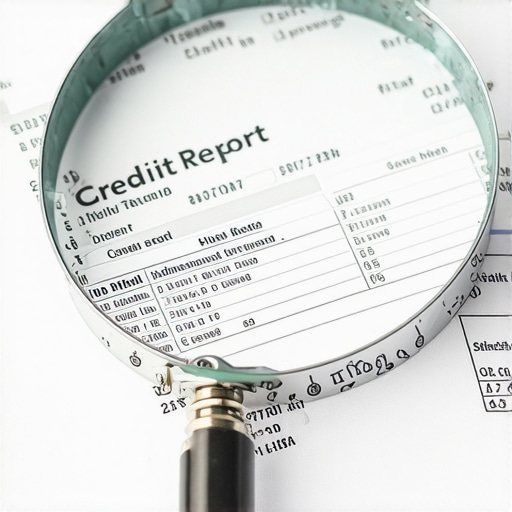
Stop Using the Online Dispute Button Immediately
It is the biggest trap in the industry. Those convenient dispute buttons on credit apps often force you to waive your right to a full investigation under the Fair Credit Reporting Act. If you want results, you have to go old school. Use the diy credit repair checklist that outperforms paid services 3 and send physical mail. Why? Because why you should never use the online dispute button 2 is rooted in the fact that automated systems are designed to reject you. I once spent six months fighting a medical bill online with zero luck; the moment I sent a certified letter with the paper-trail method for deleting wrongful medical bills, it vanished in twenty days.
Master the Statement Date Game to Win Back Points
Most people are obsessed with the Due Date, but the Statement Date is what actually dictates your score. This is the day the bank takes a snapshot of your balance and whispers it to the credit bureaus. If you have a $1,000 limit and you spend $900 on a new TV, then pay it off on the due date, your report might still show 90% utilization for the whole month. You need to understand why your credit card statement date is more important than your due date to avoid this trap. I started paying my bill three days before the statement closed, leaving only a tiny amount. This is exactly how a 10 balance can protect your credit score from dropping and keeps your utilization in the sweet spot that lenders love.
Add New Layers Without Taking on High-Interest Debt
If your score is stuck because you have a thin file, you do not need a massive personal loan. I once added 40 points to a friend’s score just by showing them how a secured loan can fix your credit mix without new debt. The goal is to show variety. If you only have credit cards, the algorithm thinks you are a one-trick pony. You can also get credit for things you are already paying for. I have seen huge jumps for people who finally realized why your rent history deserves a spot on your credit report 3 or why your phone bill data might be the missing fico link 3. These aren’t debts; they are proof of character.Most people believe that if they just pay off every old collection on their report, their score will skyrocket. It sounds logical, but it is often a trap. In my experience, paying an old, dormant collection can actually tank your score by refreshing the ‘date of last activity.’ This makes the negative mark look brand new to the FICO algorithm. You need to understand why paying off a collection could actually drop your score before you write that check. Instead of just paying, you should be focused on how to negotiate a pay-for-delete without admitting to the debt. If the agency will not agree to remove the entry, your payment might just be a gift to a debt buyer that leaves your score in the gutter. This is especially vital when looking at the truth about paying off a collection before buying a house 2, where timing is everything. 
The Trap of Piggybacking on Someone Else’s Credit
Everyone tells you to get added to a parent’s card to ‘piggyback’ their score. But if that parent has high utilization or even a single late payment, it can drag you down too. Always check the specifics of why your authorized user status might be holding you back 2 before you link your financial reputation to someone else. You are often better off building your own foundation using the 30 day blueprint for erasing a wrongful late payment 2 than relying on a shaky co-signer.
Can you really fight every error at the same time?
I see people get excited and try to dispute ten items in one letter. This is a massive mistake. When you flood the bureaus, their AI systems automatically flag your account as ‘suspicious’ or ‘frivolous.’ You must provide the evidence that stops a bureau from labeling your dispute frivolous 3 to keep the process moving. According to a report by the National Consumer Law Center, automated systems like e-OSCAR often fail to pass along your actual physical evidence to the original creditor, which is why the documentation that forces a bureau to manually verify your data is so critical for advanced credit repair. You need to be surgical. Learn how to dispute multiple errors on one report without getting flagged 2 by staggering your requests. Don’t let your eagerness to fix things lead to a permanent block from the bureaus. Have you ever fallen into this trap? Let me know in the comments.
Once you have cleaned up the initial mess on your report, the real challenge begins: staying at the top. I used to think checking my score once a month was enough, but that is like checking your gas tank only when you are already stalled on the side of the road. I rely on a specific set of tools and habits to keep my profile bulletproof. Most people use free apps, but you have to watch out for the hidden reason your credit monitoring app misses real errors. Many of those free platforms provide VantageScores, which are essentially useless for mortgage or auto loan applications. I personally use paid services that provide the actual FICO versions lenders pull, because seeing the wrong number is worse than seeing no number at all.
How do I maintain my credit health for the long haul?
Consistency is the only thing the algorithm respects. I adopted the habit of high score achievers: the 15-15 rule for payments. I pay half my expected monthly balance 15 days before my statement date and the rest 3 days before it closes. This keeps my reported utilization razor-thin and ensures I never miss a beat. You also need to realize the truth about how often your fico score actually updates; it is not instantaneous. If you are planning a big purchase, start optimizing your balances at least 60 days out to ensure the data is fresh when the lender pulls it.

Why Most Monitoring Apps Give You Junk Data
If you are serious about your financial future, you need to perform a deep dive into your actual reports every month. I follow the habit of high score achievers: checking reports every 30 days 3. I am looking for soft errors—the kind that do not look like identity theft but still drag you down, like a misreported credit limit. If a creditor sells your account while you are in the middle of a fix, you need to know how to handle a creditor who sells your account during a dispute immediately so the negative mark does not double up on your report and kill your momentum.
Brace for the Shift Toward Trended Data
The entire game is changing right now. Lenders are moving away from simple snapshots and toward trended data models. This is the logic behind the fico 10t trended data shift 2. Instead of just seeing that you have a $500 balance today, FICO 10T looks at whether your balances are growing or shrinking over the last 24 months. According to FICO’s technical documentation on the Score 10 Suite, this model provides a more predictive assessment by evaluating the trajectory of your debt rather than just the current state. This means you can no longer game the system for just one month before a mortgage; you need a long-term the habit that keeps your fico score above 780 every month 3. If you take away one thing today, make it this: go set up an alert for any new inquiry on your report and use the documentation that forces a bureau to manually verify your data to challenge anything you do not recognize within 24 hours.
The Most Expensive Lessons I Learned While Rebuilding My Life
Looking back at my journey from a 500-something score to the high 700s, I realized the biggest hurdle wasn’t just the math—it was the misinformation. I wasted months trying to ‘hack’ the system when I should have been focused on long-term stability. One major breakthrough was discovering the specific phrase that triggers a human review of your dispute, which finally got me past the automated rejections. I also learned the hard way that you should never pay a collection agency without a delete agreement; if you don’t get it in writing, that negative mark stays on your record for years regardless of your payment. Finally, I stopped worrying about every single point and focused on the logic behind the fico 10t trended data shift 2, because showing a downward trend in debt is much more powerful than a one-time payment surge. These realizations turned credit management from a chore into a strategic game I was finally winning.
My Private Toolkit for Winning the Credit War
If you are tired of running in circles with free apps that give you useless data, it is time to upgrade your approach. I rely on a very short list of resources that actually deliver results. First, I always keep the diy credit repair checklist that outperforms paid services 3 saved on my desktop; it keeps me organized and ensures I don’t miss any critical deadlines. For removing errors, I’ve found that having the specific proof you need to remove a fraudulent address is more valuable than any template letter you can find online. I also highly recommend using the documentation that forces a bureau to manually verify your data whenever you encounter a stubborn error. These tools provide a paper trail that digital buttons simply can’t match, giving you the upper hand in every dispute.
Take Back Control of Your Financial Narrative Today
Your credit score is more than just a number; it is the key to your financial freedom, the interest rates on your future home, and the security of your family. Effective credit building is a marathon, not a sprint, and it requires patience and the right strategy. Don’t let a few past mistakes define your future. By auditing your reports, using the right dispute methods, and managing your statement dates, you are taking active steps to reclaim your power. You have the tools, the knowledge, and the blueprint. Now, it is time to put them into action and watch your FICO score reflect the responsible person you have become. Have you ever had a dispute rejected by an automated system despite having proof? Let me know your experience in the comments below!