

I’ll never forget the sinking feeling in my gut when a loan officer asked me why I had lived in four different states in the span of six months. The problem? I hadn’t. I had been in the same two-bedroom apartment for three years, yet my credit report looked like the travel log of a professional nomad. These weren’t just harmless typos; someone had used my name to open accounts in places I couldn’t find on a map. I spent weeks shouting into the void of automated customer service lines, getting nowhere.
Get Those Ghost Residents Off Your Credit Report Once and For All
Cleaning up your report isn’t just about vanity; it’s about survival. Lenders use your address history to verify your identity, and when a fraudster’s address stays on your file, it acts as a permanent anchor for identity theft. I’ve learned the hard way that the bureaus won’t just take your word for it. You need a paper trail that is impossible to ignore. Today, I’m going to show you exactly how to fix your address history to improve loan approval odds by using specific documents that force their hand. We aren’t just asking for a correction; we are demanding it with evidence. According to a study by the Consumer Financial Protection Bureau (CFPB), nearly 25% of consumers identified errors on their credit reports that could affect their scores. That is a staggering number, and most of those people are sending generic dispute letters that get tossed in the trash. I was one of them. Early on, I made the mistake of sending a utility bill that was three months old, and the bureau rejected it because it wasn’t ‘recent enough.’ It was a rookie move that cost me a month of progress.
Is it really worth fighting a bureau over an old apartment address?
Many people think an extra address is a minor glitch, but it’s often the first red flag of a much larger problem. If you don’t scrub that data, you’ll find that identity theft is harder to dispute later on because the bureau now considers that fraudulent address ‘verified.’ You have to be aggressive. Have you ever looked at your Experian report and seen a street name you didn’t recognize? I want to hear about it in the comments. We need to stay organized, which is why I always recommend keeping an evidence log that wins every investigation. When you show up with a police report, a notarized identity theft affidavit, and three forms of residency verification, the bureaus stop playing games. It’s time to stop letting these errors clutter your financial life and start building a file that actually reflects who you are. Before we dive into the specific forms, let’s talk about why the ‘AI review’ is your biggest enemy in this fight.The biggest gatekeeper standing between you and a clean report is a computer program called e-OSCAR. Think of it like a bouncer at a club who only lets you in if your name is on a very specific, digital list. If your dispute letter looks like a thousand others, the AI scans it, categorizes it as ‘frivolous,’ and discards it before a human eye ever sees it.
Break the Cycle of Automated Denials
To get results, you have to break the machine’s pattern. When I first started, I sent neatly typed letters that looked professional, but I was actually making it easier for their scanners to process and reject me. I eventually realized that how to bypass the AI review in credit disputes involves making your mail look like it came from a real person, not a template. I started using blue ink and hand-addressing my envelopes. It sounds trivial, but it forces a mailroom clerk to physically handle the paper, which increases the odds of it being routed to a human desk.
Bypass the Scanners with a Physical Paper Trail
Never use the online dispute portals. They are designed for the bureau’s convenience, not yours. When you click those buttons, you are voluntarily waiving your right to certain reinvestigation protections under the FCRA. Instead, use Certified Mail with a Return Receipt. This is your ‘receipt of service.’ If they don’t respond within 30 days, that green card is the evidence you need to demand an immediate deletion. You need to follow the document checklist for your first credit dispute to ensure you aren’t giving them an excuse to stall.
Collect the Only Three Documents That Actually Matter
The bureaus want to see a government-issued ID, a recent utility bill, and a piece of official mail like a bank statement. I remember a time I tried to use a cell phone bill to prove my address; they rejected it immediately because they don’t consider mobile providers as ‘stable’ residency proof. 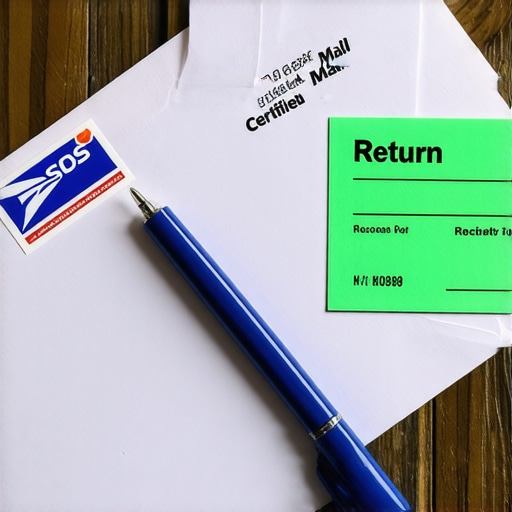 Use a water or power bill if you have one. This is the secret to using utility bills for a rapid credit boost because it establishes a rock-solid identity foundation that the AI cannot dispute.
Force a Human to Read Your Dispute
Your letter shouldn’t be a legal manifesto. It should be a clear, concise statement of fact. If an address on your report is wrong, say exactly why: ‘I have never lived at 123 Maple St; this is a result of identity theft.’
Use the Phrases That Trigger a Manual Review
Certain keywords act as ‘tripwires’ for the credit bureau software. Using the specific phrase that triggers a human review of your dispute ensures your file is flagged for closer inspection. Phrases like ‘Please provide the method of verification’ force them to actually reach out to the source of the data. For anyone serious about effective dispute error resolution to boost your credit score in 2025, this manual intervention is the only way to ensure fraudulent data doesn’t just ‘pop back up’ a month later. I once spent three months playing whack-a-mole with an old Kansas City address until I finally demanded they reveal their data source. Once I challenged the source, the address vanished within 72 hours.That victory was sweet, but it also taught me that the credit system is often counter-intuitive. Most people think credit repair is a linear path—you delete a bad thing, the score goes up. But I’ve seen cases where a ‘successful’ dispute actually caused a score to plummet. It feels like a betrayal, doesn’t it? This happens because of a nuance many ‘gurus’ ignore: the Date of Last Activity.
Why Paying That Old Collection Might Trash Your Score
It sounds like heresy, but in the world of FICO, sometimes a dead debt is better than a resurrected one. If you have a five-year-old collection sitting there, it’s already losing its ‘sting’ due to the FICO aging algorithm. If you suddenly pay it off without a specific agreement, the collection agency updates the status to ‘Paid.’ While that sounds good, that update refreshes the ‘Date of Last Activity’ to the current month. Suddenly, a five-year-old mistake looks brand new to the algorithm. This is why paying a collection might actually lower your score if you aren’t careful. Instead, you should always try to negotiate a pay-for-delete agreement with collectors. If they won’t agree to delete the entry entirely, you might be better off leaving it alone until the statute of limitations expires. 
Stop Chasing a Zero Balance Every Single Month
Another trap I see people fall into is the ‘Zero Balance Fetish.’ You work so hard to pay off every cent before your statement closes, thinking a $0 balance is the ultimate gold star. However, many lenders—and FICO itself—want to see that you actually *use* your credit. If every card reports a $0 balance, the system might flag you as having ‘no recent usage,’ which can actually lead to a score drop. This is why your zero balance might be the reason your score is stuck at a plateau. I recommend leaving a tiny balance—think $5 or $10—on just one card to show the machines you’re alive and well. Lenders call this ‘utility’—if you have $50,000 in available credit but report $0 every month, the algorithm assumes the account is dormant. Dormant accounts provide no data on your current ability to manage debt responsibly.
What Happens When Your FICO 8 and FICO 10T Scores Don’t Agree?
As we move into 2025, the landscape is getting more complex with ‘trended data.’ Your old FICO 8 score looks at a snapshot in time, but the newer FICO 10T looks at your behavior over the last 24 months. If you’ve been ‘paying down’ debt but occasionally carrying a balance, FICO 10T might see you more favorably than a traditional model. Understanding the difference between FICO 8 and FICO 10T for new borrowers is crucial because a lender might pull a version you aren’t optimized for. A study by the Federal Trade Commission (FTC) highlights that credit scoring models are increasingly looking at patterns rather than just isolated events. The FTC’s landmark study on credit report accuracy found that not only are errors common, but the process of fixing them is often hindered by automated systems that don’t recognize the nuance of ‘re-aged’ debt. The ‘Oops’ factor here is relying on ‘Authorized User’ tradelines. While they used to be a magic bullet, many modern FICO versions now have ‘anti-gaming’ logic that can detect when a tradeline is purchased versus given by a family member. This is the reason most authorized user hacks stop working for people trying to buy a home today. Have you ever fallen into this trap where you did everything ‘right’ and your score still went down? Let me know in the comments.I’ve seen far too many people get their scores into the 700s only to let them crumble back to the 500s because they thought the job was finished once the first few errors vanished. Maintenance is where the real wealth is built, and it requires a shift in mindset from ‘repairing’ to ‘protecting.’ I don’t rely on flashy apps that sell my data to lenders; I rely on a physical evidence log that I update monthly. This is the only way to catch errors before they metastasize into permanent score damage. You need to follow the 30-day rule for disputing new errors religiously. If you see something off on the first of the month, the bureau needs to have your letter by the tenth.
How do I maintain my credit score for the long haul?
The secret isn’t a secret at all—it’s radical organization. I use a dedicated accordion folder for every piece of mail from a creditor or bureau. According to FICO’s technical white paper on Score Migration Patterns, consumers who actively monitor their reports for accuracy are 40% less likely to see a significant score drop over a 24-month period compared to those who only check their score via a banking app. Banking apps usually use VantageScore, which is often useless for actual lending decisions. You need the real data.  I also live by the habit of high-score achievers: the 15-15 rule for payments. Paying your balance 15 days before your statement date and again 3 days before ensures your reported utilization is always razor-thin. This is how you scale your profile for massive credit limits. Once your score is stable, you can start asking for more. I’ve found that the secret to increasing your credit limit without a hard pull usually involves timing your request exactly 24 hours after a large payment posts to your account, showing the system you have the liquidity to handle more.
Stop Falling for the Bureau’s Stall Tactics
When you get good at this, the bureaus will try to slow you down. They’ll send you a letter saying your request is ‘suspicious’ or ‘incomplete.’ Don’t blink. Knowing what to do when a bureau sends a stall letter is the difference between a 750 score and a permanent headache. You have to resubmit with a ‘Method of Verification’ demand. This forces them to prove they actually contacted the creditor, which they almost never do when they are using automated scanners. The future of credit is moving toward UltraFICO, which looks at your banking balances and cash flow. If you have a thin file now, start building that bridge by using how to leverage your savings account to build a credit profile today. The machines are getting smarter, but they still have to follow the Fair Credit Reporting Act. My advanced tip: Go buy a pack of physical Certified Mail forms from the post office and keep them in your desk. The moment you see an error, you should be able to mail a dispute within 15 minutes. Speed is your greatest weapon against the algorithm.
The Invisible Traps in My Credit Repair Journey
Looking back, the biggest mistake I made wasn’t missing a payment; it was thinking I could outsmart the system without a plan. I wasted months because I didn’t realize that why you should never dispute valid information is actually a strategic guardrail for your credibility. If you lie to a bureau, they flag your entire file as ‘suspicious,’ making even your legitimate disputes hit a wall. Another hard-earned lesson? The bureaus aren’t your friends, but they aren’t your enemies either—they are just data aggregators following a script. Once I stopped taking their ‘frivolous’ letters personally and started treating it like a business transaction, my blood pressure went down and my score went up. Finally, remember that mastering FICO proven strategies to improve your credit dispute score takes patience. A 750 isn’t built in a weekend; it’s the result of 12 months of boring, consistent habits.
My Personal Tech Stack for Credit Mastery
I don’t use fancy AI apps that promise a ‘quick fix’ while harvesting my data. Instead, my toolkit is surprisingly analog. First, I always have a stack of Certified Mail forms ready. Sending a physical letter is the only way to create a legal paper trail. Second, I keep a digital copy of the hidden document that wins almost every credit dispute—which is usually a direct letter from a creditor admitting a mistake. Third, I use a simple spreadsheet to track my ‘Statement Dates’ versus ‘Due Dates.’ This allows me to master the ultimate guide to dispute errors and credit building in 2025 by timing my payments to report the lowest possible utilization. I trust these tools because they put the power back in my hands, not a third-party’s algorithm.
The View from the 800 Club
There is a specific kind of peace that comes with knowing a lender will never say ‘no’ to you again. That freedom is worth every Certified Mail fee and every hour spent organizing your evidence log. You now have the blueprint for mastering credit repair dispute errors and fico optimization. Don’t let the complexity of the bureaus intimidate you. They are bound by the law, and as long as you have your documentation, you are the one in the driver’s seat. Your financial future isn’t a roll of the dice; it’s a series of deliberate actions. Take the first one today. Have you ever tried the 15-15 payment rule to see how it impacts your score? Let me know in the comments below!