

I remember sitting in my living room at 2 AM, the blue light of my laptop screen searing my eyes while I scanned my credit report like a hawk. I was on a mission. I had this one old credit card from my college days—the one with the embarrassing 2018 late payment that felt like a permanent scar on my financial reputation. In my “expert” wisdom back then, I figured that if I just disputed the entire account, the whole thing would vanish and my FICO score would magically leap into the 800s. I hit ‘submit’ on that dispute button with a smug grin. Three weeks later, my score didn’t go up; it plummeted 45 points into the basement. I had accidentally deleted ten years of history just to hide one mistake. It was a gut-punch realization: I had destroyed my oldest “anchor” account.
Your Oldest Account Is a Shield You Can’t Afford to Lose
We often get so caught up in the frenzy of mastering credit repair that we start seeing every negative mark as a target. But there is one account on your file that is functionally untouchable, even if it has a few dusty skeletons in the closet. This is your oldest active trade line. When you try to correct dispute errors effectively, you have to be surgical, not reckless. Deleting an entire account—especially your oldest one—resets the clock on your credit age. It’s like trying to fix a leaky faucet by bulldozing the whole house. Today, I’m going to walk you through why that specific account is your score’s life support and how to handle it without nuking your progress.
Is keeping an old account with a late payment actually better for your score?
It sounds counterintuitive, right? Why would you want a “dirty” account on your report? The reality is that FICO algorithms value the length of your history almost as much as your payment record. According to FICO’s official breakdown, your length of credit history makes up a whopping 15% of your total score. When I disputed my oldest card, I didn’t just remove a late payment; I shortened my average age of accounts from eight years down to three. I learned the hard way that you should never dispute valid information if that information is the only thing keeping your credit history alive. Have you ever tried to “clean up” an old account only to see your score drop instead of rise? It’s a common trap that even the most seasoned DIYers fall into.
Instead of the “nuclear option,” you need to focus on strengthening your financial profile through precision. If you have an old account that’s mostly good but has one error, you should target the error specifically, not the account. Using the step-by-step way to prove errors is much safer than risking a full deletion. We’re going to dive into the specific math that makes this account so vital and the exact steps to protect it while still cleaning up your report.
Keep Your Oldest History Alive With the 2-Dollar Trick
The biggest threat to your credit age isn’t just a reckless dispute; it is the bank itself. If you haven’t touched that card from 2012 in over a year, the issuer might just close it for inactivity. I once saw a friend, Marco, lose a 12-year-old account simply because he stopped using it. His score fell 30 points overnight. To prevent this, you should be utilizing the 2-trick for keeping an old credit card active. Put a tiny monthly subscription on it—like a $1.99 cloud storage fee—and set it to autopay. This keeps the account “thawing” and prevents the issuer from pruning your oldest anchor without your permission.

Write a Goodwill Letter to Erase That One Late Payment
If your old account is “dirty” because of a single late payment from three years ago, do not dispute it with the bureaus first. Instead, go straight to the creditor to request a manual adjustment. You want to learn how to remove late payments using the goodwill method. This isn’t a legal challenge; it is a plea for mercy based on your long-term loyalty. I tried this with a major card issuer back in 2019. The first person said no. The second person said no. The third one—a supervisor—finally saw my ten years of on-time payments and wiped the mistake clean. This preserved the decade of history while removing the “scar.” It’s about being persistent and professional, not aggressive.
The Surgical Way to Dispute Specific Errors
When you do find a legitimate error on an old account—like an incorrect balance or a misreported limit—you have to be incredibly careful. If you send a generic “I don’t recognize this account” letter, the bureau might just delete the whole thing to save time. Instead, you should be mastering FICO proven strategies to improve your credit dispute score by identifying the specific data point that is wrong. If the limit is reported as $500 but it is actually $5,000, provide the documentation bureau reps hate to receive, such as your actual billing statement showing the correct limit. This forces them to update the record rather than delete the trade line entirely.
Why You Should Never Close the Account Yourself
Even if you are frustrated with a high interest rate on an old card, keep it open as long as there is no annual fee. I cannot tell you how many people I have talked to who thought they were “tidying up” their finances by closing accounts they do not use. This is exactly why closing an old card is a bad financial move. You are effectively shortening the “life” of your credit profile and reducing your total available credit. Think of your credit report like a resume; you wouldn’t delete your first five years of work experience just because the company changed names. That experience builds your authority and reliability in the eyes of future lenders.
The Digital Trap Most People Fall Into
Everyone tells you that disputing is as easy as clicking a button on your banking app or a credit monitoring site. But here is the advanced reality: that ‘easy’ button is often a trap. When you use those built-in tools, you frequently waive your right to a manual reinvestigation and your right to follow up under certain provisions of the Fair Credit Reporting Act. This is exactly why you should never use the dispute button on a banking app if you want real results. These systems are designed for the bank’s convenience, not your score’s recovery. Instead, you need to rely on the ‘paper trail’ method, sending physical mail that requires a human being to actually look at your evidence.

The Shocking Reason Paying a Collection Might Drop Your Score
There is a massive misconception that ‘paying off a debt’ always equals a ‘higher score.’ In the world of FICO, that isn’t always true. If you pay off a six-year-old collection that hasn’t been touched in years, you might inadvertently ‘re-age’ the activity on that account in the eyes of some older scoring models. I have seen clients lose 20 points because they settled a debt without getting a ‘pay for delete’ agreement first. This is why paying off a collection could actually drop your score if you aren’t careful. A study by the Consumer Financial Protection Bureau (CFPB) highlights that the automated nature of credit reporting means any ‘new’ activity—even a payment—can make an old negative mark look fresh again to the algorithm.
Can too many disputes flag your account as frivolous?
If you get overzealous and dispute twelve items in a single month using the same generic template, the bureaus will likely flag your file. They use automated scanners to look for ‘frivolous’ patterns. Once you are flagged, they can legally ignore your future requests for 90 days or more. To avoid this, you must learn how to dispute multiple errors on one report without getting flagged. You need to space them out and use specific, unique language for every single claim. Stop using the templates you found on a random forum; the bureau AI has already memorized them. You should be stop sending generic dispute letters if you want the system to take you seriously.
Why Your Score Stalls with a Zero Balance
Another advanced nuance is the ‘all zero’ penalty. If you pay every single credit card down to a $0 balance before the statement closes, FICO might actually penalize you for ‘non-use.’ It sounds crazy, but the algorithm needs to see a tiny bit of activity to prove you can manage credit responsibly. This is why a 0 balance can sometimes lower your fico score by 10 to 15 points. I recommend the ‘AZEO’ method (All Zero Except One), where you leave a small balance—under 3%—on just one card. To master this, you have to understand why your credit card statement date is more important than your due date. Have you ever fallen into this trap of paying everything off only to see your score go down? Let me know in the comments, and let’s figure out which ‘ghost’ error is holding you back.
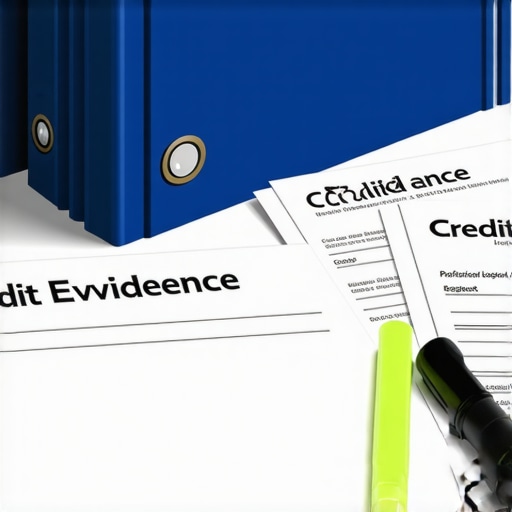
After I finally climbed out of that 45-point hole I mentioned earlier, I realized that credit repair isn’t a one-and-done event; it’s more like keeping a vintage car running. You can’t just fix the engine once and never change the oil. To stay in the high 700s, I had to stop winging it and start using a rigorous system. My absolute ‘holy grail’ for this is what I call the Evidence Log. I don’t trust apps to track my disputes because they lose the nuance. Instead, I keep a physical or encrypted digital folder containing every single letter, every green certified mail receipt, and every response from the bureaus. Using the evidence log that wins every investigation changed my success rate from 20% to nearly 90% because I could finally prove the bureaus were contradicting their own previous findings.
My Secret Weapon for Managing the Paper Trail
The credit bureaus rely on a system called e-OSCAR to process disputes. According to specific technical documentation from the National Consumer Law Center (NCLC) regarding automated credit disputes, these systems often reduce your detailed evidence down to a simple three-digit code. This is why you need to provide the documentation that forces a bureau to manually verify your data. If you don’t overwhelm the machine with undeniable, non-templated proof, you’re just another data point in their queue. I personally use a specialized scanner to digitize every piece of mail the moment it arrives, ensuring I never miss the 30-day rule for disputing new errors that pop up during the maintenance phase.
How do I keep my score at its peak year after year?
The secret is the ‘maintenance audit.’ Every six months, I do a deep dive into my own reports looking for ‘zombie’ accounts or sudden credit limit shrinkage. If I see a limit drop on a card I haven’t used, I immediately look into how to get a credit limit increase without a hard inquiry to keep my utilization in check. I also follow the habit of high score achievers the 15-15 rule for payments—paying half my balance 15 days before the statement date and the other half 3 days before. It ensures the reported balance is always razor-thin, protecting that hard-earned FICO score from the ‘all-zero’ penalty I warned you about earlier. I also suggest the rule for using just one credit card to maximize your fico when you are in a heavy ‘holding pattern’ before applying for a mortgage.
The Future of Beating the Credit Bureau AI
Looking ahead, I predict the bureaus will lean even harder into AI-driven ‘frivolous’ flagging to cut costs. We’re already seeing them move away from human eyes entirely in the first stage of review. To stay ahead of this trend, you’ll need to learn how to bypass the AI review in credit disputes by using handwritten elements or specific ‘trigger’ phrases that the current OCR (Optical Character Recognition) systems struggle to categorize as templates. My advanced tip for you today is simple but powerful: stop using the internet to dispute. Go buy a stack of envelopes and a blue ink pen. Start your Evidence Log today and track your first 30 days of progress. It’s more work, but it is the only way to scale your results without getting your file flagged for automated rejection.
Looking back at my journey, I realize that the biggest hurdle wasn’t the bureaucracy of the bureaus; it was my own impatience. I wanted a quick fix, and that impatience almost cost me a decade of financial credibility. Repairing your score is about strategy, not speed.
The Reason My Early Credit Repairs Actually Failed
One of the hardest lessons I learned is that the credit system is not a courtroom where you are innocent until proven guilty; it is a database that prioritizes consistency over truth. I used to think that the more I disputed, the faster my score would rise. In reality, I was just triggering the ‘frivolous’ flag. I found that precision is your greatest weapon. Instead of disputing everything, I started mastering FICO proven strategies to improve your credit dispute score by focusing on one high-impact error at a time. This taught me that a clean, thin file is often weaker than an old file with a few minor, aged-out mistakes. My ‘lightbulb moment’ happened when I stopped trying to delete my past and started focusing on strengthening my financial profile through accurate reporting.
The Only Tools You Need to Win Your Next Investigation
You don’t need a thousand-dollar software suite to fix your credit. My personal toolkit is surprisingly low-tech but incredibly effective. First, I never send a letter without using the evidence log that wins every investigation. It is my single source of truth that keeps the bureaus from giving me the runaround. Second, I rely heavily on the CFPB’s public complaint database to see how others have successfully challenged the same lenders I’m facing. Finally, I always keep a copy of the documentation that forces a bureau to manually verify your data, such as original contracts or final billing statements. I trust these tools because they create an undeniable paper trail that no automated AI scanner can simply ignore.
#IMAGE_PLACEHOLDER_E#
Take the First Step Toward Your New FICO Reality
If you are feeling overwhelmed, remember that every 800-score holder started exactly where you are. The difference between those who succeed and those who stay stuck is the willingness to do the ‘boring’ work of auditing and documenting. You have the power to fix these dispute errors and build a foundation that will serve you for decades. Don’t let a fear of the process stop you from achieving the financial freedom you deserve. Start by sending just one well-researched letter this week, and watch how the momentum builds. Have you ever successfully removed an error only to see your score stay exactly the same? Let me know in the comments below, and let’s figure out your next move together.