

I remember the exact moment my heart dropped into my stomach. It was a Tuesday afternoon, and I was checking my credit score, expecting to see progress after months of hard work. Instead, I saw a 45-point dip. The culprit? A $1,200 medical collection from a surgery I had two years ago—a bill I knew my insurance company had already settled. I felt sick, frustrated, and honestly, a little bit powerless. It felt like I was being punished for a mistake I didn’t even make. But here is the thing: you are not helpless. Medical billing is a chaotic, messy industry, and errors are more common than you think. Today, we are going to walk through exactly how to handle a medical bill that went to collections unfairly so you can reclaim your score and your peace of mind. We will dive into the strategies that worked for me and how to navigate the technicalities of FICO insights and dispute resolutions.
Your First Move When the Collections Letter Arrives
The worst thing you can do is ignore that letter or the dip in your score. Early on, I made the massive mistake of just calling the hospital and taking their word for it when a clerk told me it would be handled. It was not. I waited months, hoping the problem would vanish, only to find out that how dispute errors affect your score is a lot more complex than a simple phone call can fix. You need a paper trail. According to a 2022 report from the Consumer Financial Protection Bureau (CFPB), medical bills are the most common collection item on credit reports, and many are riddled with inaccuracies. You have to be your own advocate. Start by gathering your Explanation of Benefits (EOB) and every receipt you have. If you can prove the bill was an insurance error or a double-billing, you have already won half the battle. You might even find that you are within the 15-day window for disputing medical bill errors which can give you a significant advantage in getting it removed quickly.
Is fighting these collectors actually worth your time?
I get it. You are busy, and the idea of arguing with a debt collector sounds like a nightmare. You might be wondering if it is easier to just pay it and move on. My answer is a resounding no. Paying a collection that is not yours can sometimes validate the error and does not always guarantee the mark will leave your report. Plus, why give away your hard-earned money for a mistake? I spent weeks frustrated because I used the one letter that stops aggressive debt collection, and it was the only thing that finally got them to listen. It is about more than just the money; it is about protecting your financial future. Have you ever looked at your credit report and seen a medical bill you were certain was already paid? It is a gut-punch, but I am here to tell you that we can fix this together. Let us look at the specific steps to force these bureaus to actually do their jobs.
Audit Your Medical Records for Hidden Traps
Before you even pick up the phone, you need to look at your medical bill with the skepticism of a seasoned private investigator. Medical billing is notorious for ‘upcoding,’ which is essentially the billing equivalent of being charged for a five-course meal when you only ordered a side salad. I once discovered a hospital had charged me for a ‘level 5’ emergency visit when I was actually treated in a hallway for fifteen minutes. To catch these discrepancies, you must learn how to audit your own credit report for 10 common mistakes, but apply that same scrutiny to the itemized bill from the healthcare provider. If the numbers don’t match your Explanation of Benefits (EOB), you have the smoking gun you need to get the collection agency to back off.
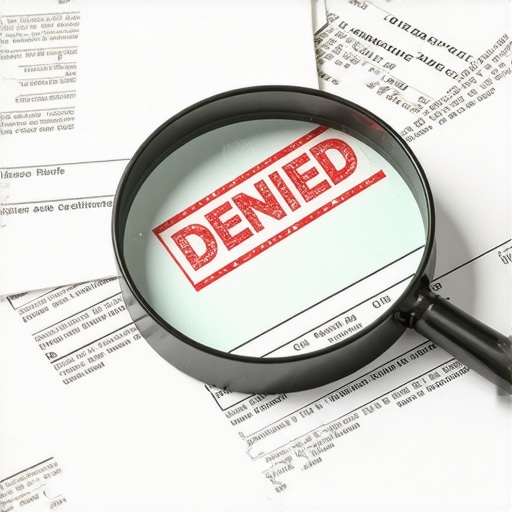
Force the Collector to Prove They Own the Debt
Think of a debt validation request as a ‘show your work’ requirement on a math test. In the world of debt collection, accounts are traded like baseball cards, often losing critical documentation in the shuffle. I remember a $400 radiology bill that surfaced out of nowhere; by the time I saw it, it had been sold three times. I simply demanded proof of the original contract and the specific itemization of the debt. Because I knew how to verify a debt that keeps changing owners and names, I realized they had nothing but my name and a dollar amount. Without proof, they cannot legally report that debt to the bureaus. If they can’t produce the receipts, they have to delete the entry.
Skip the Fast Lane and Use Certified Mail Instead
It is incredibly tempting to log into a credit app and click the ‘dispute’ button. It feels fast, clean, and modern. But in reality, that button is a trap. When you use an online portal, you often waive your right to a full investigation or the ability to re-dispute the same error later. There is a specific reason why you should never use the online dispute button: it converts your detailed evidence into a simple three-digit code that an AI can dismiss in seconds. Instead, you need to go old school. Type out your letter, attach your evidence, and go to the post office. There is immense power in knowing why you should always send dispute letters via certified mail. It gives you a timestamped receipt that the bureau received your claim, starting a legal 30-day clock they cannot ignore.
What to Do When the Robots Reject Your Claim
Sometimes, even with a mountain of evidence, the credit bureau’s automated system will spit back a ‘verified’ response. It feels like screaming into a void. This is where most people give up, but this is exactly where you need to lean in. You have to break the loop of automated rejections. By requesting a specific type of follow-up, you can learn how to force a manual review when the bureau robots say no. This forces a human being—someone who can actually see that your insurance already paid the bill—to look at your file. In my surgery case, it took two rounds of letters, but once a human eye saw my EOB next to the collection notice, the account was wiped from my history in forty-eight hours.
There is a massive misconception that simply paying off a collection is the magic bullet for your credit health. In reality, this is where most people get stuck in the “Credit Plateau.” You might think that bringing a balance to zero is the ultimate goal, but why a zero balance is not always the best for your FICO score often comes down to which scoring model your lender is using. If they are still stuck on FICO 8—which many mortgage lenders are—a paid collection is treated almost as harshly as an unpaid one. It stays on your report for seven years, dragging you down regardless of the dollar amount. This is why you see people frustrated, wondering why your score didn’t move after you settled that debt. You have to negotiate for a deletion, not just a settlement. My rule of thumb? Never pay a penny until you have a written agreement that the entry will be scrubbed from your history entirely.
Stop Feeding the Zombie Debt Collectors
The “Oops” factor I see most often is the accidental acknowledgment of ancient debt. When a collector calls you about a medical bill from six years ago, and you make even a $5 “good faith” payment, you might have just reset the statute of limitations for them to sue you. While it doesn’t extend the seven-year reporting limit, it gives them legal teeth they didn’t have before. You need to know how to spot a zombie debt before it strikes your report because these old accounts are often sold for pennies on the dollar to aggressive agencies that hope you don’t know your rights. A 2021 study by the Urban Institute highlighted that nearly 1 in 10 Americans have medical debt in collections, yet many of these are technically unverified or past their legal shelf life. If you acknowledge the debt without verifying it, you’re basically handing them your wallet.

Expose the Hidden Reporting Inaccuracies
Beyond the simple fact of the debt’s existence, there are technical nuances that even professional credit repair companies miss. Look at the “date of last activity” and the “date opened.” Collectors frequently “re-age” accounts—changing the date to make an old debt look new so it stays on your report longer. This is illegal. By learning how to audit your credit report for hidden reporting errors, you can find these inconsistencies. A medical collection that keeps moving from agency to agency is particularly prone to these errors. Every time it moves, the details get fuzzier, giving you a prime opportunity to dispute based on data integrity rather than just “this isn’t mine.”
Does Your Lender Use FICO 8 or FICO 9?
This is the advanced nuance that separates the pros from the amateurs. FICO 9 and the newer FICO 10 models actually ignore paid medical collections entirely, recognizing that healthcare billing is a mess and shouldn’t define your creditworthiness. However, the catch is that most banks are incredibly slow to upgrade their systems. This discrepancy is a primary reason why understanding FICO dispute errors and credit repair hacks is so vital. If you are applying for a mortgage, you are likely being judged by an older standard that doesn’t care if you paid the bill or not. In these cases, you must focus on the “Pay-for-Delete” strategy or finding reporting errors to force a full removal. If you’ve already paid, you might find yourself needing to learn how to remove a paid-off collection that won’t go away to finally see that score jump. Have you ever fallen into this trap? Let me know in the comments.
Once you have successfully scrubbed that medical collection, the real work begins—and it is not nearly as stressful as the fight. I have found that the secret to staying in the high-700 club is not about some magic software; it is about a simple, boring routine. Every single month, I set a calendar alert for the 1st. I do not just look at my score; I download my full reports. Establishing the habit of high score achievers checking reports every 30 days is the only way to catch a re-inserted error before it does real damage. I have seen collections ‘ghost’ back onto a report months after being deleted. If you are not watching, they will settle in like they own the place.
How can I keep my report clean for the next decade?
The best tool in my arsenal is actually a physical one: an accordion file folder. I keep a copy of every dispute letter, every certified mail receipt, and every ‘deleted’ confirmation letter I have ever received. When a bureau inevitably tries to claim my evidence is insufficient, I have the evidence log that forces a bureau manual review ready to go. I do not rely on ‘free’ credit monitoring apps for the heavy lifting. While they are great for alerts, they often use VantageScore, which is irrelevant to 90% of lenders. I personally pay for a MyFICO subscription because it gives me access to all 28 versions of my FICO score. Trust me, you would be shocked at why your score is different on Experian and TransUnion, and having the professional-grade data allows me to see exactly what a mortgage or car lender sees.
Prepare for the FICO 10T Shift
The future of credit is shifting away from snapshots and toward stories. FICO 10T is the latest model being adopted, and it focuses on ‘trended data’—meaning it looks at your behavior over the last 24 months, not just where your balances are today. This makes the logic behind the FICO 10T trended data shift vital to understand. It is no longer enough to pay down a bill right before you apply for a loan; you need to show consistent, low utilization. According to FICO’s official technical whitepaper on the 10T model, consumers who consistently pay more than their minimum and keep their utilization low over a 24-month rolling period will see significantly higher scores than those who rely on month-to-month fluctuations. To stay ahead, I recommend using the DIY credit repair checklist that outperforms paid services to do a deep-dive audit twice a year. Don’t wait for a rejection letter to find out a ‘zombie’ medical bill has resurfaced. If you see something fishy, you must provide the evidence that stops a bureau from labeling your dispute frivolous immediately. My challenge to you: spend 15 minutes this weekend and learn how to audit your own credit report for 10 common mistakes. It is the most profitable hour you will ever spend on your finances.
The $1,200 Lesson That Changed My Financial Life
Reflecting on my journey through the medical billing maze, a few hard truths stand out that I wish I’d known from day one. First, the hospital and the collection agency are rarely on the same page; never assume a ‘we’ll fix it’ from a nurse means the bill won’t be sold to a scavenger agency. Second, I realized that my credit score isn’t a static number but a dynamic narrative that I have the power to edit. The most profound shift happened when I stopped treating credit as something that ‘happened to me’ and started viewing it as a system I could master. Mastering the nuances of credit repair tips and correcting dispute errors effectively was my turning point. I realized that a single well-crafted letter is worth more than ten frustrated phone calls.
My Personal Arsenal for Credit Defense
You don’t need a high-priced agency to fix your history, but you do need a repeatable system. I personally swear by a physical ‘Evidence Log’—it sounds primitive, but having a physical folder with every certified mail receipt is your ultimate leverage when a bureau claims they never received your dispute. I also highly recommend using a dedicated FICO tracking service rather than free apps; seeing why your score is different on Experian and TransUnion in real-time prevents surprises when you’re at the dealership or bank. Finally, I keep a digital copy of the DIY credit repair checklist that outperforms paid services on my phone. It’s my go-to guide every time a new account appears or an old one updates. #IMAGE_PLACEHOLDER_E#
Your Credit Story Is Still Being Written
It’s easy to feel like a victim when an unfair medical bill tanks your score, but you now have the blueprint to fight back. Whether you are currently in the middle of a heated dispute or just starting to look for ways to protect your financial standing, remember that every piece of evidence you gather is a step toward a better financial future. You have the legal right to an accurate report, and more importantly, you have the tools to demand it. Don’t let a clerical error at a doctor’s office dictate your ability to buy a home or start a business. Take that first step today, audit your report, and reclaim your FICO standing with confidence. Have you ever successfully removed a medical bill from your credit report? Let me know your strategy in the comments below!