

I remember sitting at my kitchen table three years ago, staring at a lime-green collection notice for a medical bill I was certain I’d settled. Two months later, a different company with a much more aggressive letterhead claimed I owed them the same amount—plus a ‘service fee.’ By the time the third agency called, the debt had apparently ‘matured’ and changed names again. I felt like I was playing a high-stakes game of Whac-A-Mole where my FICO score was the prize. It’s exhausting. You want to be responsible, but how can you pay someone when you aren’t even sure they actually own the right to collect? It’s a common trap designed to make you fold and just pay out of fear. But I’ve learned that when the paper trail gets messy, the law actually swings back in your favor if you know which questions to ask.
Stop Chasing Shadows and Demand Real Paperwork
The biggest mistake I made early on—and it’s a doozy—was trying to argue with these people over the phone. I once spent forty-five minutes explaining my life story to a collector named ‘Mike’ who didn’t care about my receipts; he just wanted my debit card number. I ended up paying a small settlement just to make him go away, only to find out the original creditor had already sold the debt to someone else. I was out $200 and the debt stayed on my report. It was a brutal lesson in why you must get the documentation that stops debt buyers in their tracks before you ever talk money. If a debt is hopping from agency to agency, it often means the original data is getting corrupted. This is your opening. You need to know how to effectively handle a collection that keeps moving agencies by forcing them to prove the chain of custody. If they can’t show the ‘assignment’ of that debt from Company A to Company B, they technically have no right to report it to the bureaus.
Is This Just a Giant Waste of Postage Stamps?
You might be thinking that sending certified letters is a relic of the past or that these billion-dollar agencies will just ignore you. I thought so too. But here is the reality: the Consumer Financial Protection Bureau (CFPB) reports that nearly 50% of consumers who dispute debt collection practices see a favorable change in their situation because these companies often lack the actual ‘wet-ink’ contracts. Today, I’m going to show you how to spot a ghost debt before it ruins your credit and the exact verification steps to take. We are going to build the evidence log that forces a bureau manual review if they try to brush you off with an automated response. Have you ever had a debt collector suddenly vanish only to be replaced by a ‘law firm’ two weeks later? It’s a scary tactic, but usually, it’s just the same debt in a cheaper suit. We’re going to strip away that intimidation factor together.
The first step in taking back control isn’t writing a letter; it’s putting on your detective hat. You need to how to audit your credit report for hidden reporting errors that the average person misses. I’m talking about things as small as a wrong middle initial or a transposed number in your address. I once helped a friend who couldn’t get a car loan because a collection was tied to her name, only to realize the address listed was for an apartment she hadn’t lived in for ten years. By learning the simple way to dispute a misspelled name on your report, she cleared the logistical link that allowed the collector to verify the debt.
Identify the Real Culprit Hiding Behind Your Credit Report
You have to realize that the person calling you isn’t always the person reporting to your file. If you don’t know how to find out who is really reporting to your credit file, you’re throwing punches in the dark. Think of your credit report like a crime scene; you’re looking for fingerprints that don’t belong. I remember a specific medical bill that kept reappearing on my report from three different agencies. It was like a digital ghost. It wasn’t until I sat down and realized it was a how to prove a paid collection is actually a double entry error that I finally got it removed. They were charging me for the same X-ray under two different internal billing codes. Finding that one mismatch is often the ‘silver bullet’ you need.

Stop Using the Online Dispute Button Right Now
It’s tempting. It’s right there, glowing and easy. But you must understand why you should never use the online dispute button. When you click that button, you often waive your right to a full investigation and force your claim into a pre-set category that a computer can dismiss in seconds. Instead, you need to know why you should always send dispute letters via certified mail. A physical letter creates a legal paper trail that the credit bureaus have to respect. I’ve seen cases where a simple certified letter with a signature requirement made a collector ‘lose’ the file because they knew they couldn’t win a manual audit.
Build a Folder That Bureau Robots Can’t Ignore
The credit bureaus use AI to scan your letters for keywords. If you sound too much like a template, they’ll slap a ‘frivolous’ label on it and move on. To beat the machine, you need to know how to stop ai from automatically rejecting your dispute letter by including unique evidence. This is where the one document that forces a bureau manual review comes into play—usually a copy of your utility bill or a bank statement that contradicts their data. I once spent a Saturday afternoon organizing my receipts into a three-ring binder, highlighting every inconsistency. When the bureau sent back a generic rejection, I sent back a copy of my binder’s index. The result? A human finally looked at it, saw the error, and wiped the collection within 72 hours. This is effective dispute error resolution to boost your credit score in 2025 in action.
Most people think that hitting a $0 balance on every single credit card is the holy grail of credit building. In my experience, that’s actually one of the biggest myths in the industry. It sounds logical, right? No debt equals a perfect score. But the FICO algorithm is a strange beast. If every card on your report shows a $0 balance at the time of reporting, the system often triggers a ‘no recent revolving activity’ flag. I’ve seen clients lose 15 to 20 points overnight just because they were ‘too’ responsible. This is why you need to understand why a zero balance is not always the best for your fico score and how to use how a 10 balance can protect your credit score from dropping. It’s about showing the machine that you have credit and choose to use it sparingly, rather than not using it at all.
Why Does Your Score Stagnate When You Have Zero Debt?
The ‘oops’ factor often comes from the timing of your payments. You might pay your bill in full every month, but if you do it on the due date, the high balance might have already been reported to the bureaus. To beat this, you have to master why your credit card statement date is a critical number. According to data from FICO’s own research, high-score achievers—those in the 800+ club—typically maintain an aggregate utilization of less than 7%, but rarely 0%. This nuance is the difference between a good score and a great one. If you’re stuck, the small balance hack that adds 20 points to your fico involves leaving just a few dollars on one card until the statement closes. It sounds counterintuitive, but it works.

Another massive trap is paying off a collection account and expecting it to vanish. I see this all the time—someone is trying to buy a house, they see a $500 collection, and they pay it instantly. Suddenly, their score drops. Why? Because you just ‘verified’ the debt and updated the ‘date of last activity’ on a negative item. You should why you should never pay a collection agency without a delete agreement in writing. Without that ‘pay-for-delete’ promise, you’re just giving them money to keep a black mark on your record for another seven years. It’s a brutal mistake that the truth about paying off a collection before buying a house reveals too late for many hopeful homeowners.
Can You Actually Force a Human to Overrule the Bureau AI?
The short answer is yes, but you have to know how to force a manual review when the bureau robots say no. Most people give up after the first ‘verified’ response. They don’t realize that the Fair Credit Reporting Act (FCRA) requires a reasonable investigation, not just a computer ping. If you’ve followed the ultimate guide to dispute errors and credit building in 2025, you know that your follow-up letter is more important than your first. Use the letter that proves the bureau failed their investigation to demand the method of verification. Have you ever fallen into the ‘zero balance’ trap or paid a collection only to see your score tank? Let me know in the comments, and let’s figure out your next move together.
Once you’ve successfully scrubbed the errors and seen that initial spike in your score, the real work begins. It’s like losing weight; anyone can go on a crash diet for a month, but staying lean requires a lifestyle change. I used to think I could just ‘set it and forget it’ once I hit the 750 mark, but I quickly learned that your credit file is a living, breathing document. If you aren’t paying attention, small glitches can snowball into major setbacks. I’ve found that the secret sauce isn’t a secret at all—it’s a commitment to the habit of high-score achievers checking reports every 30 days. You need to catch a mistake the moment it appears, not when you’re sitting in a car dealership trying to close a deal.
Stop Flying Blind and Build a Personal Credit Dashboard
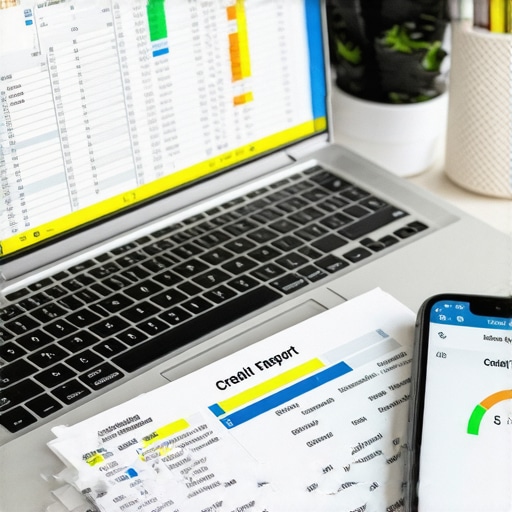
I’m a bit of a data nerd, but I’ve found that relying solely on free apps like Credit Karma is a recipe for disaster. Those apps use VantageScore, which is almost never what a mortgage lender actually looks at. I personally use a simple, custom-built Excel spreadsheet alongside my official FICO monitoring service. Why the spreadsheet? Because I need to see the trend lines that the apps hide. I’ve learned the hard way about the danger of using credit repair software without a plan; these tools can automate the letters, but they can’t strategize your debt-to-income ratio or anticipate a lender’s internal algorithm. I track my statement closing dates religiously. I’ve discovered that knowing the best day of the month to pay your credit card bill is worth more than any ‘hack’ you’ll find on social media. If you pay two days after the statement closes, you’ve already missed the reporting window for that month’s utilization. Timing is everything.
FICO 10T Is Changing How Your Debt Is Judged
Looking ahead, the landscape of credit is shifting beneath our feet. We are moving away from ‘snapshots’ and toward ‘trajectories.’ According to FICO’s technical brief on the 10T model, the system is increasingly focused on ‘trended data.’ This means the bureaus aren’t just looking at what you owe today; they are looking at whether your balances have been rising or falling over the last 24 months. You can’t just pay everything off the week before a loan application anymore. You need to understand the logic behind the fico 10t trended data shift to stay ahead of the curve. I predict that within the next two years, ‘balance chasing’—where a bank lowers your limit as you pay down a card—will become even more common if your trended data looks erratic. This is why I maintain a consistent, predictable payment history, which is the habit that keeps your fico score above 780 every month.
How do I maintain my credit wins over the long haul?
Maintenance is about more than just avoiding late payments. It’s about credit mix and age. I still have a small-limit card from my college days that I buy one pack of gum on every six months just to keep the account active. That ‘anchor’ account holds my average age of credit together. If I closed it, my score would likely drop 30 points instantly. This is the level of detail required for how to build an 800 credit score starting from zero and keeping it there. I want you to try something today: look at your last three credit card statements and find the ‘Statement Closing Date’—not the due date. Mark it on your calendar. Make your payment three days before that closing date this month and watch what happens to your reported utilization. It’s a small tweak, but it’s how the pros play the game.
What I Wish Someone Told Me Before My First Dispute
Looking back on my journey from a 580 to the high 700s, I realized that credit repair isn’t about being loud; it’s about being relentless. I spent so much time being angry at the system instead of learning how to use its own rules as leverage. First, I learned that patience is your most valuable asset. The 30-day investigation window is your friend because the bureaus are often too busy to meet it, which is how you win. Second, I stopped treating my credit report as a set-in-stone document. It is more like a draft that needs constant editing. By mastering fico proven strategies to improve your credit dispute score, I realized that I held the power all along.
The Gear I Use to Keep the Bureaus Honest
I do not rely on luck or expensive gurus. Instead, I keep a very specific toolkit that ensures I never lose a paper trail. I highly recommend keeping a dedicated Credit Bible—a physical folder with every certified mail receipt and every response you get. I also use a high-quality document scanner rather than just taking photos with my phone; when you send evidence to a bureau, it needs to be perfectly legible so their AI cannot claim it is unreadable. Finally, I always keep the diy credit repair checklist that outperforms paid services within arm’s reach. It keeps me grounded and ensures I do not miss the small details, like verifying the date of last activity, which can make or break a case.
Reclaim the Score You Deserve
You have seen the traps, the myths, and the secret levers that control your financial reputation. Now, the only thing left is to take action. Do not let the fear of a frivolous label or a robotic rejection stop you from demanding accuracy. Your financial freedom is worth the effort of effective dispute error resolution to boost your credit score in 2025. Remember, even the most daunting 800+ goals start with a single corrected address or a small balance adjustment. You have the blueprint for how to build an 800 credit score starting from zero, so do not wait for a better timing to start. Have you ever felt like you were shouting into a void when dealing with the credit bureaus? Let me know your experience in the comments below, and let’s keep the conversation going.