

I still remember the cold sweat I broke into when I pulled my first real credit report and saw a judgment from a utility company dated five years prior. I was 14 at the time. I was barely tall enough to reach the top shelf in the pantry, yet according to the credit bureau, I was somehow responsible for a three-bedroom house’s heating bill. I did what most people do: I panicked. I called the collector and begged them to listen, telling them I was just a kid! They didn’t care. In fact, my frantic phone call only made things worse because I didn’t have a paper trail. I spent years digging out of that hole because I didn’t know how to legally prove a contract signed by a minor is generally voidable. Today, I am going to show you exactly how to wipe those ghost debts off your record so you can finally focus on how to build credit when you’re starting from zero. [image_placeholder_1]
Your Birth Certificate is Your Best Defense
When I first started understanding credit errors, I thought the burden of proof was entirely on the bank. I was wrong. Early on, I made the massive mistake of assuming a simple phone conversation would fix everything. It doesn’t. You need a paper trail that is impossible to ignore. Because you were a minor when the account was opened, the contract is legally unenforceable in almost every jurisdiction. However, banks aren’t in the business of just taking your word for it. You have to proactively provide the documentation that proves you were the victim of fraud or, at the very least, evidence that you lacked the legal capacity to sign a contract.
Will the Credit Bureau Actually Delete the Error?
This is the biggest fear I hear from my neighbors: “Won’t they just ignore me and say it’s my debt anyway?” Not if you follow the law. According to the Consumer Financial Protection Bureau (CFPB), credit reporting agencies are legally obligated to investigate any dispute that isn’t frivolous, and they must respond within 30 days. When you provide a government-issued ID and a birth certificate showing you were a child when the account started, the investigation becomes very short. Have you ever looked at your report and seen a date that made absolutely no sense? Tell me in the comments, because you aren’t alone. To make this stick, you must send everything via certified mail. If you don’t have a return receipt, the bureau can claim they never received your proof, leaving you trapped with a debt that isn’t yours.
Find the Ghost Debts Hiding in Plain Sight
To fix a broken credit score, you have to know exactly where the cracks are. You cannot rely on a summary screen from a banking app. I’ve seen countless people try to fix their FICO score using only a notification they got on their phone. That is like trying to fix a car engine by looking at the paint job. You must learn how to audit your own credit report for 10 common mistakes to ensure you aren’t missing secondary errors. When I was dealing with that old utility bill, I found two other ‘ghost’ accounts that I hadn’t even noticed because I was so focused on the big one. If you find multiple errors, you need to how to properly remove a duplicate account from your report alongside your age-related dispute.
The Evidence Log That Bureaus Can’t Ignore
Most people fail because they send a letter saying, ‘I was a kid,’ without providing the receipt. Imagine trying to return a shirt without the tag or a receipt; the store just stares at you. The credit bureau is the same. You need a physical ‘evidence log’ that includes a copy of your birth certificate and a current government ID. This creates a chronological contradiction that their software cannot easily dismiss. If you are fighting a specific industry, like a mobile carrier that signed you up at 16, you need the documentation that wins a dispute against a cell provider. This proof is the cornerstone of your case. 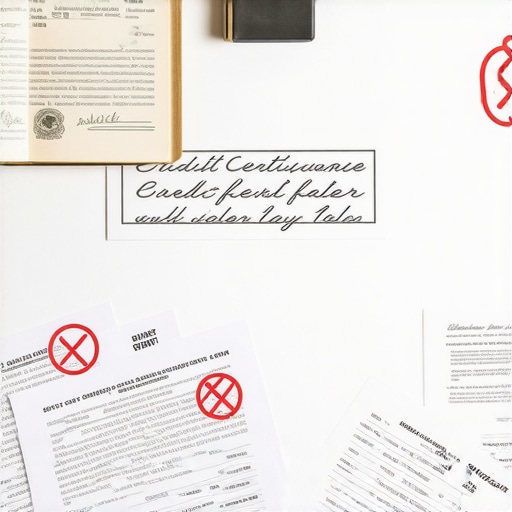
Write the Dispute Letter That Demands a Manual Review
When you write your letter, avoid sounding like a lawyer. Use your own voice, but be precise. I remember the first time I sent a dispute for an old cell phone bill. I thought I was being clever by using a template I found on a random forum. Big mistake. The bureau sent back a canned response in two weeks calling my claim ‘frivolous.’ It felt like a slap in the face. I realized then that generic letters are just noise. I had to learn how to handle a bureau that says your dispute is frivolous by proving I wasn’t just a bot myself. Your letter should explicitly state: ‘I am disputing this account because it was opened when I was a minor, making the contract voidable. Attached is my birth certificate as proof.’ This forces them to look at the dates. To make this even more effective, you should include the one document that forces a bureau manual review.
What to Do When the Robots Reject Your Proof
Credit bureaus use automated systems called e-OSCAR to process disputes. These ‘robots’ often miss the nuance of a birth certificate. If they send back a ‘verified’ status, do not panic. This is where you how to force a manual review when the bureau robots say no. You must follow up with a second letter that highlights their failure to investigate the provided evidence. Keep a meticulous record of every interaction. I started using the evidence log that forces a bureau manual review to track the dates and names of everyone I spoke with. This pressure eventually breaks the cycle of automated denials.Let’s dig deeper into the nuances that even many self-proclaimed experts often get wrong. One of the biggest myths in the industry is the idea that paying off a collection account will instantly skyrocket your FICO score. In reality, why paying off a collection does not always raise your score is a complex issue rooted in scoring model math. If a collection is several years old, much of the damage is already baked into your profile; simply changing the status to ‘paid’ doesn’t necessarily remove the historical stain. Even worse, if you aren’t careful, you might accidentally trigger the re-aging trap. I’ve seen people try to do the right thing by making a small good-faith payment, only to realize they just restarted the seven-year reporting clock. You need to know how to spot a re-aged debt on your credit report immediately before you send a single penny to a collector.
Does Every Scoring Model Care About Your Paid-Off Debts?
This is the advanced nuance most beginners miss: FICO 9 and FICO 10 actually ignore paid collection accounts entirely, which is a massive win for consumers. However, a study by the Consumer Data Industry Association (CDIA) suggests that the vast majority of mortgage lenders still rely on much older versions of the FICO algorithm, such as FICO 4 or 5, while many credit card issuers stick with FICO 8. These legacy models still penalize you for a ‘paid’ collection. This is why understanding fico dispute errors and credit repair hacks is about more than just following a template; it’s about knowing which specific score your lender is actually looking at. If you are preparing for a major purchase like a home, you must prioritize the pay-for-delete strategy that works on old utility bills to ensure the record is physically removed rather than just updated to a zero balance.
The Dangerous Trap of the All-Zero Balance
Another mistake I see constantly is the ‘all-zero’ trap. Common logic suggests that having no debt at all is the gold standard for financial health, but why a zero balance is not always the best for your fico score comes down to a specific algorithm penalty for ‘no recent revolving activity.’ If every credit card you own reports a $0 balance, the scoring system interprets this as you not using credit at all, which can ironically dock your score by 15 to 20 points. Have you ever fallen into this trap where you paid everything off only to see your score drop? Let me know in the comments. To maximize your profile, I recommend using the small balance hack that adds 20 points to your fico. By keeping a tiny, manageable balance on just one card while focusing on mastering credit repair dispute errors and fico optimization, you prove to the bureaus that you are an active and low-risk borrower. This subtle distinction is often what separates a good credit score from an elite one.
Maintaining an elite score after you’ve cleaned up your report isn’t just about paying bills on time; it’s about defensive architecture. I’ve seen people work tirelessly to remove a collection only to have a new ‘ghost debt’ appear because they didn’t seal the exits. Once you reach a certain level, your focus must shift from repair to preservation. You need to be proactive about how to build an 800 credit score starting from zero and keeping it there by watching the subtle shifts in your file that automated apps often miss.
Stop Trusting the Little Green Bar on Your Phone
The biggest mistake I see my clients make is relying solely on the score they see on their banking app. Those apps are great for a quick glance, but they often use VantageScore 3.0, which most lenders don’t even use. If you want to stay on top of your game, you need to know how to find out which credit model your lender uses. Personally, I check my raw FICO 8 and FICO 9 scores quarterly because those are the numbers that actually determine your interest rates for cars and personal loans. Relying on the wrong data is a recipe for a rude awakening at the dealership.
Why I Use a Physical Evidence Log Instead of Software
People always ask me what software I recommend for fixing credit. My answer usually surprises them: I don’t use much of it. While software can help with templates, the problem with using credit repair software for complex errors is that it lacks the human touch required for manual reviews. I keep a physical ‘Evidence Log’—a simple three-ring binder where I store my certified mail receipts and paper reports. You should why you should always request a paper credit report because the digital versions often hide ‘soft’ data points that could indicate a future error or a split file. The National Consumer Law Center (NCLC) highlights in their Fair Credit Reporting manual that the accuracy of automated dispute resolution systems remains the weakest link in consumer protection, often failing to capture the nuances of physical evidence.
How do I maintain my credit health over time?
The key to long-term success is a 15-minute monthly audit. I set a calendar alert for the first Saturday of every month to scan my accounts for anything unusual, like a misspelled employer or a new inquiry I didn’t authorize. This is the core of build credit fast expert tips for correcting credit errors and boosting fico. If you spot a mistake early, it’s a 30-day fix. If you wait a year, it’s a six-month battle. You also need to keep the specific log you need to keep when calling bureaus so you have names, dates, and reference numbers if you ever need to escalate a dispute to a supervisor.
Prepare for the Future of Trended Data
The industry is moving toward ‘trended data’ with models like FICO 10T and VantageScore 4.0. This means the bureaus aren’t just looking at your balance today; they are looking at whether you are paying down debt or accumulating it over the last 24 months. To stay ahead, you need to be mastering credit repair dispute errors and fico optimization by ensuring your monthly payment patterns show a downward trend or a steady, low utilization. You should also understand the logic behind the fico 10t trended data shift so you aren’t blindsided by a score drop even when your total balance stays the same. Start today by looking at your last three statements—if your balances are creeping up, your future score is already at risk. Try the ‘small balance hack’ this month and see if you can trigger a 10-point jump just by changing your reporting date.
Why Facts Alone Won’t Win Your Dispute
One of the most frustrating lessons I learned is that the credit bureaus aren’t actually looking for the truth; they are looking for specific data points that satisfy their automated algorithms. I used to think that because it was ‘obvious’ I was a child when a debt was incurred, the bureau would simply see the logic and delete it. It doesn’t work that way. You have to speak their language. I found that being loud and persistent with why you should always send dispute letters via certified mail is the only way to ensure your voice is heard. The system is designed to favor the creditor by default, so your job is to make it legally and administratively impossible for them to keep the error on your report.
The Resources That Actually Moved the Needle for Me
I stopped relying on generic internet advice and started looking at the systems from the inside out. My personal toolkit for maintaining an elite score includes a few non-negotiable items. First, I always follow the credit repair blueprint fixing errors and strengthening your financial profile because it treats credit as a marathon, not a sprint. Second, I am extremely cautious about third-party tools, as I’ve seen the danger of using credit repair software without a plan first-hand. Finally, if you are just starting this journey in the new year, I highly recommend following a dispute errors on your credit report a step-by-step guide for 2025 to ensure you aren’t missing any of the new reporting regulations.
[image_placeholder_final_wrapup]
Take the First Step Toward Your 800 Score Today
The cycle of ‘ghost debts’ and minor-age errors only continues if you let it. By using credit repair tips correcting dispute errors effectively, you are doing more than just fixing a number; you are reclaiming your financial identity. Your FICO score is the key to your future home, your next car, and your overall peace of mind. Don’t let a mistake from your childhood or a clerical error by a utility company keep you from the life you deserve. Start your monthly audit this weekend and take back control. Have you ever found a debt on your credit report that was older than your own driver’s license? Let me know your story in the comments below!