

I spent three hours staring at a ‘clean’ credit report on my laptop, wondering why my mortgage application just got laughed out of the room. It was 2019, and I thought I was being tech-savvy. I had the apps, the alerts, and the digital PDFs all lined up. But there was a ghost in the machine—a tiny, misspelled collection account that only appeared when I finally sucked it up and ordered a physical, hard-copy report. That tiny error, hidden by the way digital screens truncate data, was the difference between a ‘yes’ and a ‘maybe next year.’ It was a wake-up call that changed how I handle my finances forever.
Stop Trusting the Screen and Get the Real Paperwork
The problem with our ‘digital first’ world is that screens are designed for convenience, not for forensic auditing. When you view your report online, you’re often seeing a sanitized version of your data. To truly protect yourself, you need to know how to audit your credit report for hidden reporting errors that simply don’t show up in a mobile app. Early in my journey, I made the mistake of thinking ‘if it’s not on the app, it doesn’t exist.’ I was wrong. A paper report contains the full, unedited disclosure of your file, including soft inquiries and historical data that digital summaries often toss aside to save space. We are going to solve this today by getting you back to basics, because that paper trail is the one document that forces a bureau manual review when things go sideways. Have you ever noticed your score jumping around for no reason while your ‘summary’ looks exactly the same?
Is it really worth the stamps and the wait?
I get it. In an age of instant gratification, waiting seven to ten business days for a letter feels like an eternity. But here is the kicker: a study by the Federal Trade Commission (FTC) found that five percent of consumers had errors on their reports that could lead to less favorable terms for loans. That is one in twenty people getting screwed by a typo. When you have the paper in your hands, you can take a highlighter to it. You can spot the missing middle initial that ruined a credit score for someone else I helped recently. You can’t do that effectively on a 6-inch smartphone screen. Furthermore, when you find a mistake, why you should always send dispute letters via certified mail becomes much clearer once you have the physical evidence to attach. We aren’t just looking for numbers; we are looking for the narrative of your financial life. Let’s get into the nitty-gritty of why the post office is your new best friend for FICO growth.
Put Your Reports Side by Side on the Kitchen Table
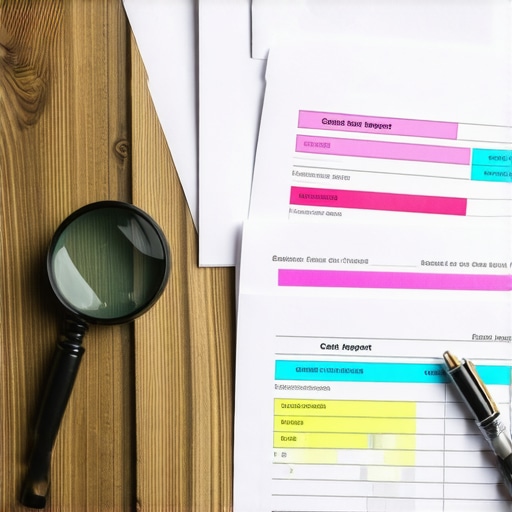
I call this the ‘Forensic Table Sweep.’ Clear your dining table, grab three different colored highlighters, and print your reports. I did this in 2021 when I was helping a friend who couldn’t figure out why her score was stuck in the 640s despite having zero debt. We laid out the Experian, TransUnion, and Equifax reports next to each other. Within ten minutes, we found the culprit: a medical bill that was listed as ‘Open’ on one report but ‘Charge-off’ on another. This kind of data inconsistency is your golden ticket because it proves the reporting is unreliable. To replicate this success, you need to know how to audit your own credit report for 10 common mistakes that frequently hide in plain sight between these different bureau versions.
Decode the Secret Language of Bureau Robots
Credit reports aren’t written for human readers; they are written for database algorithms. You will see cryptic terms like ‘Date of Last Activity’ or ‘MOP’ codes. If these dates do not match your personal bank records, you have found a loophole. I once fought a ‘zombie debt’ that kept changing its ‘Date of First Delinquency’ every time the account was sold to a new collector. By keeping a physical log of every change, I was able to prove the debt was actually past the legal statute of limitations. This is why effective dispute error resolution to boost your credit score in 2025 requires you to look at the raw data strings, not just the simplified ‘Summary’ tab on a mobile app.
Build a Paper Trail That Bureaus Cannot Ignore
When you find an error, your first instinct is to click the ‘Dispute’ button on the website. Avoid that trap. Clicking that button often forces you to use a drop-down menu that oversimplifies your problem and can even waive your right to a full investigation under the Fair Credit Reporting Act (FCRA). Instead, you want to craft a physical letter that acts like a legal summons. When you learn how to stop AI from automatically rejecting your dispute letter, you realize that including physical evidence—like a scan of a cancelled check or a letter from the original creditor—forces a human clerk to actually open your file. I remember a case where a client had two accounts with the same number but different balances; the bureau’s AI kept merging them into one mess. We had to send the evidence log that forces a bureau manual review to get a human to manually separate the files. If you have ever wondered how to prove a paid collection is actually a double entry error, it always starts with showing the bureau that two different entities are claiming the exact same debt at different price points.
Most people assume that paying off an old collection is the holy grail of credit repair. In my experience, it can actually be a landmine. You see, the common logic says ‘pay your debts and your score goes up,’ but the FICO algorithm doesn’t always play by those rules. If you pay a five-year-old collection without a ‘pay-for-delete’ agreement, it might actually update the ‘Date of Last Activity,’ making a dormant negative item look like a brand-new default to the software. This is precisely why paying off a collection does not always raise your score in the way you would expect. We need to look past the surface-level advice to find the actual levers of credit growth.
Will a zero balance actually raise your score?
Not necessarily. While newer models like FICO 9 ignore paid collections, the reality is that many mortgage lenders still use older versions that penalize you for the mere presence of a collection, regardless of the balance. According to reports from the Consumer Financial Protection Bureau (CFPB), many consumers find their scores stagnant or even lower after a settlement because they did not negotiate a total removal of the entry. Understanding why a zero balance is not always the best for your fico score becomes painfully obvious when you are at the closing table for a home loan and your score hasn’t moved an inch. Have you ever fallen into this trap? Let me know in the comments.
Avoid the Re-Aging Trap That Resets the Clock
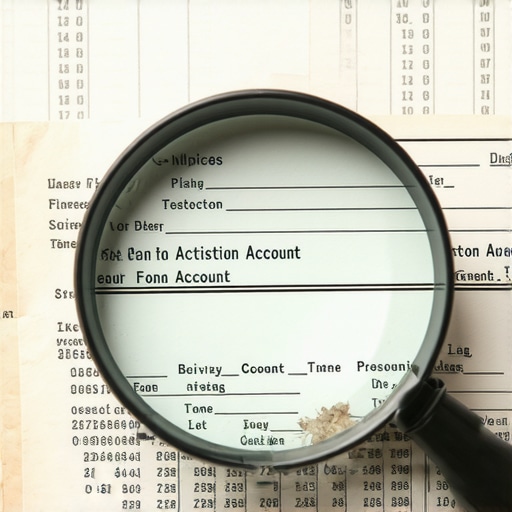
The biggest ‘oops’ factor I see among enthusiasts is the ‘re-aging’ mistake. When you talk to a collector on the phone and make even a small five-dollar ‘good faith’ payment, you might inadvertently restart the statute of limitations. This gives the creditor more years to legally pursue you or even sue. You must verify the paperwork needed to prove a debt is outside the statute of limitations before you open your wallet or sign any agreement. Advanced builders also look at the logic behind the fico 10t trended data shift 2, which examines your financial behavior over a 24-month window rather than just a single snapshot of your current balances. If you are struggling with automated rejections, you have to know how to force a manual review when the bureau robots say no to get a human eyes on your specific situation. Don’t let the simplicity of a digital ‘Pay Now’ button ruin years of careful progress.
I used to think that reaching a 750 score was the finish line. I thought once the errors were gone and the disputes were settled, I could just coast. But the truth is, credit is more like a garden than a trophy; if you stop weeding, the errors will grow back in the form of ghost debts and misreported balances. To stay on top, I stopped relying on those flashy ‘free score’ apps and started using a dedicated Audit Log. This is just a simple, encrypted spreadsheet where I track the exact date every creditor reports to the bureaus. Knowing the habit that keeps your fico score above 780 every month isn’t about secret tricks; it’s about meticulous documentation. I record the ‘Statement Closing Date’ for every card, because that is the moment the data is frozen and sent to the bureaus, regardless of when the bill is actually due.
The Boring Spreadsheet That Protects My Financial Future
Every month, I spend fifteen minutes cross-referencing my bank statements with my ‘Evidence Log.’ This isn’t just for my own sanity; it is a legal necessity. Section 611 of the Fair Credit Reporting Act (FCRA) specifically mandates that bureaus must perform a ‘reasonable investigation’ into disputed items, but they often fail this standard unless you provide a clear paper trail. By maintaining the evidence log that forces a bureau manual review, I have a historical record of my credit health that an AI algorithm can’t just dismiss. If a balance is reported incorrectly, I don’t just call and complain; I attach a screenshot of my log and my bank statement to a certified letter. This proactive stance is part of mastering credit repair dispute errors and fico optimization for the long haul.
How do I keep my FICO score from tanking again?
Maintenance is all about consistency and early detection. High achievers don’t wait for a loan rejection to check their status; they make a ritual out of the habit of high score achievers checking reports every 30 days. I personally use a ‘Calendar Blocking’ method where the 15th of every month is my audit day. I look specifically for ‘soft’ changes, like a sudden decrease in a credit limit or a misspelled employer name. These might seem minor, but they are often the first signs of a ‘mixed file’ where someone else’s data is bleeding into yours. If you see a name variation you don’t recognize, you need to know how to fix a credit report if your name is too common before that stranger’s late payment becomes your financial nightmare.
Prepare for the AI Era of Trended Credit Data
Looking ahead, the game is changing. We are moving away from static snapshots and toward ‘Trended Data’ models like FICO 10T. These models don’t just care what your balance is today; they look at whether you are ‘transacting’ (paying in full) or ‘revolving’ (carrying a balance) over a 24-month period. To stay ahead, you must understand the logic behind the fico 10t trended data shift 2. The ‘quick fix’ era is ending, and the era of ‘financial behavior tracking’ is here. This is why I suggest you stop using more than two cards for your daily expenses; keeping your footprint small makes it easier to spot errors before they become part of your permanent trended history. If you’ve been struggling with stagnant numbers, it might be time for effective dispute error resolution to boost your credit score in 2025 that accounts for these trended metrics. Start your own Audit Log today—open a fresh spreadsheet and list every active account and its last reported balance. It is the single most powerful thing you can do to take control back from the bureau robots.
The High-Value Lessons I Learned After Three Mortgage Denials
If there is one thing I wish I knew years ago, it is that the bureaus are not your friends. They are data aggregators that treat your identity like a product, and they rarely check their own work for accuracy. After years of trial and error, I realized that waiting for a mistake to fix itself is a fool’s errand; you have to be the squeaky wheel. One of the biggest lightbulb moments for me was discovering why a zero balance is not always the best for your score, as keeping a tiny, controlled balance often signals ‘active’ reliability better than a dead account with no activity. Another hard truth? Your FICO score is a living, breathing number that reacts to your habits faster than you think, especially when you understand the truth about how often your fico score actually updates and how to time your payments. Finally, never underestimate the power of a physical signature on a certified letter; it is the only way to ensure your voice isn’t just another digital ping in an AI’s inbox.
#IMAGE_PLACEHOLDER_E#
Essential Tools in My Private Credit Arsenal
I don’t rely on luck anymore; I rely on a system of meticulous documentation. Here are the tools I trust to keep my file clean: AnnualCreditReport.com remains the gold standard for your free weekly data dumps because you shouldn’t pay for information that is legally yours. I also swear by a simple Expanding File Folder to keep every ‘Proof of Payment’ and ‘Deletion Letter’ I have ever received in chronological order. For tracking the nuances of how my score fluctuates, I always look at how to find out which credit model your lender uses before I ever apply for a major loan, so there are no surprises. Lastly, my Evidence Log spreadsheet is my secret weapon; it is what allows me to spot a ‘ghost debt’ or a duplicate entry before it has a chance to settle into my history and cause damage.
Take Back the Reins of Your Financial Reputation
Your credit report is more than just a list of numbers; it is the story of your reliability in a world that increasingly relies on algorithms to judge your character. Don’t let a typo or a lazy data entry clerk dictate the terms of your next home or car loan. By mastering credit repair dispute errors and fico optimization, you are putting yourself in the driver’s seat of your financial future. It takes discipline to stick to the habit of high score achievers checking reports every 30 days, but the peace of mind you get when a lender says ‘approved’ without hesitation is worth every minute of auditing. Start small, grab your highlighters, and show those bureau robots that you are paying attention to every single line. Have you ever caught a mistake on a paper report that your mobile app totally missed? Let me know in the comments below!