
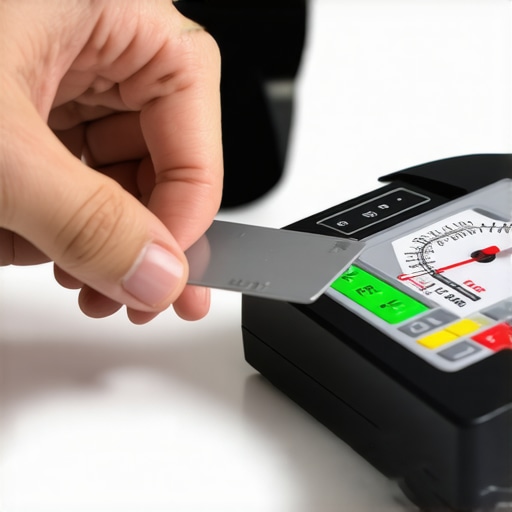
I stood there in the middle of a Target aisle, my face burning as the “Declined” message flashed on the card reader for a simple grocery run. It wasn’t because I lacked the money in my bank account; it was because my credit was a total wasteland of old mistakes and missed opportunities. I felt like a financial ghost, trying to prove I was responsible while every lender treated me like a liability. But that moment was my catalyst. I realized that sitting around waiting for my score to magically heal was a fool’s errand. I needed a tool that forced the bureaus to pay attention to me again, and that is exactly where the secured card enters the picture.
The Secured Card Strategy That Finally Worked for Me
When I first started looking into rebuilding, I was incredibly skeptical. I didn’t want to “pay to play” by handing over my own cash as collateral. But the reality is that a secured card is the single most effective way to build a bridge from the 500s into that coveted 700-plus territory. It’s not just about having a piece of plastic; it’s about how the truth about how secured cards jumpstart your history changes the narrative for the credit bureaus. I made a huge mistake early on by thinking I could just dispute my way to perfection without adding any positive data. You need a mix of cleaning up the old and proving the new. If you are struggling with a thin file, this is your fastest path out of the shadows.
Is handing over a security deposit actually worth the hassle?
You might be thinking, “Why should I give a bank $200 of my own money just to spend it?” I get it. It feels backward and frustrating. However, data from FICO shows that your payment history matters more than any other factor, accounting for a massive 35% of your score according to the official MyFICO data. That deposit is simply your ticket to a reporting line that screams “Paid on Time” every single month. Within just sixty days of using my first secured card correctly, I saw a shift that I couldn’t achieve with months of just waiting. If you follow a specific rhythm, you can learn how to use a secured card to gain 50 points in two months or even more. Have you ever felt stuck in that endless “no credit, no card” loop where nobody will give you a second chance?
Stop Waiting for Miracles and Start Building Instead
The biggest lesson I learned—the hard way—is that credit bureaus don’t reward silence. They reward consistent, boring activity. When I stopped trying to hide from my credit report and started using a secured card like a scalpel, everything changed. I stopped making those common credit score mistakes like maxing out the tiny limit just because it was there. Instead, I treated that card like a fragile ecosystem. This isn’t about spending power; it’s about reporting power. We are going to look at the exact steps to turn that small deposit into a 700-score powerhouse by managing your utilization and timing your payments to the day.
Pick a Card That Actually Talks to the Bureaus
The biggest trap you can fall into is getting a card that doesn’t report to all three major credit bureaus. It’s like shouting into a void; if Equifax, Experian, and TransUnion don’t hear about your on-time payments, the effort is wasted. When you are looking at how to get your first credit card with zero history, you need to verify that the lender is a ‘full-reporter.’ I once signed up for a store-branded ‘credit’ option that only reported to one bureau. I spent six months being ‘perfect’ on that card, only to find my FICO score hadn’t budged an inch on the other two reports. Don’t make that mistake. Focus on cards from major issuers or credit unions that explicitly state they report to everyone.
The Gas Station Hack That Tricked My FICO Score
Think of your credit limit like a digital thermometer. If the temperature (your balance) gets too high, the alarm bells go off at the credit bureau headquarters. To keep the algorithm happy, I used a very specific tactic: the one-purchase rule. I remember taking my shiny new $200 secured card to a Shell station. I pumped exactly $15 of gas, then I put the card in a drawer. I didn’t touch it again until the statement arrived. Because I kept my balance so low, I learned firsthand how a 1% change in utilization can move your fico score significantly. By reporting a $15 balance on a $200 limit, I was showing a 7.5% utilization rate—the sweet spot that tells the system you are responsible, not desperate. #IMAGE_PLACE_HOLDER_B#
Why Your Statement Date Beats Your Due Date Every Time
Most people focus on the ‘Due Date’ on their bill. That’s a rookie mistake. The ‘Statement Closing Date’ is the day the bank takes a snapshot of your balance and sends it to the credit bureaus. If you pay your bill on the due date, but you spent a lot of money right before the statement closed, the bureau sees a high balance even if you pay it off a week later. This explains why your 0 balance doesn’t always result in a higher score. You want your balance to be low on the day the snapshot is taken. I started paying my card off two days before the statement closing date. Suddenly, my reported utilization dropped to nearly zero, and my score shot up like a rocket. It’s about timing the system, not just paying your bills.
Keep the Old Ghosts from Haunting Your New Progress
Building new credit is only half the battle. If you have old errors dragging you down, that new secured card is like trying to fill a bucket with a hole in the bottom. You have to patch the holes while you pour in the fresh water. This is why I started using the ultimate guide to dispute errors and credit building in 2025 to look for inaccuracies. I found a collection from a cable company I hadn’t used in five years. By following a strict document checklist for your first credit dispute, I was able to get that negative mark removed at the same time my secured card started reporting. The combination of ‘new positive’ and ‘removed negative’ is the fastest way to hit a 700. If you don’t address the most common errors found on credit reports this month, your score will stagnate regardless of how well you handle your new card.Mastering the statement date is just the beginning. To truly move the needle, we have to look at the nuances that even ‘financial gurus’ get wrong. One of the most persistent myths is that you should always pay off every collection on your report to boost your score. It sounds like common sense, but why paying a collection might actually lower your score is a harsh reality for many. When you make a payment on a debt that has been sitting dormant for years, you can ‘re-age’ the item in the eyes of the scoring algorithm. Suddenly, that five-year-old mistake looks like it happened yesterday, and your score takes a dive. This is why you should never cut a check until you understand why you should never pay a collection without a deletion letter. It’s not just about paying the debt; it’s about controlling how that payment is reported.
Why does my bank app show a 720 while the car dealer sees a 680?
If you have ever felt like your bank was lying to you about your score, you aren’t alone. I used to check my credit card’s mobile app and see a beautiful 725, only to be told by a mortgage lender that I was actually a 690. This discrepancy exists because of why your bank app shows a different score than your lender. Most apps use the VantageScore model or a FICO 8 variant, but lenders for homes and cars often use older, specialized versions. In 2025, you also have to navigate the difference between FICO 8 and FICO 10T for new borrowers, where 10T actually looks at your ‘trended data’—your behavior over the last 24 months rather than just a single snapshot. If you’re not managing your balances over the long term, these newer models will catch you.
Win Your Disputes Without the Online Portals
Another massive ‘oops’ factor is the temptation of the online dispute portal. Every credit bureau wants you to use their website because it’s streamlined. However, why online dispute portals are designed to make you fail comes down to the fine print. When you use a portal, you are often forced to choose from a limited menu of generic reasons for your dispute. You can’t attach the hidden document that wins almost every credit dispute or explain the nuance of why a charge is fraudulent. A landmark study by the FTC found that 25% of consumers identified errors that might affect their credit scores, yet many of those errors persist because the automated ‘E-OSCAR’ system used in online disputes simply verifies the data with the creditor without looking at your evidence. #IMAGE_PLACE_HOLDER_C#
Don’t Let Your Score Stagnate in the ‘Good’ Zone
I’ve seen it happen dozens of times: someone builds their credit from the 500s to the 660s, and then… nothing. They stop seeing growth. This is usually why your credit score stagnates despite no late payments. To break into the 700s and 800s, you need more than just ‘no mistakes’; you need a perfect credit mix. I discovered that why your total debt matters less than your current credit mix is the secret sauce for that final push. If you only have credit cards, the algorithm sees you as a one-dimensional borrower. Adding a credit builder loan or a well-managed personal loan can provide the variety the system craves. Have you ever fallen into this trap where your score just stops moving? Let me know in the comments. We are in this together, and the path to financial freedom is paved with the details most people ignore.Once you hit that 700 milestone, the game changes from fighting for survival to defending the fortress. I used to think I could just set everything on autopay and walk away, but that is exactly why you need to monitor your credit even with a high score. Errors do not just happen to people with bad credit; in fact, a name change or even a simple typo at a bank can trigger a cascade of issues. I have seen cases where why your name change can create errors on your credit file ruined an application for someone with an otherwise perfect history. To keep my score in the elite tier, I stopped relying on the ‘free’ tools provided by my bank and switched to a more rigorous paper-trail approach. According to Section 611 of the Fair Credit Reporting Act (FCRA), credit bureaus are legally obligated to conduct a ‘reasonable reinvestigation’ when you dispute an item. The catch? Most digital portals use automated filters that bypass this requirement. This is why I always use the paper trail method for deleting old medical debt or other complex errors. I keep a physical folder of every letter I send via Certified Mail. It sounds old-school, but in 2025, a physical receipt is the evidence you need to win a dispute against a bank because it forces a human being to look at your file. #IMAGE_PLACE_HOLDER_D#
How do I maintain a high FICO score without obsessing over it?
The secret is not checking your score every hour; it is understanding the ‘why’ behind the fluctuations. I learned the hard way that why your credit score might drop when you pay off a loan is actually a common occurrence due to the loss of a ‘mix’ in your credit types. To combat this, I treat my credit like a garden where I prune the bad and nurture the good. I use a specific spreadsheet to track my ‘Statement Closing Dates’ rather than just ‘Due Dates.’ This ensures I never hit the hidden penalty for paying your credit card only once a month. By paying small amounts twice a month, I keep my utilization perpetually low. Looking ahead, the shift toward ‘Trended Data’ is the biggest trend to watch. Models like FICO 10T are moving away from snapshots and toward 24-month behavioral patterns. This highlights the difference between FICO 8 and FICO 10T for new borrowers. If you want to scale your financial power, start acting like a ‘transactor’ who pays in full every month. My best advice? Pick one old, stubborn error on your report today and commit to sending a physical dispute letter rather than using an app. It is the only way to master credit repair dispute errors and FICO optimization for the long term.
The Hardest Lesson I Learned About FICO
Reflecting on my own journey, the biggest shift happened when I stopped treating credit like a grade and started treating it like a conversation. One of the most painful lessons was realizing that being debt-free doesn’t mean you have a high score. In fact, if you don’t use your accounts, you become invisible. Another lightbulb moment was discovering why your FICO 8 score is different from FICO 10T—one is a snapshot, while the other is a story of your habits over two years. I also learned that the bureaus aren’t your friends; they are data aggregators, and if you don’t verify their data, nobody will. Finally, I realized that mastering credit repair dispute errors and FICO optimization is a skill you have to maintain, not a one-time fix.
#IMAGE_PLACE_HOLDER_E#
The Toolkit That Kept Me From Spiraling
If you are serious about this, you need more than just a secured card. You need a system. I personally swear by the ‘Paper Trail’ method; it sounds tedious, but having the evidence you need to win a dispute against a bank physically in your hands is a game-changer when an automated system rejects you. I also recommend keeping a close eye on your reports through a dedicated monitoring service—not just the free ones from your bank—to catch errors early. Following a dispute errors on your credit report a step-by-step guide for 2025 will keep you organized when the letters start flying back and forth.
Your Financial Ghost Era Ends Today
I know how it feels to be the person with the declined card at the register. It’s heavy, it’s embarrassing, and it feels permanent. But I am living proof that it isn’t. Credit is just a game with very specific rules, and now that you know how to play, you can stop being a spectator. Take that first step today—whether it’s opening a secured card or mailing that first dispute letter. Your future self will thank you for the effort you put into FICO optimization right now. What’s the one error on your report you’ve been too nervous to tackle? Let me know below.