

I still remember the sinking feeling in my stomach when I sat in that mahogany-paneled office, trying to buy my first reliable car. The loan officer didn’t look at my steady income or my lack of debt; he just looked at a blank screen and told me I was a ‘ghost.’ I had no credit history, and in the eyes of the FICO gods, I simply didn’t exist. It was a visceral realization that being ‘responsible’ by avoiding debt had actually backfired. I spent weeks trying to dispute errors on my credit report only to find out there were no errors to fix—there was just nothing there. That is when I stumbled upon credit builder loans, and they changed my entire financial trajectory. Today, I am going to show you exactly how to use these tools to build a profile so solid that lenders will actually compete for your business.
The Day My Credit Score Made Me Feel Invisible
When I first started, I made the classic mistake of thinking I could just jump straight into a high-tier rewards card. I was rejected instantly. I even tried some generic credit repair dispute errors strategies, but you cannot polish a stone that is not there. My biggest blunder was not realizing that my ‘credit mix’ was 100% empty. A credit builder loan is essentially a ‘reverse loan’ where the bank holds the money in a CD while you make payments, reporting each one to the bureaus. It is the closest thing to a financial cheat code I have ever found. According to the Consumer Financial Protection Bureau (CFPB), these loans can increase the likelihood of establishing a credit score by 24% for those starting from scratch. That is a massive head start.
Are these loans actually worth the hype?
I know what you are thinking because I thought it too: ‘Why would I pay interest to borrow my own money?’ It sounds like a scam at first glance. But you are not paying for the cash; you are paying for the data entry on your credit report. When I finally started my first one, I saw my score jump within months because I was finally fixing my credit mix without new debt in the traditional, risky sense. Have you ever felt like you were doing everything right but your score just wouldn’t budge? That stall usually happens because you’re missing the variety that lenders crave.
Why Your Credit Mix Needs a New Ingredient Right Now
Lenders do not just want to see that you can handle a credit card; they want to see that you can manage an installment loan. This is where most people fail when building credit from zero. By adding an installment account through a credit builder loan, you are checking a box that a revolving credit card simply cannot touch. I learned the hard way that relying solely on one type of credit makes your profile look fragile. I remember my FICO score stalling for six months until I added that one small installment loan, and then—boom—it finally broke into the 700s. We are going to dive into the specific mechanics of how to pick the right lender so you do not get stuck with predatory fees.
How to Find a Lender That Talks to the Big Three
To start, you cannot just walk into any local bank and assume they offer what you need. Most big-box banks do not bother with credit builder products because they do not make much money off them. You want to look for credit unions or specialized fintech platforms like Self or SeedFi. The non-negotiable rule here is that they must report your activity to all three major bureaus—Experian, TransUnion, and Equifax. I remember signing up for a small ‘personal growth’ loan at a local branch years ago, only to find out six months later they only reported to TransUnion. It was like shouting into a void; my other two scores stayed flat because the data wasn’t there. When you are using a small personal loan to diversify your credit mix, verify the reporting policy in writing before you sign. 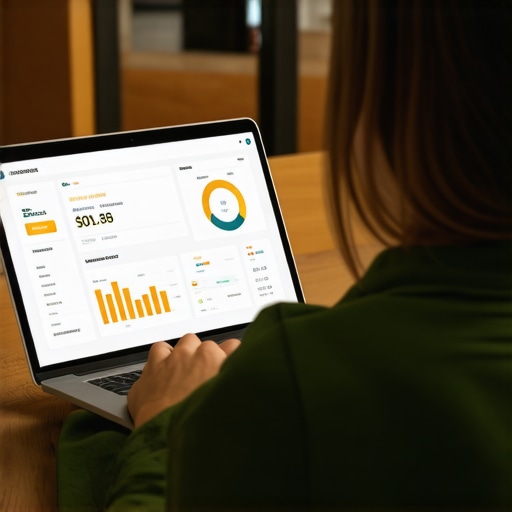
Keep Your Payments Low to Avoid the Financial Stress Trap
One of the biggest mistakes I see people make is choosing a monthly payment that stretches their budget. They think a $100 monthly payment builds credit ‘faster’ than a $25 payment. FICO does not care about the dollar amount of your installment loan; it cares about the consistency of the ‘Paid as Agreed’ status. Think of it like a gym membership for your credit score—consistency matters more than the heavy lifting. I once coached a friend who chose a high payment, hit a rough patch at work, and missed one payment. That single late mark tanked her score by 80 points, completely defeating the purpose of the loan. If you find yourself in a similar spot, you might need to learn how to remove late payments using the goodwill method, but it is much easier to just pick a payment you can afford even in your worst month.
The Paper Trail That Protects Your Hard-Earned Points
Once the loan is active, you need to become a digital archivist. Do not trust the bank’s automated system to always get it right. I have seen instances where a bank forgets to update a balance or, worse, marks a paid account as ‘closed with a balance.’ This is where the hidden reason your credit monitoring app misses real errors becomes a real problem. You should download your statement every month and check your actual credit reports at least once a quarter. If you see a discrepancy, do not use the ‘dispute’ button in a banking app. That button often waives your right to a full investigation under the Fair Credit Reporting Act. Instead, you need to gather your proofs and the documentation bureau reps hate to receive, such as a physical bank statement showing the cleared payment.
Why Your Statement Date is the Real Secret Weapon
Most people obsess over their due date, but the statement date is when the ‘snapshot’ of your debt is actually sent to the credit bureaus. If you are also using a credit card alongside your builder loan, understanding why your credit card statement date is a critical number can prevent your score from fluctuating wildly. For your credit builder loan, the balance will naturally decrease every month. This creates a beautiful downward trend on your report that signals to lenders you are responsible and liquid. When I saw my loan balance drop below 50% of the original amount, my score took its second major leap. It is a psychological win as much as a financial one.
Understanding the basic mechanics of a credit builder loan is only the first step. If you really want to crack the code of a high-tier score, we need to talk about the nuances that the ‘common wisdom’ gets wrong. Most people will tell you that a zero balance is the ultimate goal, but I have seen perfectly good scores stall out because of it. In the world of high-level credit optimization, appearing ‘too clean’ can actually be a red flag. Let’s dig deeper into the mechanics that separate the amateurs from the masters.
The Counterintuitive Truth About Zero Balances
Everyone tells you to pay your debt off entirely, but in my experience, [why a zero balance might be the reason your score is stuck](https://creditclaritys.com/why-a-zero-balance-might-be-the-reason-your-score-is-stuck) is one of the most overlooked hurdles. If every single one of your credit cards and loans reports a $0 balance at the end of the month, the FICO algorithm often triggers a ‘no recent usage’ penalty. It sounds crazy, but lenders want to see that you are using credit and managing it, not just avoiding it. I personally use the ‘All Zero Except One’ (AZEO) method, where I leave a tiny $10 balance on one card while the rest stay at zero. This proves activity without sacrificing utilization points. If you are preparing for a major purchase, like figuring out [the specific credit score fixes you need before buying in grimes county](https://creditclaritys.com/the-specific-credit-score-fixes-you-need-before-buying-in-grimes-county), this small tweak can be the difference between a ‘Good’ and ‘Excellent’ rate.

According to research by FICO, the ‘Amounts Owed’ category makes up a staggering 30% of your score. This does not just mean your total debt, but how much of your available credit you are using. If you have [the impact of high credit limits on your future loans](https://creditclaritys.com/the-impact-of-high-credit-limits-on-your-future-loans) in mind, you need to show that you can be trusted with large sums without actually spending them. High limits with low, non-zero reporting balances are the ‘sweet spot’ for the algorithm.
Can FICO 9 Save You from Your Past Mistakes?
Many advanced readers ask if the version of the score matters, and the answer is a resounding yes. While most lenders still use FICO 8, FICO 9 is becoming more common, and it treats medical debt and paid collections much more leniently. However, here is the trap: [why paying off a collection could actually drop your score](https://creditclaritys.com/why-paying-off-a-collection-could-actually-drop-your-score) on older models like FICO 8. If you pay an old, dormant collection, the ‘date of last activity’ might update to the current month. The algorithm sees this as a ‘fresh’ negative event, which can cause an immediate point drop. Before you send a dime to a debt collector, you must understand the ‘Pay for Delete’ strategy to ensure that payment actually results in the removal of the negative mark.
Don’t Fall for the Universal Dispute Myth
The biggest ‘oops’ factor I see among people trying to fix their credit is the ‘shotgun’ dispute method. They send dozens of letters disputing everything on their report, even the stuff that is 100% accurate. This is a massive mistake. When you [stop sending generic dispute letters if you want real results](https://creditclaritys.com/stop-sending-generic-dispute-letters-if-you-want-real-results), you avoid being flagged by the bureaus’ automated fraud filters. Disputing valid information can actually freeze your ability to fix real errors later because the bureau will label your future attempts as ‘frivolous.’ Instead, you should focus on [the specific phrase that triggers a human review of your dispute](https://creditclaritys.com/the-specific-phrase-that-triggers-a-human-review-of-your-dispute). A human eye will always catch things a computer misses. Have you ever fallen into this trap of disputing everything at once? Let me know in the comments. It is a frustrating cycle, but [why you should never dispute valid information 2](https://creditclaritys.com/why-you-should-never-dispute-valid-information-2) is a lesson that will save your profile in the long run.
Stop guessing and start logging your wins
After years of managing my own profile and coaching others, I have realized that the real secret to a bulletproof score isn’t a magic dispute letter—it is a rigorous tracking system. I personally use a dedicated physical binder that I call my Evidence Log. Whenever I make a significant payment or get a dispute resolved, the hard-copy confirmation goes straight into that folder. This isn’t just for my peace of mind; the evidence log that wins every investigation is your only real shield when a bureau claims they never received your documents. I have seen cases where a collection agency tried to ‘re-age’ a debt three years after it was settled, and having that physical paper trail saved me from a 100-point drop. Most people rely on free apps, but the hidden reason your credit monitoring app misses real errors is that they often use summarized data rather than the raw details found on your official credit reports.

To keep my score in the ‘Elite’ category, I swear by the 15/15 rule. I make one payment fifteen days before my statement date and another one three days before the due date. This ensures my utilization is reported as nearly zero to the bureaus without me ever actually carrying a balance. I have found that the habit of high score achievers the 15/15 rule for payments is the fastest way to stabilize a volatile score during a month of high spending. If you have old accounts you rarely use, do not let them close due to inactivity. I use the 2 trick for keeping an old credit card active by setting a tiny recurring subscription on them and forgetting about it. Lenders love longevity, and the small purchase trick that keeps your credit active prevents the ‘account closed by grantor’ status that can tank your average age of accounts overnight.
How do I maintain an 800 score without losing my mind?
The key is automation balanced with quarterly manual audits. Set your minimum payments to autopay so you never miss a deadline, but manually pay the bulk of the balance to control your reported utilization percentage. As we look toward the future, the entire industry is shifting toward more invasive data. According to Experian’s official technical documentation on FICO Score 10T, the era of ‘snapshot’ scoring is ending. Lenders are moving toward trended data, which looks at your spending and payment behavior over a 24-month window rather than just last month’s performance. This means your long-term habits will matter far more than a one-time ‘hack.’ You will need to understand the specific way lenders view your fico 8 vs fico 9 and eventually FICO 10T to stay ahead of the curve. My prediction is that in the next three years, the bureaus will move to real-time reporting, making the documentation bureau reps hate to receive even more critical because the speed of errors will also increase. Start your Evidence Log today—it is the single most powerful tool in my arsenal. If you do nothing else this week, print out your most recent ‘paid in full’ letters and file them away safely.
#IMAGE_PLACE_HOLDER_E#
The Hardest Lesson I Learned While Chasing an 800 Score
Reflecting on my journey from being a financial ‘ghost’ to a high-score achiever, the most painful realization was that doing nothing is often worse than making a mistake. I spent years avoiding credit cards because I was afraid of debt, but in the eyes of the bureaus, that silence was a red flag. If I could go back, I would tell myself that an individual account is the foundation of freedom, especially because why an individual account is safer than a joint account for your credit becomes painfully obvious during life transitions like divorce or family disputes. I also learned that the algorithm is fickle; for instance, why your fico score drops after paying off a car loan 3 was a shock to me, teaching me that the ‘mix’ of credit is something you must maintain, not just complete once.
The Toolkit That Keeps My FICO Score Bulletproof
You don’t need expensive monthly subscriptions to maintain a perfect profile. My strategy relies on three pillars: a physical Evidence Log, the official free annual reports, and a high-quality roadmap. I highly recommend using the diy credit repair checklist that outperforms paid services 3 to stay organized. When you find a discrepancy, don’t rely on digital clicks. You need to provide the documentation that forces a bureau to manually verify your data. This high-touch approach ensures that your hard work isn’t undone by a glitch in a server halfway across the country. I trust these methods because they put the power back in your hands, rather than leaving it to an automated algorithm.
Reclaim Your Status in the Eyes of the Lenders
Building a legacy of financial stability isn’t about how much money you make; it’s about how well you master the rules of the game. Whether you are starting from zero or recovering from past hurdles, the tools for credit building are more accessible today than they have ever been. By applying the strategies in the ultimate guide to dispute errors and credit building in 2025, you are not just fixing a number; you are opening doors to better homes, lower interest rates, and the peace of mind that comes with financial visibility. You have the knowledge and the checklist—now it’s just about taking that first small step. Have you ever found a surprising error on your report that felt impossible to remove? Let me know in the comments below, and let’s troubleshoot it together!