

I was standing in line for coffee when I checked my banking app and realized a card I’d held since college—the one that anchored my entire credit history—was just gone. No warning, no phone call, just a cold ‘Account Closed’ notification. My score plummeted 40 points because my average age of accounts took a massive hit. It felt like a betrayal. I’d done everything right, or so I thought. But the truth is, banks hate idle accounts. If you do not use it, they lose it, and you are the one who pays the price in higher interest rates later on. Today, I am going to show you exactly how I stopped that from ever happening again using a simple ‘set it and forget it’ strategy that keeps those crucial old accounts alive without costing you a dime in interest.
The Day My Oldest Credit Card Died (And Why Yours Might Too)
[IMAGE_PLACEHOLDER]Banks are not your friends; they are businesses. When you leave a credit card at the bottom of a drawer for six months, you become a liability instead of a profit center. They would rather give that credit limit to someone who will actually use it. I learned the hard way that why closing an old account is usually a bad idea is not just a theory—it is a mathematical certainty for your FICO score. When that account vanished, my utilization ratio spiked and my credit history shrunk. It is one of those FICO insights that most people do not realize until it is too late. According to data from the Consumer Financial Protection Bureau (CFPB), lenders regularly use ‘dormancy’ as a justification for account termination, which can cause immediate and lasting damage to a consumer’s credit profile. This is exactly why your credit score might drop even when you think you are being responsible by not spending.
Is Buying a Pack of Gum Really Worth the Effort?
You might be thinking, ‘Really? I have to manage twenty different cards just to keep a score?’ It sounds like a full-time job, but it is actually much simpler than that. I once thought it was a waste of time too, until I realized that the $2 trick for keeping an old credit card active only takes about thirty seconds of work once a year. By making one tiny purchase—a pack of gum, a single Amazon reload, or a cheap taco—you signal to the bank’s automated system that the account is ‘active.’ Have you ever had a bank close an account on you without saying a word? I would love to hear your story in the comments so we can keep others from making the same mistake. Knowing the difference between a healthy account and a dormant one is the first step in mastering proven strategies to improve your credit. Stay with me, because next, I am breaking down the exact schedule I use to keep my oldest accounts in the ‘green’ without ever paying a cent in interest.
Identify Your Score Anchors Before They Sink
The first thing I did after losing that card was pull my full report to identify my ‘score anchors.’ Think of your credit history like a bridge; the oldest accounts are the foundational pillars. If one of those pillars crumbles, the whole structure—your FICO score—wobbles. This is precisely why closing an old card is a bad financial move. You want to look for the card with the highest ‘age’ and cards with significant limits that help your overall utilization. Even if you hate the rewards or the physical card is gathering dust, that piece of plastic is a placeholder for your financial reliability. If you find errors during this audit, like an incorrect account opening date, you should jump into mastering credit repair dispute errors and FICO optimization immediately to ensure your history is accurately reflected.
Feed the Bank a Tiny Crumble
 You do not need to buy a steak dinner to keep an account active. I treat my dormant cards like a pet that only needs to be fed once every few months. My go-to move is the ‘micro-charge.’ Last year, I almost lost a card I have held for over a decade because I had not touched it in a year. I quickly logged in and used it to buy a $1.00 Amazon reload. That single dollar saved me from a potential 20-point drop in my score. You can use a $5 recurring donation or a tiny subscription like iCloud storage. Learning how to use small balance charges to prevent card closure is the most efficient way to maintain your history. It is like a digital heartbeat; it tells the bank’s computer that the account is still alive and kicking. This is vital because why a zero balance might be the reason your score is stuck—lenders want to see active, responsible usage, not a graveyard of unused credit lines.
Lock the Doors With Autopay
The danger of the micro-charge is forgetting to pay that $1.00 and getting hit with a late fee, which would defeat the whole purpose. I once missed a tiny $2.00 payment on an old store card and watched my score tank because of a ’30-day late’ mark. Now, I set every single one of these cards to ‘Auto-Pay Full Statement Balance.’ It is a fail-safe. If you only pay once a month manually, you might hit the hidden penalty for paying your credit card only once a month if your timing is slightly off. By automating the payment, you ensure that the ‘active’ signal stays green without you ever having to think about it again. This keeps your why your payment history matters more than any other factor stats perfect.
Watch for the Sneaky Re-Aging Trap
While keeping cards active, keep a sharp eye on your reports for ‘zombie’ activity. Sometimes, when an account sits for a while, errors can creep in or old debts can be ‘re-aged’ by aggressive collectors. Knowing how to spot a re-aged debt on your Experian report is crucial to protect the progress you are making. If you see a date that does not match your records, it is time for effective dispute error resolution to boost your credit score. I once saw a name misspelling on a statement that almost prevented a limit increase; never underestimate how how a simple name misspelling can tank your credit application. Maintaining these accounts is a marathon, not a sprint, and these small steps ensure you stay in the race.But here is where things get messy—and where most experts give you advice that actually hurts your profile. Everyone tells you to use the easy online dispute buttons provided by the bureaus because they are fast. In my experience, those buttons are a trap. When you click dispute online, you often waive your right to a full investigation under the Fair Credit Reporting Act (FCRA). You are essentially agreeing to let an automated system handle your financial future in seconds. If you want real results, you have to stop sending generic dispute letters and move to a physical paper trail that requires a human set of eyes.
Why Did My Score Drop After I Won a Dispute?
It sounds counterintuitive, right? You successfully argued that a six-year-old late payment should not be there, the bureau deleted the whole account, and your score fell 15 points. This is the common oops factor of credit repair. If that account was one of your oldest, deleting it entirely might have slashed your average age of accounts. Sometimes, effective dispute error resolution to boost your credit score means correcting the data rather than deleting the history. You need to know exactly how dispute errors affect your score and what to do before you pull the trigger on a deletion request.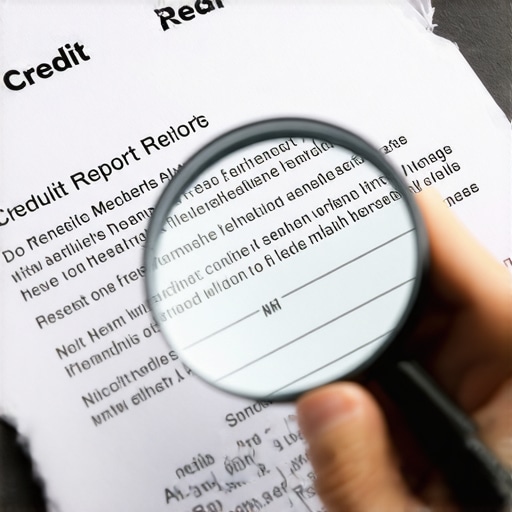 The credit bureaus are not exactly incentivized to be accurate. A landmark study by the Federal Trade Commission (FTC) found that one in four consumers identified errors on their credit reports that might affect their credit scores. This is why you need the letter that forces bureaus to reveal their data source. If you cannot see where the bad info is coming from, you cannot kill it at the root. Another major nuance involves the AI systems bureaus use to scan your mail. If your letter looks too much like a template from a credit repair company, it gets flagged as frivolous. You need to learn how to bypass the AI review in credit disputes by using unique phrasing or specific evidence. Also, be incredibly careful when talking to collectors about old debts. If you acknowledge the debt is yours or make a tiny partial payment, you might inadvertently restart the statute of limitations. I always tell my readers to stop paying old debts before you read this warning. Have you ever successfully disputed an error only to see your score do something unexpected? Let me know in the comments below; I would love to help you figure out the logic behind the numbers.
If you want to keep the gains you have fought for, you need to stop relying on the ‘free’ scores your credit card app gives you. I personally use myFICO because it provides the actual mortgage, auto, and credit card scores that lenders see. There is a massive gap in data that most people miss, which is why your FICO score and your bank’s app never match. You are likely looking at a VantageScore while the lender is scrutinizing a FICO 8 or 9. To scale this process, I use a simple Google Sheet where I log the ‘date of last activity’ for every card. This prevents the dormancy closure I mentioned earlier. If you are serious about mastering credit repair dispute errors and FICO optimization, your best tool isn’t an app; it is a physical folder for ‘Certified Mail’ receipts. This is the paper trail that forces bureaus to delete old debt because it proves you followed the law even if they did not.
How do I maintain my credit profile over time?
I recommend a ’10-minute monthly audit.’ On the first of every month, I log in to check for unauthorized inquiries. It is much easier to use the best way to handle unauthorized credit inquiries when the trail is fresh. This monthly habit is why checking your own credit is actually essential for growth—it keeps you proactive rather than reactive. In my tracking spreadsheet, I maintain four key columns: Statement Closing Date, Date of Last Activity, Current Utilization, and ‘Score Anchor’ status. If you feel overwhelmed, starting with the credit repair blueprint can give you the structure you need. I also keep a digital scan of every ‘Pay for Delete’ agreement I have ever secured. If a collection ever resurfaces, you will have the evidence you need to win a dispute against a bank ready to deploy instantly.

Looking ahead, the industry is shifting toward ‘trended data.’ According to FICO’s technical documentation on the FICO Score 10 T, lenders aren’t just looking at your score today; they are looking at whether your balances are growing or shrinking over the last 24 months. This is the difference between FICO 8 and FICO 10T for new borrowers that you need to master now. If you spot a mistake, do not wait. Use effective dispute error resolution to boost your credit score before it has a chance to bake into your trended history. My advanced tip: Go grab a ‘Red-Ink’ stamp that says ‘ACTUAL CONSUMER DISPUTE – NOT A TEMPLATE.’ Use it on your physical dispute letters to help how to bypass the AI review in credit disputes. It forces a human to manually sort your mail, and in this game, a human eye is your greatest advantage. Give that red-ink trick a try on your next round of letters; it is the single most effective way to ensure your voice is heard.
The Reality of the Credit Game: Lessons from the Trenches
Over the years, I have realized that maintaining a high score isn’t just about paying on time; it is about playing defense against the banks’ automated systems. One of the biggest shifts in my perspective came when I stopped viewing credit as a static number and started seeing it as a living record. I discovered that the ultimate guide to dispute errors and credit building in 2025 is really about persistence and the willingness to go beyond a screen. My most important lesson? Never trust the ‘All Good’ checkmark on a free app. Those apps are designed to sell you credit cards, not to protect your age of accounts or catch the subtle reporting glitches that sink scores.
Another ‘lightbulb moment’ was realizing that the bureaus are not government agencies—they are private corporations that make money by selling your data. This is why credit repair secrets how to resolve disputes and elevate your credit standing focus so heavily on the paper trail. When you mail a letter, you create a legal obligation for them to respond accurately, something an online portal just cannot provide. If I had known this ten years ago, I wouldn’t have lost that college card.
The Physical Toolkit That Actually Wins Disputes
You don’t need expensive software to manage your credit, but you do need a system. I personally rely on three non-negotiable tools: a dedicated ‘Credit Folder’ for all physical correspondence, myFICO for real-time lender-grade data, and a simple recurring calendar alert. Before you send your first letter, you should grab the document checklist for your first credit dispute to ensure you have your ID, proof of address, and evidence ready to go. I trust these methods because they rely on the Fair Credit Reporting Act (FCRA) rather than the ‘hope and pray’ method most people use.
[IMAGE_PLACEHOLDER]
Stop Playing Defense with Your Financial Future
The system is designed to be confusing, but once you understand that activity equals safety, the fear of account closure disappears. Your credit score is the key to your future home, your next car, and even your insurance rates. Don’t let a bank’s internal policy on ‘dormancy’ dictate your financial health. By using build credit fast expert tips for correcting credit errors and boosting fico, you are taking back control of your narrative. Every $1 Amazon reload and every certified mail receipt is a brick in the wall protecting your financial freedom. It is time to stop being a passive consumer and start being a credit strategist. Have you ever had a bank close an old account without giving you a chance to save it? Let me know your story in the comments below.