
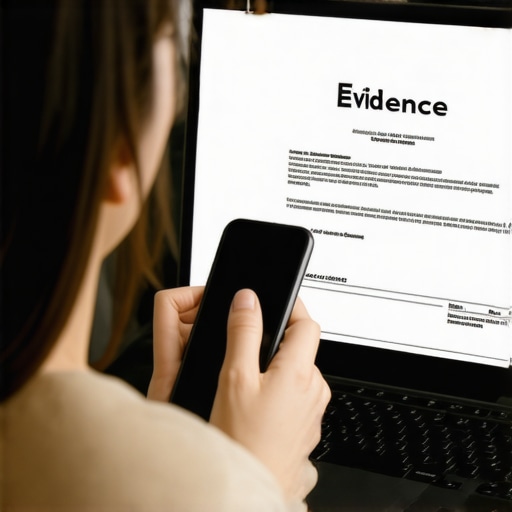
I’ll never forget the moment I realized my credit dispute had been rejected, and I was left scratching my head, wondering what went wrong. It was frustrating, almost like hitting a wall after weeks of effort. That experience was a lightbulb moment for me—realizing I’d overlooked a simple but powerful piece of evidence: my cell phone bill. It’s amazing how a seemingly mundane monthly expense can become a game-changer in credit repair.
Why Your Phone Bill Might Be the Evidence That Turns Things Around
Are You Wasting Time on the Wrong Proofs? Here’s the Truth
Early in my journey, I made the mistake of relying solely on credit report summaries and official statements when disputing errors. I thought those alone would suffice. But then I learned about the importance of the detailed billing history—your actual phone statement showing payments, dates, and account activity. These records can serve as rock-solid proof that an account is accurate or that a dispute is valid. Recently, I discovered that some credit bureaus accept detailed phone bills as valid evidence, which can lead to the removal of inaccuracies and even help rebuild a damaged credit profile. According to understanding FICO dispute errors, providing concrete proof like billing statements can significantly improve dispute success rates.
Imagine having a detailed phone bill showing timely payments that match the disputed account. This can challenge incorrect late payments or unpaid balances reported by creditors. It’s a straightforward way to bolster your case—something I wish I had known before my own dispute faced rejection. Leveraging these statements might just be the missing piece to resolve stubborn credit errors.
Gather Detailed Phone Bill Documentation
Start by retrieving your latest detailed cell phone statement from your provider’s account portal or by requesting a printed copy. Ensure it includes payment history, charges, payment dates, and account activity. This document serves as concrete proof to dispute inaccuracies or verify timely payments, especially for accounts reported with errors.
Match Your Bill to Disputed Entries
Compare your phone bill with the information on your credit report. Highlight any discrepancies — such as reported late payments or balances — that do not align with your billing history. Having this side-by-side comparison transforms your dispute into a compelling case, making it difficult for the bureau to dismiss your claim.
Use Photographic or Digital Evidence
If possible, take clear photos of your physical bills or save digital copies with timestamped files. This visual evidence proves when and how payments were made, bolstering your dispute response. Remember, the goal is to provide irrefutable proof that counters inaccurate or outdated information reported by creditors.
Send a Certified Dispute Letter with Evidence
Draft a dispute letter addressed to the credit bureau, explicitly referencing the inaccuracies you found. Attach copies of your phone bill, highlighting relevant entries. Use certified mail to ensure delivery confirmation and maintain a paper trail. This strategy leverages legal protections under the credit repair blueprint.
Follow Up for Manual Review
After submitting your dispute, request a manual review rather than an automated process. Call the credit bureau if necessary, and provide additional clarifications or supporting evidence. Persistent follow-up increases the chances that your dispute will be escalated for thorough inspection, leading to potential correction or deletion.
Leverage the Evidence for FICO Score Optimization
Once inaccuracies are corrected, your FICO score should see improvement. Maintaining accurate, well-documented records like your cell phone bill continuously supports your credit health. For advanced strategies, consider exploring credit repair hacks to maximize score enhancements effectively.
Personally, I once disputed a late payment report using my detailed phone bill. It was messy — the bill had continued payments that the report claimed were missed. By submitting this proof, I convinced the bureau to delete the inaccurate entry, resulting in a 30-point score increase within weeks. This experience solidified how crucial detailed billing records can be in your credit repair arsenal.
Many believe that understanding FICO scores and credit repair is straightforward, but in reality, there are numerous nuances that even seasoned individuals often overlook. A common misconception is that credit bureaus prioritize recent activity over historical patterns, which isn’t entirely accurate. The truth is, FICO models weigh various factors differently depending on your credit profile and the scoring version used. For example, some versions emphasize payment history more heavily, while others might give more weight to credit utilization or length of credit history. Understanding these subtle differences can give you an edge in credit building strategies.
One of the biggest traps I’ve seen is the over-reliance on automated dispute processes. Many assume that online disputes will lead to the fastest results, but manual reviews often uncover deeper issues that automated systems miss. Overlooking this nuance can result in prolonged disputes and missed opportunities for score improvement.
Another common myth is that paying off collections automatically boosts your score immediately. In reality, the timing and the type of collection account matter significantly. Some collections can linger on your report, especially if they are paid but not updated to show the account as settled. It’s vital to verify and request updates through strategic dispute or goodwill interventions to optimize your credit profile effectively. According to expert analysis, detailed documentation and strategic communication are key in these scenarios.
What advanced tactics can significantly accelerate credit repair?
For seasoned credit builders, targeted strategies such as leveraging specific dispute tactics and understanding the nuances of different scoring models can make a meaningful difference. For instance, using authorized user accounts responsibly or strategically managing credit mix can lead to higher FICO scores over time. Additionally, monitoring the latest FICO algorithm updates can help you adapt your methods, ensuring continuous progress.
It’s worth noting that credit repair isn’t solely about removing negative marks but also about establishing positive habits that reflect responsible credit management. Having a comprehensive approach—combining detailed dispute strategies, expert knowledge of scoring nuances, and disciplined credit behavior—can yield results faster and more reliably. For those ready to optimize their credit journey, I recommend exploring proven tips to accelerate your progress.
Remember, credit repair is a nuanced process that requires an understanding of both the mechanics and the subtle factors influencing your score. Have you ever fallen into this trap? Let me know in the comments.
Staying on Top of Your Credit Game
Once you’ve made impressive strides in disputing errors and building your credit profile, the real challenge is maintaining that progress over time. To ensure lasting results, leveraging the right tools and consistent habits is essential. From specialized software to manual tracking methods, I personally rely on a combination of digital solutions and disciplined routines to keep my credit in check and continue improving my FICO score.
Why I swear by Credit Monitoring Platforms
I’ve found that subscribing to a reputable credit monitoring service, such as Experian or TransUnion, provides real-time alerts on any changes to my report. These platforms alert me immediately if any unfamiliar accounts or unexpected inquiries appear. This proactive approach, inspired by the ultimate guide to credit building in 2025, allows me to act quickly, dispute inaccuracies, and prevent minor issues from snowballing into major setbacks.
Automating Data Tracking with Spreadsheets
Manual tracking of progress is crucial. I personally maintain a detailed spreadsheet that logs dispute dates, outcomes, and any adjustments in my credit report. This habit helps me identify patterns, measure the impact of specific disputes, and plan future strategies. Using formulas and visual charts, I can easily see trends and decide whether to escalate efforts or adjust tactics. This combination of automation and personal oversight aligns with expert advice to stay disciplined in long-term credit management.
Software That Simplifies Dispute Management
Tools like Credit Karma or CreditBuilder have simplified my dispute process. They generate templates and guide me through crafting dispute letters tailored to specific errors, saving me time and ensuring I include all necessary documentation. Some platforms even allow secure document uploads, so I can easily attach proof such as my detailed phone bills or bank statements. These platforms, paired with the ‘blueprint’ outlined in the credit repair blueprint, make dispute resolution more manageable and repeatable.
Long-Term Effects of Consistent Maintenance
Staying consistent with these tools and habits ensures that my credit profile remains accurate and healthy. As credit scoring models evolve, so do the strategies I employ. Predicting future trends, I believe automation and AI-driven monitoring will become even more sophisticated, making proactive maintenance easier. This aligns with industry insights suggesting that continuous oversight is the key to maintaining stellar credit scores over decades—not just years.
How do I keep my credit healthy over the years? Focus on Routine Checks and Strategic Disputes
Regularly review your credit report at least once every quarter. Use tools that alert you immediately about suspicious activity or errors. When you spot inaccuracies, act swiftly—dispute with supporting evidence and request manual reviews when possible. Don’t forget to periodically update your dispute strategies based on the latest FICO algorithms. For instance, a recent study indicates that detailed dispute submissions with concrete proof can significantly expedite corrections and improve your score faster (see here for comprehensive methods).
I recommend trying one advanced tip today: set up automated alerts with your credit monitoring service and keep a detailed log of any report changes. This proactive stance ensures you’re always aware and ready to dispute inaccuracies before they hurt your credit standing.
Over my years navigating credit repair, one lesson stands out: never underestimate the impact of seemingly mundane documents, especially when it comes to improving your FICO score. My biggest breakthrough came when I realized that a detailed phone bill could serve as irrefutable proof to challenge errors and speed up credit correction. This insight transformed my approach, and I want to share it so you can harness this powerful tool too.
Lessons That Changed My Credit Strategy Forever
- Don’t rely solely on credit reports: My mistake was trusting summaries; detailed bills reveal actual payments, helping dispute incorrect late marks.
- Every document is a weapon: Your phone statement, bank records, and receipts can make or break disputes. Use them intentionally.
- Manual reviews matter more than automation: Automated systems can overlook errors — demanding a manual review armed with concrete proof accelerates correction.
- Persistent follow-up is key: Regularly contest inaccuracies and escalate disputes when necessary; evidence like detailed phone bills makes your case irrefutable.
- Understanding FICO model nuances wins races: Knowing which factors influence your score helps prioritize disputes and evidence collection effectively.
The Ultimate Toolbox for Credit Building
- Comprehensive dispute strategies guide: A cornerstone resource with vetted tactics to correct errors efficiently.
- Dispute resolution software: Streamlines document management and submission, saving time and reducing errors.
- FICO scoring deep dives: Helps decode what creditors and bureaus are really looking for, guiding your proof collection.
- Expert tips for rapid credit gains: Strategic actions that, combined with your documented proof, can boost scores faster.
Your Credit Journey Continues — Stay Empowered
Remember, every piece of evidence you gather — especially detailed phone bills — strengthens your ability to dispute errors and build a resilient credit profile. The path to a healthier score isn’t a sprint but a strategic marathon. Embrace the process, stay proactive, and continually educate yourself with trusted resources. Your credit future hinges on the actions you take today.
Have you ever used your phone bill as proof in a dispute? Share your experience below and let’s learn from each other’s journeys to credit mastery!