
I remember sitting in that squeaky plastic chair at the car dealership, holding a pen and ready to sign for a modest SUV. The salesman walked back from his glass-walled office, not looking me in the eye. He handed me a printout and whispered, “Your score is a 540. We can’t even get you a high-interest loan.” My stomach dropped. I had paid every single bill on time for three years. It turned out someone three states away had opened four credit cards and a furniture store line of credit in my name. I wasn’t just a victim; I was a victim who had no idea how to prove I was innocent. I made the classic mistake of calling the bureaus and just ‘telling’ them it wasn’t me. Surprise: they didn’t care. To win this fight, I had to learn exactly how to handle a fraudulent account opened in your name by using hard evidence, not just my word. [image]
Your Paper Trail is Your Best Weapon
Building a case against fraud is like being a detective in your own life. You can’t just point fingers; you need a physical trail that leaves the bureaus no choice but to listen. Early on, I thought a simple phone call would fix it. I was wrong. I spent weeks shouting into the void because I didn’t have the right documentation that stops debt buyers from assuming the debt is yours. The reality is that identity theft is skyrocketing. According to the Federal Trade Commission, consumers reported losing more than $10 billion to fraud in 2023, a 14% increase over the previous year. If you aren’t prepared with a folder full of proof, you’re just a statistic. I had to learn the hard way that the bureaus are looking for specific, legally binding documents before they even think about hitting the ‘delete’ button on those fraudulent entries. Have you ever opened your credit report only to find an address you’ve never lived at? Tell me about it in the comments, because that’s often the first red flag.
Does a police report actually do anything?
Many people think filing a police report is a waste of time because the ‘local cops won’t find the guy.’ That’s missing the point. The police report isn’t for catching the thief; it’s for the credit bureaus. It is a sworn statement that carries legal weight. When you combine that with a strategy for disputing accounts after an identity theft, you become a high-priority problem for them to solve rather than an annoyance they can ignore. I once sent a dispute without a report and got a ‘frivolous’ response in five days. Once I included the official documentation and proof that forces a bureau to delete a fraudulent address, the tone of the conversation changed instantly. You need to show them that you are serious, organized, and aware of your rights under the Fair Credit Reporting Act. Today, we are going to break down the exact checklist of papers you need to gather so you never have to feel that dealership-floor defeat ever again.
Find the Rot with a Full Credit Audit
To fix your score, you have to see every single scar on your report. I once spent three hours highlighting a printout and realized that the fraudster hadn’t just opened a credit card; they’d also changed my employment history to a company I’d never heard of. It’s vital to learn how to audit your credit report for hidden reporting errors because these small discrepancies are the breadcrumbs that lead to the big fraud. If you miss one wrong address, the bureau’s automated system might ‘verify’ the debt because it matches the fake info on your file. 
Gather Your Legal Shield
Once you’ve identified the fraud, you need more than just a polite request. You need a hammer. This is where your FTC Identity Theft Affidavit and your police report come in. When I first did this, I forgot to include my utility bill. The bureau sent back a letter saying they couldn’t verify my identity. It felt like a slap in the face. I quickly learned that the 3 documents you need to clear a mixed credit file—your ID, a government-issued report, and a recent bill—are the only things that force them to take you seriously. This isn’t just paperwork; it is the one document that forces a bureau manual review. Without it, you are just another person complaining to an algorithm.
Skip the Online Button and Use Certified Mail
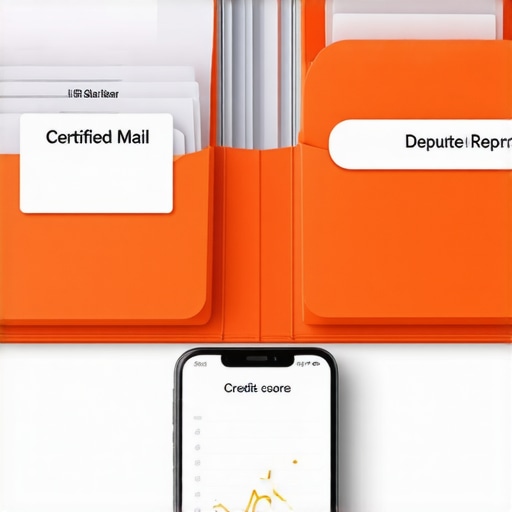
This is the mistake that costs people months of their lives. The ‘Dispute’ button on a credit bureau’s website is not your friend. It’s a shortcut for them, not you. When you click that button, you often waive your right to re-dispute for 30 days and limit the amount of evidence you can upload. Why you should never use the online dispute button is simple: it feeds your data directly into an AI that is programmed to say ‘no.’ I switched to the old-school way—paper, envelopes, and a trip to the post office. You must know why you should always send dispute letters via certified mail. That green signature card is your insurance policy. If they don’t respond within 30 days, that tracking number is the letter that proves the bureau failed their investigation, giving you the leverage to demand a deletion.
Stop the AI from Rejecting Your Claim
The bureaus use a system called e-OSCAR to scan your letters. If your letter looks like a template from a ‘credit repair’ site, it gets flagged and tossed. To win, you have to learn how to stop AI from automatically rejecting your dispute letter. I started handwriting my envelopes and using blue ink on my letters. It sounds like a myth, but it forces a human being to actually open the envelope instead of a machine scanning it. If they still push back, you need to provide the evidence that stops a bureau from labeling your dispute frivolous. Show them you aren’t guessing; show them you have the physical proof to back up your words.One of the biggest lies I was told—and one you’ve probably heard too—is that a zero balance is the holy grail of credit. People think if they pay every card down to nothing before the statement closes, their score will skyrocket. But here is the kicker: the FICO algorithm often penalizes a ‘ghost’ profile. If every account shows $0, the system might think you aren’t using credit at all. I found that the small balance hack that adds 20 points to your FICO works because it proves you have a ‘pulse’ without being a risk. In fact, why a zero balance is not always the best for your FICO score comes down to the concept of ‘credit inactivity.’ You want to show you can handle money, not that you’ve stopped using it entirely. Have you ever paid off a debt only to see your score drop? Let me know in the comments, because that’s the most frustrating ‘oops’ moment in the game.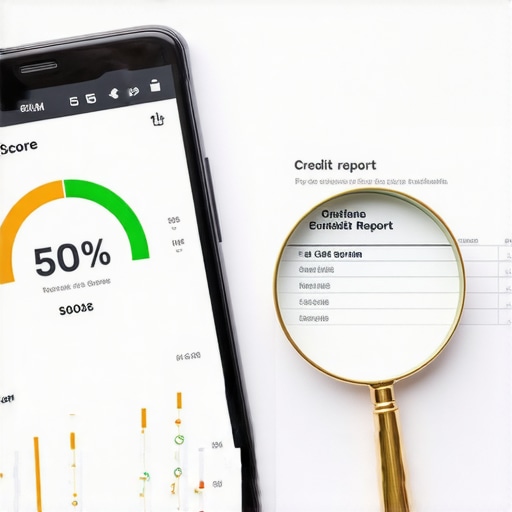 Another trap is the ‘settlement’ scam. Debt collectors love to tell you that settling for 50% will ‘help your credit.’ It won’t. A settled collection is still a collection. Unless you use a pay-for-delete strategy, that black mark stays on your report for seven years. I’ve seen people lose out on mortgages because paying off a collection before buying a house actually updated the ‘last reported date,’ making an old debt look brand new to the algorithm. This reset of the ‘date of last activity’ is a nightmare for those trying to qualify for a low interest rate.
Why does your car loan score look so much better than your credit card score?
This is a nuance most beginners miss: you don’t have just one score. FICO has dozens of ‘industry-specific’ versions. This is why your FICO score is higher for cars than for credit cards—the auto-enhanced version weighs your history of paying off vehicles more heavily than your coffee shop swipes. According to a study by FICO, nearly 90% of top lenders use these industry-specific scores to make decisions. If you’re only looking at a free app, you’re flying blind. You need to understand the logic behind the FICO 10T trended data shift, which looks at your behavior over 24 months, not just a snapshot of today. Finally, stop closing your accounts just because you don’t use them. Why closing your oldest account is a financial mistake is simple: it shrinks your ‘credit age’ instantly. Instead, use how a $10 Amazon purchase can boost your score every month to keep that old account active and healthy. This is about mastering FICO through strategy, not just raw effort. Have you fallen into the trap of closing an account to ‘clean up’ your wallet? Tell me your story below.
Once you’ve successfully purged those fraudulent accounts and errors, you enter a new phase: the long-term maintenance game. I learned quickly that a high score isn’t a trophy you win once; it’s a garden you have to weed. To stay in the 780+ club, I ditched the generic tracking apps and went straight to the source. I personally use the MyFICO mobile app because it provides the actual industry-specific scores lenders see, not just the ‘educational’ VantageScore that most free sites push. I’ve seen my score fluctuate by 40 points between different models, and if you aren’t looking at the right one, you’re making decisions in the dark. I also keep a physical ‘Credit Bible’—a simple accordion folder where I store every certified mail receipt and every response. If you’re serious, you should follow the DIY credit repair checklist that outperforms paid services to keep your records organized. This level of detail is exactly the habit that keeps your FICO score above 780 every month without constant stress.
How do I keep my score from dropping after a win?
Maintenance is about consistency and documentation. The biggest mistake people make after a successful dispute is letting their guard down. I’ve adopted the habit of high-score achievers checking reports every 30 days like clockwork. Why? Because ‘zombie debts’—those old, settled accounts—have a nasty habit of being sold to new collectors and reappearing as fresh entries. To combat this, I maintain the specific log you need to keep when calling bureaus. Every time I speak to a representative, I record their name, employee ID, the date, and exactly what was promised. This isn’t just being meticulous; it’s building a foundation for effective dispute error resolution to boost your credit score in 2025 if that debt ever tries to crawl back onto your report. If a bureau refuses to update a clear error, I don’t argue with their AI anymore. I use the evidence log that forces a bureau manual review and, if necessary, escalate the file to the Consumer Financial Protection Bureau (CFPB). According to the CFPB’s 2023 Annual Report on Credit Reporting, nearly 74% of consumer complaints regarding credit reporting were about incorrect information on a report, which highlights why your personal oversight is the only thing that truly protects you.
What the Future of Credit Repair Looks Like
As we move deeper into 2025, the game is shifting toward ‘trended data.’ Under the FICO 10T model, lenders aren’t just looking at whether you paid your bill last month; they are looking at whether you are ‘transacting’ (paying in full) or ‘revolving’ (carrying a balance) over a 24-month window. This makes the credit repair blueprint fixing errors and strengthening your financial profile more important than ever. You can’t just ‘hack’ your way to a high score for a week to get a loan; you have to demonstrate a pattern of responsibility. My advice? Start using credit repair tips correcting dispute errors effectively to clean up your past, but then pivot to credit building strategies correcting dispute errors for better FICO in 2025 by keeping your utilization low and your accounts active. If you ever feel stuck or the bureau robots keep giving you the runaround, you need to know how to force a manual review when the bureau robots say no. Don’t let an algorithm dictate your financial freedom. Grab your records, send that certified letter today, and take back control of your data.
The Hardest Truths I Discovered While Reclaiming My Identity
Reflecting on my journey, the most jarring realization was that the credit bureaus are not your advocates; they are profit-driven data machines. I spent years assuming they had an ‘accuracy department’ that proactively fixed mistakes, but in reality, they only move when the legal pressure of your documentation becomes more expensive to ignore than the error is to fix. Another lightbulb moment was seeing how mastering credit repair dispute errors and fico optimization is less about finding secret ‘loopholes’ and more about the relentless persistence of your paper trail. Finally, I learned that a single mistake on my report wasn’t just a typo—it was an anchor that allowed fraudulent accounts to latch onto my identity. If I hadn’t used the ultimate guide to dispute errors and credit building in 2025 to scrub those initial red flags, I’d still be stuck in that plastic chair at the car dealership.
[image]
Tools That Actually Moved the Needle for Me
I don’t believe in paying for ‘magic’ credit repair services, but I do believe in investing in the right tools for the job. First, the MyFICO mobile app is non-negotiable; it is the only place I trust to see my actual industry-specific scores rather than educational estimates. Second, a high-quality scanner and a dedicated ‘Credit Bible’ accordion folder are your most important physical assets for organizing certified mail receipts and tracking correspondence. Third, the CFPB complaint portal is the ultimate ‘big stick’ to carry when the bureaus give you the runaround despite your evidence. These resources are the backbone of how to build credit when you’re starting from zero in 2025 because they give you the visibility and legal leverage you need to win.
Take the Wheel and Drive Your Financial Future
You have everything you need to transition from being a victim of circumstance to a master of your own financial profile. Whether you are battling identity theft or just trying to qualify for a better mortgage rate, the strategies we’ve discussed are your shield and your sword. Don’t wait for the ‘perfect’ time to start—the best time was yesterday, and the second best time is right now. Reclaiming your score is about reclaiming your freedom to choose your own path. Have you ever discovered a mistake on your report that felt impossible to remove? Let me know in the comments below.