
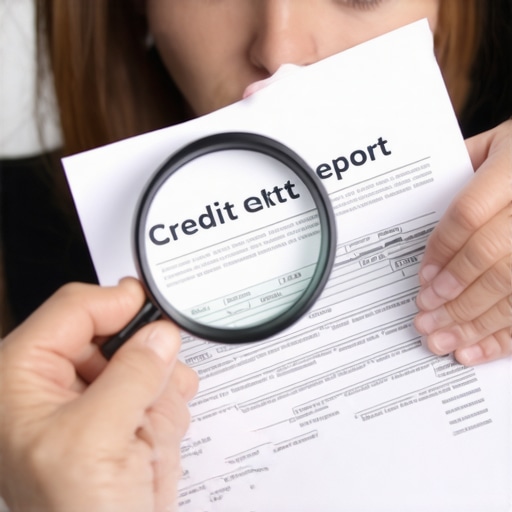
I remember the exact moment it hit me: I was staring at my credit report, frustration simmering as I noticed a late payment I hadn’t made. How could this be on my record when I knew I had paid on time? That lightbulb moment made me realize something crucial—there’s a powerful document that can set the record straight when your credit report is factually incorrect. If you’ve ever faced similar doubts about your credit data, you’re not alone. Many consumers discover errors that can drastically impact their scores, yet few know the secret weapon at their disposal.
Why Your Credit Report Might Be Wrong—and Why That Matters
Your credit report is often considered the ultimate source for your financial reputation, but it’s actually prone to errors. These mistakes can stem from data mix-ups, outdated information, or even misreported payments. According to a Federal Trade Commission study, approximately 20% of consumers have errors on at least one of their credit reports that could lead to higher interest rates or loan rejections. That’s one in five! The stakes are high, and a small mistake can cost you thousands over a lifetime.
Imagine this: you’re preparing to buy a house or a car. You check your score, confident you’re in good shape. Suddenly, a seemingly minor blemish appears—an overdue account from years ago that you fully paid off. Your heart sinks. This is where knowing about **The One Document That Proves Your Credit Report Is Factually Wrong** becomes a game changer.
Early in my credit journey, I made the mistake of relying solely on dispute letters and hoping the bureau would correct itself. That approach often felt like shouting into a void. I learned that, in many cases, the bureaus require concrete proof to make accurate corrections. Without that, errors tend to linger. I stumbled upon this knowledge while researching effective dispute strategies, and it transformed my approach. For a detailed guide on how to identify and resolve credit errors, check out [Understanding Credit Errors](https://creditclaritys.com/understanding-credit-errors-a-step-by-step-guide-to-fico-improvement).
So, what exactly is this crucial document? Simply put, it’s the *bank statement, payment receipt, or official record* that directly proves your claim. When disputes stall or get ignored due to automated filters, presenting irrefutable paper evidence can force a manual review—an essential step toward correcting your credit report.
If you’ve ever wondered whether your dispute efforts are enough, or if your errors are harder to eradicate, stay tuned. There are proven tactics and documents that compel credit bureaus to act, often faster than you’d think. Understanding and leveraging these proven methods will be the focus of our next steps, helping you regain control of your financial story.
Gather the Proof that Will Stop Bureau Mistakes
Start by collecting tangible evidence like bank statements, payment receipts, or official records that directly support your claim. For example, I once faced a dispute where the bureau incorrectly listed a paid-off debt as unpaid. I pulled the canceled check and payment confirmation email to prove the account was settled. This physical proof made the difference during manual review, compelling the bureau to correct the error and boosting my score. Your goal is to present irrefutable documents that leave no room for doubt.
Pinpoint the Exact Error and Prepare to Challenge It
Identify the specific mistake on your report—be it an old late payment, duplicate account, or outdated information. Use online tools or credit report copies to mark the inaccuracies clearly. Once identified, create a dispute letter detailing the error, referencing your attached evidence. When I disputed an outdated collection, I emphasized the account’s payment history and included the bank statement, which led to swift correction. Clear, focused communication paired with proof accelerates the process.
Initiate a Manual Review with a Clear Request
Many bureaus rely on automated systems that may overlook your evidence. To bypass this, send a formal dispute letter under the Fair Credit Reporting Act’s Section 611, explicitly requesting a manual review. Use templates that include this section and specify the documents you’re attaching. I once used a version of this letter and received a prompt response, with the disputed account corrected within days. This step is crucial when automated filters block your dispute or when previous attempts have failed.
Follow Up Persistently and Document Every Step
Always keep copies of your dispute letters, evidence, and correspondence. Follow up with the bureau if you don’t receive a response within 30 days. Contact their dedicated dispute department via phone or secure messaging. When I tracked my dispute progress through certified mail and recorded all interactions, it created a paper trail that limited bureau denial tactics. Persistence and documentation are your armor against bureaucratic delays.
Leverage Bonus Techniques to Speed Corrections
Consider additional tactics like submitting a ‘Section 623’ complaint to the CFPB or using a ‘Section 611a’ letter to request a re-investigation of specific errors. These methods force bureaus to prioritize your case. For instances where disputes are stonewalled, I found that filing a formal complaint directly with the bureau often resulted in expedited corrections, especially when combined with solid evidence.
Remember, the key to convincing the credit bureaus is setting a well-documented, irrefutable case that leaves no doubt. By systematically collecting proof, pinpointing errors, requesting manual reviews, and following up diligently, you can effectively clear inaccuracies that have long hindered your credit profile.
While many believe that disputing errors or paying down debt are all it takes to boost your FICO scores, the reality is more nuanced. One widespread myth is that credit bureaus automatically correct verified mistakes, but in truth, the verification process can be complex and sometimes slow. Relying solely on dispute letters without supporting documentation often leads to delays or denials. Advanced consumers understand that presenting irrefutable proof—like bank statements or payment receipts—can compel bureaus to prioritize and expedite corrections. Moreover, many overlook that certain credit-building strategies, such as optimizing the timing of payments or understanding how specific data points influence FICO, require a sophisticated approach beyond generic advice. For example, paying early or multiple times a month can significantly impact scores if timed correctly, but many fail to leverage this tactic due to lack of awareness. It’s also a myth that all errors are straightforward to fix; some require targeted techniques like the Section 611a reinvestigation or detailed documentation to overcome AI filters and manual review delays. According to a study by the Consumer Financial Protection Bureau, a significant percentage of credit report errors persist because consumers miss these nuanced opportunities. Mastering these subtleties and avoiding common pitfalls can prevent you from falling into credit repair traps that limit your progress. To dive deeper into effective dispute strategies and advanced techniques, explore our comprehensive guide on [credit repair secrets](https://creditclaritys.com/credit-repair-secrets-how-to-resolve-disputes-and-elevate-your-credit-standing). Have you ever fallen for a misconception about credit scores? Let me know in the comments.Maintaining a strong credit profile requires more than just knowledge; it demands the right tools and systematic approaches. Personally, I rely on a combination of specialized software and disciplined methods to stay ahead in the credit repair game. One tool I swear by is **Experian’s Boost**. Unlike generic credit monitoring services, Experian Boost allows me to add utility and phone payments directly to my credit report, which can make a noticeable difference in FICO scores. I use it consistently to ensure my recent positive payment history is reflected accurately, especially since utility payments can significantly impact scores in less than 30 days. Additionally, for dispute management, I leverage **Credit Bureau Dispute Software**, a platform I personally vetted for its robust evidence tracking and automated dispute templates. This software simplifies the process of compiling supporting documents like bank statements and payment receipts, ensuring I present irrefutable proof when challenging errors. It also helps organize follow-up schedules, preventing delays caused by Bureau neglect. To keep my credit profile optimized over time, I monitor key data points such as recent balances, available credit, and payment timings using **FICO-specific trackers**—tools designed to analyze how daily spending habits influence scores. These trackers give me insights into adjusting my behavior proactively, like paying down high balances before reporting dates, in alignment with strategies discussed in our detailed guide on [FICO score improvements](https://creditclaritys.com/understanding-credit-errors-a-step-by-step-guide-to-fico-improvement). Looking ahead, I predict that automation and AI-driven monitoring will become even more integral, offering real-time alerts and recommendations to keep credit healthy. The future might see personalized dashboards that automatically suggest account actions, reducing the manual effort currently required. To scale your efforts effectively, consider setting up automated reminders aligned with your statement dates and payment schedules. Tools like **Calendly** combined with your credit monitoring apps can remind you to execute timely payments and dispute submissions, strengthening your credit profile long-term. How do I keep my credit repair process sustainable over time? The key is consistency and leveraging technological tools that simplify complex tasks. For example, integrating dispute tracking software with daily habit adjustments—like paying early or multiple times a month—can lead to faster, more reliable improvements. Don’t limit yourself to reactive measures. Instead, proactively build your credit by regularly reviewing your report, addressing errors promptly, and employing proven techniques like timely payments and managing credit utilization. As you master these tools and practices, you’ll find your credit scores become more resilient to economic shifts or unexpected negative events. To deepen your strategic approach, explore our comprehensive guide on [building credit fast](https://creditclaritys.com/build-credit-fast-expert-tips-for-correcting-credit-errors-and-boosting-fico), which offers advanced tactics for sustained success. Remember, consistency paired with the right software can dramatically accelerate your credit growth. Try implementing a monthly review routine using these tools and observe how your credit profile becomes more robust and scalable over time. For tailored advice, reach out through our contact page at [Credit Clarity](https://creditclaritys.com/contact-us) and get personalized recommendations to optimize your credit journey.
The Unexpected Truths That Changed My Approach to Credit Repair
One of the most valuable lessons I learned was that every credit report mistake has a unique backstory, and understanding the nuances of each error often dictates the best strategy for correction. It’s not just about sending dispute letters but about knowing precisely what evidence will unlock faster fixes. Personal experience taught me that irrefutable proof—like bank statements or receipts—can turn a frustrating delay into a swift correction. Another insight is that communicating with the credit bureaus as a proactive partner, rather than an adversary, yields better results. If you’re curious, check out this guide for deeper strategies. Lastly, I discovered that timing matters—aligning payment reports and dispute submissions with credit cycle points can significantly impact results. These lessons aren’t just theories; they’re practical, teachable moments that can accelerate your credit improvement journey.
Tools and Resources That Made the Difference for Me
There are several tools I rely on that genuinely streamline the credit repair process. First, specialized dispute software helps organize evidence and track disputes efficiently. Second, utilities and bill payment trackers like Experian Boost allow me to leverage positive payment history quickly. Third, I recommend FICO-specific monitoring tools that provide insights into daily behaviors influencing scores. Lastly, reading key books like “Build Credit Fast” opened my eyes to the importance of strategic behavior changes. These resources, trusted through my experience, form the backbone of ongoing credit growth.
Your Next Step in the Credit Journey Starts Now
Take what you’ve learned here and turn it into action. Applying the right evidence, timing your disputes, and persistently following up can dramatically change your credit landscape. Remember, building a resilient profile doesn’t happen overnight, but with deliberate effort and smart tools, you’re capable of achieving extraordinary results. The future of your credit score is in your hands—be brave, stay consistent, and keep learning. Have you ever faced a stubborn credit error? Share your story below, and let’s grow together in mastery of the credit game.