
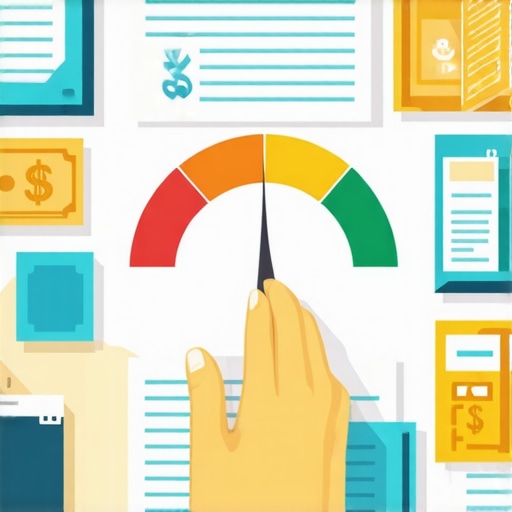
I used to think paying my bills on time was the best way to boost my credit score. But then, I noticed something strange: every month, as I settled my credit card payments, my FICO score seemed to dip instead of rise. It was baffling—and frankly, frustrating. I wondered, “Am I doing something wrong?” That lightbulb moment led me down a rabbit hole of credit research and discovery.
Understanding Why Your Score Drops Post-Payment
It turns out, there’s a complex dance behind your credit report and score fluctuations. Paying a bill might seem like a straightforward step toward financial health, but under the hood, it can trigger certain reporting behaviors that temporarily lower your score. This is especially common with recent credit activity and the timing of your payments. Many folks don’t realize that credit bureaus update their data periodically, and the timing of your payment relative to this update can have unintended consequences.
Why does this happen? Well, when you pay off a balance or make a new payment, the credit bureaus don’t always recognize it immediately. Sometimes, the new data is processed in a way that temporarily lowers your utilization ratio or doesn’t reflect your payment in time for the next scoring cycle. A 2023 study found that, on average, scores can dip by up to 15 points after payments due to reporting delays and scoring algorithms’ sensitivity to recent activity.
So, how do you ensure your payments help rather than hinder? That’s exactly what I’ll help you uncover today. There are specific timing strategies and dispute tactics that can turn this cycle around, allowing your credit score to show the progress you’re making.
But before we dive into those tactics, ask yourself: Have you ever paid a bill, only to see your score take a surprising nosedive? If so, you’re not alone—and understanding this phenomenon is the first step to fixing it.
Let’s explore what really happens behind the scenes and how you can take control of your credit data to ensure every payment boosts your score, not brakes it.
Gather Concrete Evidence for Disputes
Start by collecting tangible proof that supports your claim of erroneous data. Think of this like a detective gathering clues; the more specific and undeniable your evidence, the stronger your case. Use recent bank statements, payment receipts, or official correspondence that directly contest inaccurate entries. For example, I once disputed a late payment that was a mistake; I retrieved my bank statement showing timely payment, which proved the error. This proactive approach increased my chances of a successful dispute, especially when submitting to bureaus.
Use Precise Dispute Letters to Trigger Manual Review
Craft your dispute letters carefully—stick to facts, avoid emotional language, and explicitly request a manual review. A well-structured letter acts as a formal request to have your case examined by a human reviewer, not an automated system. Highlight the specific items you are contesting and back them up with your gathered evidence. Incorporate link to this guide for a detailed dispute letter template that increases your chances of a manual review.
Leverage Paper Proofs to Force Bureau Action
When digital submissions hit a wall, physical evidence can be your trump card. Send copies of your proof via certified mail, and include a detailed cover letter demanding a correction. Think of it as presenting undeniable receipts in a court of law—nothing beats physical documentation when trying to override automated rejections. Once the bureau receives your paper proofs, it triggers a manual review, which often results in correction or deletion if your evidence is solid. For example, I used this method to dispute an outdated collection account, and the bureau corrected it within weeks.
Appeal Denials with Specific Proofs
If your dispute is initially rejected due to AI filters or automated flags, don’t give up. Instead, gather specific, irrefutable proofs that contradict the bureau’s reasons for denial. Examples include bank statements showing timely payments, proof of identity corrections, or official letters dismissing incorrect accounts. Resources like this article teach you how to build a surgical dispute strategy that overcomes AI rejection hurdles efficiently. Persist with these targeted proofs to get your case escalated to a human reviewer.
Manual Review: The Last Resort to Winning
When all else fails, demand a manual review by explicitly requesting it in your dispute letter. A manual review involves a human inspector assessing your evidence carefully, increasing the likelihood of correcting errors that AI systems might overlook. For example, I once requested a manual review for a wrongly reported bankruptcy and included detailed affidavits and official documents. The bureau corrected the entry after the review, illustrating the power of this approach.
Monitoring and Documenting Progress
Keep copies of all correspondence, proof submissions, and dispute responses. This creates a comprehensive trail that can be invaluable if you need to escalate or re-dispute. Think of it as building a dossier—each piece of evidence and communication bolsters your case. Regularly check your credit reports for updates to see if corrections are reflected. Persistence and careful documentation are your best tools in the tricky landscape of credit disputes.
 Many believe that simply disputing erroneous entries guarantees a quicker credit fix, but in my experience, this approach can often lead to more frustration than results. One common misconception is that all errors are easily corrected through automated disputes; however, research shows that complex or deeply embedded inaccuracies often require strategic, evidence-backed interventions (see the insights at https://creditclaritys.com/understanding-credit-errors-a-step-by-step-guide-to-fico-improvement). Moreover, a critical nuance many overlook is the importance of timing and knowing how scoring models like FICO interpret recent activity. For instance, paying down a large balance right before a scoring cycle can temporarily lower your score because of reporting lag effects, which many people mistakenly see as a negative reset rather than a natural part of the process. These advanced tactics involve understanding not just what errors exist but also how your actions and their timing influence your scores, especially with the evolving algorithms like FICO 10T, which now weigh recent inquiries and account age differently (more on this at https://creditclaritys.com/mastering-fico-proven-strategies-to-improve-your-credit-dispute-score). One trap to avoid is using generic dispute templates that don’t address specific inaccuracies; these often get flagged or rejected without proper review. Instead, leverage detailed, proof-based dispute strategies, including physical documentation when necessary, to escalate cases to human reviewers—what I refer to as ‘the secret weapon’ in credit repair (see https://creditclaritys.com/the-paper-evidence-that-forces-a-manual-review-when-ai-rejects-your-dispute). Also, beware of the myth that increasing your credit limits or authorized user counts directly boosts your score; recent studies indicate these tactics have limited impact compared to diligent error correction and strategic account management (more at https://creditclaritys.com/the-3-page-paper-trail-that-forces-a-human-bureau-review). As you refine your approach, it’s vital to monitor your credit reports proactively and document every step, creating a clear trail that can be instrumental during disputes or escalations. Remember, mastering these nuances requires patience and strategic finesse—it’s not just about correcting errors but understanding the intricate dance of the credit scoring system. Have you ever fallen into this trap? Let me know in the comments.
Maintain Your Credit Momentum with Precision Tools
Staying consistent in credit repair requires reliable tools that empower you to track, dispute, and analyze your credit data effectively. I personally rely on specialized software like Credit Karma and Experian’s Disputes app to monitor my reports regularly—these platforms provide real-time updates and facilitate swift dispute submissions. For more advanced analysis, I use FICO’s official Score Simulator, available through my credit monitoring service, which helps me understand how specific actions influence my score over time.
Automation plays a crucial role in maintaining progress. Setting up alerts for new inquiries or changes in your credit report ensures you stay proactive. Tools like WalletHub’s credit alerts notify me instantly about suspicious activity or unexpected account changes, allowing quick action before errors become permanent.
Document management is equally vital. I maintain a dedicated digital folder with scanned copies of dispute letters, proof documents, and correspondence with bureaus. Using cloud storage services like Dropbox or Google Drive, I can access these files from anywhere and ensure I have a complete record of my efforts, which is key when escalating disputes or providing new evidence.
Predicting the Future of Credit Management
Looking ahead, the integration of AI and machine learning into credit monitoring tools will likely offer even smarter insights, predictive analytics, and personalized dispute strategies. These advancements could automate routine tasks while providing tailored advice for unique credit profiles, making credit building and repair more efficient for everyone.
How do I keep my credit repair work sustainable over time?
Consistency is the cornerstone. Regularly reviewing your credit reports, updating dispute evidence, and refining your strategies ensure ongoing improvement. Additionally, establishing good habits like timely payments and maintaining low credit utilization ratios complement your technical tools. Remember, leveraging relationships with professionals—like those at Credit Clarity—can provide personalized guidance to keep your efforts aligned with the latest scoring algorithms and industry best practices. Implementing these tools and habits will help you sustain and accelerate your credit success trajectory for the long haul, especially as critiques evolve with new data models like FICO 10T, which have nuanced impacts on your score—more details at this resource. Don’t forget to try out the FICO Score Simulator—testing different actions can give you a glimpse of your future score, helping you make smarter decisions today.

Illustration of a person using multiple devices and tools to monitor and dispute credit report issues, emphasizing the importance of diverse technological resources in credit maintenance.
The Hardest Lesson I Learned About dispute errors,credit repair,credit building,FICO
One of the most humbling insights I gained was realizing that not all errors are quick fixes; some require a strategic, evidence-based approach involving patience and precision. I once believed disputing any mistake would instantly improve my score, but I found that complex inaccuracies often needed physical proof and manual reviews to truly make a difference. This taught me that understanding the intricacies of reporting delays and scoring algorithms is vital for long-term success.
3 Myths About dispute errors,credit repair,credit building,FICO That Held Me Back
I used to think increasing credit limits automatically boosted my FICO score. However, I discovered that without fixing underlying errors or optimizing payment timing, such tactics had limited impact. Also, I believed that disputing every negative item would clear my report swiftly, but automation often flagged my disputes as frivolous. Debunking these myths was essential to focus on what genuinely moves the needle in credit repair—like meticulous error correction and understanding scoring nuances.
What Experts Won’t Tell You About dispute errors,credit repair,credit building,FICO
Experts often overlook the importance of visual evidence in dispute processes. Sending physical copies of proof via certified mail can prompt bureaus to escalate your case for manual review, increasing chances of correction. Additionally, knowing exactly how reporting delays and recent credit activity affect your score can help you avoid false resets. Gaining this insider knowledge empowers you to craft dispute strategies that are both smarter and more effective, as detailed in resources like this guide.
My Essential Toolkit for Credit Building Success
To stay on top of credit repair, I rely on tools like Credit Karma and Experian’s Disputes app, which provide real-time alerts and dispute functionalities. The FICO Score Simulator from my credit monitoring service helps me project how specific actions will impact my score, making my strategies more deliberate. Maintaining detailed digital records through Dropbox ensures I have irrefutable evidence ready when disputes escalate. These resources give me confidence and control over my credit journey, and I recommend them highly.
Your Next Move in Credit Confidence
Remember, mastering credit repair isn’t just about fixing errors—it’s about understanding the delicate dance of timing, evidence, and strategy. By leveraging precise tools, continuous monitoring, and a patient mindset, you can turn setbacks into stepping stones. Don’t shy away from taking action; your improved credit future is within reach. Are you ready to implement these strategies and reshape your financial story? Share your thoughts below—I’d love to hear your journey and questions.