

I was sitting at my kitchen table, nursing a cold coffee and staring at a loan rejection that felt like a slap in the face. My score was a mediocre 620, and for the life of me, I couldn’t figure out why. I’d spent months paying off every single penny I owed. I thought a clean slate meant a perfect score. Boy, was I wrong. I was a financial ghost. That was my problem. My mistake was thinking that lenders want to see you owe absolutely nothing, but in reality, they want to see you use credit responsibly without becoming a risk. Today, I am going to show you how leaving just a few dollars on a card can do more for your FICO than a dozen zero-balance statements ever could.
Stop Trying to Pay Every Card to Zero
It sounds crazy, right? We’re told our whole lives that debt is the entire enemy. But FICO is a strange, data-hungry beast. If every single card shows a zero balance when the bank reports to the bureaus, the algorithm often assumes you aren’t using your credit at all. According to data from FICO, about 30% of your total score is determined by your amounts owed, which specifically looks at how much of your available credit you are actually using. When I finally left a small $10 balance on one single card while keeping the others at zero, my score jumped nearly 30 points in a single billing cycle. This is a core part of proven strategies to improve your credit dispute score that most people overlook because it feels counterintuitive.
Does This Method Actually Work for Regular People?
You might be thinking this is just some financial voodoo that only works if you are already wealthy. I get it. I was terrified that carrying any balance would trap me in a cycle of interest payments or late fees. But we are talking about the price of a sandwich—not a mortgage payment. The trick is letting the balance report, not letting it grow.
The Day I Realized My Perfection Was a Problem
Early in my journey, I was obsessed with why a zero balance is not always the best for your score. I would pay off my cards the literal second I bought something. I thought I was being a gold-star student of finance. Instead, I was making my credit report look completely dormant. The banks weren’t seeing a responsible borrower; they were seeing an empty file with no activity to grade. You have to realize that your credit utilization ratio is more important than your balance when it comes to those high-speed scoring models. Have you ever felt like you were doing everything right, but your score just stayed stuck in the mud? Let me know if you have faced that frustration, because it is usually a sign that you are just one small tweak away from a breakthrough.
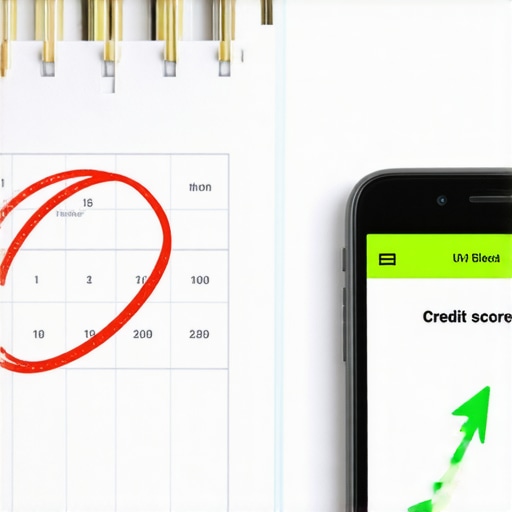
To turn the tide, you have to stop looking at your credit card bill like a utility bill and start seeing it as a reporting tool. The biggest mistake I made was focusing on the due date. In the world of credit scoring, the due date is for avoiding late fees, but the statement closing date is for building your score. Think of your credit report like a school yearbook photo. It doesn’t matter if you had messy hair for 364 days of the year; if your hair is perfect on the day the photo is taken, that is what everyone remembers. Your statement closing date is that photo day.
Catch the Bank When It Is Actually Reporting
I learned this the hard way back in 2019. I had a $2,000 limit on my main card and I had spent about $1,800 on a new laptop. I paid it off in full on the 15th, which was my due date. I felt like a financial genius until I checked my score a week later and saw it had plummeted 45 points. Why? Because my bank reported my balance on the 10th. Even though I paid the bill, the bureau saw a 90% utilization rate. To prevent this, you need to find that closing date on your statement and ensure your balance is low three days before that date. This is why you should pay twice a month for maximum FICO points. One payment handles your spending, and the second payment, right before the closing date, grooms your report for the algorithm.
Keep One Small Light On for the Algorithm
Once you have the timing down, you need to implement the AZEO method—All Zero Except One. If you have three credit cards, pay two of them to exactly $0 before their statement dates. On the third card, leave a tiny balance, something like $5 or $10. This signals to the FICO computer that you have credit, you are using it, but you aren’t dependent on it. When I first tried this, I was worried about interest, but leaving $10 results in pennies of interest—a small price to pay for a massive score boost. This tactic is a pillar of the ultimate guide to dispute errors and credit building in 2025 because it maximizes the 30% of your score dedicated to amounts owed.
Scour Your Report for the Silent Killers
You can have the best payment habits in the world, but if your report is riddled with ghost accounts or incorrect dates, you are swimming upstream. I once helped a friend who couldn’t get a car loan despite having no debt. We found an old utility bill from an apartment he hadn’t lived in for six years that was being reported as a fresh collection every month. This is a classic example of how dispute errors affect your score and what to do. You have to be aggressive. If a creditor can’t prove the debt is yours with original documentation, it has to go. Sometimes the automated systems will reject your claim instantly; in those cases, you must know how to force a manual review when the bureau robots say no. A human eye often sees the logic that an algorithm misses. By combining these strategic reporting habits with effective dispute error resolution to boost your credit score in 2025, you stop being a victim of the bureaus and start being the architect of your own financial reputation.
One of the biggest lies in the financial world is that paying your debts is always the fastest way to a high score. I know that sounds backward, but if you have a collection from five years ago, cutting a check today could actually backfire. This happens because most lenders still use older versions of the FICO algorithm—specifically for mortgages—where the Date of Last Activity matters immensely. When you make a payment, that date refreshes to the current month, making a five-year-old mistake look like it happened yesterday. This is exactly why paying off a collection does not always raise your score immediately. Have you ever fallen into this trap? Let me know in the comments.
What Happens When the Bureau Robots Miss a Re-Aged Debt?
A study by the Federal Trade Commission (FTC) found that one in four consumers had an error on their credit reports that might affect their credit scores. A particularly nasty error is re-aging, where a collector illegally changes the date of a debt to keep it on your report longer than the seven-year limit. You need to know how to spot a re-aged debt on your credit report immediately because it is a direct violation of the Fair Credit Reporting Act. If you catch this, don’t just ask them to fix it; demand they delete the entire tradeline for non-compliance.
The Settlement Trap That Leaves You Stranded
I’ve seen people negotiate settlements thinking they’ve won, only to find their score hasn’t budged an inch. If you settle for less than the full amount, the creditor might report the account as Settled for less than full balance. To a future lender, that looks like you are a risk who doesn’t fulfill their full obligations. To avoid this, you must learn how to negotiate a settlement that includes a credit update, specifically a pay-for-delete agreement. This is a core part of credit repair secrets that the big banks don’t want you to know. Use the pay-for-delete strategy that works on old utility bills and other common collections to ensure that once the money leaves your pocket, the stain leaves your report.
Look for the Dates Instead of the Dollars
Most people obsess over the balance, but the real power is in the dates. I once found a client whose score was stuck because a closed account was still reporting as open with no activity. This small data mismatch confused the algorithm’s calculation of his credit age. You should regularly learn how to audit your credit report for incorrect account dates to ensure the opened and last reported fields match reality. This level of detail is what separates a DIY credit hobbyist from someone who truly understands mastering credit repair dispute errors and fico optimization.
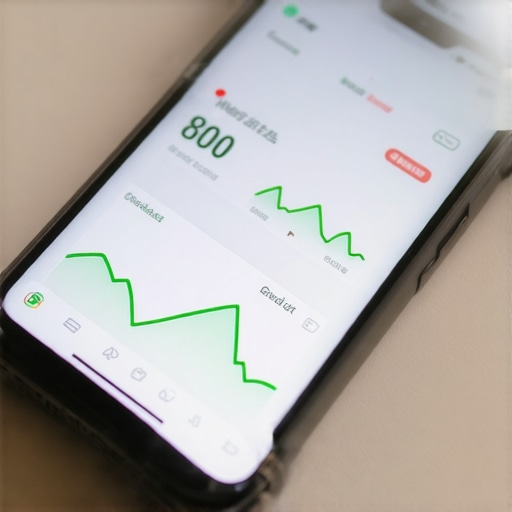
Once you have scrubbed the errors and optimized your utilization, you enter the most dangerous phase: the maintenance phase. Most people relax the moment they see that 740 or 800 pop up on their screen, but credit is not a trophy you win; it is a garden you have to weed. I personally don’t rely on the free apps provided by my bank for serious maintenance because those are usually VantageScores, which are basically the ‘participation trophies’ of the credit world. For the heavy lifting, I use the official MyFICO app. I pay for it because it’s the only way to see all 28 versions of my FICO score, including the specific models used for mortgages and auto loans. Knowing how to monitor your credit for small changes that matter is the difference between catching a reporting error in a week or finding out about it when you’re sitting in the finance office at a car dealership.
Don’t Rely on Automated Algorithms to Guard Your Future
I’ve found that the problem with using credit repair software for complex errors is that it creates a false sense of security. Software is great for identifying a basic typo, but it won’t catch the nuanced shifts in how your data is being weighted. Every month, I spend fifteen minutes doing a manual scan. I’m looking for new ‘soft’ inquiries I don’t recognize and checking that my credit limits haven’t been lowered without notice. If you see a limit drop, your utilization could spike overnight, even if you haven’t spent a dime. This is where understanding credit errors becomes a permanent skill rather than a one-time project. You have to be the one who audits the auditors.
How do I keep my score from dropping after I hit my goal?
The secret to long-term stability is what I call the ‘Credit Freeze Pivot.’ Once you have the score you want and you aren’t planning a major purchase in the next six months, freeze your files at all three bureaus. This prevents identity thieves from opening new accounts and, more importantly, it stops ‘trigger leads’—those annoying calls you get from lenders the second you apply for something. While your files are frozen, continue your credit building strategies correcting dispute errors for better fico in 2025 by keeping your older accounts active with small, recurring subscriptions. A $5 monthly streaming bill on an old card keeps the ‘Date of Last Activity’ fresh without risking high utilization.
The Future of FICO is Watching Your Every Move
We are moving into an era of ‘Trended Data.’ According to technical documentation for the FICO® Score 10 T, the algorithm is no longer just looking at a snapshot of your debt today. It is looking at the last 24 months of your spending and payment patterns to see if you are ‘layering’ debt or paying it off. This means the old ‘quick fixes’ won’t work as well in the future. You need a clean, consistent history. I recommend you how to audit your credit report for hidden reporting errors specifically looking for late payment ‘ghosts’—those markers that say you were late three years ago when you know you weren’t. These will be weighted more heavily as trended data becomes the industry standard. My challenge to you: log into AnnualCreditReport.com tonight, grab your raw data, and verify that every single ‘Date of Last Activity’ on your open accounts matches your records exactly.
The Three Hard Truths I Learned While Chasing an 800 Score
Looking back at my journey, I realize that the technical side of credit was only half the battle. The first hard truth is that perfection is a myth; your score will wiggle up and down by a few points every month based on your daily spending, and that is okay. Second, I learned that understanding fico dispute errors and credit repair hacks is a skill that pays dividends for a lifetime, not just for a single loan application. Finally, I discovered that the bureaus are not your friends—they are data brokers. When you treat them like a business you are auditing, you get much faster results.
The Toolkit That Keeps My Financial Profile Bulletproof
I do not leave my financial reputation to chance, and neither should you. My primary resource is the credit repair blueprint fixing errors and strengthening your financial profile because it provides a structured way to handle incoming data. I also swear by keeping a physical folder for all correspondence. If you have to fight a reporting error, you will need the evidence log that forces a bureau manual review. This simple log—tracking who you spoke to and the date—is a powerful weapon against automated rejections. Use dispute errors on your credit report a step-by-step guide for 2025 to ensure your letters are legally sound.
#IMAGE_PLACEHOLDER_E#
Step Into the Driver’s Seat of Your Financial Life
You are the architect of your own opportunities. Whether you are starting with a blank slate or cleaning up past mistakes, remember that every positive action you take today builds a stronger foundation. There is a profound sense of peace that comes when you no longer fear a credit check. By following these credit building strategies correcting dispute errors for better fico in 2025, you are reclaiming your financial freedom. It takes time, but the view from the top is worth the climb.
Have you ever noticed your score drop even after you paid off a large debt? Let me know in the comments below!