
I sat at my kitchen table, staring at a stack of mail, and felt my stomach drop. I had spent weeks meticulously documenting a mistake on my report, only to receive a generic letter from the bureau. They claimed they couldn’t verify my identity or that my request was ‘frivolous.’ It felt like a slap in the face after all that hard work. I was trying to do the right thing, yet I was being treated like a scammer. But here is the thing: that letter isn’t a final ‘no.’ It is a test of your patience. I have been there, done that, and I am going to show you how to pass that test and force them to actually do their jobs.
Beat the Bureau at Their Own Game
My biggest mistake when I started this journey was thinking the bureaus were on my side. I once sent a dispute letter I copied straight from a random forum without changing a single word. I thought it was ‘professional.’ It wasn’t. It was a red flag for their automated systems. You must stop sending generic dispute letters if you want to avoid the ‘stall’ bin. These bureaus handle millions of disputes, and they use every trick in the book to lighten their workload. When you receive a stall letter, it usually means you haven’t provided what they call ‘sufficient’ evidence—even if you think you have. To win, you need to understand the evidence you need to win a dispute to make your case bulletproof from the start. They want you to get frustrated and walk away. Don’t let them.
Do these letters actually mean you’ve lost?
A lot of people see that ‘frivolous’ label and panic. They think they are in trouble or that the error will stay there forever. That is exactly what the bureaus want you to think. It is a psychological game. According to the Consumer Financial Protection Bureau (CFPB), the Fair Credit Reporting Act (FCRA) mandates that these agencies must conduct a reasonable investigation within 30 days unless they can specifically prove a dispute is irrelevant. A generic stall letter often fails that ‘reasonableness’ test entirely. If you are struggling with a bureau that won’t budge, you need a plan for what to do when the credit bureau ignores your letter. Have you ever felt like you were yelling into a void while trying to fix your score? Let me know in the comments below; I’d love to hear your story. We are going to look at the exact paperwork that makes them sit up and pay attention in the next section.
Ditch the Digital Shortcut If You Want Results
Think of the credit bureau as a massive, automated sorting machine. When you use their online forms, you are essentially feeding the machine exactly what it wants to see: simplified data that a computer can reject in milliseconds. I remember trying to dispute a collection account through a mobile app back in 2018. It felt efficient at the time, but I was essentially handing them a ‘get out of jail free’ card. The system didn’t allow for attachments or nuanced explanations, and within three days, my dispute was closed with a canned response. This is exactly why online dispute portals are designed to make you fail. They strip away your legal leverage under the Fair Credit Reporting Act (FCRA). If you want a real investigation, you must use a physical paper trail. By sending a letter via Certified Mail with a Return Receipt Requested, you create a legal clock that they cannot ignore. This is one of the tactics we used to fix a broken credit profile fast, and it works because it forces a human to actually sign for your mail and log the date of receipt.
Assemble the Evidence Packet That Demands Attention
The bureaus often hide behind the claim that your dispute is ‘unverifiable.’ To beat this, you need to provide a level of detail that makes it impossible for them to look the other way. Don’t just say an account isn’t yours; show them why. I once had a client who was being haunted by a debt that actually belonged to someone with a similar name. We didn’t just send a letter; we sent a copy of his social security card, a utility bill showing his correct address, and a copy of his driver’s license. Before you mail anything, you need to check the document checklist for your first credit dispute to ensure you aren’t leaving any gaps. If the error involves an incorrect balance, include a copy of your final statement showing the $0 balance. Providing the one document that wins almost every credit dispute—like a letter from the creditor themselves admitting a mistake—is the ultimate silver bullet.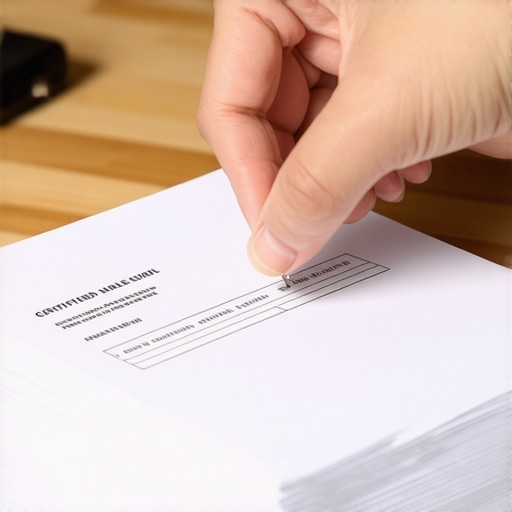
Stop the Identity Not Verified Stall in Its Tracks
One of the most common tricks in the bureau playbook is sending a letter stating they ‘could not verify your identity.’ It is a classic delay tactic. To bypass this, your dispute packet must include two clear forms of identification: a government-issued ID and a recent utility bill or bank statement showing your name and current address. This level of transparency is essential for how to force a credit bureau to delete unverified debt fast. If you are dealing with older accounts, such as medical collections, you might also need to use the paper trail method for deleting old medical debt to show that the insurance already covered the costs. When your evidence is organized like a legal brief, the bureaus realize you aren’t a casual consumer they can bully; you are someone who knows the rules. This precision is the foundation for mastering credit repair dispute errors and fico optimization. Finally, make sure you use the phrasing you need in a debt validation letter to ensure you are citing the correct sections of the law.Let’s pull back the curtain on a myth that almost every self-proclaimed guru pushes: the idea that paying off an old collection is a guaranteed way to see your score jump. In reality, I have seen people lose 30 points overnight by doing exactly that. This happens because most lenders still use the FICO 8 model, which generally does not care if a collection is paid or unpaid—it only cares that the negative mark exists. When you pay an old debt, you might inadvertently update the date of last activity, making a decaying five-year-old debt look brand new to the algorithm. This is precisely why paying a collection might actually lower your score. If you aren’t careful, you are just paying for the privilege of a lower FICO. Have you ever fallen into this trap? Let me know in the comments; I would love to hear your story.
Why does your FICO score drop when you finally pay off a loan?
It feels like a betrayal when you celebrate a final payment only to see your score dip. The nuance lies in the ‘Credit Mix’ and ‘Account Aging’ categories of your score. When a loan is closed, you lose the active ‘mix’ of having an installment account, and the algorithm may no longer weigh that history as heavily as it did when it was active. This is a common phenomenon explored in why your score drops after you finish paying off a loan. To combat this, you need to look at the difference between fico 8 and fico 10t for new borrowers to understand how newer models are trying to fix this ‘logic gap’ by looking at trended data rather than just a snapshot in time. 
Avoid the trap of the automated e-OSCAR system
The biggest mistake advanced DIYers make is failing to realize their dispute isn’t being read by a human. Most disputes are processed through e-OSCAR, a system that reduces your detailed, five-page letter into a three-digit code. If you don’t use specific language that bypasses these codes, you are shouting into a digital void. According to the Consumer Financial Protection Bureau (CFPB), nearly 70% of consumers reported issues with the credit bureaus’ automated responses in 2022. This is why mastering credit repair dispute errors and fico optimization requires you to use the ‘factual dispute’ method. Instead of saying ‘this isn’t mine,’ you must point out that the ‘Date Opened’ on Equifax doesn’t match the ‘Date Opened’ on TransUnion. These technical inconsistencies are the keys to credit building strategies correcting dispute errors for better fico in 2025. When you find a factual error, the bureau is legally required to delete the entire trade line if they cannot verify the specific data point you challenged. This is how you win the game at the highest level.If you want to move beyond just ‘fixing mistakes’ and start building a profile that lenders fight over, you have to stop relying on the pretty charts in your banking app. I personally use a physical ‘Credit Audit Spreadsheet’ alongside my digital files, and it is the single most important tool in my arsenal. Why? Because most apps hide the ‘Date of Last Activity’ or the ‘Original Delinquency Date’ behind three layers of menus. I track these dates manually because they are effectively the expiration dates for negative items. If a debt collector tries to re-age a debt to make it stay on my report longer, my spreadsheet catches the discrepancy immediately. This level of granular tracking is a core part of the ultimate guide to dispute errors and credit building in 2025. You need to become the auditor of your own financial life.
How can I keep my score high after the errors are gone?
Maintenance isn’t just about checking a number; it is about protecting the integrity of your history. I make sure to log in to my accounts every 90 days to verify that my oldest, most valuable accounts haven’t been closed for inactivity by the bank. I use the 2 trick for keeping an old credit card active by placing a small, recurring subscription on a legacy card and setting it to autopay. It keeps the aging history alive without any manual effort on my part. Furthermore, you must remain vigilant against ‘re-pollution’ of your report. You should know how to identify a zombie debt on your credit report. These are ancient debts that have been sold so many times that the data is corrupted, often leading to them ‘respawning’ as brand-new collections. 
Stop Asking for Permission to Grow
One of my favorite advanced moves for scaling a score into the 800s is aggressively hunting for ‘soft pull’ limit increases. I refuse to take a hard inquiry just for the ‘privilege’ of a higher credit limit. By mastering the secret to increasing your credit limit without a hard pull, you can drop your overall utilization ratio overnight, which is one of the most effective mastering fico proven strategies to improve your credit dispute score. Looking forward, the game is shifting toward ‘trended data.’ Lenders are moving toward the ‘Metro 2’ reporting format even more strictly, which is the technical language furnishers use to transmit data to bureaus. According to the Consumer Data Industry Association (CDIA), the Metro 2 format allows for much more granular reporting of payment patterns. This is exactly why your fico 8 score is different from fico 10t—the newer models see if you are actually paying down debt or just shifting balances around. My prediction for the next two years is that ‘snapshot’ scores will become obsolete; lenders will only care about your 24-month trajectory. To stay ahead, start why checking your own credit is actually essential for growth and focus on maintaining that upward trend. Try this today: Pick one old credit card you haven’t used in six months, put a $5 charge on it, and set up an automatic payment for the full balance. That single action protects the oldest, most foundational part of your credit history from being deleted by the bank’s automated systems.
The Reality Check Most Credit Repair Gurus Avoid
After years of navigating this complex system, I have realized that the biggest barrier to a high score isn’t just the bank—it is the mental exhaustion they hope you feel. One major ‘lightbulb moment’ for me was discovering that silence is a strategic weapon for the bureaus; they intentionally wait for your energy to dip so they can close the file. I also learned that credit repair tips correcting dispute errors effectively usually boil down to who has the better paper trail, not who uses the fanciest legal jargon. Finally, remember that your credit score is a living organism; it reacts to every single piece of data in real-time, which is why understanding credit errors a step-by-step guide to fico improvement is a lifelong habit of vigilance, not a one-time project.
The Resource Stack That Keeps My Profile Bulletproof
I never leave my financial health to chance, and neither should you. My personal ‘war room’ for credit management includes a printed copy of the Fair Credit Reporting Act for quick citations and a manual spreadsheet to track ‘Date of Last Activity’ for every single account. If you are looking for a clear, actionable path forward, I highly recommend following the credit repair blueprint fixing errors and strengthening your financial profile. It provides the structural integrity your dispute letters might currently be missing. For those just starting their journey, checking out how to build credit when you’re starting from zero in 2025 is the single best way to ensure your newly cleaned report has the positive depth it needs to move your score higher.
#IMAGE_PLACEHOLDER_E#
Stop Waiting for the Bureaus to Change and Start Forcing Their Hand
The system is designed to be difficult, but you now possess the specific tactics to dismantle those barriers. Every letter you send and every technical error you identify is a brick in the wall of your future financial freedom. Use credit repair secrets how to resolve disputes and elevate your credit standing to take back the leverage you deserve. You aren’t asking the bureaus for a favor; you are demanding the accuracy that the law requires. Your future self—the one signing the mortgage on a dream home or securing a low-interest business loan—will thank you for the persistence you show today. Have you ever felt like giving up after a bureau sent you a generic stall letter? Let me know in the comments below; I would love to help you strategize your next move.