
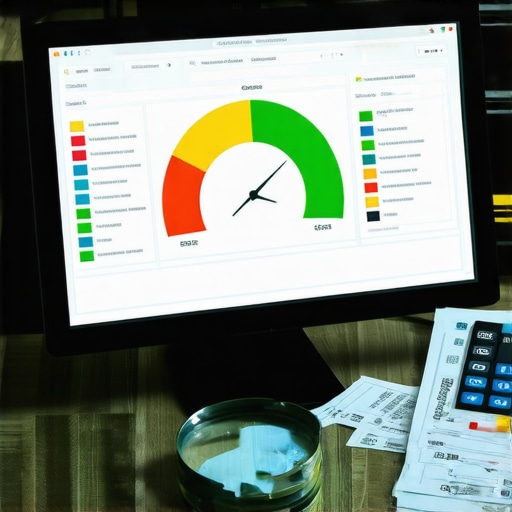
I still remember the sinking feeling in my stomach when I sat across from the mortgage loan officer. I had spent six months checking my Credit Karma app religiously, watching that bright green dial creep up to a beautiful 745. I thought I was golden. But when the lender pulled my actual files, he looked at me with a sympathetic shrug and said, “Your mid-score is actually a 682.” My heart absolutely stopped. That single moment of shock cost me thousands of dollars in interest and sent me on a years-long journey to figure out exactly how I had been misled by my own phone screen.
The Great Credit Score Illusion That Fools Millions
It turns out I had fallen headfirst into a trap that traps millions of everyday folks. I was staring at a VantageScore model on my app, while my lender was looking at a traditional FICO model. We were essentially speaking two completely different financial languages. Many people do not realize that the score you see on free tracking apps is rarely the one used to determine your eligibility for major loans. When you are trying to buy a house or get a car, relying on these superficial numbers can lead to devastating surprises. This is precisely the reason your FICO score differs between Experian and TransUnion and why the free apps you monitor daily can paint an entirely fictional picture of your borrowing power.
Today, we are going to strip away the marketing fluff and look at the real mechanics of credit tracking. My goal is to make sure you never get blindsided at a dealership or a bank like I did. We will break down exactly why these free scores deviate so wildly from reality, how the credit bureaus manipulate your data behind the scenes, and what you can do to see the exact numbers that lenders see before you apply for anything new.
Is your free credit tracking app actually lying to you?
It is not that Credit Karma is committing fraud; they are simply showing you a VantageScore 3.0, a model developed by the three major credit bureaus as a competitor to FICO. However, according to research by the Consumer Financial Protection Bureau, over 90% of top lenders still exclusively use FICO scores to make their actual lending decisions. When I was starting out, my biggest mistake was treating my Credit Karma number like financial gospel. I ignored the underlying reports because the big green number made me feel safe. If you want to build real purchasing power, you have to focus on the actual data in your reports rather than the daily aesthetic fluctuations of a free app. Correcting basic mistakes on your actual files is the real key to success, which is why learning credit repair tips correcting dispute errors effectively is far more valuable than staring at a simulated daily update.
Have you ever walked into a dealership or applied for a credit card only to find out your real score was dozens of points lower than what your phone app promised? I want to hear your story, so drop a comment below and let me know how big your gap was!
Grab the Exact Reports Your Lenders Are Staring At
Before you send a single dispute letter or pay off a penny of debt, you need to see the exact data lenders see. Do not rely on credit monitoring dashboard summaries. I learned this the hard way when I tried to fix a lingering collection account on my screen, only to find out the bureau had my file merged with someone else entirely. To prevent this, you must look at your raw files. Your first move is to bypass the colorful app interfaces and pull your official, comprehensive documents directly from the source. In fact, why you should always request a paper credit report becomes obvious once you realize how much critical background data is stripped out of the digital versions.
When I was trying to rebuild my credit score, I printed out all three bureau reports and sat on my living room floor with three different colored highlighters. It was messy, tedious, and incredibly frustrating. I highlighted personal info errors in yellow, suspicious account dates in pink, and unfamiliar balances in blue. Within forty-five minutes, I found a major error: a credit card I had closed in college was still showing as active but with a series of late payments from a completely different year. This manual audit is the essential foundation of the credit repair blueprint fixing errors and strengthening your financial profile because it exposes the bugs in the machine before they can permanently damage your score.

How to Audit Your Credit Report for Incorrect Account Dates
Once you have your paper files in front of you, look closely at the specific dates listed for every negative item. Credit bureaus frequently make mistakes with the ‘date of first delinquency’ or the date an account was closed. A classic trap occurs when a collection agency buys an old debt and changes the date to make it look brand new. This illegal practice of re-aging can keep a negative item on your report far past the legal seven-year limit. Learning how to audit your credit report for incorrect account dates is your best defense against these sneaky tactics.
The Paperwork That Wins a Dispute Against a Creditor
If you find an error during your audit, do not just click the ‘dispute’ button on an app. Online disputes often force you to choose from a generic list of reasons, which can waive your rights to a thorough manual investigation. Instead, write a physical dispute letter. I remember drafting my first letter to dispute a bogus cell phone bill; I gathered my final utility statements and my bank cancellation receipt to prove the account was closed in good standing. Having the correct documentation is what actually forces a bureau to update your status. If you are dealing with utilities or mobile accounts, presenting the documentation that wins a dispute against a cell provider is the difference between getting a quick deletion and getting ignored.
Why You Should Pay Twice a Month for Maximum FICO Points
While you wait for dispute updates, you can actively manipulate your FICO score by changing how you pay your active credit cards. Lenders report your balances to the bureaus once a month, usually on your statement closing date, not your due date. If you carry a high balance throughout the month and pay it off on the due date, your report might still show a high credit utilization ratio, which drags your score down. An incredibly simple workaround is to make half-payments every two weeks. When you implement this habit, you ensure that your reported balance is always low. This is why you should pay twice a month for maximum FICO points, as it tricks the reporting cycle into showing optimal utilization without you spending an extra dime.
When I first started disputing my own credit errors, I fell for the most common myth in the entire financial community: the idea that sending a massive, generic dispute list to all three bureaus at once would clean my slate overnight. The industry is flooded with automated templates claiming to sweep your record clean. However, in my experience, inundating the bureaus with dozens of challenges simultaneously is the fastest way to get your entire file flagged as spam. The credit bureaus use automated optical character recognition systems to scan mail, and if you trigger their algorithms, they will simply reject your hard work without a human ever reading it.
Why you should not dispute every negative item at once
If you submit a laundry list of twenty different items you want investigated, the automated processing systems at TransUnion or Experian will likely label your request as frivolous. Instead of getting a thorough investigation, you receive a automated rejection letter. According to a landmark study by the Federal Trade Commission, nearly 25% of consumers identified errors on their credit reports that might affect their scores. But the key to actually removing these errors is precision. I found that disputing just one or two highly critical inaccuracies at a time yields a much higher success rate because it forces a real human operator to review your evidence. It is always better to prioritize the most damaging errors first, which is why learning why you should not dispute every negative item at once is a strategy that actually yields real deletions.

Another dangerous trap is the pull of professional credit repair companies that promise guaranteed score increases. The truth is, these companies have no special legal pathways that you do not possess yourself. In fact, many of them use automated credit repair software that repeatedly sends the exact same generic dispute letters every thirty days. This lazy approach can permanently damage your credibility with the bureaus, making it twice as hard to correct actual, legitimate errors later on. For most people, taking a DIY approach and using personalized, evidence-backed letters is not only free, but infinitely more effective. Understanding the risks involved is why smart consumers learn why you should avoid credit repair companies for easy fixes and take control of their own financial data.
How do you handle a credit bureau that claims your dispute is frivolous?
If you do receive a letter from a bureau claiming your dispute is frivolous or irrelevant, do not panic. This is a common defensive tactic designed to make you give up. To break through this wall, you must respond with new, undeniable evidence rather than sending the exact same letter again. This means providing physical copies of utility bills, cancelled checks, or a specific log of your communication history with the original creditor. Knowing how to handle a bureau that says your dispute is frivolous is what separates the novices from the experts. By maintaining a clean paper trail and responding with fresh facts, you legally obligate the credit bureau to reopen the case and conduct a genuine investigation.
Have you ever fallen into this trap and had a credit bureau dismiss your legitimate dispute as frivolous? Let me know in the comments below how you handled it!
Now that we have dismantled the common myths and learned how to navigate bureau rejections, we need to focus on keeping the engine running. Rebuilding your credit score isn’t a one-time project; it requires a systematic maintenance routine. Over the years, I have tried countless spreadsheets, paid tracking software, and manual systems, but the real magic happens when you build a streamlined, habitual workflow that prevents new errors from ever taking root. In the world of credit management, consistency outweighs sporadic effort every single time.
How do I maintain my optimized FICO score over time?
Maintaining a pristine file requires a strategic shift from aggressive disputing to passive observation and fast response times. I personally rely on a dedicated physical binder where I log every communication with creditors, combined with a secure digital archive of my monthly statements. This is the core of the credit repair blueprint fixing errors and strengthening your financial profile because a well-organized history makes future disputes trivial. According to the Consumer Financial Protection Bureau (CFPB), keeping detailed records is your single greatest weapon if a credit bureau fails to maintain accurate records. I check my Experian, Equifax, and TransUnion files quarterly, looking specifically for small changes like incorrect employer names or old addresses, as these are often the first signs of database mismatched files.
As we look toward the future, the credit landscape is shifting. With the rise of machine learning models like FICO 10T, which analyzes trended data over a 24-month period rather than just a single snapshot, the old trick of paying down balances right before a mortgage application won’t be enough. Future-proofing your score means you must understand credit repair tips correcting dispute errors effectively to ensure your historical trends look flawless. Keeping utilization consistently low every single month, rather than scrambling at the last minute, will become the industry standard for securing prime interest rates.

My absolute favorite tool for maintaining a healthy credit profile is setting up customized calendar alerts for statement closing dates. Most people only track payment due dates, but tracking the actual statement closing date allows you to apply why you should pay twice a month for maximum FICO points perfectly. By setting an alert for three days prior to the statement closing date, I can pay my balance down to less than 3% utilization, ensuring that only a tiny, positive balance is reported to the credit bureaus. This small habit has done more to stabilize my FICO score than any expensive monitoring tool ever could.
My challenge to you today is to log into your primary credit card portal right now, find your next statement closing date, and set a recurring alarm on your phone for three days before that date. Make a payment to bring your balance down to under 5% of your limit, and watch how your score responds over the next 30 days.
I still remember the sinking feeling in my stomach when I sat across from the mortgage loan officer. I had spent six months checking my Credit Karma app religiously, watching that bright green dial creep up to a beautiful 745. I thought I was golden. But when the lender pulled my actual files, he looked at me with a sympathetic shrug and said, “Your mid-score is actually a 682.” My heart absolutely stopped. That single moment of shock cost me thousands of dollars in interest and sent me on a years-long journey to figure out exactly how I had been misled by my own phone screen.
The Great Credit Score Illusion That Fools Millions
It turns out I had fallen headfirst into a trap that traps millions of everyday folks. I was staring at a VantageScore model on my app, while my lender was looking at a traditional FICO model. We were essentially speaking two completely different financial languages. Many people do not realize that the score you see on free tracking apps is rarely the one used to determine your eligibility for major loans. When you are trying to buy a house or get a car, relying on these superficial numbers can lead to devastating surprises. This is precisely the reason your FICO score differs between Experian and TransUnion and why the free apps you monitor daily can paint an entirely fictional picture of your borrowing power.
Today, we are going to strip away the marketing fluff and look at the real mechanics of credit tracking. My goal is to make sure you never get blindsided at a dealership or a bank like I did. We will break down exactly why these free scores deviate so wildly from reality, how the credit bureaus manipulate your data behind the scenes, and what you can do to see the exact numbers that lenders see before you apply for anything new.
Is your free credit tracking app actually lying to you?
It is not that Credit Karma is committing fraud; they are simply showing you a VantageScore 3.0, a model developed by the three major credit bureaus as a competitor to FICO. However, according to research by the Consumer Financial Protection Bureau, over 90% of top lenders still exclusively use FICO scores to make their actual lending decisions. When I was starting out, my biggest mistake was treating my Credit Karma number like financial gospel. I ignored the underlying reports because the big green number made me feel safe. If you want to build real purchasing power, you have to focus on the actual data in your reports rather than the daily aesthetic fluctuations of a free app. Correcting basic mistakes on your actual files is the real key to success, which is why learning credit repair tips correcting dispute errors effectively is far more valuable than staring at a simulated daily update.
Have you ever walked into a dealership or applied for a credit card only to find out your real score was dozens of points lower than what your phone app promised? I want to hear your story, so drop a comment below and let me know how big your gap was!
Grab the Exact Reports Your Lenders Are Staring At
Before you send a single dispute letter or pay off a penny of debt, you need to see the exact data lenders see. Do not rely on credit monitoring dashboard summaries. I learned this the hard way when I tried to fix a lingering collection account on my screen, only to find out the bureau had my file merged with someone else entirely. To prevent this, you must look at your raw files. Your first move is to bypass the colorful app interfaces and pull your official, comprehensive documents directly from the source. In fact, why you should always request a paper credit report becomes obvious once you realize how much critical background data is stripped out of the digital versions.
When I was trying to rebuild my credit score, I printed out all three bureau reports and sat on my living room floor with three different colored highlighters. It was messy, tedious, and incredibly frustrating. I highlighted personal info errors in yellow, suspicious account dates in pink, and unfamiliar balances in blue. Within forty-five minutes, I found a major error: a credit card I had closed in college was still showing as active but with a series of late payments from a completely different year. This manual audit is the essential foundation of the credit repair blueprint fixing errors and strengthening your financial profile because it exposes the bugs in the machine before they can permanently damage your score.
How to Audit Your Credit Report for Incorrect Account Dates
Once you have your paper files in front of you, look closely at the specific dates listed for every negative item. Credit bureaus frequently make mistakes with the ‘date of first delinquency’ or the date an account was closed. A classic trap occurs when a collection agency buys an old debt and changes the date to make it look brand new. This illegal practice of re-aging can keep a negative item on your report far past the legal seven-year limit. Learning how to audit your credit report for incorrect account dates is your best defense against these sneaky tactics.
The Paperwork That Wins a Dispute Against a Creditor
If you find an error during your audit, do not just click the ‘dispute’ button on an app. Online disputes often force you to choose from a generic list of reasons, which can waive your rights to a thorough manual investigation. Instead, write a physical dispute letter. I remember drafting my first letter to dispute a bogus cell phone bill; I gathered my final utility statements and my bank cancellation receipt to prove the account was closed in good standing. Having the correct documentation is what actually forces a bureau to update your status. If you are dealing with utilities or mobile accounts, presenting the documentation that wins a dispute against a cell provider is the difference between getting a quick deletion and getting ignored.
Why You Should Pay Twice a Month for Maximum FICO Points
While you wait for dispute updates, you can actively manipulate your FICO score by changing how you pay your active credit cards. Lenders report your balances to the bureaus once a month, usually on your statement closing date, not your due date. If you carry a high balance throughout the month and pay it off on the due date, your report might still show a high credit utilization ratio, which drags your score down. An incredibly simple workaround is to make half-payments every two weeks. When you implement this habit, you ensure that your reported balance is always low. This is why you should pay twice a month for maximum FICO points, as it tricks the reporting cycle into showing optimal utilization without you spending an extra dime.
When I first started disputing my own credit errors, I fell for the most common myth in the entire financial community: the idea that sending a massive, generic dispute list to all three bureaus at once would clean my slate overnight. The industry is flooded with automated templates claiming to sweep your record clean. However, in my experience, inundating the bureaus with dozens of challenges simultaneously is the fastest way to get your entire file flagged as spam. The credit bureaus use automated optical character recognition systems to scan mail, and if you trigger their algorithms, they will simply reject your hard work without a human ever reading it.
Why you should not dispute every negative item at once
If you submit a laundry list of twenty different items you want investigated, the automated processing systems at TransUnion or Experian will likely label your request as frivolous. Instead of getting a thorough investigation, you receive a automated rejection letter. According to a landmark study by the Federal Trade Commission, nearly 25% of consumers identified errors on their credit reports that might affect their scores. But the key to actually removing these errors is precision. I found that disputing just one or two highly critical inaccuracies at a time yields a much higher success rate because it forces a real human operator to review your evidence. It is always better to prioritize the most damaging errors first, which is why learning why you should not dispute every negative item at once is a strategy that actually yields real deletions.
Another dangerous trap is the pull of professional credit repair companies that promise guaranteed score increases. The truth is, these companies have no special legal pathways that you do not possess yourself. In fact, many of them use automated credit repair software that repeatedly sends the exact same generic dispute letters every thirty days. This lazy approach can permanently damage your credibility with the bureaus, making it twice as hard to correct actual, legitimate errors later on. For most people, taking a DIY approach and using personalized, evidence-backed letters is not only free, but infinitely more effective. Understanding the risks involved is why smart consumers learn why you should avoid credit repair companies for easy fixes and take control of their own financial data.
How do you handle a credit bureau that claims your dispute is frivolous?
If you do receive a letter from a bureau claiming your dispute is frivolous or irrelevant, do not panic. This is a common defensive tactic designed to make you give up. To break through this wall, you must respond with new, undeniable evidence rather than sending the exact same letter again. This means providing physical copies of utility bills, cancelled checks, or a specific log of your communication history with the original creditor. Knowing how to handle a bureau that says your dispute is frivolous is what separates the novices from the experts. By maintaining a clean paper trail and responding with fresh facts, you legally obligate the credit bureau to reopen the case and conduct a genuine investigation.
Have you ever fallen into this trap and had a credit bureau dismiss your legitimate dispute as frivolous? Let me know in the comments below how you handled it!
Now that we have dismantled the common myths and learned how to navigate bureau rejections, we need to focus on keeping the engine running. Rebuilding your credit score isn’t a one-time project; it requires a systematic maintenance routine. Over the years, I have tried countless spreadsheets, paid tracking software, and manual systems, but the real magic happens when you build a streamlined, habitual workflow that prevents new errors from ever taking root. In the world of credit management, consistency outweighs sporadic effort every single time.
How do I maintain my optimized FICO score over time?
Maintaining a pristine file requires a strategic shift from aggressive disputing to passive observation and fast response times. I personally rely on a dedicated physical binder where I log every communication with creditors, combined with a secure digital archive of my monthly statements. This is the core of the credit repair blueprint fixing errors and strengthening your financial profile because a well-organized history makes future disputes trivial. According to the Consumer Financial Protection Bureau (CFPB), keeping detailed records is your single greatest weapon if a credit bureau fails to maintain accurate records. I check my Experian, Equifax, and TransUnion files quarterly, looking specifically for small changes like incorrect employer names or old addresses, as these are often the first signs of database mismatched files.
As we look toward the future, the credit landscape is shifting. With the rise of machine learning models like FICO 10T, which analyzes trended data over a 24-month period rather than just a single snapshot, the old trick of paying down balances right before a mortgage application won’t be enough. Future-proofing your score means you must understand credit repair tips correcting dispute errors effectively to ensure your historical trends look flawless. Keeping utilization consistently low every single month, rather than scrambling at the last minute, will become the industry standard for securing prime interest rates.
My absolute favorite tool for maintaining a healthy credit profile is setting up customized calendar alerts for statement closing dates. Most people only track payment due dates, but tracking the actual statement closing date allows you to apply why you should pay twice a month for maximum FICO points perfectly. By setting an alert for three days prior to the statement closing date, I can pay my balance down to less than 3% utilization, ensuring that only a tiny, positive balance is reported to the credit bureaus. This small habit has done more to stabilize my FICO score than any expensive monitoring tool ever could.
My challenge to you today is to log into your primary credit card portal right now, find your next statement closing date, and set a recurring alarm on your phone for three days before that date. Make a payment to bring your balance down to under 5% of your limit, and watch how your score responds over the next 30 days.
The Hardest Lessons I Learned Fighting the Bureaucratic Machinery
When you start taking control of your financial destiny, you quickly realize that the credit bureaus do not exist to protect you; they exist to package you. The single hardest lesson I had to digest was that patience is actually a tactical weapon. In my early days, when a dispute came back “verified,” I would immediately fire off an angry response the same afternoon. I learned that doing this often results in your letters getting flagged by the bureau’s automated spam filters. I also realized that keeping a physical paper log of dates, employee identification numbers, and exact call times was the only real way to back a supervisor into a corner. Taking a structured approach, like following understanding credit errors a step-by-step guide to FICO improvement, requires treating credit tracking like a legal proceeding rather than a series of automated notifications on your phone.
My Essential Toolbox for Beating the Credit Algorithms
You do not need to spend hundreds of dollars on fancy credit repair software. Instead, you need a highly intentional set of tools that allow you to act with absolute precision. First, utilize AnnualCreditReport.com to pull your official raw reports, avoiding the commercial upsells of the individual bureaus. Second, keep a physical binder with divided tabs for each bureau—do not rely solely on digital PDF files that can easily be misplaced. Third, keep a box of certified mail envelopes with return receipts; physical paper is legally trackable, whereas a click on a dispute website is not. For a deep structural look at maintaining your score’s momentum over the long haul, I highly recommend adopting the principles in the ultimate guide to dispute errors and credit building in 2025 to future-proof your financial profile against changing FICO algorithms.
Take Back Your Financial Power Starting Today
It is incredibly easy to feel defeated when you are staring down incorrect historical data on your credit reports. But remember: the bureaus are massive automated machines, and every machine has rules that must be followed. By executing a slow, targeted approach—fixing one or two errors at a time, keeping precise records, and adjusting your payment cycles—you can systematically remove incorrect records and establish an incredibly strong financial foundation. Step away from the free tracking apps, stop letting automated systems control your credit profile, and actively utilize credit building strategies correcting dispute errors for better FICO in 2025 to shape your own destiny. You deserve a score that accurately represents your actual history.
Have you ever successfully forced a credit bureau to correct a major historical error? Let me know what specific step worked for you in the comments below!