

I remember standing in a cramped leasing office three years ago, holding a cashier’s check for a security deposit on what I hoped would be my first solo apartment. The manager looked at my application, then at me, and sighed. "Your income meets our requirements," she said, "but your credit report is basically a blank sheet of paper. I can’t approve you." I felt like the air had been kicked out of my lungs. I was working hard and paying my bills on time, but because I avoided debt like the plague, the system didn’t even know I existed. I thought I was being responsible, but I was actually ‘credit invisible.’ Today, I want to show you exactly how I went from that embarrassing rejection to a 740 score without ever earning more than $35,000 a year. We are going to de-mystify the process and prove that a small paycheck is never an excuse for a low score. Have you ever felt like the financial system was rigged against you just because you aren’t wealthy?
Stop Waiting for a Big Raise to Fix Your Credit
The most dangerous myth in personal finance is that you need to be rich to have a high FICO score. In reality, the algorithm doesn’t care if you’re a CEO or a barista; it cares about patterns. One of the first things I had to wrap my head around was why your income doesn’t actually affect your fico score. It’s a bitter pill to swallow, but it’s also empowering. It means you can start exactly where you are. Early on, I made the huge mistake of applying for four different store cards in one afternoon, thinking ‘the more, the merrier.’ My score plummeted because of the inquiries, and I was rejected for all of them. I didn’t realize that how to get your first credit card with zero history requires a much more surgical approach than just blasting out applications.
Can You Really Boost Your Score While Living Paycheck to Paycheck?
Many people believe that building credit requires spending money you don’t have, but that’s a recipe for disaster. According to a study by the Consumer Financial Protection Bureau, approximately 26 million Americans are ‘credit invisible,’ yet many of these individuals are financially stable. The trick is to report the data you’re already creating. For instance, I started seeing real movement when I discovered the link between utility bill payments and creditworthy status. By using tools that report your phone and electricity bills, you’re essentially getting credit for living your life. If you’re skeptical, I get it. I was too. But once I learned how to use a secured card to gain 50 points in two months, the momentum became unstoppable. It’s not about the size of the transaction; it’s about the consistency of the report.You need to become a detective of your own financial data before you can expect the system to work for you. I used to think the credit bureaus were like the IRS—all-knowing and always correct. They aren’t. They are private companies that sell your data, and they are often messy. I once found three different versions of my middle name and an address I hadn’t lived at for ten years on one report. It sounds trivial, but how a simple name misspelling can tank your credit application is a real phenomenon because it confuses the matching algorithms and can even lead to your file being merged with someone else’s. I spent an entire Saturday afternoon highlighting every single typo. This isn’t just about being a perfectionist; it’s about making sure your file is accurate because why checking your own credit is actually essential for growth becomes clear once you see the garbage data holding you back.
Scrub Your Report for Ghost Debts and Data Errors
To get results, you have to treat your credit report like a legal document. When you find an error, your first instinct might be to call the number on the screen. Don’t do it. Dealing with bureaus via phone is like trying to nail jelly to a wall; there is no record of what was said. You need a physical paper trail. I learned the hard way that why you should stop calling debt collectors and start writing is the only way to hold them legally accountable under the Fair Credit Reporting Act. 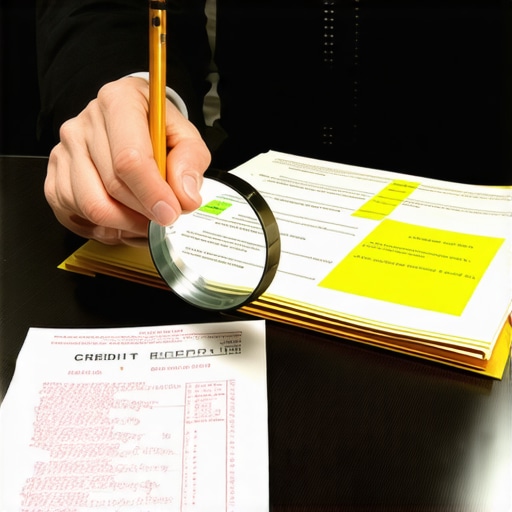 When I disputed a $400 medical bill that didn’t belong to me, I used a specific approach. Instead of a generic ‘this isn’t mine,’ I used the phrasing you need in a debt validation letter to force the collector to prove they actually had the right to collect. Thirty days later, that collection vanished, and my score jumped 40 points overnight.
Keep the Lights On with the Small Purchase Trick
Once your report is clean of errors, you have to ‘feed’ the algorithm with positive, consistent data. A common mistake is thinking that if you don’t use credit, your score will stay high. In reality, an inactive card is a dead card. I use the small purchase trick that keeps your credit active by putting a single, tiny recurring subscription on my oldest card and setting it to autopay. This keeps the account ‘alive’ without me having to carry a balance. However, pay attention to your reporting dates. I discovered the hidden penalty for paying your credit card only once a month: if the bank reports your balance to the bureau before your payment clears, it looks like you’re carrying high debt even if you pay it off in full a day later. If your ‘mix’ of credit is weak, you might consider how a personal loan can actually help your fico score by adding an installment account to your history, which shows lenders you can handle different types of debt responsibly, not just revolving credit cards.I used to think that ‘paying my dues’ meant exactly that—paying every old bill I saw on my report. But here is the contrarian truth: paying an old collection can sometimes be the worst thing you do for your number. This is because the one mistake that extends the life of your debt is often simply acknowledging it or making a partial payment that restarts the statute of limitations. In many cases, why paying a collection might actually lower your score comes down to how the ‘date of last activity’ is updated. If you don’t secure a ‘pay for delete’ agreement first, you are essentially giving away your leverage and telling the algorithm that a negative event is fresh. Have you ever fallen into this trap? Let me know in the comments.
Does Paying Off an Old Debt Always Help Your Score?
Not necessarily. The FICO algorithm rewards the absence of negative data, not necessarily the resolution of it. This leads to one of the most frustrating nuances: the zero balance trap. Most people aim for a $0 balance on every card, but why a zero balance might be the reason your score is stuck is a real technicality. To maximize points, you actually want one card to report a very small balance—usually less than 1%—while the others stay at zero. This is known among experts as the AZEO method (All Zero Except One). If you look at why your fico 8 score is different from fico 10t, you will see that newer models are even more sensitive to these utilization trends over time.
The Online Dispute Portal Trap You Need to Avoid
When you see an error, the credit bureau’s website will practically beg you to use their ‘Easy Dispute’ button. Don’t touch it. I learned the hard way that why online dispute portals are designed to make you fail is because they often force you to waive your right to re-dispute or even sue the bureau if they refuse to fix the mistake. A study by the National Consumer Law Center points out that these automated systems are built for the bureaus’ efficiency, not for your accuracy. They strip your detailed evidence down to a simple three-digit code that an AI can process in seconds, ignoring the context of your proof.  Instead, you need to stick to the paper trail method for deleting old medical debt and other errors. By sending a physical letter via certified mail, you create a legal clock that the bureaus cannot ignore. This is how you transition from being a victim of the system to mastering fico proven strategies to improve your credit dispute score. It takes more manual effort, but the results are legally binding and permanent. If you receive a response claiming your dispute is ‘frivolous,’ it is often a stall tactic. You must persist by credit repair tips correcting dispute errors effectively through consistent follow-ups. Mastery of your credit is not about following the loudest advice; it is about understanding the quiet rules the banks use behind the scenes.I used to be a Credit Karma addict, checking it three times a day like it was a social media feed. But here is the wake-up call: those scores are often based on VantageScore 3.0, a model almost no mortgage lender actually uses. You need to understand why your fico score and your banks app never match before you walk into a dealership expecting the best rates. I eventually switched to a professional-grade monitoring service that gives me access to all 28 FICO versions. It sounds like overkill until you realize that why your bank app shows a different score than your lender is usually because the lender is looking at a specific industry version, like FICO Auto Score 8 or the classic FICO Score 2 for mortgages. Once you have reached the 700 club, the game changes from repair to protection. I am a huge advocate for the simple move that protects your identity from credit scammers: the permanent security freeze. It is free, takes ten minutes at each bureau, and is the only real way to stop unauthorized accounts. Many people hesitate because they think it stops their score from updating, but it does not. Understanding why a credit freeze doesnt stop your score from changing is vital because your current creditors still report your monthly wins even while the door is locked to new inquiries.
How do I keep my score from falling once I hit 750?
Maintenance is actually easier than the initial climb, but you cannot get lazy. I set a calendar alert for every six months to perform account health checks. This is when I use the 2 trick for keeping an old credit card active so the bank does not close my oldest accounts for inactivity, which would tank my average age of accounts. I also look at why you need to monitor your credit even with a high score because identity theft does not care about your score; it cares about your available limits. As your score grows, you will see the impact of high credit limits on your future loans, which gives you massive leverage for negotiating better rates on everything from insurance to personal lines of credit. The future of credit is shifting toward Trended Data. According to FICO’s technical documentation for the Score 10 T model, they are now analyzing your behavior over a 24-month look-back period rather than just a single snapshot in time. This means the difference between fico 8 and fico 10t for new borrowers is huge; the new model rewards those who consistently pay down debt over time. To stay ahead, stop looking at your score as a static number. My advanced tip: go to AnnualCreditReport.com and look specifically at the Balance History section of your report. If your balances are not trending downward month-over-month, your FICO 10T score will suffer even if your FICO 8 looks perfect.
What the Credit Bureaus Won’t Tell You About Their Algorithms
After years of trial and error, I realized that the credit system isn’t designed to be fair; it’s designed to be efficient. One of my biggest lightbulb moments was realizing that speed is your enemy when disputing. If you use the online portals, you’re just feeding an AI that is programmed to protect the bureau’s bottom line. You have to learn how to bypass the ai review in credit disputes by sending physical, documented evidence that requires a human being to actually read it. Another hard lesson? Stop sending generic dispute letters if you want real results. The bureaus see thousands of those ‘templated’ letters every day and flag them as frivolous before a human even blinks. You also need to know how to force a credit bureau to delete unverified debt fast by using the legal deadlines defined in the FCRA to your advantage.
#IMAGE_PLACEHOLDER_E#
The Resource Kit That Actually Works
You don’t need a high-priced lawyer to fix your profile, but you do need the right tools. I personally rely on AnnualCreditReport.com for my raw data, but I never trust the ‘estimated’ scores on free apps. Instead, I look for MyFICO reports to see the exact versions lenders use. If you are feeling overwhelmed, I highly recommend reading the truth about credit repair companies vs doing it yourself so you can decide if you have the time to commit to this process. For a complete roadmap, the ultimate guide to dispute errors and credit building in 2025 is the best place to start. Lastly, keep a physical folder of every piece of mail you send or receive; that paper trail is your only real protection.
Take the First Step Toward Your 750 Today
Three years ago, I was rejected for a simple apartment. Today, I have the leverage to walk into any bank and dictate the terms of my loans. The difference wasn’t a pay raise; it was a shift in strategy. You can achieve credit building success regardless of your current income level if you are willing to do the boring, detailed work of effective dispute error resolution to boost your credit score in 2025. Don’t let a “credit invisible” status or a past mistake define your financial future. The system is just a set of rules, and now you know how to play the game. Which credit error is giving you the most headache right now? Let me know in the comments below!