

I remember sitting at my kitchen table three years ago, staring at a $1,200 car repair bill while my bank account sat at a measly $42. I had the money coming—a client check was stuck in the mail—but ‘coming soon’ doesn’t pay the mechanic or keep the lights on. I felt like a failure despite having a decent job. I ended up putting that bill on a high-interest store card, which was a massive mistake. I didn’t realize then that why your credit limit matters more than your total debt to lenders isn’t just about a score; it’s about survival. Today, I want to show you how a Personal Line of Credit (PLOC) can become your financial lungs, helping you breathe when the cash flow gets tight. We are going to break down how to stop living in fear of ‘the gap’ between paychecks. Have you ever been caught in that awkward week where you are ‘rich’ on paper but broke at the grocery store?
Stop Letting Lumpy Income Dictate Your Stress Levels
A personal line of credit is basically a revolving door of cash. Unlike a standard loan where you get a lump sum and pay interest on the whole thing, a PLOC lets you take what you need, pay it back, and do it again. Early in my journey, I made the mistake of thinking all debt was ‘bad’ debt. I avoided opening new lines because I heard the real reason your fico score dropped five points could be as simple as a new inquiry. I was so focused on a perfect number that I lacked the tools to manage real-life emergencies. Using a PLOC correctly actually helps your profile because the impact of high credit limits on your future loans is generally positive, provided you aren’t maxing them out. It provides a safety net that is much cheaper than credit card interest or, heaven forbid, a payday loan. According to data from the Federal Reserve, credit card interest rates often hover above 20%, while PLOCs typically offer much lower, more manageable rates for those with solid credit.
Will This Trash My FICO Score?
It is the question I get most often from neighbors and friends. The short answer? Not if you’re smart. People panic when they see a balance, but sometimes your fico score stalls even after paying every balance because you lack a diverse credit mix. Adding a PLOC can actually round out your profile. I started small, and eventually, I learned how to get a credit limit increase without a hard inquiry, which gave me an even bigger cushion. The goal isn’t to spend money you don’t have; it’s to have a bridge ready before you even need to cross the river. I’m going to show you exactly how to set this up so you never have to sweat a late check again.
Clean the House Before You Invite the Bank In
Before you even think about applying, you need to know exactly what the lender sees when they pull your file. I once walked into my local credit union confident as ever, only to be rejected because of a ghost collection from a gym I hadn’t visited in years. It was a $40 clerical error that cost me a $15,000 credit line. Don’t be me. You need to follow the credit repair blueprint fixing errors and strengthening your financial profile so your application doesn’t hit a brick wall. Scrutinize every line of your report from all three bureaus. If you find something incorrect, you have to be aggressive. Most people fail because they use generic templates that get tossed by automated systems, but learning why most dispute templates get ignored by bureau algorithms will give you the edge you need to get that clean slate.
How to Hunt for Hidden Errors
Look for things like incorrect balances, re-aged debts, or misreported limits. I’ve seen cases where a bank reports a significantly lower limit than you actually have, which destroys your utilization ratio. If your report is messy, focus on effective dispute error resolution to boost your credit score in 2025. Think of your credit report like a professional resume; one typo can get you tossed in the trash pile. You must provide the documentation that forces a bureau to manually verify your data rather than letting a computer decide your fate.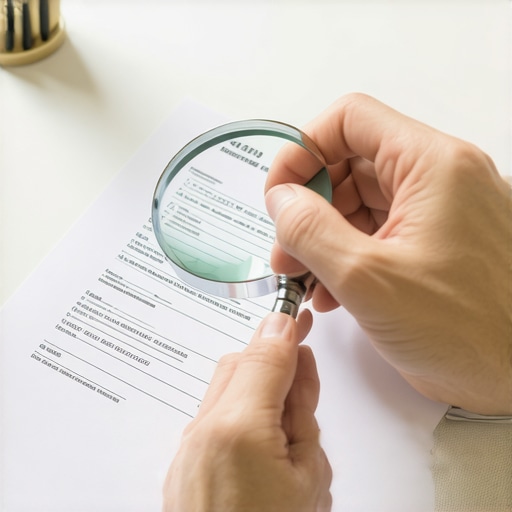
Choose Your Lender Like a Partner Not a Landlord
Not all Personal Lines of Credit (PLOC) are created equal. Big national banks often have stricter requirements and much higher interest rates. I’ve found that local credit unions are usually more flexible because they value the long-term relationship more than just the raw score. However, be careful—sometimes why your local bank might be reporting incorrect credit limits can become a headache later on. Ask them directly how they report to the bureaus. You want a lender that reports your line as revolving to help your credit mix. If you’re struggling with a thin file, you might even consider how a secured loan can fix your credit mix without new debt as a precursor to prove you’re reliable enough for an unsecured line.
Protect Your Score During the Application Hunt
Every application triggers a hard inquiry, which can shave points off your score. To minimize the damage, do your research first and only apply when you are 90% sure of an approval. If you do get hit with a stray inquiry you didn’t authorize, you’ll need to know the best way to handle unauthorized credit inquiries to keep your score from sagging. Once the line is open, the magic happens. Use it for small bridge expenses, then pay it back immediately. I started using the habit of high score achievers the 15-15 rule for payments to ensure my utilization stayed low while the activity stayed high. Also, keep in mind that why your credit card statement date is more important than your due date applies to PLOCs too; if you have a balance on the day they report, your score will take a temporary hit regardless of when the bill is due.
Don’t Fall for the Dispute Everything Myth
The common wisdom floating around TikTok and YouTube is to dispute every single negative mark on your report all at once. It sounds proactive, right? In reality, this is a fast track to getting your file flagged as ‘frivolous’ by the automated systems. When you send a laundry list of twenty items, you are basically telling the bureau’s AI that you are guessing. In my experience, I’ve learned that stop sending generic dispute letters if you want real results is the only way to get a human to actually look at your case. You need precision, not volume. Most people fail because they don’t realize that how to bypass the ai review in credit disputes requires specific evidence, not just a boilerplate claim of ‘this isn’t mine.’
Why does your score drop after paying off a collection?
It feels like a punch in the gut. You finally clear a debt, expecting a boost, only to see your score tank by thirty points. This happens because the ‘date of last activity’ on the account refreshes. To the FICO algorithm, that old, dusty collection now looks like a brand-new delinquency. This is exactly why paying off a collection could actually drop your score if you don’t handle it correctly. According to the Consumer Financial Protection Bureau (CFPB), lenders must ensure data accuracy, but they aren’t required to remove a debt just because you paid it unless you have a prior agreement. This is why you should check out why you should never pay a collection agency without a delete agreement. Without that ‘pay-for-delete’ promise in writing, you are essentially paying for a status update that might still haunt you for years. 
The Hidden Danger of the Banking App Dispute Button
One of the biggest ‘oops’ moments I see is people clicking that shiny blue button in their banking app to dispute an error. It feels convenient, but why you should never use the dispute button on a banking app is a lesson learned the hard way. By using that button, you often waive your right to a full reinvestigation or the ability to appeal the decision later. You are essentially opting into a simplified process that rarely favors the consumer. Instead, you need to build a manual file using the paper-trail that forces bureaus to delete old debt. When you send physical mail with certified tracking, you create a legal timeline that the bureaus cannot ignore. Use the specific phrase that triggers a human review of your dispute to ensure your letter doesn’t just get scanned and discarded by a machine. It’s about being a surgeon with your credit repair, not a sledgehammer. Have you ever fallen into the trap of paying an old debt only to see your score drop? Let me know in the comments, and let’s figure out how to fix it together.Once you have cleared the debris of old mistakes, you cannot simply walk away and hope for the best. Credit health is not a destination; it is a lifestyle. I personally use a physical ‘War Room’ folder paired with a digital tracking sheet because relying on memory is a recipe for disaster. You need to master the evidence log that wins every investigation to ensure that if a deleted error tries to ‘zombie’ its way back onto your report, you have the proof to kill it instantly. I have seen people work for months to hit a 750, only to have a dormant card closed for inactivity, which tanks their average age of accounts. To prevent this, I use the small purchase trick that keeps your credit active. I put one small $10 subscription on each old card and set it to autopay. It is more effective than any flashy monitoring app that just wants to sell you more loans. 
Protect Your Hard-Won Progress from Unexpected Closures
If you have an old card you rarely use, do not let it collect dust. I always recommend the 2 trick for keeping an old credit card active to ensure your length of credit history remains a pillar of your score. Lenders are becoming more aggressive about closing inactive lines to reduce their own risk, and you do not want to lose that available limit. Furthermore, stay vigilant by following the 30 day rule for disputing new errors. If a stray medical bill or an incorrect address appears, you must attack it before it settles into your file like concrete. Being proactive is the only way to stay in the elite tier of borrowers.
How do I maintain my credit profile over the next decade?
Consistency is the unglamorous secret to wealth. You should treat your credit report like a garden that needs regular weeding. By referencing the ultimate guide to dispute errors and credit building in 2025, you can stay updated on the latest shifts in banking algorithms. I predict that within the next three years, ‘Trended Data’ will become the primary metric for all major lenders. This means they will not just look at your current balance, but whether your debt is increasing or decreasing month-over-month. You need to understand fico insights how dispute errors affect your score and what to do to navigate this shift toward more invasive AI-driven scoring models.
Know Your Rights Under FCRA Section 611
Authority comes from knowing the law better than the person on the other end of the phone. According to Section 611(a)(5)(B) of the Fair Credit Reporting Act (FCRA), credit bureaus are strictly prohibited from reinserting previously deleted information unless the furnisher certifies the accuracy and the bureau notifies you in writing within five days. This is your ultimate legal shield. If you see an old error reappear, do not panic—just reference your evidence log and cite that specific section of the FCRA. My advanced tip for you today: open a dedicated email account solely for your credit correspondence. It creates a timestamped, searchable history that no bureau can dispute. Take ten minutes tonight to set this up; it is the single best way to organize your financial defense for the future.
Why I Stopped Obsessing Over 850 and Focused on Liquidity Instead
For a long time, I was caught in the trap of thinking a perfect score was the ultimate prize. I eventually realized that why a zero balance might be the reason your score is stuck reflects a deeper truth: banks want to see responsible movement, not just stagnation. A 760 with a $50,000 credit line is infinitely more powerful than an 800 with a $2,000 limit when life throws a curveball. I also learned that mastering credit repair dispute errors and fico optimization is less about fighting the past and more about engineering the future. Real financial health is about having the access to capital when the world around you gets expensive.
#IMAGE_PLACEHOLDER_E#
The Three Assets That Make My Financial Life Easier
I don’t just rely on luck anymore; I rely on a specific system to keep my profile in top shape. Here is what stays in my toolkit: The Paper Trail. I never dispute anything via a web portal anymore because understanding credit errors a step-by-step guide to fico improvement starts with having a physical receipt for every claim. I rely heavily on the evidence log that wins every investigation to track every phone call, reference number, and letter sent to the bureaus. Finally, knowing the specific way lenders view your fico 8 vs fico 9 allows me to apply for the right products at the right time without guessing which version of my score they are looking at. These aren’t just suggestions; they are the defense mechanisms that protect my family’s stability.
Reclaim Your Power Over the Bureaus Today
You have the legal right to an accurate credit report, but you have to be the one to enforce it. Don’t let the fear of a temporary score dip prevent you from fixing long-term errors that could cost you thousands in interest. Whether you are dealing with a mixed file, a zombie debt, or a misreported limit, the steps remain the same: document the error, dispute with evidence, and follow up with persistence. Your FICO score is a tool designed to work for you, not a grade on your value as a person. Use it to build the life you want, starting with the very next letter you mail. Have you ever been blindsided by a sudden credit limit reduction or an error that wouldn’t go away? Let me know in the comments below, and let’s talk strategy.