

I sat at my kitchen table three years ago, hitting ‘refresh’ on my banking app until my thumb literally ached. I’d just paid off a massive credit card balance—a move I thought would instantly rocket my score into the 700s—and I was ready to celebrate. But the number didn’t budge. Not that hour, not that day, and not even that week. It felt like the credit bureaus were personally ignoring my financial win. I felt defeated, like I was shouting into a void while my mortgage application hung in the balance. We’ve all been there, haven’t we? That agonizing wait where you feel like you’ve done everything right but the system isn’t catching up. Today, I want to clear the air and show you exactly why that number stays frozen and how you can actually time your moves to see results faster. [[IMAGE_PLACEHOLDER]]
Your Payment Date Isn’t the Magic Trigger You Think It Is
Most people believe that the moment they click ‘submit’ on a payment, the FICO gods look down and smile. In reality, your credit score is more like a monthly snapshot than a live stream. I learned this the hard way when I realized that why your credit card statement date is a critical number matters far more than your actual due date. My early mistake was assuming the bureaus were constantly ‘watching’ me. They aren’t. They only know what your creditors tell them, and those creditors usually only speak up once a month. According to official FICO data, while the software can calculate a score at any moment, it only has new data to work with when a lender reports a change to your file. If you are trying to improve your credit dispute score, you have to realize that the ‘refresh’ button is often just a placebo.
Is that daily credit monitoring update actually a lie?
I see the ads everywhere: ‘Check your score daily!’ But here is the thing—just because your app updates every 24 hours doesn’t mean your FICO score has actually changed. Most of those free apps use a different scoring model entirely, and the hidden reason your credit monitoring app misses real errors is that they prioritize speed over the deep data lenders actually use. If you’re obsessing over a three-point drop on a Tuesday, you’re likely chasing ghosts. You need to focus on the habit of checking reports every 30 days instead of every 30 minutes.
Why the Bureau’s Internal Clock Governs Your Life
The three major bureaus—Equifax, Experian, and TransUnion—don’t all sync up like a well-oiled machine. One might update on the 5th, while another waits until the 20th. This is why you might see a higher score for a car loan than you do for a credit card; lenders are often looking at different versions and different update cycles. If you’ve been waiting for a correction to show up, remember that the 30-day rule for disputing new errors is a legal minimum, not a maximum. I once spent weeks yelling at a customer service rep because a deleted error hadn’t disappeared in 48 hours. I looked like an amateur because I didn’t understand the cycle. Have you ever felt like your score was stuck in cement even after you cleared a big debt? Tell me about it, because understanding that lag is the first step to mastering your FICO.
Move Your Money Before the Statement Date Hits
Think of your credit report like a cruise ship manifest. Once the ship sails, you can’t add or remove passengers until the next port. If you pay your bill on the 10th, but your statement closes on the 1st, your credit report will show a high balance for 30 days because you missed the boat. To fix this, I started using the 15-15 rule for payments. I pay half my balance 15 days before the statement date and the rest 3 days before. This ensures that when the snapshot is taken, my utilization looks tiny. I once dropped my score by 40 points because I maxed out a card for a laptop and paid it off on the due date—but the bureau saw the $3,000 balance before the payment cleared. I was furious, but it was my own timing that failed me.
Stop Clicking the Online Dispute Button
The dispute button on a banking app or a bureau website is a trap designed for speed, not accuracy. When you click it, you’re usually funneled into a drop-down menu that forces your complex problem into a generic category like ‘not mine.’ This triggers an automated system that checks the lender’s database for a matching name and SSN. If they match, the dispute is rejected in seconds. This is why you should never use the online dispute button. Instead, you need to use a physical letter.  When I had a wrongful medical charge, I tried the app three times and got rejected instantly. It wasn’t until I used the paper trail method that I actually got a human to look at the bill.
Create the Evidence Log That Bureaus Can’t Ignore
You have to treat your credit file like a legal case. Most people send a vague letter saying ‘this is wrong.’ You need to send what I call the un-ignorable packet. This includes the evidence log that wins every investigation: copies of the front and back of canceled checks, dated correspondence with the original lender, and a clear explanation of the discrepancy. For effective dispute error resolution to boost your credit score in 2025, you must send these via certified mail with a return receipt. This forces a physical person to sign for your documents, creating a legal timestamp that the bureaus are required by law to respond to within 30 days.
How to Handle a Creditor Who Sells Your Account
Sometimes you’re in the middle of a fight and the lender sells the debt to someone else just to get it off their books. This creates a zombie entry. You need to know how to handle a creditor who sells your account during a dispute because if you don’t track the transfer, you’ll end up fighting two different companies for the same error. I spent six months chasing a $200 utility bill that moved between three collectors; each time it moved, I had to restart my evidence log from scratch to prove the original error followed the debt.
When you’re deep in the trenches of credit repair, you quickly realize that the standard advice often does more harm than good.
Ditch the myth that paying off every collection helps you
You’ve probably heard that a $0 balance is always better than any other number. In the world of high-level FICO optimization, that simply isn’t true. If you pay off a five-year-old collection account without a specific agreement, you might actually see your score drop significantly. This happens because the payment updates the “date of last activity,” making an old, decaying negative mark look brand new to the scoring algorithm. This is why paying off a collection could actually drop your score unless you play your cards right. You should never pay a collection agency without a delete agreement in writing. I’ve seen people lose 30 points overnight because they thought they were doing the “right” thing. 
Why did my score suddenly drop after I paid off my student loans?
It feels like a slap in the face. You work for a decade to clear a debt, and then FICO seemingly punishes you for your success. According to official data from FICO, “Credit Mix” accounts for approximately 10% of your total score. When you close that installment loan, you effectively lose that specific part of your “mix” as well as the average age of that account once it eventually falls off. This is why your score fell after you paid off your student loans—the algorithm sees a less diverse and potentially “younger” financial profile. It’s a sophisticated nuance that catches even the most disciplined spenders off guard.
Watch out for the re-aging trap when collectors sell debt
The biggest “oops” factor in credit repair is accidentally restarting the seven-year legal clock on a debt. If you acknowledge an old debt or make a tiny “good faith” payment on an account that’s about to fall off your report, you might be handing the debt collector a legal reset button. You have to know how to stop junk debt buyers from re-aging your old accounts because once it is re-aged, it can haunt you for another decade. This is the one mistake that extends the life of your debt and keeps you in financial purgatory longer than necessary. Instead of reacting emotionally, look at FICO insights on how dispute errors affect your score before you make your next move. Mastering this requires a surgeon’s precision, not a sledgehammer, as part of mastering credit repair and FICO optimization. Have you ever fallen into this trap? Let me know in the comments.
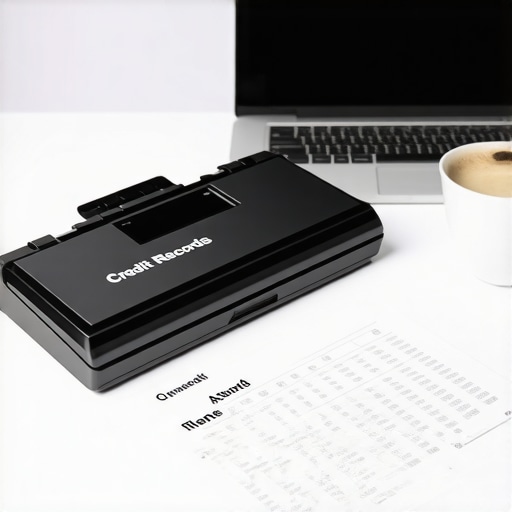
Once you stop firefighting and actually clear those major errors, you move into the ‘pro’ phase of credit management. This isn’t about hope anymore; it is about infrastructure. I stopped relying on those flashy apps that give you a ‘grade’ because I realized they were masking the data I actually needed. I started keeping a physical ‘Credit Bible’—a simple accordion folder where I store every single certified mail receipt. If you are serious about effective dispute error resolution to boost your credit score in 2025, you need a paper trail that survives a computer crash. I personally use a high-speed document scanner to digitize every letter I receive from a bureau. Why? Because when a ‘deleted’ item reappears three months later, I have the timestamped proof to force an immediate permanent removal.
The physical toolkit that actually gets things done
Forget the ‘set it and forget it’ mentality. I use a simple spreadsheet to track my statement closing dates, not just my due dates. This allows me to execute the 15-15 rule for payments with surgical precision. If you are still building your foundation, I recommend looking at how to use credit builder loans to establish a solid profile without taking on high-interest debt. These tools are like scaffolds for a building; once the structure is strong, you can take them down. But while they are there, they provide that crucial ‘payment history’ cushion that makes your FICO score resilient against small fluctuations. According to the Consumer Financial Protection Bureau (CFPB) 2023 Annual Report on Credit Reporting Complaints, the bureaus are increasingly using automated ‘e-OSCAR’ systems that favor high-volume data over individual nuance, which is why your documentation must be sharper than ever to how to bypass the AI review in credit disputes.
How do I keep my score high without checking it every hour?
Maintenance is about rhythm, not obsession. I’ve found that the habit that keeps your fico score above 780 every month is simply a 10-minute audit on the first of every month. I’m not looking for the score number; I’m looking for new inquiries or balance changes. You have to understand the specific way lenders view your FICO 8 vs FICO 9 because your ‘maintenance’ strategy might change depending on if you’re buying a house or just a new car. If you see a dip, don’t panic. Check the data first. Often, the real reason your FICO score dropped five points is just a temporary reporting lag from a retail card, not a systemic failure.
Why FICO 10T is about to change your life
Looking ahead, the ‘trended data’ model (FICO 10T) is becoming the new gold standard. In the past, you could ‘cheat’ a high score by paying off a balance right before a mortgage application. In the future, lenders will look at your utilization trends over the last 24 months. This means maintenance isn’t just a good idea—it’s the only way to survive. If you’ve been ‘cycling’ your limits, stop now. Start building a history of low, consistent usage. My challenge to you: Go pull your reports from AnnualCreditReport.com tonight—it’s free—and look for one tiny, misspelled address or an old phone number. Correcting that one ‘minor’ detail is the first step toward a bulletproof file. It’s time to move from being a victim of the system to being the one who manages it.
I sat at my kitchen table three years ago, hitting ‘refresh’ on my banking app until my thumb literally ached. I’d just paid off a massive credit card balance—a move I thought would instantly rocket my score into the 700s—and I was ready to celebrate. But the number didn’t budge. Not that hour, not that day, and not even that week. It felt like the credit bureaus were personally ignoring my financial win. I felt defeated, like I was shouting into a void while my mortgage application hung in the balance. We’ve all been there, haven’t we? That agonizing wait where you feel like you’ve done everything right but the system isn’t catching up. Today, I want to clear the air and show you exactly why that number stays frozen and how you can actually time your moves to see results faster. [[IMAGE_PLACEHOLDER]]
Your Payment Date Isn’t the Magic Trigger You Think It Is
Most people believe that the moment they click ‘submit’ on a payment, the FICO gods look down and smile. In reality, your credit score is more like a monthly snapshot than a live stream. I learned this the hard way when I realized that why your credit card statement date is a critical number matters far more than your actual due date. My early mistake was assuming the bureaus were constantly ‘watching’ me. They aren’t. They only know what your creditors tell them, and those creditors usually only speak up once a month. According to official FICO data, while the software can calculate a score at any moment, it only has new data to work with when a lender reports a change to your file. If you are trying to improve your credit dispute score, you have to realize that the ‘refresh’ button is often just a placebo.
Is that daily credit monitoring update actually a lie?
I see the ads everywhere: ‘Check your score daily!’ But here is the thing—just because your app updates every 24 hours doesn’t mean your FICO score has actually changed. Most of those free apps use a different scoring model entirely, and the hidden reason your credit monitoring app misses real errors is that they prioritize speed over the deep data lenders actually use. If you’re obsessing over a three-point drop on a Tuesday, you’re likely chasing ghosts. You need to focus on the habit of checking reports every 30 days instead of every 30 minutes.
Why the Bureau’s Internal Clock Governs Your Life
The three major bureaus—Equifax, Experian, and TransUnion—don’t all sync up like a well-oiled machine. One might update on the 5th, while another waits until the 20th. This is why you might see a higher score for a car loan than you do for a credit card; lenders are often looking at different versions and different update cycles. If you’ve been waiting for a correction to show up, remember that the 30-day rule for disputing new errors is a legal minimum, not a maximum. I once spent weeks yelling at a customer service rep because a deleted error hadn’t disappeared in 48 hours. I looked like an amateur because I didn’t understand the cycle. Have you ever felt like your score was stuck in cement even after you cleared a big debt? Tell me about it, because understanding that lag is the first step to mastering your FICO.
Move Your Money Before the Statement Date Hits
Think of your credit report like a cruise ship manifest. Once the ship sails, you can’t add or remove passengers until the next port. If you pay your bill on the 10th, but your statement closes on the 1st, your credit report will show a high balance for 30 days because you missed the boat. To fix this, I started using the 15-15 rule for payments. I pay half my balance 15 days before the statement date and the rest 3 days before. This ensures that when the snapshot is taken, my utilization looks tiny. I once dropped my score by 40 points because I maxed out a card for a laptop and paid it off on the due date—but the bureau saw the $3,000 balance before the payment cleared. I was furious, but it was my own timing that failed me.
Stop Clicking the Online Dispute Button
The dispute button on a banking app or a bureau website is a trap designed for speed, not accuracy. When you click it, you’re usually funneled into a drop-down menu that forces your complex problem into a generic category like ‘not mine.’ This triggers an automated system that checks the lender’s database for a matching name and SSN. If they match, the dispute is rejected in seconds. This is why you should never use the online dispute button. Instead, you need to use a physical letter. #IMAGE_PLACE_HOLDER_B# When I had a wrongful medical charge, I tried the app three times and got rejected instantly. It wasn’t until I used the paper trail method that I actually got a human to look at the bill.
Create the Evidence Log That Bureaus Can’t Ignore
You have to treat your credit file like a legal case. Most people send a vague letter saying ‘this is wrong.’ You need to send what I call the un-ignorable packet. This includes the evidence log that wins every investigation: copies of the front and back of canceled checks, dated correspondence with the original lender, and a clear explanation of the discrepancy. For effective dispute error resolution to boost your credit score in 2025, you must send these via certified mail with a return receipt. This forces a physical person to sign for your documents, creating a legal timestamp that the bureaus are required by law to respond to within 30 days.
How to Handle a Creditor Who Sells Your Account
Sometimes you’re in the middle of a fight and the lender sells the debt to someone else just to get it off their books. This creates a zombie entry. You need to know how to handle a creditor who sells your account during a dispute because if you don’t track the transfer, you’ll end up fighting two different companies for the same error. I spent six months chasing a $200 utility bill that moved between three collectors; each time it moved, I had to restart my evidence log from scratch to prove the original error followed the debt.
When you’re deep in the trenches of credit repair, you quickly realize that the standard advice often does more harm than good.
Ditch the myth that paying off every collection helps you
You’ve probably heard that a $0 balance is always better than any other number. In the world of high-level FICO optimization, that simply isn’t true. If you pay off a five-year-old collection account without a specific agreement, you might actually see your score drop significantly. This happens because the payment updates the “date of last activity,” making an old, decaying negative mark look brand new to the scoring algorithm. This is why paying off a collection could actually drop your score unless you play your cards right. You should never pay a collection agency without a delete agreement in writing. I’ve seen people lose 30 points overnight because they thought they were doing the “right” thing. #IMAGE_PLACE_HOLDER_C#
Why did my score suddenly drop after I paid off my student loans?
It feels like a slap in the face. You work for a decade to clear a debt, and then FICO seemingly punishes you for your success. According to official data from FICO, “Credit Mix” accounts for approximately 10% of your total score. When you close that installment loan, you effectively lose that specific part of your “mix” as well as the average age of that account once it eventually falls off. This is why your score fell after you paid off your student loans—the algorithm sees a less diverse and potentially “younger” financial profile. It’s a sophisticated nuance that catches even the most disciplined spenders off guard.
Watch out for the re-aging trap when collectors sell debt
The biggest “oops” factor in credit repair is accidentally restarting the seven-year legal clock on a debt. If you acknowledge an old debt or make a tiny “good faith” payment on an account that’s about to fall off your report, you might be handing the debt collector a legal reset button. You have to know how to stop junk debt buyers from re-aging your old accounts because once it is re-aged, it can haunt you for another decade. This is the one mistake that extends the life of your debt and keeps you in financial purgatory longer than necessary. Instead of reacting emotionally, look at FICO insights on how dispute errors affect your score before you make your next move. Mastering this requires a surgeon’s precision, not a sledgehammer, as part of mastering credit repair and FICO optimization. Have you ever fallen into this trap? Let me know in the comments.
Once you stop firefighting and actually clear those major errors, you move into the ‘pro’ phase of credit management. This isn’t about hope anymore; it is about infrastructure. I stopped relying on those flashy apps that give you a ‘grade’ because I realized they were masking the data I actually needed. I started keeping a physical ‘Credit Bible’—a simple accordion folder where I store every single certified mail receipt. If you are serious about effective dispute error resolution to boost your credit score in 2025, you need a paper trail that survives a computer crash. I personally use a high-speed document scanner to digitize every letter I receive from a bureau. Why? Because when a ‘deleted’ item reappears three months later, I have the timestamped proof to force an immediate permanent removal.
The physical toolkit that actually gets things done
Forget the ‘set it and forget it’ mentality. I use a simple spreadsheet to track my statement closing dates, not just my due dates. This allows me to execute the 15-15 rule for payments with surgical precision. If you are still building your foundation, I recommend looking at how to use credit builder loans to establish a solid profile without taking on high-interest debt. These tools are like scaffolds for a building; once the structure is strong, you can take them down. But while they are there, they provide that crucial ‘payment history’ cushion that makes your FICO score resilient against small fluctuations. According to the Consumer Financial Protection Bureau (CFPB) 2023 Annual Report on Credit Reporting Complaints, the bureaus are increasingly using automated ‘e-OSCAR’ systems that favor high-volume data over individual nuance, which is why your documentation must be sharper than ever to how to bypass the AI review in credit disputes.
#IMAGE_PLACE_HOLDER_D#
How do I keep my score high without checking it every hour?
Maintenance is about rhythm, not obsession. I’ve found that the habit that keeps your fico score above 780 every month is simply a 10-minute audit on the first of every month. I’m not looking for the score number; I’m looking for new inquiries or balance changes. You have to understand the specific way lenders view your FICO 8 vs FICO 9 because your ‘maintenance’ strategy might change depending on if you’re buying a house or just a new car. If you see a dip, don’t panic. Check the data first. Often, the real reason your FICO score dropped five points is just a temporary reporting lag from a retail card, not a systemic failure.
Why FICO 10T is about to change your life
Looking ahead, the ‘trended data’ model (FICO 10T) is becoming the new gold standard. In the past, you could ‘cheat’ a high score by paying off a balance right before a mortgage application. In the future, lenders will look at your utilization trends over the last 24 months. This means maintenance isn’t just a good idea—it’s the only way to survive. If you’ve been ‘cycling’ your limits, stop now. Start building a history of low, consistent usage. My challenge to you: Go pull your reports from AnnualCreditReport.com tonight—it’s free—and look for one tiny, misspelled address or an old phone number. Correcting that one ‘minor’ detail is the first step toward a bulletproof file. It’s time to move from being a victim of the system to being the one who manages it.
The Hardest Lessons I Learned While Managing My Own File
Reflecting on the journey from a frozen 600 to a thriving 800, a few things stand out that you won’t find in a standard bank brochure. First, silence from a bureau isn’t a rejection; it’s a test of your record-keeping. I realized that mastering credit repair and FICO optimization is 10% math and 90% persistence. Second, the ‘submit’ button is your enemy when stamps and an envelope are your best friends. I spent years trying to be fast when I should have been thorough.
- The speed trap: Digital disputes are designed to fail because they strip away your evidence.
- The balance myth: A $0 balance on every card can actually look like ‘inactivity’ to the FICO algorithm.
- The human factor: A physical letter forces a human or a more sophisticated AI to look at your case rather than a simple database match.
The Physical Toolkit That Actually Gets Results
I don’t rely on luck anymore. My success came from building a system that I call my ‘Financial Shield.’ If you are looking for credit repair secrets to elevate your credit standing, start with these three tools. I use a dedicated accordion folder for every certified mail receipt—this is my legal leverage. I also swear by a high-speed scanner to digitize every scrap of mail. Finally, I recommend following expert tips for correcting credit errors found in high-level guides that focus on the Fair Credit Reporting Act (FCRA) rather than just quick hacks. [[IMAGE_PLACEHOLDER_FINAL]]
Step Into a Future with a Bulletproof FICO Profile
Building a top-tier score isn’t a sprint; it’s a series of intentional habits. Whether you are dealing with how to build credit when you’re starting from zero or fighting an old error, the power lies in your documentation. You are no longer shouting into a void; you are building a case that the law requires the bureaus to hear. By tackling dispute errors with a plan and focusing on long-term credit building, you are securing a lower interest rate for your future self. It’s time to stop worrying about the number and start managing the data that creates it. Have you ever had a dispute get rejected instantly, and what was your very next move? Let me know in the comments below!