

I remember the exact moment I hit the ‘submit’ button on that $450 payment to a debt collector. I had this vision of my credit score instantly leaping up by fifty points, like some digital reward for my honesty. Instead, three weeks later, I logged into my account to see my score had actually dropped by 18 points. I was floored. I felt like I’d been punched in the gut. I had less money in the bank and a worse credit profile. That was my wake-up call that the logic of the credit system doesn’t always follow the logic of common sense. If you’re sitting there wondering why your hard-earned money didn’t fix your FICO score, I’m here to tell you that you aren’t crazy—you’re just dealing with a system that has some very strange rules.
The Debt Collector’s Trap You Never Saw Coming
The biggest mistake I made early on was assuming that a zero balance was the ultimate goal for every account. In reality, how that zero balance gets reported matters more than the payment itself. When you pay an old, dormant collection, you can accidentally trigger an update to the “Date of Last Activity.” To the scoring software, that old debt suddenly looks brand new again. This is one of the most frustrating credit repair secrets: a fresh collection, even a paid one, can hurt more than a three-year-old unpaid one. It’s a quirk of the FICO 8 model that catches thousands of well-meaning people off guard every year. It’s a bitter pill to swallow, especially when you’re trying to do the right thing. You might be looking at your screen right now trying to figure out why your score didn’t move or why it took a dive. The truth is, according to the Consumer Financial Protection Bureau, simply paying off a debt doesn’t automatically erase the negative history associated with it. The ghost of that late payment can linger for up to seven years, continuing to haunt your mortgage or car loan applications.
Is Clearing the Balance Actually Worth the Risk?
This is the part where most people get skeptical, and I don’t blame you. Why bother paying at all if the score doesn’t budge? The answer lies in the strategy you use before you send the money. I used to think I could just call them up and they’d be nice enough to help me out. They weren’t. You need to understand how dispute errors affect your score and how to leverage your payment for a “pay-for-delete” agreement. If you don’t get the deletion in writing, you’re essentially just giving the collection agency a gift while your credit score stays in the basement. Have you ever experienced that sinking feeling when you check your score after a big payment? I’d love to hear your experience in the comments; it helps all of us spot these patterns. We really need to dive into the truth about paying off a collection before buying a house because the rules there are even more specific. Before you make another move, let’s break down the exact steps to ensure your next payment actually helps your financial future instead of hindering it.
The first thing you have to do—before you even think about opening your wallet—is to demand proof. I used to think that if a debt collector called me, they must have all their ducks in a row. I was dead wrong. In my early twenties, I had a $210 bill from a gym I hadn’t visited in years. Instead of paying, I sent a formal request to verify a debt that keeps changing owners and names. It turned out they didn’t even have the original contract or any proof I had signed up for the membership. Because they couldn’t prove I owed it, the account had to be removed entirely. That’s the power of shifting the burden of proof back onto them; if they can’t produce the paperwork, they have no legal right to stay on your report.
Make Them Prove the Debt is Real
You need to send a Debt Validation Letter within 30 days of their first contact. This isn’t just a polite ask; it is a legal requirement under the Fair Debt Collection Practices Act. If they cannot produce the original agreement or a clear chain of title showing they actually own the debt, they should not be reporting it. This is a critical step in how you audit your own credit report for 10 common mistakes that most people simply ignore. If you just pay without validating, you might be paying a ‘zombie debt’—a debt that is past the statute of limitations or one they didn’t even have the legal standing to collect on in the first place.
Catch the Errors Hidden in the Fine Print
Once you have validated the debt, you need to look for technicalities. I once found the same $400 medical bill listed twice—once under the original hospital name and once under an aggressive collection agency. This is a classic double entry that tanks your score unfairly. Learning how to prove a paid collection is actually a double entry error can instantly clean up your report and give your FICO score some much-needed breathing room. Check every date, every spelling of your name, and every account number. Under the law, credit reporting must be 100% accurate, not ‘mostly’ accurate.

Negotiate Like You Mean It
If the debt is valid and the reporting is technically accurate, your next move is the ‘Pay-for-Delete’ agreement. This is essentially the holy grail of credit repair strategy. You are offering to pay the debt in full, or a negotiated settlement, only if they agree in writing to completely remove the trade line from your credit report. It is like the debt never happened. I applied this with an old electric bill that was dragging me down, and it worked wonders for my mortgage application. You can learn more about the pay-for-delete strategy that works on old utility bills and other common collections. Just remember: if you don’t get the agreement in writing before you pay, the collector will likely ignore your request later.
The Paper Trail That Forces Action
Whatever you do, stay away from the ‘dispute’ button on the credit bureau websites. It feels fast and convenient, but it is a trap designed to save the bureaus money, not to help you. When you click that button, you often waive your right to a manual review by a human being and limit the types of evidence you can submit. This is a major reason why you should never use the online dispute button. Instead, grab a pen, some paper, and a stamp. You want to send everything via physical mail. There is a specific legal weight to a physical letter that a digital click simply lacks. Furthermore, why you should always send dispute letters via certified mail is because it gives you a tracking number and a signature of receipt. That tracking number is your evidence that they received your dispute and are legally obligated to respond within 30 days. Without that proof, they can simply claim your letter was never delivered, leaving your credit score in limbo.
Everyone tells you that staying out of debt is the safest way to a high score. In my experience, that’s actually a recipe for a stagnant 680. It’s one of the most persistent myths in the financial world. If you don’t use credit, FICO doesn’t have the data to prove you are a reliable borrower. I’ve seen people avoid credit cards for a decade only to be shocked when they are rejected for a mortgage. This is exactly why your credit score stagnates despite having no debt. The system doesn’t reward absence; it rewards managed presence. This is also why a zero balance is not always the best for your fico score. You want to show a tiny bit of utilization—think 1%—to prove the account is active. Have you ever fallen into this trap where playing it ‘safe’ actually hurt your score? Let me know in the comments below.
Stop the Automated Rejection Robots in Their Tracks
The biggest ‘oops’ factor for most people starting their journey is the shotgun approach. They find ten errors and dispute them all in one massive letter. To a human, that looks like a thorough audit; to the credit bureau’s AI, it looks like a scam. When you over-dispute, you risk being flagged, which is why you need to know the evidence that stops a bureau from labeling your dispute frivolous. If they label your request as frivolous, they legally don’t have to investigate it at all. You need to be surgical. Focus on one or two high-impact errors at a time to ensure a human actually looks at your file. If you’ve already been rejected by the bots, you’ll need to learn how to stop ai from automatically rejecting your dispute letter by varying your language and providing unique documentation.
Will the Credit Bureau Ignore My Physical Evidence?
They will certainly try to downplay it. Most disputes are processed through a system called e-OSCAR, which strips away your carefully written letters and converts them into simple numeric codes. This is a huge hurdle in effective dispute error resolution to boost your credit score in 2025. A 2012 study by the Federal Trade Commission (FTC) revealed that 25% of consumers identified errors on their credit reports that could affect their scores. Despite this, the bureaus often prioritize speed over accuracy. To fight back, you have to force a manual review when the bureau robots say no by providing ‘new’ information that wasn’t included in the first round. 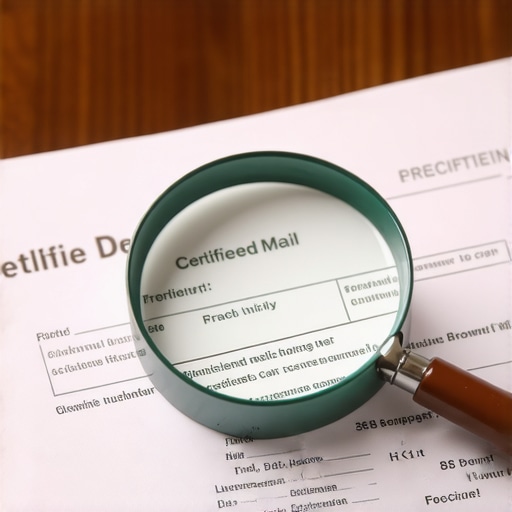 This is where your evidence log that forces a bureau manual review becomes your most valuable asset. If you can prove they didn’t actually contact the original creditor, you’ve caught them in a violation of the Fair Credit Reporting Act. This level of understanding credit errors is what separates the people who see a 5-point bump from those who see a 100-point transformation.
Stop Stalling and Start Scaling Your Score
Once you have cleared the wreckage of old collections and double entries, you enter the scaling phase. Most people relax once they hit 700, but that is where the real opportunities begin. I personally use a ‘Credit Evidence Binder’—a physical folder where I keep every certified mail receipt and every response from the bureaus. This is not just about organization; it is about building a legal trail. When I was learning how to build an 800 credit score starting from zero, I realized that the bureaus are less likely to mess with someone who has a meticulous history of their own data. I also rely heavily on the MyFICO app because it provides the actual versions used by lenders, not the ‘educational’ scores that can be off by 40 points. If you are serious about mastering fico, you need to see the same numbers your mortgage officer sees.
How do I maintain my credit health over time?
Consistency is the only thing the FICO algorithm respects. I have a recurring calendar alert for the 15th of every month to audit my accounts. This is the habit of high score achievers checking reports every 30 days that prevents small errors from becoming catastrophic. One month, I noticed a tiny $15 charge on a card I thought was tucked away in a drawer; catching that before the 30-day late mark saved me from a 100-point drop. This level of vigilance is part of the habit that keeps your fico score above 780 every month. It only takes ten minutes, but it protects years of hard work. 
Prepare for the Shift to Trended Data
The credit landscape is changing rapidly with the introduction of FICO 10T. According to Ethan Dornhelm, FICO’s Vice President of Scores and Analytics, this new model looks at ‘trended data,’ meaning it tracks your balances over the last 24 months rather than just a single snapshot. If you are someone who carries a balance one month and pays it off the next, the new system will see that pattern. This makes the logic behind the fico 10t trended data shift vital for anyone planning a major purchase in the next year. It is no longer enough to just have a high score today; you need to show a downward or stable trend in your debt levels. This is a core component of the ultimate guide to dispute errors and credit building in 2025. If you have been struggling to break past a certain number, I challenge you to try the ‘Small Balance Hack.’ Spend just $10 on one card and let it report before paying it off. It sounds too simple, but the small balance hack that adds 20 points to your fico is often the nudge the algorithm needs to see that you are an active, responsible user of credit. Give it a shot this billing cycle and watch what happens to your utilization ratio.
Hard Truths the Credit Bureaus Hope You Never Figure Out
Looking back on my journey, the biggest realization wasn’t just about a specific tactic, but about the mindset required to win. First, you have to accept that the bureaus aren’t your friends; they are data aggregators who profit from your information, and they prioritize their efficiency over your accuracy. Second, I learned that a perfect score is less about having zero debt and more about being a predictable, active borrower. Finally, never underestimate the power of persistence. Most people give up after the first automated rejection, but that is exactly when the real credit repair secrets start to work in your favor because you’ve proven you won’t just go away.
The Gear I Use to Keep My Financial Life in Check
I don’t rely on luck or memory to maintain my score; I use a specific toolkit that has proven its worth over years of trial and error. I always recommend starting with a high-quality credit tracking service that shows your actual mortgage-ready scores, not just an educational estimate. Keeping a physical Credit Evidence Binder is non-negotiable for me; having the one document that forces a bureau manual review at your fingertips is a total game-changer when a collector tries to play games. I also suggest bookmarking the ultimate guide to dispute errors and credit building in 2025 to stay ahead of the technical shifts in how trended data is now being calculated.
Taking the First Step Toward Your New Financial Identity
Your credit score is technically just a three-digit number, but in reality, it represents the freedom to live the life you want without paying a penalty for existing. Whether you are fighting a single medical bill error or rebuilding your entire profile from scratch, the key is to stop waiting for the system to fix itself and take the lead. By mastering fico and committing to the habit of high score achievers checking reports every 30 days, you will find that the system eventually yields to your diligence. You have the tools and the knowledge—now it is time to put them into practice. Have you ever successfully removed a negative mark only to see it reappear a month later? Let me know in the comments below so we can troubleshoot the solution together.