

I remember sitting at my kitchen table three years ago, staring at a 580 score and feeling absolutely defeated. Then, a flashy ad for a ‘one-click’ credit repair app popped up. It promised to handle everything—no letters to write, no phone calls to make. I thought I’d found the magic bullet. I eagerly handed over my Social Security number, my full name, and even my bank login credentials. It felt like progress. But a week later, instead of seeing a jump in my FICO, I was getting frantic alerts about a credit card application in a state I’d never visited. I had literally handed a digital key to my entire life to a company with zero accountability. It was a gut-punch realization that I’d traded my security for a shortcut that didn’t even work. Today, I want to show you why these apps are often a playground for identity thieves and how you can actually dispute errors on your credit report without turning your personal data into a target.
Stop Trading Your Security for a Faster Score
Many of us fall into the trap of thinking software is safer than a human. It’s not. When you use these tools, you are often engaging in the danger of using credit repair software without a plan. These platforms aggregate massive amounts of highly sensitive data, and let’s be honest, they aren’t always spending their budget on high-end encryption. My early mistake was assuming that because an app was in the app store, it was vetted. It wasn’t. These companies can sell your ‘lead’ data to third parties, or worse, become victims of data breaches that leave your profile exposed. According to the Federal Trade Commission (FTC), reports of identity theft have surged, often fueled by the very ‘fintech’ tools meant to help us. If you’re trying to build a solid foundation, you should probably avoid quick fix credit repair schemes that demand total access to your digital footprint.
Is a ‘One-Click’ Solution Worth Losing Your Identity?
The skepticism you’re feeling right now is your best friend. You have to ask yourself: why does an app need your bank password to ‘fix’ a mistake on your TransUnion file? It doesn’t. Real credit repair is about documentation and persistence, not a magic algorithm. If you have already been burned, you need to look into a strategy for disputing accounts after an identity theft immediately. Have you ever felt that nagging doubt while typing your SSN into a new app? Trust that gut feeling. It’s much safer to learn how to master credit repair and dispute errors yourself than to outsource your financial safety to a piece of code. Let’s look at how to take the reins back without the risk.
Audit Your Reports Like a Forensic Accountant
The first mistake I made was trusting the ‘summary’ page on a free app. Those colorful graphs are just the surface. To really see what’s dragging you down, you need to look at the raw data. Think of your credit report as a grocery receipt where the cashier accidentally double-charged you for organic avocados. You wouldn’t just look at the total; you’d check every line item. You need to audit your credit report for hidden reporting errors by looking for ‘re-aged’ debts or accounts that aren’t even yours. This is why I always tell people to request a paper credit report. There’s something about a physical document that makes inconsistencies jump off the page in a way a smartphone screen never could.
Pinpoint the Dates that Don’t Add Up
Look closely at the ‘Date of Last Activity.’ This is the expiration date of your debt’s reporting life. I once found an old medical bill from 2016 that a collection agency had ‘updated’ to 2021 to keep it on my report longer. That’s a massive red flag. When you audit your credit report for incorrect account dates, you’re looking for these illegal extensions. If you find one, you don’t need a fancy app; you just need a copy of your old records to prove the timeline.
Build a Paper Trail That Robots Can’t Ignore
Once you’ve spotted an error, you need the ‘smoking gun’ evidence. This is where most people get lazy, and it’s why their disputes get labeled ‘frivolous.’ Think of a dispute as a court case where you are the prosecutor. If you just say ‘it’s not mine,’ the judge—which is usually a bureau’s automated system—will throw it out. But if you provide documentation that proves a payment was made on time, you force a human to look at the file. 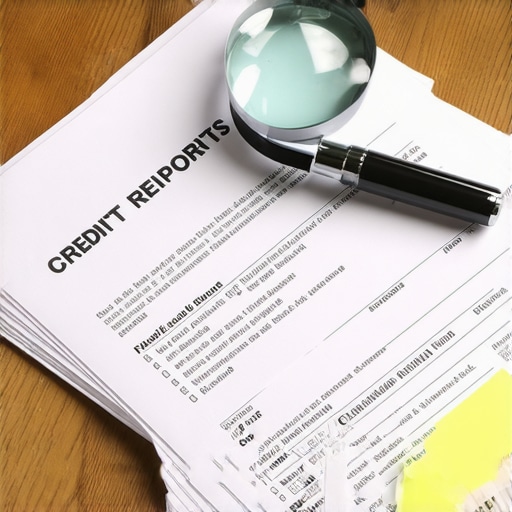 I remember fighting a $400 utility bill error that had haunted me for years. I dug through my old email archives, found the final confirmation of payment, and printed it out. I didn’t just tell them I paid it; I showed them the digital footprint of the transaction. That single piece of paper did more for my FICO than six months of ‘credit monitoring’ apps ever did.
Make Certified Mail Your Best Friend
The ‘one-click’ dispute button in an app is a trap. It often waives your right to a full investigation under the Fair Credit Reporting Act. Instead, write a physical letter. This is the only way to ensure effective dispute error resolution. When you send dispute letters via certified mail, you get a tracking number and a signature. This creates a legal clock. The bureaus have 30 days to respond. If they don’t, you have the proof needed to force a deletion. It’s about taking the power back from the algorithm and putting it into a process with real legal teeth.
Force a Human to Open Your File
Bureaus use a system called e-OSCAR to process disputes. It turns your detailed letter into a three-digit code. To beat this, you have to force a manual review when the bureau robots say no. Use a blue or black pen to hand-write parts of your letter or include a unique piece of evidence, like a police report if you were a victim of fraud. This disrupts the automated scanning process and gets your file in front of an actual person who can see that you are mastering credit repair and dispute errors through sheer persistence.
Let’s dig deeper into the mechanics of your score, because the most common advice is often the most dangerous. Everyone tells you that clearing your debts is the holy grail of financial health, but here is a nuance that catches even savvy investors off guard: simply paying off an old collection account can sometimes actually lower your score. It sounds counterintuitive, right? You think you’re doing the right thing, but because of how old scoring models calculate the ‘recency’ of a negative item, that payment can ‘refresh’ the status. This is exactly why paying off a collection does not always raise your score. If the collection was four years old and dormant, and you pay it without a specific agreement, it might suddenly look like a ‘recent’ negative event to the FICO algorithm. Instead of blindly sending a check, you need to master the pay for delete strategy that works on old utility bills and other collections. This ensures that the moment the money leaves your bank, the record leaves your report.
Can Settling a Debt Actually Lower Your FICO Score?
The answer is a frustrating ‘yes’ if you don’t negotiate the reporting status before you pay. When you settle for less than the full amount, the creditor often reports the account as ‘Settled for less than full balance.’ To a future lender, this looks like you failed to meet your original obligation. According to the Consumer Financial Protection Bureau (CFPB), the way a debt is reported after payment is just as important as the act of paying it. You should always aim for how to negotiate a settlement that includes a credit update to ‘Paid in Full’ or, better yet, total deletion. This illegal move by collectors—known as re-aging—is often missed because people don’t know how to spot a re-aged debt on your credit report immediately. They assume the ‘Date Opened’ on the collection is the legal start date, but the credit reporting clock actually starts when the original account first went delinquent.

Don’t Kill Your Credit Age by Being Too Tidy
Another trap I see people fall into is the ‘clean house’ mistake. They get motivated, look at their report, and decide to close three old credit cards they haven’t used in years. They think they are reducing risk, but they are actually nuking their ‘Length of Credit History,’ which accounts for 15% of your FICO score. You must learn the proper way to close a credit card to minimize impact. If those cards have no annual fee, keep them open. Use them for a tiny purchase once a month—something as simple as how a 10 dollar amazon purchase can boost your score every month—to keep the account active. This maintains your high available credit and keeps your utilization low. In fact, understanding why your credit utilization ratio is more important than your balance is a lesson most people learn far too late. If you’re struggling with a score that just won’t budge, try the small balance hack that adds 20 points to your fico by paying your bill a few days before the statement closing date rather than the due date. This ensures the bureau sees a 1% utilization rather than the full month’s spending. Have you ever fallen into this trap? Let me know in the comments.
Maintaining a high score is actually harder than fixing a low one. Once you’ve done the heavy lifting of scrubbing errors, you enter the ‘maintenance phase,’ where one late payment or a forgotten subscription can feel like a landslide. This is why I stopped relying on those flashy, automated apps and switched to a manual ‘Evidence Log.’ I use a simple, encrypted spreadsheet to track every single interaction I have with creditors and bureaus. You need the specific log you need to keep when calling bureaus because, in my experience, phone representatives often give conflicting information. By recording the date, the representative’s ID, and the exact promise made, you build a foundation for future disputes if that ‘deleted’ item suddenly reappears. This isn’t just about being organized; it’s about having a legal shield ready at all times.
How do I keep my credit score climbing every single month?
The secret isn’t just in what you remove, but in how you monitor the small things. I personally set up alerts for any change in my ‘available credit.’ If a bank lowers your limit without telling you, your utilization spikes and your score drops. You have to monitor your credit for small changes that matter before they become permanent fixtures on your report. I also learned the hard way that why a zero balance is not always the best for your score. The FICO algorithm likes to see ‘activity,’ not just silence. By leaving a tiny balance—usually less than 1% of my limit—on just one card until the statement prints, I show the robots that I am a responsible user of credit, not someone who has abandoned it entirely.

The Shift to Trended Data: What is Coming in 2025
The game is changing. We are moving away from ‘snapshot’ scoring and into ‘trended’ scoring. According to official technical documentation from the Fair Isaac Corporation (FICO) regarding their FICO 10T model, lenders are now looking at your financial behavior over the last 24 months. They aren’t just asking ‘What is your balance today?’ but ‘Are you paying down your debt or just cycling it?’ This means you need to understand the logic behind the fico 10t trended data shift. If you want to scale your credit for a massive purchase like a home or land, you can’t just ‘clean it up’ 30 days before the application. You need a consistent downward trend in your balances for at least two years. If you are serious about your financial future, I challenge you to try the ‘statement closing date’ trick this month: pay your full balance three days before your statement actually closes. You’ll be amazed at how quickly your score reacts when the bureau sees a 0% to 1% utilization ratio reported officially.
Hard Truths I Learned While Reclaiming My FICO Score
One of the biggest lessons I’ve carried with me is that the credit bureaus aren’t your enemies, but they aren’t your friends either; they are data processing machines. They respond to logic and law, not frustration or emotion. I realized early on that persistence beats a high-tech app every single time. If a bureau rejects your first dispute, it’s not a dead end; it’s just the beginning of the negotiation. You have to be willing to be the most annoying person in their mailbox. Another ‘lightbulb moment’ was realizing that the ultimate guide to dispute errors and credit building in 2025 isn’t about some secret loophole, but about meticulous record-keeping. I spent months mastering credit repair and dispute errors only to find that my biggest gains came from simply proving I was right with a dated receipt. Don’t let the complexity of the scoring models intimidate you; the foundation of a high score is simply accuracy.
My Personal Arsenal for Fighting Credit Errors
If you want to move the needle, you need the right tools. I suggest starting with a physical ‘Evidence Log’—a simple accordion folder where you keep every letter and every receipt. I also highly recommend using the CFPB’s complaint portal if a bureau ignores your valid evidence. #IMAGE_PLACEHOLDER_E# For those looking to build credit fast through expert tips, I always suggest keeping a digital copy of your paper credit reports in an encrypted drive. These physical documents are your shield against the automated errors that plague the digital world.
Take the Reins of Your Financial Future
You don’t need a degree in finance to have an elite score; you just need the discipline to audit your reports and the courage to call out mistakes. Whether you are learning how to build an 800 credit score starting from zero or fixing a temporary setback, the power is entirely in your hands. Don’t let a piece of code or a flawed algorithm dictate your ability to buy a home or start a business. Start today by sending that first certified letter and committing to mastering credit repair and dispute errors for good. What is the one error on your report that you’ve been too nervous to tackle? Let me know in the comments below and let’s figure out the first step together!