

I’ll never forget the cold sweat that broke out when I saw that $4,200 balance on my Experian report. I had just finished a massive debt snowball, and my actual balance was a measly $150. Yet, there it sat—a ghost of my financial past, haunting my credit score right as I was trying to buy a reliable family car. It felt like I was screaming at a brick wall. Have you ever felt that sinking feeling when you realize your bank’s ‘administrative error’ is costing you thousands in interest rates? You aren’t alone.
Why Your Bank is Ignoring Your Real Balance
The truth is, creditors aren’t in a hurry to report your successes. They are required by law to report accurately, but ‘lazy reporting’ is a silent killer for many well-meaning folks trying to build credit fast. When I first started this journey, I made the huge mistake of thinking a quick phone call would fix everything. I was wrong. I spent hours talking to ‘level one’ support staff who had no power to change anything. According to a study by the Federal Trade Commission (FTC), one in five consumers has an error on at least one of their credit reports. That is a staggering number of people being penalized for someone else’s typos.
Is fighting the big banks actually worth the hype?
You might be wondering if it’s better to just wait for the system to catch up. I’m here to tell you: do not wait. Every month that balance stays high, your debt-to-credit ratio looks worse than it is, which is why your payment history matters but utilization acts as the immediate trigger for score drops. We’re going to look at the fast way to fix an incorrect balance without losing your mind in the process.
The Paper Trail That Actually Gets Results
If you want a creditor to move, you have to stop acting like a polite customer and start acting like a savvy investigator. You need the one document proving your balance is reported wrongly—usually a final statement or a letter of satisfaction. When I finally stopped calling and started sending certified mail, things changed in seven days. You have to stop sending generic dispute letters and use the specific language that triggers a mandatory reinvestigation under the Fair Credit Reporting Act. Have you ever sent a dispute only to have it rejected in forty-eight hours? That’s because you didn’t give them a reason to take you seriously. Let’s change that today.When you click that shiny ‘dispute’ button on a credit bureau’s website, you are essentially signing away your rights to a full investigation. Think of it like a legal ‘waive’ of your protections. These systems are programmed to reduce your complex financial history into a two-digit code that an AI can dismiss in seconds. This is why online dispute portals are designed to make you fail. If you want results, you have to force a human being to open an physical envelope.
Throw a Wrench into the Automated System
The goal is to trigger a manual review. When I was fighting that $4,200 ghost balance, I spent three months clicking ‘dispute’ online only to get an automated ‘verified’ response every 48 hours. I felt like I was playing chess against a supercomputer that didn’t have to follow the rules. It wasn’t until I sent a physical package that the score finally budged. You need to learn how to bypass the AI review in credit disputes by making your correspondence look ‘non-standard’ to the scanners.
Hand-Write Your Envelopes and Use Blue Ink
It sounds like an old wives’ tale, but it works. Optical Character Recognition (OCR) software is incredibly good at reading typed text, but it struggles with cursive or slightly irregular handwriting. By handwriting your letter in blue ink, you increase the odds that a human clerk at Experian or Equifax has to actually read what you wrote. This is a core part of mastering FICO proven strategies to improve your credit dispute score. I once used a neon green envelope for a particularly stubborn medical debt, and I’m convinced that’s the only reason it got pulled for a manual look.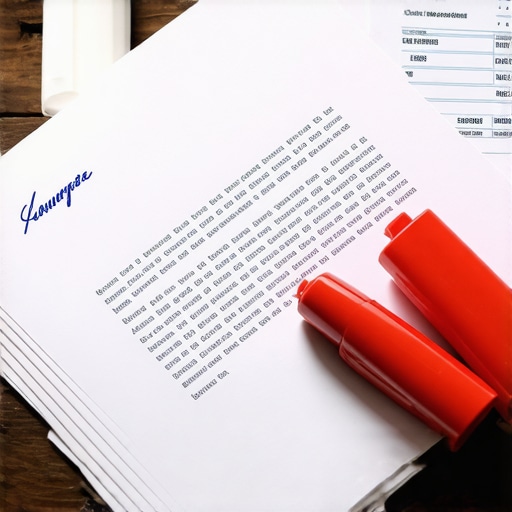
Demand the Proof They Don’t Want to Provide
Most people ask the bureau to ‘check’ the balance. The bureau then sends an electronic ping to the bank, and the bank’s computer says ‘yep, it’s correct.’ That isn’t a reinvestigation; it’s a digital handshake. You need to demand the evidence required to delete an incorrect late payment or balance.
The Magic Phrasing for Data Source Requests
If the bureau claims they ‘verified’ the information, your next move is to send the letter that forces bureaus to reveal their data source. You are asking for the name, address, and phone number of the person they spoke to at the bank. Spoiler: They didn’t speak to anyone. They used an automated system called e-OSCAR. When they can’t provide a human contact, you have them cornered under the Fair Credit Reporting Act.
Stick to the Essential Document Checklist
Don’t overwhelm them with a 50-page diary of your life. Keep it clinical. Before you lick the stamp, verify you have everything on the document checklist for your first credit dispute. For me, the ‘smoking gun’ was a screen capture of my bank’s mobile app showing the actual $150 balance right next to the $4,200 entry on my credit report. I circled both in red ink and wrote ‘Which one is lying?’ across the top. Seven days later, the balance was corrected.Most people assume that once they pay off a debt, the credit score automatically rebounds. That is a dangerous fairy tale. In fact, if you pay an old collection that has been dormant for years, you risk ‘reactivating’ it in the eyes of the scoring algorithm. This is one of the most critical credit repair tips experts rarely share: the date of last activity is often more important than the balance itself. If you move that date to today by making a partial payment, you could see your score plummet because the system now views it as a ‘recent’ failure. You have to stop paying old debts without a written ‘pay-for-delete’ agreement. I’ve seen well-meaning people lose 40 points overnight because they thought they were doing the right thing. Have you ever fallen into this trap? Let me know in the comments. One nuance I discovered during my own battle was that while FICO 9 ignores paid collections, most mortgage lenders still use older versions like FICO 2 or 5, which penalize you regardless. A report by the Consumer Financial Protection Bureau (CFPB) highlights that the automated dispute system often misses these subtleties, leaving consumers in a loop of ‘verified’ but contextually incorrect statuses. This is why paying a collection might actually lower your score if you aren’t careful about the timing and the reporting methodology. 
Why does your bank app show a different score than the lender?
It is the most common question I get. Your banking app likely uses VantageScore, while 90% of top lenders use FICO. They are different languages entirely. Why your bank app shows a different score often comes down to the fact that they aren’t even looking at the same data points. The ‘oops’ factor usually hits hardest during a home purchase. People try to ‘clean up’ their files last minute, but the danger of settling a debt right before a home purchase is that it can trigger a fresh review that stalls your closing. Instead, focus on effective dispute error resolution at least six months in advance. Remember, why a zero balance might be the reason your score is stuck—sometimes you need a tiny, 2% utilization to prove you are still a reliable borrower in the eyes of the machine. To get the best results, you must learn mastering FICO proven strategies to improve your credit dispute score by focusing on the ‘Date of Last Activity’ and ‘Original Creditor’ fields, which are the most common places for banks to make sloppy mistakes.Once you finally get those ghost balances purged, the temptation is to delete your banking apps and never look back. Don’t do that. Credit isn’t a trophy you win once; it’s more like a garden that grows weeds the second you stop looking. I personally use the MyFICO premium subscription because it is the only way to see the mortgage-specific scores that lenders actually use. Most people think their work is done after one round of letters, but why you need to monitor your credit even with a high score is to ensure those deleted errors don’t pull a zombie move and reappear next quarter. According to the 2023 CFPB Annual Report on Credit Reporting Complaints, nearly 75% of consumers who disputed errors saw them return at least once because of systemic re-pollution of data streams from the original creditors. This is why I advocate for a zero-tolerance policy with your report.
How do I keep my score high without checking it every day?
The secret is automation. I set up a tiny recurring charge on my oldest cards—usually a two-dollar digital subscription—and then set those cards to autopay from my main checking account. This is the small purchase trick that keeps your credit active that prevents the bank from closing your account for inactivity, which would otherwise tank your average age of accounts. You are essentially tricking the algorithm into seeing constant, low-risk activity. If you are worried about forgetting, use a simple Google Sheet or a calendar reminder to track your Date of Last Activity for every open line. This is a core part of the credit repair blueprint fixing errors and strengthening your financial profile for the long haul. I have noticed a massive shift toward trended data in the industry. As we move further into 2025, FICO 10T is going to look at your behavior over the last 24 months, not just a snapshot of today. This means the difference between fico 8 and fico 10t for new borrowers is going to be the deciding factor for your next car loan or mortgage. To stay ahead, you need to be mastering credit repair dispute errors and fico optimization by keeping your utilization consistently under 5%. If you want to see a massive jump this month, try the 2% trick: let exactly 2% of your limit report on one card and zero dollars on all others. It is the closest thing to a FICO cheat code I have ever found. Start by auditing your oldest account today and ensuring that Date of Last Activity is reported accurately to prevent the one mistake that extends the life of your debt through accidental re-aging.
What No One Tells You About the Credit Bureau Bureaucracy
Looking back at my battle with that $4,200 ghost balance, I realized that the credit system isn’t actually broken—it’s designed to be efficient for the banks, not for you. The biggest ‘aha’ moment I had was realizing that a ‘verified’ status doesn’t mean the debt is yours; it just means the computers talked to each other. If you want a real fix, you have to break that digital cycle. Another hard truth? Your credit score is more about your potential risk than your actual character. Once you stop taking the numbers personally, you can start manipulating the variables like a pro.
My Personal Toolbox for Winning the Credit Game
If you’re serious about credit repair secrets, I recommend keeping these three things in your arsenal. First, a dedicated physical folder for every ‘certified mail’ receipt. Second, the MyFICO app—not just your bank’s dashboard—to see the real mortgage scores. Lastly, always keep a copy of the ultimate guide to dispute errors bookmarked for when the bureaus try to send you a stall letter. #IMAGE_PLACEHOLDER_E# I trust these because they prioritize the human element over the automated mess.
Take Back Control of Your Financial Narrative
Correcting these errors is exhausting, but seeing that score jump 80 points is a feeling like no other. You aren’t just a number on a screen; you are a borrower with rights. By following credit building strategies that focus on precision rather than volume, you’ll find that the system eventually bows to the truth. Keep your records sharp, your letters handwritten, and your persistence even sharper. Have you ever had a credit bureau verify an error that you knew for a fact was wrong? Let me know in the comments below.