

I sat at my kitchen table, staring at a stack of bills that felt like they were literally closing in on me. One envelope was different—bright gold, promising “Financial Freedom in 24 Months!” I was so close to signing away my financial autonomy to a company that claimed they’d handle everything. I didn’t realize that “handling it” meant letting my accounts go into default, inviting lawsuits, and watching my credit score plummet into the 400s. It was a brutal realization that the “help” I was buying was actually a slow-motion wrecking ball for my credit report. I made the mistake of thinking a third party had a magic wand, when in reality, they were just using my own money to create a disaster I’d have to clean up later. [image placeholder]
The Shady Reality Your Settlement Agent Won’t Mention
Today, I’m going to show you exactly how to avoid the trap I almost fell into. We’re going to break down the hidden fees, the tax implications, and the long-term damage that these companies often gloss over in their sales pitches. You deserve a path to freedom that doesn’t leave you stranded in five years. Have you ever felt like you were drowning in debt and considered one of these “quick fix” companies? I’d love to hear if you’ve seen those same glossy brochures in your mailbox.
Is debt settlement actually worth the massive hit to your credit?
One of the biggest mistakes I made early on was thinking that settling a debt was the same as it being gone. It’s not. In fact, why paying a collection might actually lower your score is a lesson I learned the hard way when my score dropped after a payment because of how the date of last activity was reported. When you stop paying your creditors to “build a settlement fund,” you are essentially nuking your payment history—the most important factor in your FICO score. According to the Consumer Financial Protection Bureau (CFPB), many debt settlement companies fail to explain that you could be sued by creditors long before a settlement is ever reached. This isn’t just about a lower score; it’s about legal risks that can lead to wage garnishment. Instead of blindly trusting a third party, I found that learning the best way to negotiate a settlement with debt collectors myself was far more effective and way cheaper. You have more power than you think, especially when you understand the one mistake that extends the life of your debt and how to avoid it.
Validate the debt before you lose your leverage
Think of your credit report like a legal transcript. If there is a mistake, the whole record is tainted. Before you even think about sending a check, you must verify that the collector actually has the right to the money. Many junk debt buyers pick up accounts for pennies on the dollar without the proper paperwork to back it up. You need to use the phrasing you need in a debt validation letter to force them to prove the debt is yours. I remember a specific time I was hounded for a $450 gym membership I’d canceled years prior. The agency sent me scary-looking notices every week. Instead of caving, I demanded the original service contract with my signature. They couldn’t produce it, and the debt vanished from my report within thirty days. If I had just settled, that “settled for less than full balance” mark would have scarred my score for seven years.
The Pay-for-Delete agreement is your strongest weapon
When you finally decide a debt is legitimate, don’t just pay it. Paying a collection doesn’t remove it; it just changes the status to “paid,” which does surprisingly little for your FICO score. You must learn how to negotiate a pay-for-delete agreement with collectors. This is where you trade your payment for their promise to wipe the entry off your report entirely. It’s like erasing a stain rather than just scrubbing it. 
Avoid the template trap for faster results
Most people fail because they use the same “one-size-fits-all” letters they find on the first page of Google. The credit bureaus use automated systems to flag these. To get past the bots, you need to stop sending generic dispute letters if you want real results and start being specific about the errors. Check the dates, the balances, and the account numbers. Even a tiny mismatch is a reason for deletion. If you find a mistake, follow dispute errors on your credit report: a step-by-step guide for 2025 to ensure your package is bulletproof.
Build while you burn the old debt
Repairing is only half the battle; you have to put something positive back in. Since why your payment history matters more than any other factor, you need new, on-time payments reporting immediately. I often suggest opening a secured line of credit. If you do it correctly, you can learn how to use a secured card to gain 50 points in two months. This creates a “buffer” of positive data that offsets the old, negative items as they fall off.Everyone tells you that debt is the enemy, and while that is true for your bank balance, it is not always true for the FICO algorithm. The most common myth in credit building is that a $0 balance across every single credit card is the gold standard for a perfect score. In my experience, showing absolute zero can actually lead to a sudden and frustrating score dip. This happens because the scoring model needs to see active management of revolving credit to assess risk accurately. According to data from FICO, high-achievers with scores above 800 typically carry a very small, non-zero balance on at least one card while keeping the rest at zero. If you have been stuck at a certain number despite doing everything right, why a zero balance might be the reason your score is stuck will reveal the mechanics behind this counterintuitive plateau. This technique, often called the AZEO method, is the difference between a good score and an elite one.
Why does your FICO 8 score look different from what your mortgage lender sees?
This is a layer of nuance most quick-fix guides completely overlook. You might be celebrating a 740 on your banking app, but when you sit down with a loan officer, they pull a 690. The reason is that why your bank app shows a different score than your lender comes down to the specific version of the FICO software being used. While your app likely shows FICO 8, mortgage lenders historically use older versions like FICO 2, 4, and 5. These legacy versions are far more sensitive to small collections and the age of your newest account. Understanding the specific way lenders view your fico 8 vs fico 9 is essential before you walk into a dealership or a bank.  One massive oops factor I see daily is the urge to close an account once it is finally paid off. It feels like a psychological victory, but for your credit report, it is a disaster. Closing that card shortens your average age of credit and immediately reduces your total available credit, which causes your utilization percentage to spike. I have seen people lose 30 to 50 points overnight just by trying to clean up their wallet. You must understand why closing an old card is a bad financial move before you make a permanent mistake. Instead, use the $2 trick for keeping an old credit card active to ensure the bank doesn’t close it for inactivity while you keep the history alive. We are also seeing a shift toward trended data with newer models. Knowing why your fico 8 score is different from fico 10t is vital because the newer versions look at whether you are paying off your balances in full each month or just making the minimums over time. Finally, if you are still using those convenient online dispute buttons, stop immediately. Why online dispute portals are designed to make you fail is a harsh reality; these portals often strip you of your right to a full investigation under the Fair Credit Reporting Act. Have you ever fallen into this trap? Let me know in the comments.
Keep your files organized or watch your progress vanish
Maintaining a 750+ score isn’t a one-and-done event; it’s more like keeping a vintage car running. You need the right diagnostic tools. Personally, I refuse to rely on the free ‘educational’ scores provided by banking apps. I pay for a service that gives me access to the specific versions used for mortgages and auto loans. If you aren’t looking at the real data, you’re flying blind. Why your fico score and your banks app never match is usually because you’re looking at a VantageScore while the world runs on FICO. I also keep a physical ‘Credit Bible’—a simple accordion folder where I store every single piece of correspondence with bureaus. The documentation bureau reps hate to receive is a clear, chronological history of their own mistakes. When you can cite a letter sent on a specific Tuesday, you stop being a number and start being a legal liability they need to fix. 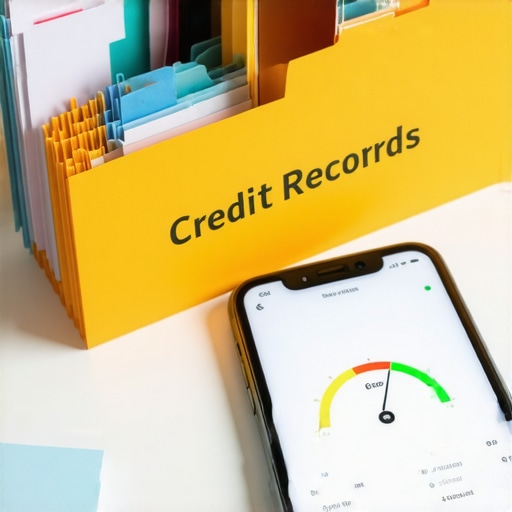
How can I stay on top of my credit profile without losing my mind?
The key is automation with a human touch. I set up small recurring charges—like a $5 streaming subscription—on my oldest cards and then set those cards to auto-pay. This utilizes the small purchase trick that keeps your credit active without you having to lift a finger. I also perform a quarterly ‘deep dive’ where I check my personal data. You’d be surprised how often a stray typo in an old address can link you to someone else’s bad debt. Learning how to fix your address history to improve loan approval odds is a high-level move that most people completely ignore.
Why your transactor status is the future of lending
Looking ahead, I predict that ‘Trended Data’ will become the only metric that matters. Lenders won’t just care if you paid today; they’ll use AI to analyze if your spending patterns suggest a job loss or financial distress months before it happens. This is why understanding why your fico 8 score is different from fico 10t is so critical right now. FICO 10T looks back at 24 months of your balance history. If you’re a ‘transactor’—someone who pays in full every single month—you’ll win. If you’re a ‘revolver,’ you’ll be penalized harder than ever before. According to the National Consumer Law Center (NCLC), the sheer complexity of these automated systems means that over 20% of consumers have at least one material error on their reports. This isn’t just bad luck; it’s a systemic failure. If you want to jump to the next level, I want you to try one specific move: pull your LexisNexis file. It’s the ‘secret’ report that contains your life’s data. If there’s junk in there, your FICO score will feel the weight. Start by gathering the evidence you need to win a dispute against a bank and move beyond just the big three bureaus.
The Hard Truths About Credit Scores I Had to Learn the Hard Way
Reflecting on my journey, the most important lesson wasn’t about a specific letter or a legal loophole; it was about realizing that the credit bureaus are not government agencies. They are private, for-profit corporations that sell your data. Once I understood that, I stopped asking for permission and started demanding accuracy. First, I realized that patience is actually a high-level strategy. You cannot rush a process that is legally bound by 30-day investigation windows. Second, I learned that why you should never pay a collection without a deletion letter is the difference between a clean report and a ‘paid’ scar that lingers for years. Finally, the biggest lightbulb moment was discovering that my score wasn’t a reflection of my worth, but a reflection of how well I played a very specific game. When you treat credit like a game with rules, the stress evaporates.
The Trusted Toolkit I Use to Keep My Score Above 750
I don’t believe in expensive monthly subscriptions for ‘credit monitoring’ that only gives you a fraction of the story. Instead, I rely on a few specific tools and habits. I always recommend using the official MyFICO portal if you are preparing for a mortgage because you need to see the specific versions lenders use. I also keep a physical ‘Credit Bible’—an accordion folder where I store every certified mail receipt. This is part of the documentation bureau reps hate to receive because it makes you impossible to ignore. For daily tracking, I use my bank’s free tool, but I take it with a grain of salt, knowing it’s often a VantageScore rather than the FICO score that matters. Most importantly, I use the $2 trick for keeping an old credit card active to ensure my oldest accounts never get closed for inactivity.
#IMAGE_PLACEHOLDER_E#
Your 800 Score Isn’t Just a Dream Anymore
The path from a 500 to a 750 or even an 800 is rarely a straight line. You will have moments where your score dips for no apparent reason, or a bureau sends you a stall letter that makes you want to give up. Don’t. Every dispute you send and every small purchase you pay off is a brick in the foundation of your future financial freedom. You now have the blueprints for mastering fico proven strategies to improve your credit dispute score that most people will never take the time to learn. You are no longer a passive observer of your financial life; you are the architect. Take that first step today, whether it’s sending one validation letter or setting up one auto-pay. Your future self, the one sitting in a new home with a low-interest mortgage, will thank you. Have you ever managed to get a collection deleted on your very first try, or did it take a few rounds of letters? Let me know your experience in the comments below!