

I sat in that mahogany-trimmed office, sweating through my best dress shirt, ready to sign for my first house. The loan officer looked at me with a mix of pity and confusion. “Sir,” he said, “your report says you have an unpaid tax lien in a state you’ve never lived in.” That was the moment I realized the bureaus had merged my life with a stranger’s. It felt like someone had stolen my financial shadow. If you’ve ever seen an account on your report that clearly isn’t yours, you know the cold panic that follows. It is frustrating, invasive, and feels nearly impossible to fix when you are stuck behind a computer screen.
Stop Letting the Credit Bureaus Play Matchmaker with Your Data
It’s a glitch in the system called a “mixed file,” and it happens more than the credit bureaus would ever like to admit. I spent three months yelling at automated phone trees and hitting dead ends before I realized I was doing it all wrong. I thought a simple phone call would clear it up. I was wrong. I actually made it worse by not having a physical paper trail. You see, when the algorithm sees two people with similar names, similar Social Security numbers, or the same birthdate, it sometimes just mashes them together into one messy profile. Today, I’m going to show you exactly how to tear those files apart so your FICO score reflects your hard work, not a stranger’s mistakes. We aren’t just sending letters; we are building a legal fortress around your identity. According to data from the Consumer Financial Protection Bureau, issues with incorrect information on credit reports remain the single most complained about topic in the financial world, accounting for over 70% of total complaints. Have you ever found a complete stranger’s address or a weird name variant on your report? It’s usually the first sign of a file merge.
Is This Paperwork Strategy Really Better Than Just Calling Them?
You might be thinking, “Can’t I just click the dispute button on their website and be done with it?” Trust me, I tried that. It’s a trap. Using the online portal often waives your right to a full manual investigation under the Fair Credit Reporting Act. If you want to know why you should never use the online dispute button, it’s because it turns your complex identity crisis into a simple data code that a robot can easily ignore. I made the massive mistake of trusting the “easy” way early on, and it cost me that first house. To fix this, you need a specific set of physical documents that force a human to look at your file. You specifically need the 3 documents you need to clear a mixed credit file to prove you are who you say you are. Learning how to fix a credit report if your name is too common is something I had to master the hard way after “Robert’s” debt became my burden. We are going to reclaim your name, one stamped envelope at a time.
Start With a Total Forensic Audit of Your Report
You need to think like a financial detective. When I first saw that lien on my report, I didn’t just look at the dollar amount; I looked at the typos in the address and the specific employer listed. I realized the bureau wasn’t just wrong about the money—they were wrong about the person. Before you send a single letter, you must audit your own credit report for 10 common mistakes to identify exactly where your life ends and the stranger’s begins. Think of your credit report as a digital filing cabinet. If the bureau files your ‘paperwork’ in someone else’s folder, the only way to get it back is to prove the folder itself is mislabeled. Circle every name variant, every job you never held, and every address you never lived at. These are the crumbs that lead you to the source of the merge.
Why Certified Mail Is Your Best Friend
I remember sending my first letter to Equifax years ago. I used a standard envelope and a first-class stamp. Two weeks later, I got a generic form letter saying they ‘verified’ the info was correct. I was livid. It wasn’t until I understood why you should always send dispute letters via certified mail that my results changed. Certified mail creates a legal receipt that provides proof of delivery. It’s like a digital ‘read receipt’ for the legal world. When you have that green return receipt in your hand, the bureaus know they are on a 30-day clock, and they can no longer pretend your evidence was lost in the mail.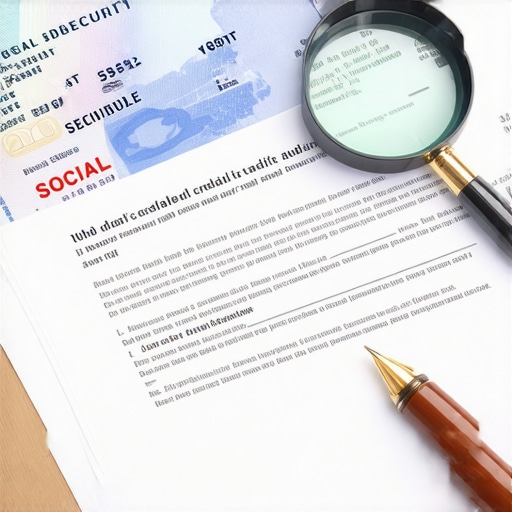
Use the Document Packet That Forces a Human Eyes-On Review
The real secret to winning this fight is forcing a manual review. The bureaus use sophisticated OCR technology to scan your letters and turn them into simple three-digit codes for an algorithm to process. To stop this, you need the one document that forces a bureau manual review. For me, that meant sending an oversized packet containing a copy of my Social Security card, a clear photo of my driver’s license, and two different utility bills. I once helped a client whose file was merged with a twin brother living three states away. We didn’t just send a letter; we created a ‘Compare and Contrast’ sheet that highlighted the differences in their Social Security numbers. This is how you learn how to force a manual review when the bureau robots say no. You are essentially throwing a wrench into their automated gears, requiring a human employee to sit down and physically look at the documents. By mastering fico proven strategies to improve your credit dispute score, you move from being a victim of a glitch to a manager of your own financial data.You’ve done the paperwork, you’ve got your certified mail receipts, and you’re waiting. But here is the part where most credit experts lead you straight into a brick wall. Everyone tells you that the fastest way to fix your credit is to just pay off every old debt you find. In my experience, that is often the worst possible move for your FICO score. If you pay an old collection without a pay-for-delete agreement, you are essentially refreshing the date of last activity. This makes a dormant, three-year-old mistake look like a brand-new failure to the scoring algorithm. You need to understand why your score didn’t move after you settled that debt before you write another check.
Why Does My Score Drop After I Do the Right Thing?
It feels like a betrayal. You settle a debt, and your score drops 20 points. This happens because FICO’s older models—which most mortgage lenders still use—don’t give you brownie points for a $0 balance on a collection. A report by the Federal Trade Commission on credit report accuracy highlights that many consumers struggle with zombie debts that reappear or refresh after a payment is made. The trap here is resetting the statute of limitations. When you acknowledge or make a partial payment on a debt that is near its expiration, you might accidentally give the creditor another seven years to haunt you. This is why you must learn how to spot a zombie debt before it strikes your report.
The Hidden Nuance of Your Credit Mix
Another mistake I see advanced DIYers make is obsessing over deletions while ignoring credit building. If you successfully remove ten negative items but have no active, positive accounts, your score will remain thin and stagnant. You have to balance effective dispute error resolution to boost your credit score in 2025 with aggressive rebuilding. I’ve seen people clear their entire report of negatives only to find they still can’t get a car loan because they have no depth of credit. You have to realize the truth about paying off a collection before buying a house: sometimes, leaving it alone and letting it age is actually better for your debt-to-income ratio. Before you take any action, get the full fico insights how dispute errors affect your score and what to do. It is a chess match, not a sprint. Have you ever fallen into this trap where doing the right thing backfired on your score? Let me know in the comments.Once the smoke clears and those fraudulent entries finally vanish, you might feel like your job is done. I certainly did. But three months after I fixed my mixed file, a new collection for a gym membership I never signed up for popped up on my TransUnion report like a weed in a freshly mowed lawn. I realized then that credit health isn’t a destination; it is a maintenance routine. To keep your profile pristine, you need to develop the habit that keeps your fico score above 780 every month. It isn’t just about deleting the bad stuff; it is about building a defense so strong that errors can’t take root. I personally use a physical binder for every dispute because digital folders are too easy to ignore. You need the specific log you need to keep when calling bureaus to track exactly who you spoke to and what they promised.
Keep Your FICO Shield Strong Every Month
I’ve found that the best way to prevent a score from stagnating is to keep the data flowing. Lenders love to see activity, but not necessarily big spending. One of my favorite tricks is how a 10 amazon purchase can boost your score every month by ensuring your accounts never look dormant to the scoring algorithm. If a card sits idle for too long, the bank might close it, and you’ll find out why closing your oldest account is a financial mistake the hard way. I recommend setting a calendar alert for the 15th of every month to do a quick 5-minute sweep of your apps. This is the core of the habit of high score achievers checking reports every 30 days.
How do I maintain my credit results without working a second job?
It’s all about the systems you put in place. According to the Fair Credit Reporting Act (FCRA) Section 611(a)(1), credit bureaus have a specific timeframe to investigate your disputes, but they often push those limits. If you aren’t tracking those dates, they will walk all over you. I suggest using the diy credit repair checklist that outperforms paid services to stay organized. Looking forward, we are seeing a massive shift toward the logic behind the fico 10t trended data shift, which means lenders are now looking at your behavior over the last 24 months, not just where your score sits today. This makes long-term consistency more valuable than a one-time ‘repair’ sweep. If you want to really jumpstart this, try the small-balance strategy I mentioned earlier—charge one small subscription to an old card and set it to auto-pay. It keeps the account ‘warm’ and the history growing without any effort on your part.
Why Your First Dispute Probably Failed and How to Pivot
I learned the hard way that the bureaus aren’t your friends; they are data aggregators who prioritize efficiency over accuracy. My first three attempts were rejected because I didn’t realize I was being screened by a machine. The real breakthrough happened when I stopped treating my credit report like a static document and started treating it like a legal deposition.
- Bureaus use a system called e-OSCAR to digitize your letters; if you don’t use physical proof, you’re just a data point.
- Every phone call is recorded, but rarely for your benefit—stick to the paper trail.
- A mixed file won’t fix itself; you have to be more persistent than the error.
By mastering credit repair dispute errors and fico optimization, you stop being a victim of the algorithm and start taking control of your financial narrative.
The Tools That Actually Moved the Needle for Me
If you are serious about fixing these dispute errors, you need more than just a template from the internet. I trust a few specific resources that have never steered me wrong during my own financial recovery and help ensure credit building continues smoothly.
- The CFPB Complaint Portal: When a bureau ignores your certified mail, this is the most powerful tool you have to get their attention.
- Certified Mail with Return Receipt: This is non-negotiable for proving the 30-day clock has started and creating a legal audit trail.
- A High-Quality Document Scanner: You need digital backups of every physical piece of evidence you send to the bureaus.
Using the diy credit repair checklist that outperforms paid services helped me keep my sanity when the letters started flying back and forth.
Your New Chapter Starts With This First Letter
Reclaiming your identity is an act of self-respect. It is about ensuring that your future isn’t dictated by someone else’s mistakes or a computer glitch. Once you clean up the mess, focus on how to build an 800 credit score starting from zero to ensure you have the best possible rates for your next home or car. The system is designed to be difficult, but you now have the blueprint to navigate it. Your financial shadow belongs to you—make sure it is a reflection of your hard work. #IMAGE_PLACEHOLDER_E#
Have you ever had a credit bureau try to tell you that a debt wasn’t yours when you knew the truth? Drop your story in the comments below.