
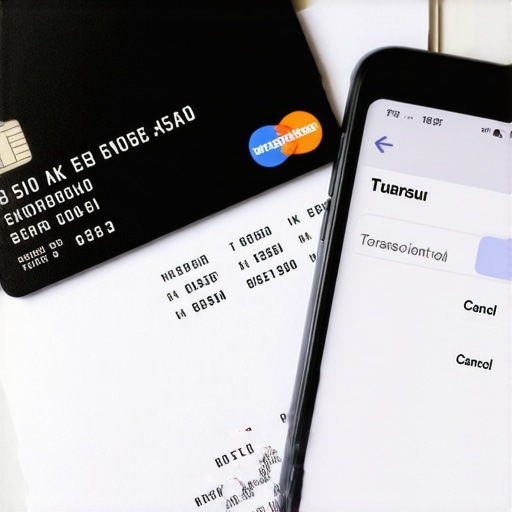
I remember the visceral sting of seeing that $49.99 charge hit my bank account for the third month in a row. It wasn’t even about the money at that point; it was the sheer feeling of being ignored. I had followed their rules, or so I thought. I had called, I had clicked ‘cancel’ on their clunky website, and yet, there it was, mocking me from my digital statement. I felt like a hostage in my own financial life. That moment was my breaking point. It led me down a rabbit hole of consumer rights and credit laws, and I realized that being ‘nice’ to customer service gets you nowhere. You need a paper trail that is impossible to ignore. Today, I’m going to share exactly how to build that fortress of evidence so you can kill those ‘zombie’ charges for good.
Stop the Ghost Charges Before They Haunt Your Credit Score
It is incredibly easy to think a recurring charge is just a minor nuisance, but if you stop paying without the right evidence, it can spiral into a collection account. Trust me, you do not want to be in a position where you are trying to correct dispute errors effectively later on because a gym or a software company reported you for non-payment. I once made the massive mistake of just ‘blocking’ a merchant through my bank app without keeping a formal cancellation record. Spoiler alert: the merchant just sent the bill to a debt collector, and my FICO score took a terrifying dive. We are going to avoid that. I’m going to walk you through the specific evidence you need to gather—the stuff your bank actually cares about—to ensure that a recurring charge stays dead. We aren’t just talking about clicking a button. We are talking about the paperwork that proves a creditor failed to update your status. This is about protecting your financial future from companies that rely on your forgetfulness.
Is a simple phone call really enough to stop the bleeding?
The short answer is a resounding no. While a phone call feels proactive, it leaves no digital footprint. If you don’t have a recording or a specific confirmation number, it effectively didn’t happen in the eyes of your credit card issuer. You need more than just a memory of a conversation; you need hard data. Have you ever felt like you were shouting into a void trying to get a subscription to stop? Let me know in the comments, because I’ve been there, and it is exhausting. According to the Federal Trade Commission, merchants are legally required to provide a simple way to cancel, yet many use ‘dark patterns’ to trap you. When you eventually dispute errors and build credit, the bank will ask for one thing: proof of your attempt to cancel. You must keep a specific log of every interaction you have with the merchant. Setting the stage for a win requires you to stop being a ‘customer’ and start being a ‘litigator’ of your own bank account. A study by the Consumer Financial Protection Bureau (CFPB) suggests that millions of dollars are lost annually to these recurring billing traps. By gathering the right documentation now, you aren’t just saving fifty bucks; you are learning how dispute errors affect your score and how to fight back effectively.
Send the Email That Slams the Door
Your first move is to stop talking and start typing. Think of a phone call like a handshake in a dark room—it is meaningful to you, but it is effectively invisible to a credit auditor. An email, however, is a permanent beacon. When I was battling a streaming service that refused to let go, I sent a formal notice and BCC’d my personal archive. This creates an undeniable digital receipt that the merchant cannot claim they never received. You need to explicitly state, “I am canceling my subscription effective immediately and revoking my authorization for future charges.” If they try to keep billing you after that timestamp, you have the document that forces a creditor to update your status. Without it, your bank will likely treat your dispute as a simple disagreement rather than a violation of your rights.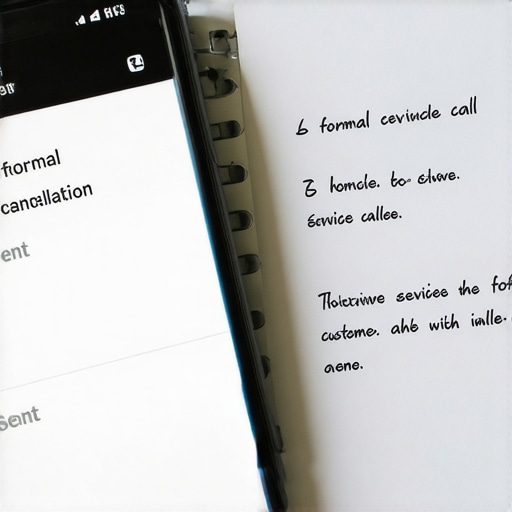
Record Every Single Interaction Like a Detective
If you are forced to use a phone line, treat the conversation like a legal deposition. I learned this the hard way when a cable company swore they closed my account, only to send a $200 bill to collections six months later because their ‘system didn’t save the request.’ Now, I keep a specific log of every interaction, including the representative’s name, their employee ID, and the exact minute the call ended. This isn’t just extra work; it is your ultimate shield. When you later have to dispute errors on your credit report, this log provides the granular detail that forces bureaus to move beyond their automated responses. It is the difference between a rejected claim and a total removal of the debt.
Outsmart the Deceptive Dark Patterns
Many companies use what designers call ‘dark patterns’—tricky interface choices meant to confuse you into staying subscribed. I once dealt with a software company that made me click through five separate ‘Are you sure?’ pages, where the ‘Cancel’ button kept changing color and position. If you encounter this, take screenshots of every step. This visual evidence is gold when you are trying to master credit repair hacks. It proves that you made a good-faith effort and the merchant used deceptive tactics to block you. Banks are much more likely to side with you when you can show a gallery of a merchant’s intentional obstacles.
Force Their Hand with the Right Paperwork
Sometimes the merchant ignores your logs and screenshots entirely. That is when you pivot to the credit bureaus with aggressive documentation. You aren’t just asking them to help; you are providing the documentation that proves a payment was made on time or, in the case of zombie charges, that no debt was ever owed. Think of your credit report like a pristine garden; if you don’t pull the weeds of unauthorized charges immediately, they will eventually choke out your FICO growth. I once used credit repair tips for correcting dispute errors effectively to delete a ‘zombie’ gym fee that had mutated into a collection. By showing the bureau my original cancellation email and the subsequent bank statement showing the unauthorized pull, I forced a deletion in record time. This is how you boost your credit score in 2025—by being more organized and more persistent than the companies trying to exploit your bank account.I remember the visceral sting of seeing that $49.99 charge hit my bank account for the third month in a row. It wasn’t even about the money at that point; it was the sheer feeling of being ignored. I had followed their rules, or so I thought. I had called, I had clicked ‘cancel’ on their clunky website, and yet, there it was, mocking me from my digital statement. I felt like a hostage in my own financial life. That moment was my breaking point. It led me down a rabbit hole of consumer rights and credit laws, and I realized that being ‘nice’ to customer service gets you nowhere. You need a paper trail that is impossible to ignore. Today, I’m going to share exactly how to build that fortress of evidence so you can kill those ‘zombie’ charges for good.
Stop the Ghost Charges Before They Haunt Your Credit Score
It is incredibly easy to think a recurring charge is just a minor nuisance, but if you stop paying without the right evidence, it can spiral into a collection account. Trust me, you do not want to be in a position where you are trying to correct dispute errors effectively later on because a gym or a software company reported you for non-payment. I once made the massive mistake of just ‘blocking’ a merchant through my bank app without keeping a formal cancellation record. Spoiler alert: the merchant just sent the bill to a debt collector, and my FICO score took a terrifying dive. We are going to avoid that. I’m going to walk you through the specific evidence you need to gather—the stuff your bank actually cares about—to ensure that a recurring charge stays dead. We aren’t just talking about clicking a button. We are talking about the paperwork that proves a creditor failed to update your status. This is about protecting your financial future from companies that rely on your forgetfulness.
Is a simple phone call really enough to stop the bleeding?
The short answer is a resounding no. While a phone call feels proactive, it leaves no digital footprint. If you don’t have a representation or a specific confirmation number, it effectively didn’t happen in the eyes of your credit card issuer. You need more than just a memory of a conversation; you need hard data. Have you ever felt like you were shouting into a void trying to get a subscription to stop? Let me know in the comments, because I’ve been there, and it is exhausting. According to the Federal Trade Commission, merchants are legally required to provide a simple way to cancel, yet many use ‘dark patterns’ to trap you. When you eventually dispute errors and build credit, the bank will ask for one thing: proof of your attempt to cancel. You must keep a specific log of every interaction you have with the merchant. Setting the stage for a win requires you to stop being a ‘customer’ and start being a ‘litigator’ of your own bank account. A study by the Consumer Financial Protection Bureau (CFPB) suggests that millions of dollars are lost annually to these recurring billing traps. By gathering the right documentation now, you aren’t just saving fifty bucks; you are learning how dispute errors affect your score and how to fight back effectively.
Send the Email That Slams the Door
Your first move is to stop talking and start typing. Think of a phone call like a handshake in a dark room—it is meaningful to you, but it is effectively invisible to a credit auditor. An email, however, is a permanent beacon. When I was battling a streaming service that refused to let go, I sent a formal notice and BCC’d my personal archive. This creates an undeniable digital receipt that the merchant cannot claim they never received. You need to explicitly state, “I am canceling my subscription effective immediately and revoking my authorization for future charges.” If they try to keep billing you after that timestamp, you have the document that forces a creditor to update your status. Without it, your bank will likely treat your dispute as a simple disagreement rather than a violation of your rights.
Record Every Single Interaction Like a Detective
If you are forced to use a phone line, treat the conversation like a legal deposition. I learned this the hard way when a cable company swore they closed my account, only to send a $200 bill to collections six months later because their ‘system didn’t save the request.’ Now, I keep a specific log of every interaction, including the representative’s name, their employee ID, and the exact minute the call ended. This isn’t just extra work; it is your ultimate shield. When you later have to dispute errors on your credit report, this log provides the granular detail that forces bureaus to move beyond their automated responses. It is the difference between a rejected claim and a total removal of the debt.
Outsmart the Deceptive Dark Patterns
Many companies use what designers call ‘dark patterns’—tricky interface choices meant to confuse you into staying subscribed. I once dealt with a software company that made me click through five separate ‘Are you sure?’ pages, where the ‘Cancel’ button kept changing color and position. If you encounter this, take screenshots of every step. This visual evidence is gold when you are trying to master credit repair hacks. It proves that you made a good-faith effort and the merchant used deceptive tactics to block you. Banks are much more likely to side with you when you can show a gallery of a merchant’s intentional obstacles.
Force Their Hand with the Right Paperwork
Sometimes the merchant ignores your logs and screenshots entirely. That is when you pivot to the credit bureaus with aggressive documentation. You aren’t just asking them to help; you are providing the documentation that proves a payment was made on time or, in the case of zombie charges, that no debt was ever owed. Think of your credit report like a pristine garden; if you don’t pull the weeds of unauthorized charges immediately, they will eventually choke out your FICO growth. I once used credit repair tips for correcting dispute errors effectively to delete a ‘zombie’ gym fee that had mutated into a collection. By showing the bureau my original cancellation email and the subsequent bank statement showing the unauthorized pull, I forced a deletion in record time. This is how you boost your credit score in 2025—by being more organized and more persistent than the companies trying to exploit your bank account.But even with a perfect paper trail, many consumers make the fatal error of thinking the battle ends once the merchant stops calling. This is where the real complexity of the credit system begins. Most people assume that once they finally cave and settle a ‘zombie’ charge, their credit score will automatically bounce back. This is a dangerous myth. In reality, why paying off a collection does not always raise your score comes down to the legacy scoring models that lenders actually use. While newer versions like FICO 9 ignore paid collections, a 2021 CFPB report highlighted that many lenders still utilize older models where a ‘paid’ collection is viewed as a negative mark just as heavily as an unpaid one. You need that mark gone entirely, not just updated to a zero balance. Have you ever fallen into this trap? Let me know in the comments.
Stop Believing a Paid Collection is a Clean Collection
If you are trying to correct dispute errors effectively, you have to stop looking at your report through the eyes of a consumer and start looking through the eyes of a mortgage underwriter. To them, a collection updated to ‘paid’ still signals a history of default. This is the nuance that separates beginners from experts. Instead of rushing to pay, your first priority should be identifying whether the debt is even legitimate. Look closely for re-aging tactics; if a collector moves the ‘date of last activity’ forward to keep the debt on your report longer, you need to spot a re-aged debt on your credit report immediately and challenge it. Simply paying it off can sometimes ‘reset’ the clock in the eyes of automated scoring systems, causing your score to stall or even dip. This is why learning how to remove a paid off collection that won’t go away is a critical skill for long-term FICO health.
Will settling a debt actually hurt your FICO score more than leaving it alone?
It depends entirely on the model. If you are applying for a mortgage, the lender likely uses FICO 2, 4, or 5. In these models, the presence of the collection is the problem, not the balance. However, if you are looking to understand how dispute errors affect your score, you must realize that settling can sometimes be the first step in a ‘pay-for-delete’ negotiation. Without a written agreement to delete the entry, settling is often a waste of your leverage. Before you send a single dollar, you need to find out which credit model your lender uses so you can predict exactly how that ‘paid’ status will reflect on your profile.
The One-Click Trap on Bureau Websites
One of the biggest mistakes I see advanced credit builders make is using the ‘Dispute’ button on a bureau’s website. It looks convenient, but it is a trap designed to speed up the bureau’s workflow at your expense. When you use that button, you often unintentionally waive your right to a full re-investigation or limit the amount of evidence you can submit. This is the problem with using credit repair software for complex errors as well; it turns a legal right into a templated request that bureau robots can easily dismiss.  To truly win, you must bypass the automated systems and force a manual review when the bureau robots say no. This requires sending physical mail with your logs and screenshots attached, proving that you have done the legwork. By combining these advanced credit repair hacks, you aren’t just cleaning up a mess; you are mastering the system that was designed to keep you in the dark.I’ve learned that the hardest part of this journey isn’t the first dispute; it is the silent months that follow where you have to keep the walls of your financial fortress high. If you stop paying attention, those old errors have a nasty habit of creeping back under different names. To prevent this, I’ve moved away from flashy apps and back to the basics that actually work. I personally use a high-speed document scanner—specifically the Fujitsu ScanSnap—to digitize every single piece of mail that comes from a bureau or a creditor. Why? Because when you are deep in the trenches of understanding fico dispute errors and credit repair hacks, your ability to recall a specific letter from fourteen months ago is your greatest leverage.
Your Filing Cabinet is a Secret Weapon
I cannot stress this enough: stop relying on the digital ‘summaries’ provided by free credit monitoring sites. They often omit the very metadata you need to win a legal challenge. I make it a non-negotiable habit to always request a paper credit report at least once a year. There is something about the physical tactile nature of a 40-page report that allows you to see patterns—like a misspelled address or a slightly shifted ‘date opened’—that your eyes would skip over on a smartphone screen. These tiny discrepancies are the keys to correcting dispute errors effectively because they prove the bureaus are not maintaining ‘maximum possible accuracy.’ 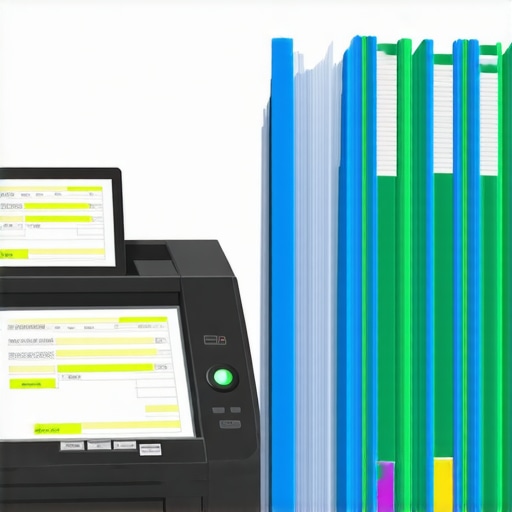
How do I maintain these results year after year?
The secret is a quarterly ‘clean-room’ audit. Every three months, I sit down with my scanned documents and my latest reports to monitor your credit for small changes that matter. This isn’t just about the score; it is about the data integrity. I use a simple spreadsheet to track the ‘Date of Last Activity’ for every closed account. If that date moves, I know a collector is attempting to re-age the debt, and I hit them with a dispute immediately. According to the National Consumer Law Center (NCLC) in their report ‘Automated Injustice,’ the bureaus’ automated systems are fundamentally biased toward the creditor’s data. By maintaining your own parallel record, you are the only person in the room with the full truth.
Look Beyond the Score to the Metadata
As we move into an era where FICO 10T and trended data become the standard, the length of your clean history will matter more than a single high-balance month. You need to audit your credit report for incorrect account dates regularly to ensure your ‘age of accounts’ is being calculated fairly. I predict that within the next two years, AI-driven ‘predictive’ scoring will make it even harder to hide past mistakes, which is why dispute errors and credit building must be seen as a lifelong maintenance task, not a one-time fix. I’ve seen people lose forty points overnight because they let their guard down on an old utility bill they thought was gone. Don’t be that person. Grab a physical folder today and start your paper audit—it’s the one thing the robots can’t ignore.I remember the visceral sting of seeing that $49.99 charge hit my bank account for the third month in a row. It wasn’t even about the money at that point; it was the sheer feeling of being ignored. I had followed their rules, or so I thought. I had called, I had clicked ‘cancel’ on their clunky website, and yet, there it was, mocking me from my digital statement. I felt like a hostage in my own financial life. That moment was my breaking point. It led me down a rabbit hole of consumer rights and credit laws, and I realized that being ‘nice’ to customer service gets you nowhere. You need a paper trail that is impossible to ignore. Today, I’m going to share exactly how to build that fortress of evidence so you can kill those ‘zombie’ charges for good.
Stop the Ghost Charges Before They Haunt Your Credit Score
It is incredibly easy to think a recurring charge is just a minor nuisance, but if you stop paying without the right evidence, it can spiral into a collection account. Trust me, you do not want to be in a position where you are trying to correct dispute errors effectively later on because a gym or a software company reported you for non-payment. I once made the massive mistake of just ‘blocking’ a merchant through my bank app without keeping a formal cancellation record. Spoiler alert: the merchant just sent the bill to a debt collector, and my FICO score took a terrifying dive. We are going to avoid that. I’m going to walk you through the specific evidence you need to gather—the stuff your bank actually cares about—to ensure that a recurring charge stays dead. We aren’t just talking about clicking a button. We are talking about the paperwork that proves a creditor failed to update your status. This is about protecting your financial future from companies that rely on your forgetfulness.
Is a simple phone call really enough to stop the bleeding?
The short answer is a resounding no. While a phone call feels proactive, it leaves no digital footprint. If you don’t have a recording or a specific confirmation number, it effectively didn’t happen in the eyes of your credit card issuer. You need more than just a memory of a conversation; you need hard data. Have you ever felt like you were shouting into a void trying to get a subscription to stop? Let me know in the comments, because I’ve been there, and it is exhausting. According to the Federal Trade Commission, merchants are legally required to provide a simple way to cancel, yet many use ‘dark patterns’ to trap you. When you eventually dispute errors and build credit, the bank will ask for one thing: proof of your attempt to cancel. You must keep a specific log of every interaction you have with the merchant. Setting the stage for a win requires you to stop being a ‘customer’ and start being a ‘litigator’ of your own bank account. A study by the Consumer Financial Protection Bureau (CFPB) suggests that millions of dollars are lost annually to these recurring billing traps. By gathering the right documentation now, you aren’t just saving fifty bucks; you are learning how dispute errors affect your score and how to fight back effectively.
Send the Email That Slams the Door
Your first move is to stop talking and start typing. Think of a phone call like a handshake in a dark room—it is meaningful to you, but it is effectively invisible to a credit auditor. An email, however, is a permanent beacon. When I was battling a streaming service that refused to let go, I sent a formal notice and BCC’d my personal archive. This creates an undeniable digital receipt that the merchant cannot claim they never received. You need to explicitly state, “I am canceling my subscription effective immediately and revoking my authorization for future charges.” If they try to keep billing you after that timestamp, you have the document that forces a creditor to update your status. Without it, your bank will likely treat your dispute as a simple disagreement rather than a violation of your rights.
Record Every Single Interaction Like a Detective
If you are forced to use a phone line, treat the conversation like a legal deposition. I learned this the hard way when a cable company swore they closed my account, only to send a $200 bill to collections six months later because their ‘system didn’t save the request.’ Now, I keep a specific log of every interaction, including the representative’s name, their employee ID, and the exact minute the call ended. This isn’t just extra work; it is your ultimate shield. When you later have to dispute errors on your credit report, this log provides the granular detail that forces bureaus to move beyond their automated responses. It is the difference between a rejected claim and a total removal of the debt.
Outsmart the Deceptive Dark Patterns
Many companies use what designers call ‘dark patterns’—tricky interface choices meant to confuse you into staying subscribed. I once dealt with a software company that made me click through five separate ‘Are you sure?’ pages, where the ‘Cancel’ button kept changing color and position. If you encounter this, take screenshots of every step. This visual evidence is gold when you are trying to master credit repair hacks. It proves that you made a good-faith effort and the merchant used deceptive tactics to block you. Banks are much more likely to side with you when you can show a gallery of a merchant’s intentional obstacles.
Force Their Hand with the Right Paperwork
Sometimes the merchant ignores your logs and screenshots entirely. That is when you pivot to the credit bureaus with aggressive documentation. You aren’t just asking them to help; you are providing the documentation that proves a payment was made on time or, in the case of zombie charges, that no debt was ever owed. Think of your credit report like a pristine garden; if you don’t pull the weeds of unauthorized charges immediately, they will eventually choke out your FICO growth. I once used credit repair tips for correcting dispute errors effectively to delete a ‘zombie’ gym fee that had mutated into a collection. By showing the bureau my original cancellation email and the subsequent bank statement showing the unauthorized pull, I forced a deletion in record time. This is how you boost your credit score in 2025—by being more organized and more persistent than the companies trying to exploit your bank account.But even with a perfect paper trail, many consumers make the fatal error of thinking the battle ends once the merchant stops calling. This is where the real complexity of the credit system begins. Most people assume that once they finally cave and settle a ‘zombie’ charge, their credit score will automatically bounce back. This is a dangerous myth. In reality, why paying off a collection does not always raise your score comes down to the legacy scoring models that lenders actually use. While newer versions like FICO 9 ignore paid collections, a 2021 CFPB report highlighted that many lenders still utilize older models where a ‘paid’ collection is viewed as a negative mark just as heavily as an unpaid one. You need that mark gone entirely, not just updated to a zero balance. Have you ever fallen into this trap? Let me know in the comments.
Stop Believing a Paid Collection is a Clean Collection
If you are trying to correct dispute errors effectively, you have to stop looking at your report through the eyes of a consumer and start looking through the eyes of a mortgage underwriter. To them, a collection updated to ‘paid’ still signals a history of default. This is the nuance that separates beginners from experts. Instead of rushing to pay, your first priority should be identifying whether the debt is even legitimate. Look closely for re-aging tactics; if a collector moves the ‘date of last activity’ forward to keep the debt on your report longer, you need to spot a re-aged debt on your credit report immediately and challenge it. Simply paying it off can sometimes ‘reset’ the clock in the eyes of automated scoring systems, causing your score to stall or even dip. This is why learning how to remove a paid off collection that won’t go away is a critical skill for long-term FICO health.
Will settling a debt actually hurt your FICO score more than leaving it alone?
It depends entirely on the model. If you are applying for a mortgage, the lender likely uses FICO 2, 4, or 5. In these models, the presence of the collection is the problem, not the balance. However, if you are looking to understand how dispute errors affect your score, you must realize that settling can sometimes be the first step in a ‘pay-for-delete’ negotiation. Without a written agreement to delete the entry, settling is often a waste of your leverage. Before you send a single dollar, you need to find out which credit model your lender uses so you can predict exactly how that ‘paid’ status will reflect on your profile.
The One-Click Trap on Bureau Websites
One of the biggest mistakes I see advanced credit builders make is using the ‘Dispute’ button on a bureau’s website. It looks convenient, but it is a trap designed to speed up the bureau’s workflow at your expense. When you use that button, you often unintentionally waive your right to a full re-investigation or limit the amount of evidence you can submit. This is the problem with using credit repair software for complex errors as well; it turns a legal right into a templated request that bureau robots can easily dismiss. To truly win, you must bypass the automated systems and force a manual review when the bureau robots say no. This requires sending physical mail with your logs and screenshots attached, proving that you have done the legwork. By combining these advanced credit repair hacks, you aren’t just cleaning up a mess; you are mastering the system that was designed to keep you in the dark.I’ve learned that the hardest part of this journey isn’t the first dispute; it is the silent months that follow where you have to keep the walls of your financial fortress high. If you stop paying attention, those old errors have a nasty habit of creeping back under different names. To prevent this, I’ve moved away from flashy apps and back to the basics that actually work. I personally use a high-speed document scanner—specifically the Fujitsu ScanSnap—to digitize every single piece of mail that comes from a bureau or a creditor. Why? Because when you are deep in the trenches of understanding fico dispute errors and credit repair hacks, your ability to recall a specific letter from fourteen months ago is your greatest leverage.
Your Filing Cabinet is a Secret Weapon
I cannot stress this enough: stop relying on the digital ‘summaries’ provided by free credit monitoring sites. They often omit the very metadata you need to win a legal challenge. I make it a non-negotiable habit to always request a paper credit report at least once a year. There is something about the physical tactile nature of a 40-page report that allows you to see patterns—like a misspelled address or a slightly shifted ‘date opened’—that your eyes would skip over on a smartphone screen. These tiny discrepancies are the keys to correcting dispute errors effectively because they prove the bureaus are not maintaining ‘maximum possible accuracy.’
How do I maintain these results year after year?
The secret is a quarterly ‘clean-room’ audit. Every three months, I sit down with my scanned documents and my latest reports to monitor your credit for small changes that matter. This isn’t just about the score; it is about the data integrity. I use a simple spreadsheet to track the ‘Date of Last Activity’ for every closed account. If that date moves, I know a collector is attempting to re-age the debt, and I hit them with a dispute immediately. According to the National Consumer Law Center (NCLC) in their report ‘Automated Injustice,’ the bureaus’ automated systems are fundamentally biased toward the creditor’s data. By maintaining your own parallel record, you are the only person in the room with the full truth.
Look Beyond the Score to the Metadata
As we move into an era where FICO 10T and trended data become the standard, the length of your clean history will matter more than a single high-balance month. You need to audit your credit report for incorrect account dates regularly to ensure your ‘age of accounts’ is being calculated fairly. I predict that within the next two years, AI-driven ‘predictive’ scoring will make it even harder to hide past mistakes, which is why dispute errors and credit building must be seen as a lifelong maintenance task, not a one-time fix. I’ve seen people lose forty points overnight because they let their guard down on an old utility bill they thought was gone. Don’t be that person. Grab a physical folder today and start your paper audit—it’s the one thing the robots can’t ignore.
The Hardest Lessons I Learned Fighting the Bureaus
Reflecting on my own journey, the biggest lightbulb moment was realizing that credit bureaus are data aggregators that favor the creditor’s voice until you prove otherwise. You must stop hoping for fairness and start demanding accuracy through a process of elimination. Another lesson? The ‘Date of First Delinquency’ is the most manipulated field on your report. If you don’t watch it like a hawk, a debt you thought was dead can be resurrected indefinitely. I’ve found that using proven strategies to improve your credit dispute score requires you to be more methodical than the automated systems designed to ignore you. Finally, remember that silence from a creditor after a dispute isn’t always a win—it is often just a pause before they sell the ‘garbage’ debt to a more aggressive collector.
The High-Value Toolkit for Financial Defense
To keep your records bulletproof, I personally rely on the Fujitsu ScanSnap for its ability to quickly digitize the mountains of mail the bureaus send. Beyond hardware, I cannot recommend enough that you always request a paper credit report at least once a year; the level of detail is vastly superior to any app. I also suggest keeping a dedicated ‘Dispute Bible’—a simple physical binder where you store your logs, screenshots of dark patterns, and certified mail receipts. For those who want to go deeper into the technical side, I suggest studying understanding FICO dispute errors and credit repair hacks to see exactly how the scoring algorithms react to different types of deletions.#IMAGE_PLACEHOLDER_E#
Step Into a Future Without Zombie Debt
The journey to a perfect credit report isn’t a sprint; it is a series of tactical maneuvers that protect your future buying power. By implementing the ultimate guide to dispute errors and credit building, you are taking a stand against the ‘zombie’ charges that attempt to derail your financial goals. You have the evidence, you have the tools, and now you have the plan. Don’t let another month of unauthorized charges pass you by. Have you ever had a subscription come back from the dead months after you thought it was cancelled? Share your ‘zombie’ story in the comments below.