

I was sitting in my car, parked outside a local dealership, when the salesman told me my debt-to-income ratio was too high because of an ‘open’ $3,000 balance on a card I knew I had zeroed out months ago. I had the confirmation email right there on my phone, but to the credit bureau, I was still buried in debt. I felt small. I realized then that my words meant nothing to a cold, distant algorithm. I had to learn the hard way that bureaus don’t move for ‘the truth’; they move for unassailable proof. Today, I’m helping you skip the frustration and go straight to the knockout punch. We are going to look at the exact paper trail that forces a bureau to update your balance immediately so you can get back to living your life.
The Day My Dispute Letter Met the Bureau’s Shredder
I made a massive mistake early on by thinking a polite, handwritten letter explaining the situation would be enough to fix my score. I sent a generic template I found on a random forum, and I quickly learned why you should stop sending generic dispute letters if you want real results. It was a total disaster. The bureau didn’t even have a human read it; they just ran it through an automated scanner that flagged it as ‘frivolous’ and sent back a form letter. It felt like I was screaming into a void while my financial future hung in the balance. But here’s the reality: you aren’t alone in this fight. According to the Consumer Financial Protection Bureau (CFPB), nearly 20% of consumers have a verified error on at least one of their three credit reports.
Is this actually worth the effort or just a waste of stamps?
You might be skeptical that a multi-billion dollar company will listen to you about a few hundred dollars. I get it. I used to think the same thing until I discovered there is specific documentation bureau reps hate to receive because it leaves them no legal wiggle room. Once you provide the right evidence—not just a ‘he-said, she-said’—they are legally obligated under the Fair Credit Reporting Act to correct the data or delete the entry entirely. Have you ever sent in proof only to have the bureau tell you the debt was ‘verified’ anyway? It’s infuriating. I’m going to show you how to force a creditor to update a incorrect balance by using the exact logs they can’t debunk. I once forgot to include a final billing statement showing a zero balance, and that one tiny oversight cost me three months of waiting. We aren’t going to let that happen to you. We’re going to build the evidence log that wins every investigation so you can finally see the score you’ve earned.Think of the credit bureau as a high-security vault. You don’t get in by asking the guard nicely; you get in because you have the physical key and the clearance codes. In this world, those codes are your ‘Master File’—a collection of data points that leave zero room for interpretation. When I was trying to fix that $3,000 ‘phantom’ balance, I spent three weeks sending bank screenshots. Every single one was rejected. I finally realized that the bureau’s OCR (Optical Character Recognition) software was looking for specific fields that my cropped screenshots didn’t provide. I had to call the creditor and demand a ‘Letter of Satisfaction’ or a ‘Final Account Statement’ that clearly displayed my full name, the partial account number, and the specific date the balance hit zero. If you don’t have the documentation that forces a bureau to manually verify your data, you are just gambling with your time. 
Gather Your Weapons Before You Fight
You need to treat this like a legal discovery phase. Most people fail because they provide ‘evidence’ that is actually just a suggestion. A credit bureau is a data-processing factory. If your data doesn’t fit their assembly line, it gets tossed. You need to gather three specific things: the final billing statement showing the $0 balance, a copy of the cleared check or electronic transfer confirmation, and a letter from the creditor if possible.
Why Your Phone App Screenshots are Useless
I once thought a crisp screenshot of my banking app showing a ‘Paid’ status was the ultimate ‘gotcha’ moment. I sent it in, waited thirty days, and got a ‘Verified as Accurate’ response. I was livid. But here is the trick: why your fico score and your banks app never match is often down to data lag and reporting cycles. The bureau didn’t reject my screenshot because I was lying; they rejected it because a screenshot can be easily doctored. They want ‘Static PDF’ statements or scanned physical mail. This is the evidence required to delete an incorrect late payment or a wrong balance: it must be a document originally generated by the creditor, not a user-interface grab from your phone.
Make Your Letter Impossible for a Robot to Categorize
The biggest hurdle isn’t a human at the bureau—it’s the ‘e-OSCAR’ system. This AI reads your letter and assigns it a three-digit code. If you use words like ‘not mine’ or ‘I don’t owe this,’ the AI categorizes you as a ‘Standard Dispute’ and sends an automated ping to the creditor. You need to learn how to bypass the AI review in credit disputes by being hyper-specific. Instead of saying ‘the balance is wrong,’ say ‘Account #1234 reports a balance of $3,000, but the attached Final Statement from March 12th confirms a $0 balance. Please update Field 14 to reflect this.’ When I finally used this ‘Field-Level’ language on my second attempt, my score jumped 42 points in less than two weeks. I wasn’t asking for a favor; I was correcting their inventory. You are essentially acting as an unpaid auditor for a multi-billion dollar company. If you do the work for them, they are much more likely to click the ‘Update’ button just to close the file.Now that you’ve got your paper trail ready, we need to talk about the ‘phantom’ penalties most people ignore. Everyone tells you that debt is the enemy and a zero balance is the holy grail. But in my experience, hitting absolute zero across every single account can actually stall your progress. It sounds counterintuitive, but why a 0 balance can sometimes lower your fico is one of the most common surprises for people trying to cross the 800 threshold. According to data from the FICO High Achiever studies, consumers with the best credit profiles demonstrate an ability to keep utilization low (typically 1-6%) without hitting zero on every account. This is known as the ‘AZEO’ (All Zero Except One) method among credit enthusiasts. If the bureau sees nothing but zeros, they might see you as ‘inactive,’ which is a data point they can’t score as effectively. It’s a game of chess, not checkers.
Does paying off every penny actually hurt your FICO profile?
It can, especially if you aren’t watching your reporting dates. This is the ‘Oops’ factor that catches even the most diligent savers. I’ve seen people rush to pay off an old, dormant collection account thinking they are doing the right thing, only to watch their score tank. This happens because why paying off a collection could actually drop your score is tied to the ‘Date of Last Activity.’ By making a payment on a six-year-old debt, you effectively ‘wake up’ the negative entry, making it look like a recent default to the older FICO models still used by many mortgage lenders. Before you send a dime to a debt buyer, you need to understand how to wipe out zombie debt collections using the two-year rule.  Another nuance that separates the pros from the amateurs is understanding the version of FICO being used. Most people check their ‘bank app score’ and think they are ready for a mortgage, but the difference between fico 8 and fico 10t for new borrowers is massive. While FICO 8 ignores small medical collections, newer versions like 10T look at ‘trended data’—meaning they see if you are paying down debt or just shuffling it around every month. This is why mastering credit repair dispute errors and fico optimization requires a look at your entire historical trend, not just a snapshot of today. One final trap: the ‘dispute button’ inside your banking or monitoring app. It’s a shiny, convenient trap. When you click that, you often waive your right to a full investigation under the Fair Credit Reporting Act or limit the types of evidence you can submit. To get real results, you need credit repair tips correcting dispute errors effectively that prioritize certified mail over digital shortcuts. Have you ever fallen into this trap and seen your score go the wrong way? Let me know in the comments.I stopped using my phone camera for disputes a long time ago. If you’re serious about this, you need a dedicated document scanner. I personally use a Fujitsu ScanSnap, but any scanner set to 300 DPI in grayscale will do. Why? Because the bureaus’ automated systems have a much harder time rejecting a crisp PDF than a blurry JPEG of a crumpled letter. This is part of the credit repair blueprint fixing errors and strengthening your financial profile that the gurus never tell you about. You need to treat your credit file like a business inventory. I keep a physical ‘Master File’ and a digital backup on a secure drive. Every time I get a new statement, it gets scanned and filed. This isn’t just being obsessive; it’s being prepared for the next time a bank decides to ‘misplace’ a payment record or report a balance that hasn’t existed for months.
How do I keep my score from sliding backward month after month?
The secret to long-term stability isn’t a one-time fix; it’s a maintenance rhythm. I use the 2 trick for keeping an old credit card active which involves putting a small, recurring subscription—like a $1.99 iCloud storage fee—on my oldest, least-used cards. This ensures the lender doesn’t close the account for inactivity, which would kill my average age of accounts and damage my score’s foundation. You have to realize that the small purchase trick that keeps your credit active is the difference between a score that plateaus and one that climbs. I’ve seen people lose 20 points overnight just because they didn’t use a card for a year. 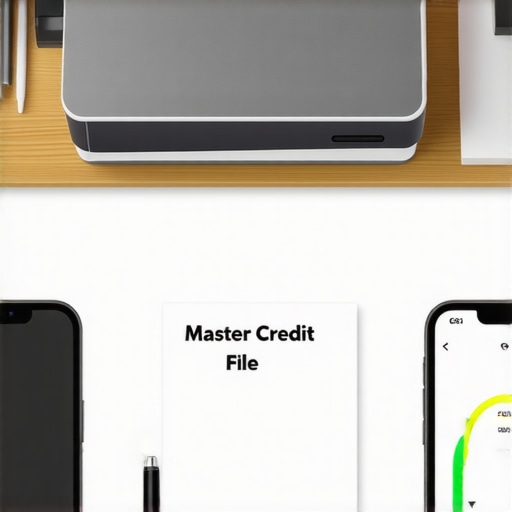 As we move further into 2025, the game is shifting significantly. Lenders are moving away from static snapshots and toward ‘Trended Data’ found in models like FICO 10T. According to the National Consumer Assistance Plan (NCAP) guidelines, bureaus are being pushed toward higher standards for public record accuracy, but they are also getting better at spotting ‘artificial’ score boosts like temporary authorized user tradelines. This means your historical behavior—how you handle debt over a 24-month window—matters more than a quick fix today. You need to be looking at the ultimate guide to dispute errors and credit building in 2025 to understand how these new algorithms track your trajectory. My most advanced tip for you today? Get your hands on the one document that kills a junk debt buyers case: the original contract with your physical or digital signature. Most debt buyers only purchase a spreadsheet of names and amounts. If they can’t produce that contract upon demand, they cannot legally report the debt under the Fair Credit Reporting Act. Go through your report tonight, find one old ‘charged off’ account, and send a ‘Request for Original Contract’ to the debt buyer. Don’t ask them to verify it; demand the source document. You’ll be surprised how quickly they fold when they realize you aren’t just another person using a generic template.
What I Wish I Knew Before I Sent My First Dispute
Looking back at my stack of rejected letters, I realize the biggest mistake was thinking the bureau was a judge; they are actually just data librarians. Here are the lightbulb moments that changed everything for me. First, precision beats passion every time. Telling a bureau ‘this is unfair’ gets you nowhere, but highlighting a specific date discrepancy forces a human to look. Second, I learned that why your fico score and your banks app never match is often a feature of reporting cycles, not a bug, so don’t panic over minor fluctuations. Finally, I realized that the most powerful tool in my belt wasn’t a template I found online; it was my home printer and a pack of certified mail envelopes that left a legally binding trail of receipt.
#IMAGE_PLACEHOLDER_E#
The Toolkit I Use to Keep My Score Above 800
I don’t leave my financial health to chance anymore. I rely on a few specific resources to stay ahead of the game. For deep dives into the changing algorithm, I always consult the ultimate guide to dispute errors and credit building in 2025 because it covers the shift toward trended data. I also keep a physical ‘Master File’—a binder where I store every ‘Letter of Satisfaction’ and final billing statement I’ve ever received. For daily maintenance, I follow the 2 trick for keeping an old credit card active, which prevents my oldest accounts from being closed due to neglect. I also highly recommend using a high-resolution document scanner to ensure your credit repair tips correcting dispute errors effectively are backed by crisp, unassailable proof.
Your Path to Financial Freedom Starts Tonight
You now have the exact roadmap I used to stop feeling like a victim of a cold algorithm. By following the credit repair blueprint fixing errors and strengthening your financial profile, you are taking back control of your own financial narrative. It might take thirty days, or it might take six months, but the version of you that has a clean report and lower interest rates is waiting on the other side of that first certified letter. You have the proof, you have the strategy for mastering credit repair dispute errors and fico optimization, and now you have the momentum. Go get the score you deserve. Have you ever felt like a credit bureau was just ignoring your proof? Let me know your experience in the comments below.