
I still remember the cold sweat that broke out on my neck when I looked at my credit report and saw a 30-day late payment flag on an old credit card. It was a complete lie. I knew deep in my bones that I had paid that bill on time, but the customer service representative on the phone didn’t care about my memories. They wanted cold, hard proof. Early in my financial journey, I made the amateur mistake of thinking a polite phone call and a desperate plea would make bureaus update a closed account. It didn’t. I spent months sending generic letters, only to get slammed with frustrating, automated rejection notices. That was my lightbulb moment: the credit bureaus and major banks don’t care about your stories, they only care about cold, undeniable paper trails.
The Unbeatable Proof Sitting in Your Checking Account
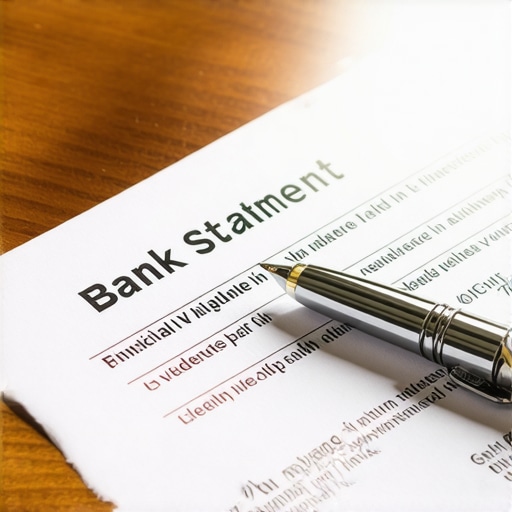
When you are fighting a credit reporting error, you are engaging in a system that is highly automated and heavily biased toward the creditor’s initial report. To win, you need to disrupt that automation with absolute facts. This is where your monthly bank statement comes in as the ultimate weapon. Unlike a handwritten note or a typed-out explanation, a bank statement is a legally regulated document that details exactly when money left your possession and where it went. If a creditor claims you missed a payment deadline, showing a line-item transaction from your bank from that exact week is the equivalent of showing up with video evidence. Armed with the right documentation, you can confidently engage in correcting dispute errors effectively without relying on expensive third-party services.
Is dug-up bank paperwork actually worth the hassle?
You might be wondering if digging through years of PDF statements is really worth your limited Saturday afternoon. The short answer is an absolute yes. According to a landmark study by the Federal Trade Commission (FTC), nearly one in five consumers has an error on at least one of their credit reports. When you submit a dispute without physical evidence, the bureau’s automated system often dismisses it as frivolous. However, when you attach a clear bank statement highlighting the exact transaction, you provide the documentation that proves a payment was made on time, which legally obligates the credit bureau to conduct a manual investigation. Have you ever had a credit bureau summarily reject your dispute because you didn’t include enough hard evidence?
How a Paper Trail Outsmarts Automated Rejections
Many folks make the mistake of using generic dispute templates they found online, hoping for a quick fix. But if you want a better FICO score, you have to bypass the basic algorithms. When a dispute processor opens your file and sees a highlighted bank statement matching your claims, their ability to hit the “reject” button vanishes. Your bank statement is an official financial record that a creditor cannot easily dispute without looking like they are committing accounting fraud. If you’ve been struggling to get traction on your credit journey, pairing your bank records with strategic steps like correcting dispute errors for better FICO in 2025 will put you lightyears ahead of the crowd. It’s time to stop begging for corrections and start demanding them with hard proof.
Step-by-Step Execution of the Bank Statement Strategy
Getting your hands on your records is only half the battle. If you just send a massive 30-page PDF of your monthly bank statements to a credit bureau, they will likely toss it into the automated rejection pile. When I was trying to fix a stubborn late-payment error on my auto loan, I made the mistake of sending an unedited, raw statement. The processor ignored it completely. To win, you must act as your own forensic accountant and present the data so clearly that a five-year-old could understand it.
Highlight the exact moment the money moved
First, log into your online banking portal and download the official PDF statement for the month in question. Do not take a low-resolution screenshot of your banking app on your phone, as bureaus often reject these due to quality guidelines. Open the PDF on your computer and locate the line item showing the payment. Use a digital PDF highlighter tool to mark the date of the transfer, the payment amount, and the recipient’s name. By presenting a clean, targeted document, you provide the documentation that proves a payment was made on time in a format that cannot be ignored.
Draft a highly specific dispute letter
Forget the generic templates floating around online forums. Your letter should be brief and businesslike. State the name of the creditor, the account number, and the exact date of the disputed transaction. Point directly to your attached bank statement. Write something simple, like: “Please find attached my official bank statement for October 2024. Line item 14 shows a payment of $250 cleared my account on October 12th, three days before the due date.” If you are dealing with closed accounts, you can leverage the paperwork that forces a bureau to update a closed account to ensure your historical data is accurately reflected on your FICO profile.
How to Bypass the Bureau Automated Sorting Systems
Credit bureaus use scanning machines to sort incoming mail and categorize disputes. If your paperwork looks like a generic credit repair template, the scanner automatically flags it. To beat this, print your dispute letter and your highlighted bank statement on physical paper. Write your name and address by hand on the envelope, and mail it via Certified Mail with a return receipt requested. This physical paper trail forces a human mailroom worker to open the envelope and manually upload your highlighted proof into the system.
What to do if the bureau plays dumb
Sometimes, despite your flawless paper trail, a credit bureau will send back a canned letter claiming your dispute is “frivolous” or that they could not verify the information. Do not panic, and definitely do not give up. This is a common stalling tactic. Your next move is to write back immediately, referencing your certified mail receipt number and demanding a manual reinvestigation. Understanding how to handle a bureau that says your dispute is frivolous is a crucial skill that separates people who give up from those who actually succeed in cleaning up their credit history.
Keep your financial momentum going
While you wait for the credit bureaus to investigate your dispute, you should continue optimizing the other areas of your profile. Consistently managing your active credit accounts is key. If you are struggling with low scores because of high balances, applying techniques like the secret to using small balances to boost your score will keep your FICO trending upward while your disputes are being processed. Every small action adds up to a stronger financial profile.
Everyone online tells you that disputing credit errors is a simple numbers game. They say if you throw enough automated letters at the wall, something will eventually stick. In my experience, this shotgun approach is the fastest way to get your file red-flagged. The credit bureaus are not stupid. They process millions of disputes monthly using highly advanced artificial intelligence designed specifically to spot amateur, mass-mailed templates. If you want to actually win, you have to realize that the secret isn’t sending more letters; it is sending undeniable, surgical proof that forces a human eyes-on review.
Why disputing every negative item at once is a major trap
One of the biggest mistakes I see folks make when they get excited about fixing their credit is trying to clean house overnight. They find five or six negative items and dispute them all in a single letter. When you do this, the credit bureau’s automated system instantly flags your account for suspicious activity. According to data from the Consumer Financial Protection Bureau (CFPB), bulk disputes are heavily correlated with automated credit repair software, which gives the bureaus a legal loophole to dismiss your entire dispute package as frivolous. Instead of a clean slate, you end up with a blocked account and zero progress. To keep your file looking clean and credible, you should learn why you should not dispute every negative item at once before sending your next mailer.

Another nuance that most beginners miss is the danger of relying on online dispute portals. Clicking that easy “dispute” button on a bureau’s website seems convenient, but it forces you to waive your rights under the Fair Credit Reporting Act (FCRA) to a full, manual reinvestigation. You are essentially pre-selecting their simplified, automated options, which rarely result in permanent deletions. If you are serious about your financial health, you need to step away from the quick-fix apps. Instead, utilize comprehensive credit building strategies correcting dispute errors for better FICO in 2025 that rely on physical paper, registered mail, and undeniable bank evidence.
Have you ever fallen into this trap and had a bureau reject your online dispute within 24 hours? Let me know in the comments below! If you are currently dealing with a stubborn credit mark, stop sending automated templates and start gathering your bank statements. Taking control of your credit journey requires patience, but presenting a bulletproof paper trail is the only way to guarantee a higher score and long-term financial freedom.
Once you break through the automated defenses of the credit bureaus and successfully remove a major error, the temptation is to wipe your brow, close your laptop, and never look at a credit report again. I did that once. Within nine months, an old, closed store card account mysteriously re-reported with an incorrect late flag, and my FICO score plummeted 45 points overnight because I wasn’t paying attention. Cleaning up your history is only half the battle; building a permanent fortress around your credit profile is where the real financial freedom lies. Today, I do not rely on expensive credit repair agencies or automated apps to protect my hard work. I use a manual, highly deliberate checklist that keeps my profile clean and keeps my lenders happy.
How do I maintain my credit score over time without burning out?
The secret is systematizing your routine so it takes less than ten minutes a month. Personally, I do not check my credit every single day; that is a fast track to anxiety and won’t help you catch long-term systemic errors anyway. Instead, I schedule a calendar alert for the first Saturday of every quarter. During this session, I pull my raw report directly. While many people use popular free apps, I highly advise against it because they hide the deep metadata. Instead, you should know why you should always request a paper credit report directly from the bureaus to verify the underlying account codes. I manually match these paper files against my active bank statements, looking for any subtle changes in credit limits or payment dates that could drag down my FICO score.

For my live tracking, I completely avoid generic monitoring platforms. Instead, I rely directly on the official Experian and MyFICO credit monitoring portals. Why? Because they use the actual FICO 8 and FICO 9 scoring algorithms that auto lenders and mortgage brokers use, rather than the highly volatile VantageScore models. According to credit industry expert John Ulzheimer, former manager at FICO and Equifax, checking a non-FICO score is like checking the temperature in Celsius when your entire world runs on Fahrenheit—it simply does not give you the actionable data you need. If you want to keep your file pristine, learning how to monitor your credit for small changes that matter will save you from devastating surprises down the road.
Looking ahead, the landscape of credit building is shifting rapidly. By 2026, we will see the widespread adoption of FICO 10T, a trend-ed data model that looks at your financial habits over a rolling 24-month window rather than just a snapshot of today. This means temporary credit utilization spikes will have a more lasting impact. If you want to stay ahead of this trend, my biggest recommendation is to start practicing the ’15-day rule’ immediately. Pay your credit card balances down to less than 6% exactly fifteen days before your statement closing date, and then pay the remaining balance off on the actual due date. My personal challenge to you today is to log into your primary credit card portal right now, find your statement closing date, and set a recurring calendar alert to make a payment fifteen days before that date. This single habit will keep your utilization optimized and insulate your FICO score from any future algorithm updates.
The Hardest Lesson I Learned Fighting Credit Errors
When I started, I fell into the trap of thinking the system wanted to help me. I believed that pointing out a mistake would trigger a quick correction because it was the ‘right’ thing to do. That naive belief cost me months of progress. I quickly learned that the dispute process is a cold, calculated legal game. The bureaus do not care about fairness; they care about liability. If you do not force their hand with irrefutable proof, your file is dropped into an automated rejection queue. Once you accept this reality, you can stop pleading and start strategizing. Discovering mastering credit repair dispute errors and fico optimization was my turning point, shifting my focus from sending emotional letters to presenting bulletproof legal evidence.
The Toolkit I Trust to Maintain a Bulletproof Score
You do not need to pay thousands of dollars to shady agencies to protect your financial profile. Over the years, I have built a lean, highly effective toolkit that keeps my report pristine with minimal effort. First, I completely ignore free credit monitoring estimators and instead retrieve my official raw data to check the underlying metadata. I highly recommend learning why you should always request a paper credit report to spot systemic reporting mistakes that digital dashboards hide. Second, I rely heavily on Certified Mail with Return Receipt Requested for every single communication. This creates a legal timeline that credit bureaus cannot dispute in court. Finally, I use basic digital highlighter tools to dissect my banking statements before mailing them. Presenting clean, high-contrast visual evidence is the single best way to ensure a human processor actually reviews your dispute.
Your Turn to Stop Accepting System Errors
Your credit score dictates your financial freedom, from your mortgage rate to the price you pay for car insurance. Do not let a bureaucratic reporting error hold your life back or drain your bank account. Take what you have learned here today, log into your banking portal, pull your statements, and start building your undeniable paper trail. You have the power to force these bureaus to fix their mistakes; you just have to present the evidence they cannot ignore. Consistency and hard facts are your best weapons on this journey. Have you ever tried to dispute an incorrect credit mark online only to have it rejected instantly? Let me know your experience in the comments below!