

I remember the exact moment my stomach dropped. I was sitting in a dimly lit office in downtown Dallas, holding a fresh rejection letter for a car loan. I had a solid job, no debt, and I’d never missed a payment in my life. I thought I was a financial rockstar. But the lender saw things differently. ‘Your file is too thin,’ he said, barely looking up from his monitor. ‘You just haven’t been in the system long enough.’ It felt personal, like being told I wasn’t mature enough to sit at the grown-up table. I’d spent years avoiding credit cards, thinking I was staying out of trouble, but in the eyes of a bank, I was a ghost. This was my wake-up call: in the world of lending, time is a currency all its own. Today, I’m going to pull back the curtain on why the length of your credit history is often the silent killer of loan applications and how you can stop the bleeding. Have you ever felt like you were doing everything right, only to be told your history wasn’t ‘deep’ enough?
The Day My Perfect Balance Wasn’t Enough
That rejection letter sent me down a rabbit hole. I realized that my strategy of paying for everything in cash had backfired. I was trying to build a future without a past. I eventually got a credit card, but then I made a massive rookie mistake: I closed it a year later because I didn’t like the annual fee. I thought I was being tidy. Instead, I was committing what I now know is one of the biggest blunders: why closing your oldest account is a financial mistake. When you close an account, you eventually lose the ‘age’ it contributes to your profile. If you are just starting out and don’t want to make the same mistakes I did, you should read up on how to build credit when you’re starting from zero. According to FICO, the length of your credit history accounts for roughly 15% of your FICO score calculation. That is a massive chunk of your financial reputation determined solely by how long you’ve been playing the game.
Does a long history really move the needle on interest rates?
You might be skeptical. Does a lender really care if I’ve had a card for ten years versus two? The answer is a resounding yes. It’s all about risk prediction. A longer history gives lenders a larger sample size of your behavior. Think of it like a sourdough starter; you can’t fake the flavor that comes with years of cultivation. I learned this the hard way when I finally qualified for a mortgage but was hit with a higher interest rate because my average account age was so low. That slight percentage difference can cost you tens of thousands of dollars over the life of a loan. If you’re curious about how these numbers fluctuate, it’s worth checking out the truth about how often your FICO score actually updates.
Your Oldest Accounts Are Your Best Friends
I used to think of my credit report as a list of debts to be cleared. Now, I see it as a resume of my reliability. Every old account, even that dusty store card you haven’t used since 2018, is a testimonial to your stability. When I was trying to fix my score, I almost fell for the trap of ‘cleaning up’ my report by removing anything I wasn’t currently using. Thankfully, I learned about the proper way to close a credit card to minimize impact before I did more damage. Lenders aren’t just looking for a high number; they are looking for ‘seasoned’ credit. They want to see how you handled a recession, a job change, or a move five years ago. Without that history, you’re just a stranger asking for a lot of money, and banks don’t like surprises.
Check Your History Before the Banks Do
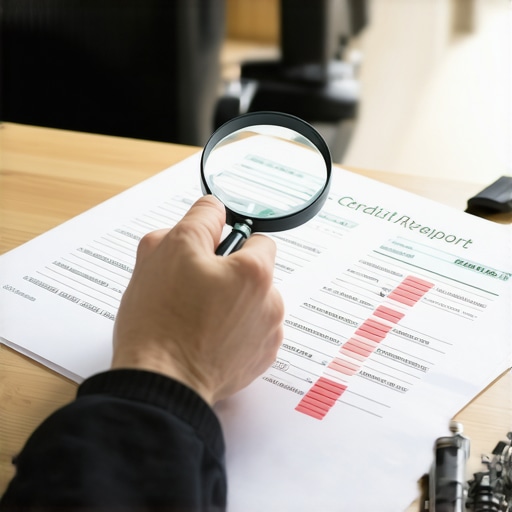
You can’t fix what you can’t see. Most people wait until they are sitting across from a loan officer to find out their history is too thin. I learned to be proactive by performing my own deep dives. You need to how to audit your own credit report for 10 common mistakes at least once a year. Think of your credit report like a garden; if you don’t pull the weeds of incorrect dates or closed accounts that should be open, the whole landscape looks messy to a lender. When I first started auditing my own file, I found an old utility bill from a college apartment that was still showing as an open balance even though it was settled. That tiny error was making my file look unstable.
Find the Date Your Old Debt Actually Falls Off
Timing is everything when you are dealing with negative items that drag down your average age. If you have old collections that are about to age out, you need to know exactly when that happens. I once spent weeks trying to dispute a debt that was six years and eleven months old. If I had just waited thirty more days, it would have disappeared on its own. You should learn how to find the exact date your old debt will fall off to avoid poking a sleeping bear and accidentally resetting a statute of limitations.
Clean Up the Mess Left by Automated Systems
The credit bureaus aren’t perfect. Their software often glitches, creating ghost accounts or duplicates that wreak havoc on your average account age. I once discovered a duplicate entry for an old retail card. It looked like I had two accounts opened on the same day, which confused the algorithm and lowered my overall age of accounts. I had to learn how to properly remove a duplicate account from your report without accidentally deleting the original seasoned history. It’s a delicate dance between clearing errors and keeping the age that helps your FICO score.
Stop AI from Trashing Your Hard Work
When you send a dispute, it is usually read by a machine first, not a human. If your letter looks like every other template online, the system flags it as frivolous. To get a real pair of eyes on your file, you have to know how to stop AI from automatically rejecting your dispute letter. I started using handwritten notes and specific phrasing in my certified mail, which forces a manual scan and often leads to more favorable results. This is a core part of the ultimate guide to dispute errors and credit building in 2025.
Turn Your Utility Bills Into Credit Builders
If your file is thin, you need to fatten it up with data that banks usually ignore. For years, I paid my electric and water bills on time, but they did nothing for my FICO score. That is a missed opportunity. You should investigate why your utility bill history could save your mortgage application. By using reporting services, you can essentially back-date your credit history using bills you have already been paying for years. It is like getting credit for a class you already finished; it adds immediate depth to your profile without you having to wait another five years.
Use Small Limits to Your Advantage
You do not need a ten-thousand-dollar limit to build a long history. In fact, why small limit cards are better for building credit fast is a secret many financial gurus ignore. They are easier to manage and keep open indefinitely because the risk is lower. To keep those accounts active and reporting positive age, try how a 10 amazon purchase can boost your score every month. It keeps the account thumping in the eyes of the bureau without costing you a fortune in interest. Pair this with knowing the best day of the month to pay your credit card bill to ensure your utilization looks perfect when the snapshot is taken.
Why Sitting at Zero Actually Slows Your Growth
Most financial gurus will tell you that the path to a perfect score is paved with zero balances. I used to believe that myself, until I realized the algorithm often treats a zero-balance report the same way a teacher treats a student who skipped the exam: they can’t give you an ‘A’ if they have no data to grade. This is the counterintuitive truth about why a zero balance is not always the best for your score. If the bureaus don’t see any active utilization, they might stop calculating your score altogether or lower your ranking because you aren’t demonstrating an active ability to manage revolving debt. I recommend keeping a tiny balance—less than 1%—on just one card to prove the lights are still on in your credit profile.
Does the FICO 10T Shift Change How You Should Spend?
For decades, we’ve been told that your credit score is a snapshot of a single moment in time. However, the industry is moving toward ‘trended data,’ which looks at your behavior over a 24-month rolling window. Understanding the logic behind the fico 10t trended data shift 2 is essential for anyone planning a major purchase like a home. In the old days, you could pay down your cards 30 days before applying for a mortgage and look like a hero. With 10T, the lender sees that you carried high balances for the last year and only recently cleaned up your act. This shift emphasizes that consistent habits are now more important than last-minute fixes.
Keep the Human in the Loop During Disputes
One of the most dangerous traps you can fall into is the ‘automation shortcut.’ I see people all the time who think that clicking a few buttons in a credit monitoring app counts as a real dispute. Unfortunately, the danger of using credit repair software without a plan is that it generates cookie-cutter letters that the bureaus’ automated systems instantly flag as frivolous. A landmark study by the Consumer Financial Protection Bureau (CFPB) highlighted that nearly one-third of consumers face significant hurdles when their disputes are processed by automated systems rather than human reviewers. To get actual results, you must learn how to force a manual review when the bureau robots say no. It requires physical evidence, certified mail, and a paper trail that no algorithm can ignore. This is a core pillar of mastering fico proven strategies to improve your credit dispute score. By refusing to let a machine decide your financial fate, you take back control of your history. Have you ever fallen into this trap of relying on automated ‘one-click’ disputes? Let me know in the comments.
I’ve spent thousands of hours in the trenches of credit repair, and if there’s one thing I’ve learned, it’s that the shiny apps on your phone are mostly toys. If you’re serious about scaling your score and keeping it there, you need a physical toolkit. I keep a physical ‘Credit Bible’—a simple three-ring binder where I store every piece of correspondence, every certified mail receipt, and every response from the bureaus. This isn’t just me being old school; it’s a strategic defense. If you ever have to sue a bureau for non-compliance, your digital screenshots won’t carry half the weight of a physical paper trail. You need to master the specific log you need to keep when calling bureaus because phone reps are notoriously inconsistent with their notes.
How do I maintain a high score over the long haul?
Maintenance is less about grand gestures and more about the boring, repetitive tasks. I’ve found that the habit of high score achievers checking reports every 30 days is the only way to catch ‘zombie’ errors before they calcify. I personally set a calendar alert for the first Sunday of every month. I don’t just look at the score; I look for new addresses, misspelled employers, or ‘soft’ inquiries I don’t recognize. To do this properly, you have to stop relying on simplified mobile views. You need the raw data, which is why you should always request a paper credit report directly from the bureaus at least once a year.  The National Consumer Law Center (NCLC) has repeatedly warned that automated ‘e-OSCAR’ systems often fail to convey the actual evidence consumers submit to creditors during a dispute. This is why I double down on physical evidence and manual reviews. Looking ahead, I predict that ‘Social Credit’ scoring—measuring your reliability through non-traditional data like subscription services and utility habits—will become the primary way lenders judge borrowers. This makes effective dispute error resolution to boost your credit score in 2025 even more critical, as more data points mean more opportunities for the system to glitch. If you want to jump ahead of the curve, try my favorite advanced tip: start your own ‘Credit Bible’ today. Log every interaction and use physical mail for anything important. This simple shift in discipline is what separates the 800-club members from everyone else. This methodology is a core pillar of the ultimate guide to dispute errors and credit building in 2025.I remember the exact moment my stomach dropped. I was sitting in a dimly lit office in downtown Dallas, holding a fresh rejection letter for a car loan. I had a solid job, no debt, and I’d never missed a payment in my life. I thought I was a financial rockstar. But the lender saw things differently. ‘Your file is too thin,’ he said, barely looking up from his monitor. ‘You just haven’t been in the system long enough.’ It felt personal, like being told I wasn’t mature enough to sit at the grown-up table. I’d spent years avoiding credit cards, thinking I was staying out of trouble, but in the eyes of a bank, I was a ghost. This was my wake-up call: in the world of lending, time is a currency all its own. Today, I’m going to pull back the curtain on why the length of your credit history is often the silent killer of loan applications and how you can stop the bleeding. Have you ever felt like you were doing everything right, only to be told your history wasn’t ‘deep’ enough?
The Day My Perfect Balance Wasn’t Enough
That rejection letter sent me down a rabbit hole. I realized that my strategy of paying for everything in cash had backfired. I was trying to build a future without a past. I eventually got a credit card, but then I made a massive rookie mistake: I closed it a year later because I didn’t like the annual fee. I thought I was being tidy. Instead, I was committing what I now know is one of the biggest blunders: why closing your oldest account is a financial mistake. When you close an account, you eventually lose the ‘age’ it contributes to your profile. If you are just starting out and don’t want to make the same mistakes I did, you should read up on how to build credit when you’re starting from zero. According to FICO, the length of your credit history accounts for roughly 15% of your FICO score calculation. That is a massive chunk of your financial reputation determined solely by how long you’ve been playing the game.
Does a long history really move the needle on interest rates?
You might be skeptical. Does a lender really care if I’ve had a card for ten years versus two? The answer is a resounding yes. It’s all about risk prediction. A longer history gives lenders a larger sample size of your behavior. Think of it like a sourdough starter; you can’t fake the flavor that comes with years of cultivation. I learned this the hard way when I finally qualified for a mortgage but was hit with a higher interest rate because my average account age was so low. That slight percentage difference can cost you tens of thousands of dollars over the life of a loan. If you’re curious about how these numbers fluctuate, it’s worth checking out the truth about how often your FICO score actually updates.
Your Oldest Accounts Are Your Best Friends
I used to think of my credit report as a list of debts to be cleared. Now, I see it as a resume of my reliability. Every old account, even that dusty store card you haven’t used since 2018, is a testimonial to your stability. When I was trying to fix my score, I almost fell for the trap of ‘cleaning up’ my report by removing anything I wasn’t currently using. Thankfully, I learned about the proper way to close a credit card to minimize impact before I did more damage. Lenders aren’t just looking for a high number; they are looking for ‘seasoned’ credit. They want to see how you handled a recession, a job change, or a move five years ago. Without that history, you’re just a stranger asking for a lot of money, and banks don’t like surprises.
Check Your History Before the Banks Do
You can’t fix what you can’t see. Most people wait until they are sitting across from a loan officer to find out their history is too thin. I learned to be proactive by performing my own deep dives. You need to how to audit your own credit report for 10 common mistakes at least once a year. Think of your credit report like a garden; if you don’t pull the weeds of incorrect dates or closed accounts that should be open, the whole landscape looks messy to a lender. When I first started auditing my own file, I found an old utility bill from a college apartment that was still showing as an open balance even though it was settled. That tiny error was making my file look unstable.
Find the Date Your Old Debt Actually Falls Off
Timing is everything when you are dealing with negative items that drag down your average age. If you have old collections that are about to age out, you need to know exactly when that happens. I once spent weeks trying to dispute a debt that was six years and eleven months old. If I had just waited thirty more days, it would have disappeared on its own. You should learn how to find the exact date your old debt will fall off to avoid poking a sleeping bear and accidentally resetting a statute of limitations.
Clean Up the Mess Left by Automated Systems
The credit bureaus aren’t perfect. Their software often glitches, creating ghost accounts or duplicates that wreak havoc on your average account age. I once discovered a duplicate entry for an old retail card. It looked like I had two accounts opened on the same day, which confused the algorithm and lowered my overall age of accounts. I had to learn how to properly remove a duplicate account from your report without accidentally deleting the original seasoned history. It’s a delicate dance between clearing errors and keeping the age that helps your FICO score.
Stop AI from Trashing Your Hard Work
When you send a dispute, it is usually read by a machine first, not a human. If your letter looks like every other template online, the system flags it as frivolous. To get a real pair of eyes on your file, you have to know how to stop AI from automatically rejecting your dispute letter. I started using handwritten notes and specific phrasing in my certified mail, which forces a manual scan and often leads to more favorable results. This is a core part of the ultimate guide to dispute errors and credit building in 2025.
Turn Your Utility Bills Into Credit Builders
If your file is thin, you need to fatten it up with data that banks usually ignore. For years, I paid my electric and water bills on time, but they did nothing for my FICO score. That is a missed opportunity. You should investigate why your utility bill history could save your mortgage application. By using reporting services, you can essentially back-date your credit history using bills you have already been paying for years. It is like getting credit for a class you already finished; it adds immediate depth to your profile without you having to wait another five years.
Use Small Limits to Your Advantage
You do not need a ten-thousand-dollar limit to build a long history. In fact, why small limit cards are better for building credit fast is a secret many financial gurus ignore. They are easier to manage and keep open indefinitely because the risk is lower. To keep those accounts active and reporting positive age, try how a 10 amazon purchase can boost your score every month. It keeps the account thumping in the eyes of the bureau without costing you a fortune in interest. Pair this with knowing the best day of the month to pay your credit card bill to ensure your utilization looks perfect when the snapshot is taken.
Why Sitting at Zero Actually Slows Your Growth
Most financial gurus will tell you that the path to a perfect score is paved with zero balances. I used to believe that myself, until I realized the algorithm often treats a zero-balance report the same way a teacher treats a student who skipped the exam: they can’t give you an ‘A’ if they have no data to grade. This is the counterintuitive truth about why a zero balance is not always the best for your score. If the bureaus don’t see any active utilization, they might stop calculating your score altogether or lower your ranking because you aren’t demonstrating an active ability to manage revolving debt. I recommend keeping a tiny balance—less than 1%—on just one card to prove the lights are still on in your credit profile.
Does the FICO 10T Shift Change How You Should Spend?
For decades, we’ve been told that your credit score is a snapshot of a single moment in time. However, the industry is moving toward ‘trended data,’ which looks at your behavior over a 24-month rolling window. Understanding the logic behind the fico 10t trended data shift 2 is essential for anyone planning a major purchase like a home. In the old days, you could pay down your cards 30 days before applying for a mortgage and look like a hero. With 10T, the lender sees that you carried high balances for the last year and only recently cleaned up your act. This shift emphasizes that consistent habits are now more important than last-minute fixes.
Keep the Human in the Loop During Disputes
One of the most dangerous traps you can fall into is the ‘automation shortcut.’ I see people all the time who think that clicking a few buttons in a credit monitoring app counts as a real dispute. Unfortunately, the danger of using credit repair software without a plan is that it generates cookie-cutter letters that the bureaus’ automated systems instantly flag as frivolous. A landmark study by the Consumer Financial Protection Bureau (CFPB) highlighted that nearly one-third of consumers face significant hurdles when their disputes are processed by automated systems rather than human reviewers. To get actual results, you must learn how to force a manual review when the bureau robots say no. It requires physical evidence, certified mail, and a paper trail that no algorithm can ignore. This is a core pillar of mastering fico proven strategies to improve your credit dispute score. By refusing to let a machine decide your financial fate, you take back control of your history. Have you ever fallen into this trap of relying on automated ‘one-click’ disputes? Let me know in the comments.
I’ve spent thousands of hours in the trenches of credit repair, and if there’s one thing I’ve learned, it’s that the shiny apps on your phone are mostly toys. If you’re serious about scaling your score and keeping it there, you need a physical toolkit. I keep a physical ‘Credit Bible’—a simple three-ring binder where I store every piece of correspondence, every certified mail receipt, and every response from the bureaus. This isn’t just me being old school; it’s a strategic defense. If you ever have to sue a bureau for non-compliance, your digital screenshots won’t carry half the weight of a physical paper trail. You need to master the specific log you need to keep when calling bureaus because phone reps are notoriously inconsistent with their notes.
How do I maintain a high score over the long haul?
Maintenance is less about grand gestures and more about the boring, repetitive tasks. I’ve found that the habit of high score achievers checking reports every 30 days is the only way to catch ‘zombie’ errors before they calcify. I personally set a calendar alert for the first Sunday of every month. I don’t just look at the score; I look for new addresses, misspelled employers, or ‘soft’ inquiries I don’t recognize. To do this properly, you have to stop relying on simplified mobile views. You need the raw data, which is why you should always request a paper credit report directly from the bureaus at least once a year. The National Consumer Law Center (NCLC) has repeatedly warned that automated ‘e-OSCAR’ systems often fail to convey the actual evidence consumers submit to creditors during a dispute. This is why I double down on physical evidence and manual reviews. Looking ahead, I predict that ‘Social Credit’ scoring—measuring your reliability through non-traditional data like subscription services and utility habits—will become the primary way lenders judge borrowers. This makes effective dispute error resolution to boost your credit score in 2025 even more critical, as more data points mean more opportunities for the system to glitch. If you want to jump ahead of the curve, try my favorite advanced tip: start your own ‘Credit Bible’ today. Log every interaction and use physical mail for anything important. This simple shift in discipline is what separates the 800-club members from everyone else. This methodology is a core pillar of the ultimate guide to dispute errors and credit building in 2025.
The Costly Lessons I Learned While Waiting for My Credit to Mature
Looking back at my journey from that Dallas rejection to an 800+ score, a few lightbulb moments stand out. First, I realized that patience is an active strategy, not a passive one. You can’t rush time, but you can ensure every month counts by never missing a payment. Second, I learned that expert tips for correcting credit errors are only useful if you have a foundation of aged accounts to support them. Finally, I discovered that my credit report isn’t a grade on my worth; it’s a living document of my financial reliability. If you’re feeling stuck, remember that credit building strategies take time to marinate. Don’t let a slow-moving score discourage you from the long-term goal.
The Toolkit That Keeps My FICO Score Above 800
I don’t leave my financial future to chance, and neither should you. My personal ‘Credit Bible’ is my most trusted tool, but I also rely on a few specific resources. I highly recommend visiting AnnualCreditReport.com to get your official disclosures, as they are more detailed than what you see on most apps. I also swear by the habit that keeps your fico score above 780 every month, which involves a deep-dive audit every 30 days. For those dealing with stubborn inaccuracies, the CFPB’s Consumer Complaint Database is an essential secondary resource to use when the bureaus refuse to cooperate with your physical evidence.
Take Control of Your Financial Narrative Today
Your credit history is the story of your financial life. While you can’t change the past, you can start building a more robust and seasoned future starting right now. Whether you are using credit repair secrets to resolve disputes or simply letting your oldest accounts grow, the key is consistency. Don’t wait for a lender to tell you your file is too thin—go out there and prove your reliability one month at a time. Have you ever closed an old account and watched your score drop unexpectedly? Let me know your experience in the comments below!