

I remember sitting across from a loan officer named Greg about three years ago, watching him frown at a computer screen that seemed to hold my entire future. The room smelled of stale coffee and ink, and the silence was deafening. I had a solid job, a decent down payment saved up, and I had never missed a payment in my life. Yet, Greg looked at me and said the words that still haunt me: “Your credit file is just too thin.” I felt like a ghost. I had been paying my electric, water, and gas bills religiously for a decade, but because I avoided credit cards like the plague, the system didn’t think I existed. It was a crushing realization that led me down a rabbit hole of credit building strategies to finally prove I was a responsible adult. Today, I am going to show you exactly how to stop being a credit ghost and use your mundane utility history to bridge that gap between a rejection and a set of new house keys. We are going to solve the “thin file” problem by leveraging data you are already creating every single month. [image_placeholder_1]
Get Credit for Every Dollar You Spend
The reality is that conventional scoring models are often as outdated as a flip phone in a 5G world. For years, the big bureaus only cared about debt—how much you owed and how well you paid it back. They completely ignored the fact that you’ve kept the lights on and the water running without a single hiccup. This is where the game changes. By using specific tools to report your utility history, you can potentially see an immediate bump in your score. I learned this the hard way after I made a massive dispute error early on. I had a small disagreement with a water company over a $40 surcharge and let it sit there, thinking it wouldn’t affect my mortgage. I was dead wrong. Every piece of data counts when you are on the edge of a lender’s approval threshold. If you are just starting out, knowing how to build credit when you are starting from zero is crucial, and utilities are the lowest-hanging fruit available to you.
Does the Bank Really Care About My Electric Bill?
It is natural to be skeptical. You might wonder if a mortgage lender actually looks at your gas bill and thinks, “Wow, this person is a great bet for a 30-year loan.” The answer isn’t just about the human lender; it’s about the algorithm they use. According to a study by FinRegLab, the inclusion of utility and cash-flow data can significantly increase the number of people who qualify for credit by providing a more complete picture of financial behavior. When you use services that report these payments, you are effectively padding your file with positive data points. I’ve seen friends add twenty points to their score just by linking their accounts. You can even learn how to use your cell phone account to pad your credit profile, which is another hidden gem in the FICO world. Have you ever been told your credit file was “too thin” or felt frustrated that your on-time utility payments weren’t being counted toward your score? Let me know in the comments, because you aren’t alone. Understanding why your phone bill data might be the missing FICO link is the first step toward building a profile that lenders can’t ignore. Now, let’s get into the nitty-gritty of how to set this up without making the same mistakes I did.The first step isn’t just signing up for a service; it’s doing a deep-dive audit of your own records. Think of your credit report like a legal brief you’re presenting to a judge. You wouldn’t include a witness who might accidentally incriminate you. Before you even think about reporting your gas or electric payments, you need to perform the simple way to proofread your credit report for identity errors to ensure your basic file is clean. If your name is misspelled or your address is wrong, the utility data might not even latch onto your profile correctly.
Audit Your Bills Like a Forensic Accountant
Open your last twelve months of statements for every utility you pay—water, gas, electric, trash, and even your phone. You are looking for ‘clean streaks.’ A clean streak is at least six months of consecutive on-time payments. If you have a single late payment in the last year, skip that specific account for now. It is much safer to use how to use credit builder loans to establish a solid profile if your utility history is spotty. Reporting a bill that has a recent 30-day late flag is like inviting a wolf into the sheepfold; it will do more damage than good.
Choose Your Three Most Reliable Accounts
You don’t need to report every single bill. In fact, most algorithms only need two or three solid data points to begin recalculating your risk level. I recommend starting with your cell phone and your primary electric bill. These are the heavy hitters. If you encounter issues where a bureau won’t accept your data, you’ll need to gather the documentation that forces a bureau to manually verify your data or use the specific phrase that triggers a human review of your dispute. This is your insurance policy against a ‘no-match’ error. 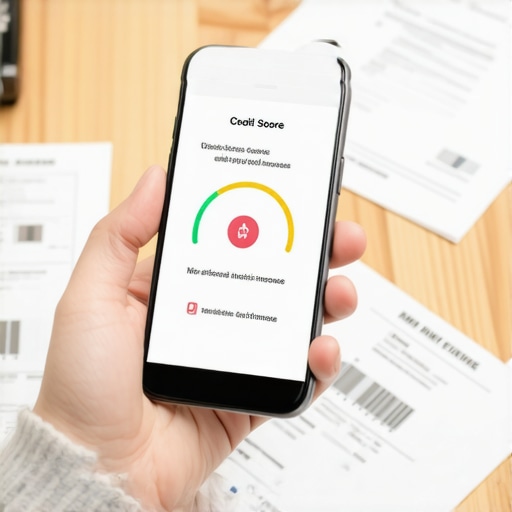
Watch Out for the Automation Trap
Here is where I messed up. Two years ago, I was so excited to use my T-Mobile history that I hit the ‘link’ button without checking a disputed $12 equipment fee from a phone I’d returned months prior. The automation didn’t care that I was right; it only saw an ‘unpaid’ balance. My score didn’t move an inch because that tiny negative outweighed a year of on-time payments. I had to scramble to learn the exact evidence that forces a credit bureau to correct a balance just to fix my own self-inflicted wound. If you find yourself in a similar spot with a utility company, don’t just wait for it to go away. Use the paper trail that forces bureaus to delete old debt to clean it up before you try to boost your score again. Many people assume these tools are a ‘set it and forget it’ solution, but you must remain vigilant. If you ever close an account or change providers, you need to know the 30-day rule for disputing new errors. Switching from a legacy provider can create a gap in your reporting that looks like a closed account, which might temporarily dip your score. You also have to be careful about ‘zombie’ balances that reappear during the transition. If an old provider claims you owe money from years ago, you need to know how to wipe out zombie debt collections using the two-year rule to keep your record spotless.Let’s dig deeper into the mechanics of the credit machine, because what worked for your parents’ generation can actually backfire in 2025. Common wisdom suggests that a clean slate is always the goal, and when you see an old $200 collection, your instinct is to pay it off to ‘clean’ your record. However, this is one of the biggest mistakes you can make without a plan. In many older scoring models, paying an old collection can actually tank your score by updating the ‘date of last activity,’ making a three-year-old mistake look like it happened yesterday. Before you open your wallet, you need to understand the truth about paying off a collection before buying a house. Unless you have a written ‘pay for delete’ agreement, that payment might be the very thing that delays your mortgage approval. This is the nuance that separates beginners from experts in credit building strategies. 
Stop Paying Old Collections Without a Strategy
Most people assume that any payment is a ‘good’ payment, but why paying off a collection could actually drop your score is a question every serious credit-builder must ask. If the debt is close to the statute of limitations, making a partial payment could even restart the clock on how long a creditor can legally sue you. Instead of blindly paying, your focus should be on accuracy and reporting standards. If the collection agency cannot prove the debt with original documentation, you have the right to challenge its presence entirely rather than just settling for a ‘paid’ status.
Why Does My FICO Score Stay Stuck When My Balances Are Zero?
This is the ultimate ‘sophisticated’ reader question. You’ve done everything right: you paid off your credit cards, cleared your personal loans, and yet, your score dropped five points. This happens because of a phenomenon known as the ‘all zero’ penalty. FICO algorithms want to see that you are actively using credit responsibly; if every single card shows a $0 balance on your statement date, the system interprets this as a lack of recent credit use. I learned that why a zero balance might be the reason your score is stuck is usually tied to your utilization reporting. To maximize your points, you should aim for at least one card to report a tiny balance—think 1% of your limit—while the others stay at zero. This proves you are active without being a risk.
Don’t Give Up Your Rights for a Faster Dispute
The biggest ‘oops’ factor in modern credit repair is the convenience of the ‘Dispute’ button inside your banking app or on the bureau’s website. It looks so easy, but it is a trap. When you click that button, you often unknowingly agree to terms that waive your right to a full investigation under the Fair Credit Reporting Act (FCRA). According to a report by the Consumer Financial Protection Bureau (CFPB), automated dispute systems often use simplified codes that strip away your evidence, resulting in a ‘rubber stamp’ rejection. This is why you should never use the online dispute button if you want real results. Instead, you must send physical mail with specific evidence to ensure a human actually looks at your file. If you want to win, you have to know how to bypass the AI review in credit disputes and force a manual verification. Have you ever fallen into this trap and seen your dispute rejected in minutes? Let me know in the comments. By mastering FICO proven strategies to improve your credit dispute score, you stop playing the game by their rules and start playing by yours. Once you know how to force a creditor to update an incorrect balance, you become the master of your own financial narrative.Once you’ve cleared the hurdles of initial disputes, the real work shifts from repair to management. I personally don’t rely on the flashy, free apps that give you a ‘simulated’ score. Those are marketing tools, not financial ones. In fact, the hidden reason your credit monitoring app misses real errors is that they often use VantageScore, which lenders rarely look at for mortgages. I use an evidence log—a simple physical or digital folder where I save every ‘results’ letter and every billing statement. If you want to win, the evidence log that wins every investigation is your most powerful weapon. It prevents the bureaus from ‘re-aging’ an error you already fixed. 
How do I maintain my credit momentum over time?
Consistency is the only thing the algorithm rewards long-term. I follow what I call the high-achiever protocol. It’s not about big gestures; it’s about the the habit of high score achievers: the 15/15 rule for payments. By paying half of your balance 15 days before your statement date and the other half three days before, you ensure your reported utilization is always razor-thin. This is how you scale from a 700 to an 800 without needing a massive income.
Why the Future of Credit is All About Trends
Looking ahead, the industry is moving toward Trended Data. According to the technical documentation for FICO® Score 10 T, lenders are no longer just looking at a snapshot of your debt today. They are looking at the ‘trend’ of your balances over the last 24 months. Are you paying them down or ramping them up? This means a one-month ‘clean up’ before a loan application won’t be enough anymore. You need a sustained history of low utilization. If you see a dip because of a mistake, you need the 30-day blueprint for erasing a wrongful late payment to keep that trend line looking healthy. To keep growing your available credit, I recommend learning how to get a credit limit increase without a hard inquiry. This expands your ‘cushion’ and makes your trended data look even better to the AI-driven underwriters of the future. Try implementing the 15/15 rule this month and watch how your statement balance reports—it is the fastest way to stabilize a fluctuating score.[image_placeholder_E]
What Nobody Tells You About the Psychology of Debt Reporting
The biggest hurdle I faced wasn’t just the paperwork; it was the psychological exhaustion of feeling like I was shouting into a void. When you start correcting dispute errors effectively, you realize the system is designed to be tedious to discourage you from following through. I learned that persistence is actually a metric of its own. Here are the lightbulb moments that changed everything for me: first, a ‘no’ from a bureau isn’t a final judgment, it’s often just an automated gatekeeper testing your resolve. Second, I realized that paying a collection agency without a delete agreement is essentially giving away your leverage for nothing. Finally, the ‘thin file’ label isn’t a life sentence; it’s just a data gap that you now have the tools to fill with your own monthly habits.
My Go-To Survival Kit for Fighting the Big Three
To stop being a credit ghost, you need more than just hope. I trust these specific tools to keep the bureaus honest. First, always maintain the evidence log that wins every investigation. I use a simple expanding accordion file for every physical letter I receive; digital scans are great, but there is something about having the original paper in hand that makes you a more formidable advocate when things escalate. Second, I rely on official FICO scoring reports rather than the ‘educational’ scores found on free apps, which often mask the very credit errors that matter to mortgage lenders. Lastly, use a high-quality scanner app on your phone to instantly digitize every post office receipt for your certified mail—you’ll need that timestamp if they claim they never got your dispute.
Take Back Control of Your Financial Identity
You are more than just a three-digit number or a ‘thin file’ on a screen. By taking the time to address dispute errors and leveraging the bills you already pay, you are essentially voting for your own financial freedom. It takes time, and there will be moments of frustration, but the reward—a lower interest rate, a new home, or simply the peace of mind that your record is accurate—is worth every stamp and every letter. You have the blueprint now; all that’s left is to start. Have you ever tried to use your utility history to boost your score only to be told it wasn’t ‘qualifying’ data by a lender? Let me know in the comments below!