

I still remember the night I sat at my kitchen table, staring at my laptop screen in absolute disbelief. I had spent months meticulously paying down my credit card balances to exactly 29% of their limits. I was following the golden rule of credit building—or so I thought. But when my FICO score updated, it barely nudged. In fact, the following month, it actually went down. I was angry, confused, and felt like the entire financial system was playing a cruel joke on me. It was only after weeks of digging through forums and talking to credit experts that I realized I had fallen for one of the biggest financial myths out there: the infamous 30% utilization rule. Today, I want to show you why aiming for 30% is actually keeping your scores suppressed, and how targeting a tiny 1% utilization is the real secret to maximizing your credit profile.
Why the Conventional 30 Percent Advice is Holding You Back
For years, mainstream financial blogs have repeated the same tired advice: “Just keep your utilization under 30% and you will be fine.” While keeping your balances under 30% will prevent your score from completely cratering, it is far from optimal. Your debt-to-limit ratio is the fastest way to change your score, and leaving your balances sitting at 29% tells lenders that you are actively carrying a significant amount of debt. According to official data from FICO, high-achieving credit holders—those with scores above 800—actually maintain an average utilization rate of roughly 7%. When I made the shift from 29% down to just 1%, my score shot up almost overnight. If you have been doing everything right and your progress has stalled, this simple shift is likely the missing piece of the puzzle.
Is keeping your balance at zero actually better?
This is where most people get tripped up. When I first learned about the pitfalls of the 30% rule, I went to the opposite extreme. I paid every single card down to a flat zero dollars before my statement dates. To my shock, my score dropped again! This happens because of a FICO scoring penalty known as “All Cards Reporting Zero.” If every card shows a $0 balance, the scoring algorithm assumes you are not actively using your credit, which makes you look like a dormant risk. To get the absolute best results, you want to utilize small balances to boost your score. By letting just one single card report a tiny 1% balance while paying the rest to zero, you signal active, highly responsible credit management. Have you ever noticed your score drop after paying off your cards completely? Leave a comment below and let me know—I would love to help you troubleshoot your specific situation.
How to Implement the AZEO Method Today
To successfully execute this strategy, you need to understand the difference between your payment due date and your statement closing date. This was a massive mistake I made early on. I used to pay my bills on the due date, thinking that was enough. But credit bureaus don’t look at what you pay; they look at what is reported on your statement closing date. By mastering this timeline, you can easily implement the “All Zero Except One” (AZEO) method. If you are currently struggling with other issues on your credit report that are holding you back, it might also be time to look into dispute errors and FICO optimization to clean up your history while you optimize your utilization. In the next section, we will dive deep into the exact calendar strategy you need to use to make sure your balances report perfectly every single month.
The Two Dates That Rule Your Credit Profile
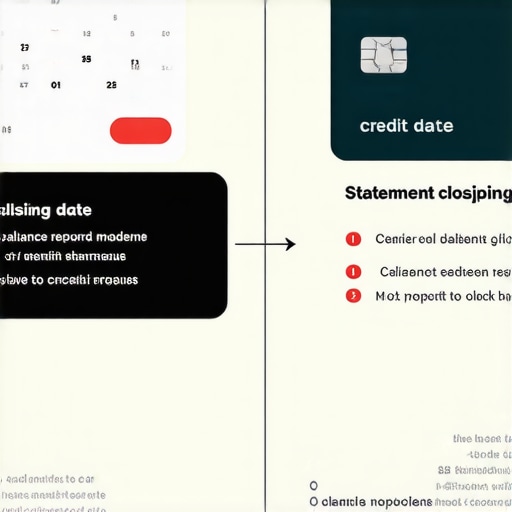
To master the AZEO (All Zero Except One) method, you must understand a critical truth: your due date is not the day the credit bureaus look at. I learned this lesson the hard hard way during my first attempt to reach an 800 score. I paid off my balance of $1,200 on my due date, only to watch my score drop because my statement closing date had occurred three days prior, reporting a 45% utilization rate. Your due date keeps you from being late, but your statement closing date is the day your card issuer takes a snapshot of your account balance and reports it to the bureaus. If you want to maximize your score, you need to align your payments with this reporting window.
Why You Should Pay Twice a Month
The easiest way to control this reporting snapshot is to adopt a bi-weekly payment habit. When you pay twice a month for maximum FICO points, you split your payments to align with your personal cash flow and your specific statement closing dates. The first payment, made mid-cycle, knocks down the bulk of your balance. The second payment, made three to five days before your statement closing date, trims the balance down to that target 1% range. Think of this cycle like a highway speed trap. It does not matter how fast you drove on the open road; all that matters is your speed when you pass the radar gun. Your statement closing date is that radar gun.
How to Select and Manage Your One Reporting Card
Not all credit cards are created equal when executing the AZEO strategy. When I first tried this, I chose a small retail store card to be my “one” reporting card. This was a massive mistake. The algorithm penalizes high utilization on individual cards, and because that store card had a tiny $300 limit, a simple $45 grocery run put me at 15% individual utilization, dragging my score down. To prevent this, you want to utilize a card with a high limit for your single reporting card, as this naturally keeps your individual card utilization low even with everyday transactions. Additionally, understanding the nuances of how different cards behave is crucial; for instance, understanding FICO, dispute errors, and credit repair hacks can help you identify why certain card types behave differently under scoring algorithms.
Establish Your Target Balance and Automate
Once you have selected a primary, major bank card, you want to automate a small recurring charge to hit that card every month. This could be a cheap $5 streaming subscription. You then set up an automatic payment for that card to pay off everything except $5. This ensures that a tiny, non-zero balance reports to the bureaus, successfully bypassing the “All Cards Reporting Zero” penalty. For your remaining credit cards, you must pay them down to a absolute flat zero balance before their respective statement closing dates. If managing multiple accounts feels overwhelming, you should read up on how credit building strategies correcting dispute errors for better FICO in 2025 can streamline your financial profile and make your overall accounts much easier to manage.
While mastering your payment dates and utilizing the AZEO method will give you an immediate scoring edge, you will eventually hit a glass ceiling if your report is cluttered with inaccuracies. This is where most consumers dive headfirst into credit repair, only to make critical mistakes that actually damage their standing. The mainstream credit community loves to preach that you should dispute every single negative item on your report all at once, hoping something gets deleted by chance. In my experience, this shotgun approach is a recipe for disaster. When you flood the credit bureaus with generic dispute templates, they will quickly flag your requests as frivolous, leaving you with a frozen file and zero progress.
Why does disputing accurate information backfire so spectacularly?
When you file a dispute, you are legally certifying that the information reported is inaccurate. If you attempt to dispute a perfectly accurate late payment or collection account just to hide it, you run a massive risk. According to a study by the Federal Trade Commission (FTC) on credit report accuracy, credit bureaus utilize advanced automated scanning systems (specifically e-OSCAR) that easily detect templated, bad-faith disputes. Not only will the bureaus reject your claim, but the creditor may update the entry with a newer reporting date, which can inadvertently lower your score by making an old delinquency look brand new. Instead of disputing everything blindly, you should focus on effective dispute error resolution to boost your credit score in 2025 by targeting genuine, verifiable mistakes.

The Dispute Trap That Temporarily Inflates Your Score
Another nuance that sophisticated credit builders get wrong is relying on active disputes to pass a lender’s manual underwriting. When an account is actively under dispute, FICO temporarily removes that account’s negative history from its scoring calculation. Your score might shoot up 40 points, giving you a false sense of victory. However, many mortgage and auto lenders will not approve your loan while an active dispute comment exists on your file. Once the dispute is resolved and the comment is removed, the negative item is factored back into the algorithm, and your score tanks right back to where it started. Understanding how these temporary shifts work is a major part of mastering FICO proven strategies to improve your credit dispute score.
How do you clean up your history without triggering a frivolous flag?
To avoid the dreaded frivolous flag, you must treat your credit report like a legal case. Do not use generic internet templates. Instead, pull your official reports and look for inconsistencies in reporting dates, payment histories, or high balances. By focusing on factual inaccuracies, you can use the credit repair blueprint fixing errors and strengthening your financial profile to construct targeted, evidence-backed dispute letters. Have you ever fallen into this trap of disputing everything at once only to have the bureaus ignore you? Let me know in the comments below, and let’s discuss how to clean up your profile the right way.
Once you clean up the glaring inaccuracies on your report, the real challenge begins. Credit building isn’t a one-time project; it is a continuous maintenance loop. To keep my score consistently above 800, I don’t rely on guesswork or generic monthly credit monitoring alerts. I use a highly systematic workflow that ensures my profile remains pristine, tracking my reports with the same discipline I use to track my business revenue.
How do I maintain excellent credit over time?
The secret to keeping your FICO score high over the long haul lies in routine, automated micro-audits. I personally block out fifteen minutes on my calendar on the first Saturday of every quarter to run through my official reports. During this audit, I cross-reference my open balances with my personal spreadsheets to make sure nothing has shifted. If you want to build an bulletproof profile, you must learn how to monitor your credit for small changes that matter before they snowball into major scoring disasters.
The Precise Tools I Use and Recommend
I do not use generic credit repair apps or automated dispute software. Those tools often spit out templated letters that lead straight to a frivolous rejection. Instead, I recommend using the official credit bureau portals exclusively for pulling raw data, and managing your dispute tracking manually via a dedicated spreadsheet. For my scoring data, I ignore the free educational scores provided by consumer websites, which often use the VantageScore model. Instead, I rely directly on the official consumer platform of myFICO to see my actual FICO 8 and FICO 9 scores, which are the models used by the vast majority of lenders. Knowing how to find out which credit model your lender uses is critical because it prevents you from being blindsided when you apply for a major loan.

In addition to monitoring software, my absolute favorite physical tool is a simple, dedicated accordion folder where I archive every single paper disclosure, billing statement, and physical dispute response. According to consumer law expert attorney National Association of Consumer Advocates (NACA), having physical, dated paper trails is your ultimate leverage if a credit bureau fails to correct a reinvestigation. If a creditor fails to update your status, having the original paper letters forces their hand immediately. To protect yourself from future administrative errors, you need to know exactly how to leverage the paperwork that proves a creditor failed to update your status.
Where This Credit System is Headed
The credit landscape is changing rapidly. Over the next few years, I expect we will see a massive push toward the widespread adoption of FICO 10T and VantageScore 4.0. These newer scoring models utilize trended data, which means they don’t just look at a single snapshot of your utilization on today’s statement closing date; they look at your historical spending and repayment patterns over the past 24 months. This means temporary tricks won’t work forever. Establishing a clean, consistent history of paying down balances early and maintaining a low-utilization footprint is going to be the only way to secure top-tier financing.
If you want to stay ahead of these algorithmic updates, start using the AZEO method this month on just one of your cards and see how your score responds. Let me know in the comments which card you chose to be your designated 1% reporting account!
What Experts Won’t Tell You About Designing an 800-Plus Profile
When I was struggling to break past the mid-700s, I realized that the mainstream advice is designed for mediocrity, not mastery. The credit scoring system is essentially an automated risk-assessment engine, and once you understand how to speak its language, you can command the score you want. Here are the three most critical realizations that completely changed my perspective on FICO optimization:
- The system rewards micro-management: Automated systems love predictability. When you establish a pattern of keeping your utilization at exactly 1% on a single card, you eliminate the “risk profile” associated with sudden spending spikes.
- Fewer active balances mean higher scores: Even if your total utilization is extremely low, having small balances reporting across five different cards simultaneously triggers a subtle scoring penalty. This is why your score stalls when you use too many credit cards at once.
- Bureaus are compliance machines, not courts: Credit bureaus do not care about the “story” behind a late payment. They only care if the data meets federal reporting guidelines. If you find a reporting error, focus strictly on technical inconsistencies rather than emotional explanations.
My Essential Toolkit for Financial Defense and Score Optimization
I do not advocate for expensive monthly subscription services or quick-fix credit repair agencies. Instead, I rely on a highly targeted selection of tools and habits to keep my profile in peak condition. If you want to replicate my results, here are the exact resources you need in your arsenal:
First, obtain your raw credit data directly by utilizing the annual free credit report system. I highly recommend that you why you should always request a paper credit report because the physical printouts often contain detailed date timestamps and historical account histories that are hidden from online consumer dashboards. Second, track your actual FICO scores, not educational VantageScores. You can read up on why your credit karma score is often wrong to understand why relying on third-party consumer apps can mislead you when preparing for a major mortgage or auto application.
Your Roadmap to a Bulletproof Financial Legacy
Improving your credit profile is not merely about achieving a vanity number; it is about reclaiming your financial sovereignty and unlocking access to wealth-building opportunities at the lowest possible cost. By shifting your mindset from passive monitoring to active, strategic management, you position yourself years ahead of the average consumer. The AZEO method and precise dispute management are your keys to bypassing the traditional system. Implement these strategies step-by-step, stay consistent, and watch your score reflect your dedication.
Have you ever tried to pay down your balances to zero only to see your score unexpectedly drop? Let me know in the comments below, and let’s troubleshoot your utilization strategy together!