
I sat there staring at my laptop screen, the blue light reflecting off my glasses, feeling a mix of hope and sheer desperation. I had just clicked “submit” on a payment for a credit repair service that promised—in big, bold letters—a “100% Money-Back Guarantee.” At the time, my FICO score was barely dragging itself across the finish line of 580, and I was tired of being told “no” by every lender in town. I thought I had finally found the golden ticket. Fast forward six months: my score hadn’t budged an inch, and that “guarantee” I leaned on? It turned out to be as thin as tissue paper in a hurricane. I learned the hard way that when it comes to fixing your financial reputation, there are no magic wands, only hard work and a lot of fine print. [IMAGE_PLACEHOLDER]
My Expensive Lesson in Credit Repair Promises
Most of us dive into the world of credit building because we want a better life for our families, but that vulnerability makes us easy targets. I made the classic mistake of thinking that a high price tag and a shiny refund policy meant I was protected. It didn’t. Instead of getting my credit back on track, I ended up fighting with a customer service rep who pointed out a tiny clause stating I had to wait twelve months and provide proof of three different types of credit monitoring before I could even apply for a refund. It was exhausting. Today, I want to pull back the curtain and show you how to avoid the same traps I fell into. We’re going to talk about what those guarantees actually mean and how you can take control of your own file without getting scammed.
Is a Money-Back Guarantee Actually Worth Anything?
To be blunt: usually not in the way you think it is. The Federal Trade Commission (FTC) is very clear that no credit repair company can legally guarantee a specific outcome, such as removing accurate negative information from your report. When a company promises a “sweep” or a “total fix,” they are often skirting the edge of the law and putting your file at risk. I’ve found that the real “secret” isn’t a secret at all; it’s about auditing your own credit report for common mistakes and being persistent. Have you ever felt like you were promised the moon only to be left in the dark with a lower bank balance? I know I have, and it’s a lonely place to be.
Why Those Bold Promises Usually Fall Flat
The reason most of these guarantees fail is that they are built on a foundation of “if” statements. They count on you giving up before the refund window opens. I spent so much time waiting for a professional to “handle it” that I missed the critical window for disputing medical bill errors that actually belonged to someone else. If I had just known how to verify a debt that keeps changing owners, I could have saved myself hundreds of dollars and months of stress. The truth is, the most effective way to see movement in your score is to understand the mechanics of the bureaus yourself. When you rely on a third-party guarantee, you’re handing over your power to someone who might just be using credit repair software without a real plan. You deserve better than a template letter and a vague promise.
Get Your Hands on Real Paper Reports
To fix a broken machine, you have to see all the gears, not just a digital snapshot. Most people rely on free apps that give you a summarized version of your file, but that is like trying to fix a car engine while looking through a foggy window. You need the full picture. Your first move is to demand physical copies because you need to see exactly how the bureaus are categorizing your data. In my early days, I relied on screen-grabs and PDF downloads, but I kept missing the fine details. It wasn’t until I decided to why you should always request a paper credit report that I noticed my middle initial was missing on some entries, which was causing my file to get mixed with someone else’s. 
Wipe Out the Double-Entry Errors Dragging You Down
One of the most common ways a score gets suppressed is through simple repetition. Creditors often sell old debts to collection agencies, and suddenly, that one late payment looks like three different open collections. I remember opening my report and seeing a $400 medical bill listed three different times by three different companies. It was like a ghost that wouldn’t leave, and every time I tried to talk to the bureau, they treated me like I was the one making a mistake. You have to be surgical here. You need to learn how to properly remove a duplicate account from your report by identifying the original creditor and showing the timeline of the transfers. When you prove that a single debt is being reported multiple times, the bureaus are legally required to clean up the clutter.
Put Your Disputes in a Certified Envelope
If you dispute an error online, you are essentially clicking a button that sends your data through an automated system designed to find reasons to say “no.” It is the path of least resistance, but it rarely yields results for complex issues. Think of it like sending an email to a huge corporation versus hand-delivering a letter to the CEO. When you write a physical letter, you create a legal trail that the credit bureaus cannot easily ignore. This is why I tell everyone that why you should always send dispute letters via certified mail is the only way to play the game. Having that green return receipt in your hand is your insurance policy. It proves exactly when they received your request, starting the 30-day clock they have to investigate.
Beat the Automated Robots at Their Own Game
When a bureau receives a dispute, they often use e-OSCAR, an automated system that boils your detailed explanation down to a two-digit code. If that code doesn’t match their internal logic, they will send you a generic letter saying your request is “frivolous.” It feels like a slap in the face, especially when you have provided proof. I once had a bureau tell me my dispute was frivolous even though I sent them a letter from the bank admitting the error. To win, you must know how to handle a bureau that says your dispute is frivolous by demanding a human eye. You have to push for a manual investigation. Knowing how to force a manual review when the bureau robots say no is the difference between a stalled score and a clean file.
The Small Balance Hack for a Quick Win
While you are fighting the bureaus over old errors, you can also give your FICO score a shot of adrenaline by managing how your current balances are reported. Most people think paying their bill on time is enough, but the bureaus only care about what your balance looks like on the specific day they pull the data. I discovered that by paying my card down to just a few dollars a few days before my statement closed—not the due date—my score jumped significantly almost overnight. This is the small balance hack that adds 20 points to your fico without you needing to spend an extra dime. It is about timing the system so you appear as a low-risk borrower every single month.One of the biggest myths in the financial world is that paying off a collection account is a guaranteed way to see your numbers climb. I have seen people drain their savings to settle a five-year-old debt, only to realize why paying off a collection does not always raise your score immediately. If the damage is already done, simply changing the status to “Paid” does not erase the history. In fact, on older FICO versions—the ones most mortgage lenders still use—that update can sometimes look like recent negative activity to the algorithm. It is a counter-intuitive mess that often leaves people more frustrated than when they started.
Why Does Your Score Stagnate Even With Zero Debt?
You would think having a clean slate with no balances would be the ultimate goal, but it often triggers a penalty. I learned this the hard way when I cleared every single card and my score actually dropped 15 points. This is because the algorithm needs to see active “utilization” to prove you can manage credit responsibly. This is exactly why a zero balance is not always the best for your fico score. You want to show a tiny bit of activity—aim for a 1% balance—rather than absolute zero. 
Avoid the Dangerous Lure of Credit Repair Sweeps
We need to talk about the “Credit Repair Sweep” myth. You might see flashy ads promising to wipe your entire report clean in 30 days using secret legal loopholes. Stay away. The truth about credit repair sweeps and why they fail is that they usually involve filing fraudulent identity theft reports. It might work for three weeks, but once the bureaus verify the data, the items pop back up like weeds, and you could face legal repercussions. A report by the Consumer Financial Protection Bureau (CFPB) highlights that automated dispute systems often fail to catch these nuance errors, but they are very good at spotting mass-produced fraudulent claims. Instead of looking for a shortcut, you need to focus on how to find out which credit model your lender uses so you can tailor your strategy to their specific requirements.
The Trap of Using Template Software for Complex Issues
The biggest mistake I see advanced DIY-ers make is relying on automated templates. The problem with using credit repair software for complex errors is that the bureaus have become incredibly efficient at spotting computer-generated disputes. If your letter looks like 10,000 others, it is going straight to the “frivolous” pile. You have to provide unique, hand-written context to get past the initial digital filters. Have you ever fallen into this trap where you followed the “standard” advice only to have it backfire? Let me know in the comments. I want to hear your stories so we can avoid these pitfalls together.Once you move past the initial shock of seeing errors on your report, you have to transition from a ‘fixer’ to a ‘manager.’ I spent years reacting to problems as they popped up, which is a recipe for high blood pressure and low FICO scores. Now, I treat my credit report like a small business. I have a dedicated physical binder—yes, old school paper—where I track every single interaction. This isn’t just about being organized; it is about creating the evidence log that forces a bureau manual review when the digital gatekeepers try to lock you out. Section 611(a) of the Fair Credit Reporting Act (FCRA) is your best friend here, as it legally requires bureaus to conduct a ‘reasonable reinvestigation’ of any item you dispute. If you have a paper trail, ‘reasonable’ becomes a very high bar for them to clear without actually looking at your proof. 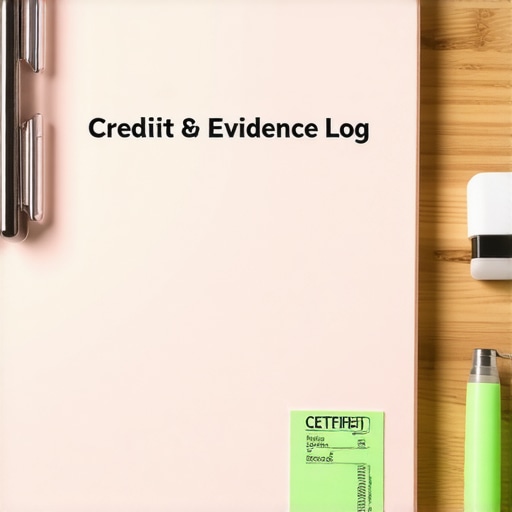
The Low-Tech Tools That Actually Work
You do not need a $100-a-month subscription to a fancy dashboard. My most valuable tool is a simple $5 ledger. Every time I pick up the phone to talk to a collector or a bureau rep, I record the date, the time, the full name of the person I spoke to, and a summary of what was said. This is the specific log you need to keep when calling bureaus because memory is a fickle thing, but a timestamped note is evidence. If they promise to remove a late payment and then ‘forget,’ you have the exact details to hold them accountable. I also make sure I am how to audit your credit report for hidden reporting errors at least once a quarter. These are not always big identity theft items; sometimes it is just a lender failing to update your limit, which silently chokes your utilization ratio.
How do I keep my score high after I have fixed the errors?
Maintenance is about consistency, not intensity. Once your file is clean, the biggest risk is actually inactivity. I have seen people work so hard to fix their credit that they become afraid to use it. But as I have learned, why your credit score stagnates despite having no debt is a real phenomenon. You have to keep the gears turning. I use a ‘rotation’ system where each of my cards has one small recurring utility bill attached to it. This keeps the accounts active and ensures I am why you should always send dispute letters via certified mail if a new error ever dares to appear.
The New Era of Trended Data is Coming
If you think you can just ‘game’ the system for one month before applying for a mortgage, think again. The industry is shifting toward models like FICO 10T. The logic behind the fico 10t trended data shift 2 means that lenders are no longer just looking at a snapshot of your debt today; they are looking at your trajectory over the last 24 months. They want to see if you are paying down debt or slowly drowning. This makes the one document that forces a bureau manual review even more critical, because a single lingering error can now skew your ‘trend’ for two full years. My advice? Start your physical evidence log tonight. Don’t wait for the next error to find you. Take the initiative and send that first letter, because using the certified route is the only way to ensure your voice is heard in an increasingly automated world.
Brutal Truths I Learned While Fighting the Credit Bureaus
After months of trial and error, I realized that the credit repair industry thrives on your impatience. The biggest ‘lightbulb moment’ for me was discovering that no software can replace the weight of a physical, hand-signed letter. You also have to accept that your credit score is a living, breathing number; even after you fix major errors, minor fluctuations are normal. Most importantly, I learned that mastering fico proven strategies to improve your credit dispute score requires a marathon mindset, not a sprint. The first and most important lesson is that speed is often a trap; real results come from creating the evidence log that forces a bureau manual review. Don’t expect the bureaus to do you any favors; they are data aggregators, not your personal advocates.
Assemble Your Personal Credit Repair Toolkit
To win this game, you need more than just hope. I personally rely on three main pillars: a physical binder for my ‘evidence log,’ a steady supply of certified mail forms from the post office, and a detailed understanding of the logic behind the fico 10t trended data shift 2. These aren’t just tools; they are your protection against automated rejections. If you are starting from scratch, I highly recommend following the specific steps in how to build an 800 credit score starting from zero 2 to ensure your foundation is solid before you start the heavy lifting of disputes. I trust these resources because they focus on the law rather than loopholes.
[IMAGE_PLACEHOLDER]
Reclaim Your Financial Power Today
Fixing your credit isn’t just about a number—it is about the freedom to choose your home, your car, and your future without a bank’s permission. Dealing with dispute errors and credit building can feel like a full-time job, but the peace of mind that comes with a clean FICO profile is worth every stamp and every phone call. Don’t let the complexity of credit repair stop you from taking that first step tonight. Your financial story isn’t written in stone; it is written in data that you have the legal right to correct. Have you ever tried to dispute a mistake only to be met with total silence from the bureau? Let me know in the comments below.