

I’ll never forget the cold sweat I broke into at the local car dealership a few years back. I had my down payment ready, my paperwork in order, and a chest full of confidence because I knew I’d been responsible. Then the finance manager slid a printout across the desk with a look of pure pity. It showed a foreclosure and three maxed-out credit cards I’d never seen in my life. My stomach dropped through the floor. It turns out, because I’m a ‘Junior’ and my dad had hit a rough patch, the credit bureaus decided we were the same person. This wasn’t just a typo; my entire financial identity was strangled by my father’s history. It felt like I was being punished for someone else’s mistakes before I even had a chance to start. I spent months fighting to prove I was me. It was exhausting, but I learned exactly how the system breaks—and more importantly, how to force them to fix it. Today, I’m going to show you how to untangle your records so you can finally own your own score again.
Get Your Name Back from Your Relatives
If you share a name or an address with a family member, the credit bureaus’ automated systems can get lazy. They see a ‘John Smith Sr.’ and a ‘John Smith Jr.’ and simply mash the files together into a messy ‘mixed file.’ This is more than just a headache; how dispute errors affect your score is often catastrophic because negative data from a relative can tank your FICO overnight. I made the mistake of thinking a quick phone call would solve it. It didn’t. You have to be aggressive. You need to understand how to fix a credit report if your name is too common and realize that the bureaus won’t do the heavy lifting for you. According to a report by the Consumer Federation of America, mixed files are a persistent issue because credit bureaus prioritize ‘matching’ incoming data even when some identifiers, like birth years or Social Security numbers, don’t perfectly align.
Can You Really Fix This Without a Lawyer?
I know it feels like you’re shouting into a void, especially when a robot tells you the ‘information has been verified.’ But you absolutely can win this fight. The key isn’t just complaining; it’s providing the specific paperwork needed to stop a bureau from merging your file once and for all. You have to document the distinction between your life and your relative’s life with surgical precision. When I finally sent over my birth certificate alongside my father’s, and a list of addresses where I had lived versus where he had lived, the wall finally started to crumble. Have you ever pulled your report only to see your brother’s reckless shopping spree staring back at you? It’s a violation of your hard work, and I want to hear your story in the comments below. Let’s get into the step-by-step process of cleaning this up.
Audit Every Inch of Your Report First
To stop the bleeding, you have to find every single entry that doesn’t belong to you. This is more than just looking at a high-level score; it’s about forensic accounting on your own life. You need to realize that why you should always request a paper credit report is because digital versions often truncate middle names or suffixes that are the very thing causing the mix-up. Look for variations in your Social Security number, old addresses where only your relative lived, and even employer names that don’t match your history. If you see a misspelled employer, it’s a red flag; how to fix a misspelled employer name on your report is often the first step in proving the bureau has confused your identity with someone else’s.
Collect the Evidence They Can’t Ignore
Once you’ve highlighted the errors, you need a mountain of proof. The credit bureaus are not your friends; they are data aggregators that hate manual labor. To get them to move, you need to provide a clear ‘This is Me’ vs. ‘This is Not Me’ packet. This includes a copy of your birth certificate, your Social Security card, and current utility bills in your name. If you’re a Junior or Senior, include copies of both your and your relative’s IDs if possible. This level of paperwork needed to stop a bureau from merging your file is the only way to break through their automated defense systems. 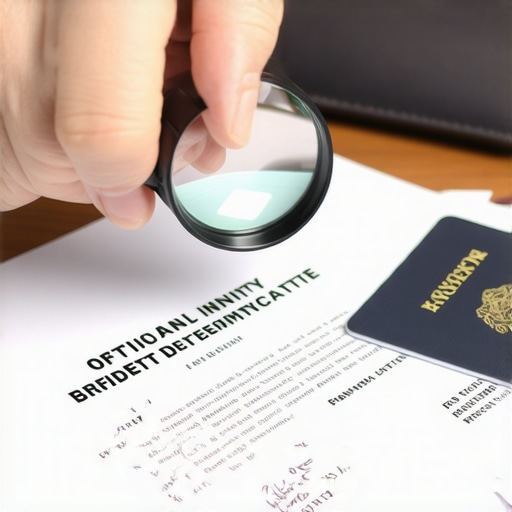
Break Out of the Automated Verification Loop
I remember my first attempt at fixing my father’s debt appearing on my file. I used the online dispute button, thinking it was efficient. Within 48 hours, I got an email saying the debt was ‘verified.’ The robot had simply looked at our shared last name and a previous address and called it a day. I felt defeated, like the system was rigged. It wasn’t until I learned how to force a manual review when the bureau robots say no that I saw progress. I sent a certified letter—not an email—and demanded that a human being look at the physical copies of the birth certificates I provided. Three weeks later, my score jumped 110 points because 15 years of someone else’s financial mistakes vanished.
Follow the Professional Dispute Blueprint
You must be methodical. Every letter you send should follow the dispute errors on your credit report a step-by-step guide for 2025 to ensure you aren’t flagged as ‘frivolous.’ If you have a very common name, this is even more critical. You should actively study how to fix a credit report if your name is too common because the bureaus use ‘logical’ matching which often ignores the middle initial entirely. Write your letter clearly, use bullet points for each disputed account, and always include the specific account numbers as they appear on your report. Don’t just say ‘that’s not mine.’ Say ‘This account belongs to [Relative Name], who is my father and has a different Social Security number.’ This level of detail makes it harder for them to ignore you.
Stop Believing That Verified Means Accurate
Most people make the fatal mistake of assuming that if a bureau says a debt is ‘verified,’ it must be true. In my experience, ‘verified’ is often just bureau-speak for ‘our computer found your name on another computer.’ They aren’t actually looking at the original contract or verifying that the debt belongs to you and not your cousin. This is where the e-OSCAR system—the automated network bureaus use—fails the average person. According to a study by the Consumer Financial Protection Bureau (CFPB), many consumers find themselves trapped in a loop where bureaus prioritize automated speed over investigative accuracy. If you’ve hit this wall, you need to stop using the basic online tools and switch to effective dispute error resolution to boost your credit score in 2025. Don’t let a robot dictate your financial future just because it’s ‘verified’ a file that isn’t even yours.
Why Does My Score Still Flatline After a Successful Dispute?
It’s incredibly frustrating: you finally get that massive error removed, and your score barely budges—or worse, it drops. This happens because the error might have been an older account that was actually providing ‘age’ to your file, even if it had negative marks. When it vanishes, so does that history. You have to understand why your score didn’t move after you settled that debt or removed an error. Sometimes, the removal of a dirty ‘mixed’ account exposes the fact that your own real credit profile is too thin. This is the ‘oops’ factor that most ‘credit gurus’ won’t tell you about. If you don’t have enough of your own positive data, the removal of a relative’s account can leave you with no foundation.
Don’t Fall for the Pay-to-Fix Collection Trap
Another common myth is that paying off a collection account will instantly fix your score. This is a trap. In many cases, paying an old collection can actually lower your score because it updates the ‘date of last activity,’ making an old mistake look brand new to the FICO algorithm. You must realize why paying off a collection does not always raise your score before you send a single dime. Instead of just paying, you should be looking for a ‘pay-for-delete’ agreement or focusing on removing the account entirely if it’s a result of a mixed file. I’ve seen people lose 30 points just by being ‘responsible’ and paying a debt that wasn’t even theirs to begin with. 
Avoid the Automated Dispute Software Disaster
If you’re dealing with a complex mixed file, stay far away from those ‘credit repair’ apps that promise to send hundreds of disputes for you. This is a recipe for being flagged. The bureaus have sophisticated algorithms to detect ‘frivolous’ disputes generated by software. I’ve spent years analyzing the truth about credit repair sweeps and why they fail, and the conclusion is always the same: a personalized, human-led approach wins every time. When you use software, you lose the ability to provide the specific nuance required for a mixed file. You need to show them why you aren’t the person on that record, not just send a generic ‘not mine’ letter. Have you ever fallen into this trap of thinking more disputes equals faster results? Let me know in the comments below. To truly see a change, you need to focus on why a zero balance is not always the best for your score and ensure that as you clean up the mess, you are simultaneously building a solid, independent profile.
Keep a Physical Log or Lose the Battle
Once you’ve successfully scrubbed those mixed-file errors, the biggest mistake you can make is putting your credit on autopilot. The bureaus are notorious for ‘re-inserting’ deleted data if a creditor reports it again three months later. To stop this, you need a system. I personally use a physical binder—yes, old school—because digital files can be lost or accidentally deleted. You need to maintain the specific log you need to keep when calling bureaus. This log should include the date of the call, the name of the representative, their employee ID, and a summary of what was promised. If a deleted error pops back up, this log is your primary evidence for a Fair Credit Reporting Act (FCRA) violation claim. Don’t trust your memory; trust your ink.
How do I maintain a clean credit profile over time?
Consistency is the only thing the FICO algorithm respects over the long haul. You should be checking your reports at least once a month, but not just for the score. You are looking for ‘micro-errors’—misspelled addresses or new inquiries you didn’t authorize. I recommend learning how to monitor your credit for small changes that matter so you can catch a mistake before it sinks your score by 50 points. This isn’t about obsession; it’s about defensive financial driving. If you see a new name variation, kill it immediately. If you see a ‘soft pull’ from a collection agency you don’t recognize, send a validation letter that same day.
Move Beyond Secured Cards to Scale Your Limit
If you started your journey with a secured card to distance yourself from a relative’s bad history, you shouldn’t stay there. Secured cards are training wheels; they often have low limits and high fees. To truly scale your FICO, you need to know how to transition from a secured card to an unsecured one. Higher limits lead to lower utilization, which is the fastest way to manipulate your score upward without spending a dime. When I moved from a $500 secured limit to a $5,000 unsecured line, my score jumped simply because my $100 grocery bill now represented 2% utilization instead of 20%. This is how you use the system’s own math to your advantage as part of the ultimate guide to dispute errors and credit building in 2025. 
What FICO 10T Means for Your Financial Future
The landscape of credit is shifting beneath our feet. We are moving away from ‘snapshot’ scoring and toward ‘trended’ data. According to the FICO Score 10 T technical summary, the new models analyze the last 24 months of your account balances to see if you are actively paying down debt or just treading water. This means ‘cleaning’ your report is no longer enough; you must demonstrate a downward trend in total debt. If you’ve been using mastering FICO proven strategies to improve your credit dispute score, you need to pair those disputes with a aggressive debt-reduction plan. In the next few years, the ‘quick fix’ will be even harder to maintain as AI-driven models look at your behavior over years, not just days. I want you to try one advanced tip today: log into your primary credit card portal and move your ‘due date’ to three days before your ‘statement closing date.’ This ensures your reported balance is always at its lowest. Give it a shot and watch your score react next month.
The Brutal Truth About How Credit Robots See Your Name
After months of fighting, I realized that the credit bureaus don’t view you as a person; they view you as a data cluster. If your cluster looks 70% like your father’s, the algorithm takes the path of least resistance and merges them. One of my biggest lightbulb moments was realizing that automated verification is not an investigation. When a bureau says an item is ‘verified,’ it often just means their software found a ‘match’ on a name and a zip code, regardless of the Social Security number. This is why understanding credit errors a step-by-step guide to fico improvement is so vital—you have to prove the match is false at the data level.
Another lesson? Never assume a deleted error stays deleted. The industry refers to this as ‘re-insertion,’ and it’s a nightmare. If a creditor reports the same bad data next month, the bureau’s system might just put it back on your file. This is why you need to be familiar with effective dispute error resolution to boost your credit score in 2025 to ensure you have the leverage to keep that data off for good.
My Private Arsenal for Crushing Credit Errors
I didn’t win this battle with fancy software; I won it with a printer and a stack of stamps. If you’re serious about cleaning your file, you need these three tools in your corner:
- The CFPB Portal: When the bureaus ignore your certified letters, filing a complaint with the Consumer Financial Protection Bureau is the nuclear option that forces a human to actually read your file.
- AnnualCreditReport.com (Paper Requests): Digital reports hide the very ‘micro-data’ (like misspelled middle names) that causes mixed files. Always request the physical mailed copies.
- Personalized Dispute Templates: Don’t use the generic ones found in apps. Use the ultimate guide to dispute errors and credit building in 2025 to craft a letter that specifically calls out why a relative’s account is appearing on your file.
#IMAGE_PLACEHOLDER_E#
Don’t Let Your Relative’s Past Define Your Financial Future
It’s easy to feel like the victim when your score is being dragged down by a family member’s choices. But remember: your financial identity belongs to you. Every time you successfully dispute an error or build your own independent history, you are taking back a piece of your freedom. By mastering credit repair dispute errors and fico optimization, you’re not just fixing a number; you’re ensuring that when you’re ready to buy that house or car, no one else’s history can stand in your way. Keep pushing, stay organized, and don’t take ‘verified’ for an answer. Have you ever found a relative’s debt on your own credit report? Drop a comment below and let’s talk about how to get it off!