

I was sitting in my dimly lit living room at 2 AM, coffee gone cold, staring at a 640 credit score that felt like a personal insult. I had one retail card from three years ago—perfectly accurate, but it had a high balance and a couple of late payments from a rough summer. I thought I could just click a button, tell the credit bureau I’d never heard of that store, and watch my score soar. I thought I was being clever. I was wrong. Instead of a boost, I nearly ruined my chances of getting a car loan later that year. I learned the hard way that trying to hide the truth is a recipe for disaster. Today, I want to share why honesty actually builds a better FICO score than any ‘hack’ ever could.
Stop Trying to Erase Your Genuine Credit History
We’ve all been there. You look at your report and see a blemish that makes you cringe. But here is the cold, hard truth: disputing a correct account just because you don’t like how it looks is one of the fastest ways to shoot yourself in the foot. When I tried to ‘ghost’ my own debt, the credit bureau didn’t just ignore me; they sent back a stern letter that felt like a slap in the face. I ended up having to learn how to handle a bureau that says your dispute is frivolous, which is a headache you definitely want to avoid. I fell for those quick-fix credit repair schemes you see on social media, but they never tell you the full story. If you delete an account that’s been open for years, you’re not just deleting the late payments; you’re deleting the age of that account, which is a massive chunk of your score calculation.
Will Keeping an Old Messy Account Actually Destroy Your Progress?
The fear is real. You think that one old collection or a few late payments act as a permanent anchor on your financial life. However, the age of your accounts matters just as much as the payment history. According to the Federal Trade Commission, the law only requires bureaus to remove information that is inaccurate, incomplete, or unverifiable. If the data is correct, trying to force it off your report often results in a permanent ‘frivolous’ flag that makes it impossible to fix real errors later. Have you ever been tempted to ‘erase’ a past financial mistake just by claiming it wasn’t yours? If so, take a breath. You are much better off mastering FICO strategies that focus on building new positive history. We also need to talk about why credit repair sweeps fail so frequently: they rely on the hope that a bureau is too busy to verify. In 2025, their systems are far too advanced for that. Instead, let’s look at correcting dispute errors effectively by targeting the items that are actually wrong, leaving the true accounts to age like fine wine and help your score recover naturally.
Get Your Hands on a Physical Report First
Think of your credit report like a professional resume. If your resume has typos or claims you worked at a company that doesn’t exist, a hiring manager won’t trust anything else you say. Credit bureaus operate on the same logic. Most people try to fix their score by squinting at a tiny smartphone screen, but those apps often simplify the data so much that you miss the critical details. You need to start with why you should always request a paper credit report. A physical copy shows you the exact codes and dates that the digital summaries hide. When I finally ordered my paper reports, I found a collection account that had been ‘re-aged’—a common tactic where a debt buyer changes the date of last activity to make an old debt look brand new. You must know how to spot a re-aged debt on your credit report immediately because that is a direct violation of federal law and a prime target for a successful dispute.

Look for the Smallest Lies to Break the Big Ones
If you have a major error that is hard to prove, start by cleaning up the low-hanging fruit. This is a psychological game with the bureaus. If your report has three different variations of your name or an old address you haven’t lived at in a decade, it creates ‘data noise.’ By fixing a credit report error related to a name change or address mismatch, you force the bureau’s computer systems to have a clearer, more accurate link to your identity. This makes it much harder for them to ‘verify’ a junk debt that doesn’t perfectly match your corrected profile. I once spent three months arguing about a $2,000 medical bill that wasn’t mine, but the bureau wouldn’t budge. As soon as I corrected my employer’s name and removed four old addresses, my next dispute on that bill went through in ten days. You are essentially clearing the static so the truth can be heard.
Fight Smarter by Documenting Every Single Call
I remember a rainy Tuesday in 2021 when I spent four hours on the phone with three different credit representatives. By the third call, I realized they were all giving me conflicting information. If I hadn’t been keeping the specific log you need to keep when calling bureaus, I would have been completely lost. I started writing down the representative’s name, their employee ID, and the exact time the call started. When the bureau eventually tried to claim I never contacted them, I sent a letter citing those specific logs. It shifted the power dynamic immediately. When you follow understanding credit errors a step-by-step guide to FICO improvement, documentation is your only shield. If they try to label your efforts as ‘frivolous’ because you are persistent, you need to know how to fight a frivolous dispute response from the bureau by providing the paper trail they didn’t expect you to have.
Plant New Seeds While You Pull the Weeds
Repairing your credit is like gardening; pulling the weeds (the errors) is only half the job. You also have to plant new seeds (positive history). While I was correcting dispute errors effectively, I didn’t just wait for the score to rise on its own. I opened a small line of credit to show I could handle responsibility in real-time. The key is understanding why your debt-to-limit ratio is the fastest way to change your score. I kept my spending to under 10% of the limit and paid it off every single month. I even looked for how to get a secured card that graduates to unsecured so that the age of the account would stay on my report long after the initial ‘rebuild’ phase was over. Your FICO score needs to see that you are a low-risk borrower today, and that current behavior carries a lot of weight compared to mistakes from your past.
One of the biggest lies in the credit world is that paying off an old collection will automatically boost your score. It sounds logical, right? You owe money, you pay it, and the score goes up. But in reality, why paying off a collection does not always raise your score comes down to the specific FICO model being used by your lender. Most mortgage lenders still rely on older versions of the FICO formula that do not grant a single point for a paid collection. If you settle a debt without securing a written ‘pay for delete’ agreement, you are often just trading a ‘balance due’ status for a ‘paid collection’ status—both of which are viewed as equally toxic in older systems. This is precisely why your score didn’t move after you settled that debt. According to the National Consumer Law Center (NCLC), credit bureaus often prioritize speed over accuracy, meaning many consumers make the fatal ‘oops’ of ‘shotgunning’ the bureaus with generic dispute templates found online. If you use those ‘copy-paste’ letters, you are likely falling into the danger of using credit repair software without a plan. The bureaus use Optical Character Recognition (OCR) to flag these templates instantly, often routing them straight to the ‘frivolous’ pile before a human even sees them.
Can You Force a Manual Review When the Robots Keep Saying No?
The short answer is yes, but it requires surgical precision rather than brute force. When you are mastering FICO strategies, you learn that the automated dispute resolution system, known as e-OSCAR, is often your biggest hurdle. To bypass the algorithm, you must provide ‘new and material evidence’ that has not been submitted in previous rounds. I have seen people get stuck in a dispute loop for years until they finally learned how to force a manual review when the bureau robots say no. This usually involves sending certified mail with a very specific set of documents, such as original canceled checks or direct correspondence from the original creditor, that contradicts the bureau’s data. 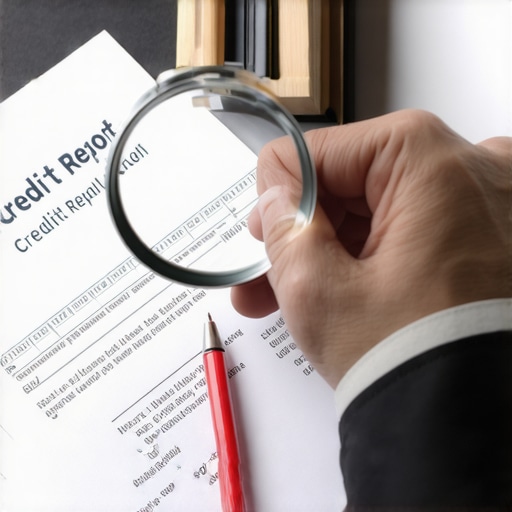
Another nuance that trips up even seasoned DIYers is the obsession with total debt balances rather than revolving ratios. You might think paying down a $10,000 car loan is better than paying off a $1,000 credit card, but why your credit utilization ratio is more important than your balance is the real secret to moving the needle quickly. FICO prioritizes the percentage of available credit you are using on revolving accounts over the raw dollar amount of your installment debt. If you find your progress has stalled, check FICO insights on how dispute errors affect your score to ensure you are not fighting a battle that won’t actually result in points. Have you ever fallen into the trap of paying off a collection only to see your score stay exactly the same? Let me know in the comments below, because your experience might help someone else avoid the same mistake.
Ditch the Apps and Build a True Credit Audit Folder
Once you’ve started the heavy lifting of disputing errors, you can’t just walk away and hope the bureaus stay honest. I’ve found that relying solely on free monitoring apps is a trap because they often lag behind the actual data by weeks. Instead, I use a dedicated ‘Credit Audit’ method. Every quarter, I download my full reports and use a highlighter to perform a line-by-line check. You should be looking for how to audit your credit report for incorrect account dates specifically, because as accounts age, bureaus sometimes ‘accidentally’ reset the clock on negative items. This isn’t just a minor glitch; it’s a violation of the Fair Credit Reporting Act (FCRA) Section 611, which mandates that credit reporting agencies must conduct a ‘reasonable’ reinvestigation. If they can’t prove the date is correct, it has to go. This level of scrutiny is the core of the credit repair blueprint fixing errors and strengthening your financial profile for the long haul.
How do I maintain these results for the next decade?
The secret to a 750+ score isn’t a one-time fix; it’s about building a system that alerts you before a small error becomes a catastrophe. I personally set up ‘micro-alerts’ on my bank accounts for any transaction over $1.00. This might sound paranoid, but it’s the habit that prevents identity theft on your credit file before it ever reaches the bureau level. You also need to know how to monitor your credit for small changes that matter, such as a sudden drop of two points, which could signal a new inquiry you didn’t authorize. If you are someone who has moved toward a minimalist lifestyle, learning how to build credit while living on a cash-only budget is essential so that you don’t lose the ‘credit mix’ points that FICO loves. Consistent maintenance means you are always ready for the ultimate guide to dispute errors and credit building in 2025 and beyond.
Why the Future of FICO Belongs to the Data-Obsessed
We are entering an era of ‘trended data.’ In the past, FICO just looked at a snapshot of your debt today. Moving forward, models like FICO 10T will look at your spending and payment patterns over the last 24 months. This means that even if you pay off your balances today, a history of high utilization will still weigh you down. I predict that the ‘quick boost’ will become harder to achieve, making it vital to follow credit building strategies correcting dispute errors for better FICO in 2025 now, rather than waiting until you need a loan. If you notice your numbers moving for no apparent reason, check the reason your score fluctuates after a large purchase to understand how these new models interpret your behavior. My best advice? Take one afternoon this weekend to start your own physical audit file and highlight every date on your report. It’s the single most effective way to catch the errors the robots miss. If you hit a wall, you can always contact us for more specialized guidance on complex disputes.
The Lessons I Learned While Rebuilding from 640
- Your FICO score is a reflection of your habits, not your worth. I spent years thinking a low score meant I was bad with money, but often it just means your report is cluttered with data noise.
- Never underestimate the power of the “No.” When a bureau rejects your first dispute, they are testing your resolve. Real progress happens in the second and third rounds of mastering credit repair dispute errors and fico optimization.
- Accuracy is a moving target. Just because your report is clean today doesn’t mean it will stay that way. The bureaus are constantly updating, and errors can creep back in like weeds in a garden.
The Three-Part Toolkit I Trust for Total Accuracy
I don’t recommend fancy software that promises the world. Instead, I stick to the basics that actually force the bureaus to listen. First, always have a printed copy of the Fair Credit Reporting Act (FCRA) on your desk; it is the ultimate rulebook. Second, use a physical logbook to track every single interaction. Third, utilize the dispute errors on your credit report a step-by-step guide for 2025 to ensure you are following the most current legal requirements. These aren’t just “tips”—they are the foundation of a professional-grade credit audit.
Take Back Your Financial Narrative Today
You have more power than the credit bureaus want you to think. By focusing on the ultimate guide to dispute errors and credit building in 2025, you are not just fixing a number; you are opening doors to lower interest rates and a stress-free financial future. If you are starting fresh, check out how to build credit when you’re starting from zero in 2025 to ensure your foundation is solid. Credit building is a marathon, and utilizing expert tips for correcting credit errors and boosting fico will give you the edge you need. #IMAGE_PLACEHOLDER_E# Have you ever felt like the credit bureaus were ignoring your valid disputes? Let me know your story in the comments below!